
Choosing the right mini lathe comes down to more than size alone. Motor power, swing, speed range, and build quality all affect how smoothly a machine turns, cuts, and handles different projects.
This roundup highlights compact options for hobbyists, home shops, and makers who want controlled speed adjustment in a space-saving footprint.
Best 10 Variable Speed Mini Lathes Picks for 2026
Compact Starter Pick
WEN 3421 8" x 12" Variable Speed Mini Lathe

- 3.2-amp motor with soft-start variable speed
- 750 to 3200 RPM for small turning tasks
- Fits pieces up to 12 inches long and 8 inches wide
Best For: Beginners turning pens, bowls, cups, and other small workpieces
Heavy-Duty Midi Choice
RIKON 70-150VSR 12" x 16.5" VSR Midi Lathe

- 1 HP DC motor with electronic variable speed
- Digital RPM readout plus forward/reverse
- Magnetic control box and included turning accessories
Best For: Woodturners wanting more capacity and stronger performance in a compact footprint
Budget-Friendly Beginner Option
8x12 Benchtop Variable Speed Wood Lathe
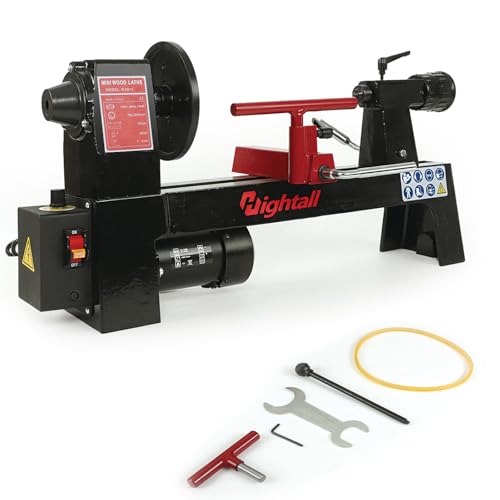
- Infinitely adjustable 750 to 3200 RPM speed
- 1/3 HP motor for small woodturning projects
- Includes spare belt, extra tool rest, and 5-year warranty
Best For: First-time woodturners wanting a compact lathe with helpful extras
Shop-Ready Upgrade
JET JWL-1221VS 12" x 21" Variable-Speed Lathe

- 1 HP motor with three optimized speed ranges
- Large DRO, spindle lock, and 24 indexing positions
- Includes tool supports, caddies, and knockout rod
Best For: Serious hobbyists and small-shop woodturners needing refined controls
Large-Capacity Wood Turner
WEN 34035 14x20 Variable Speed Wood Lathe
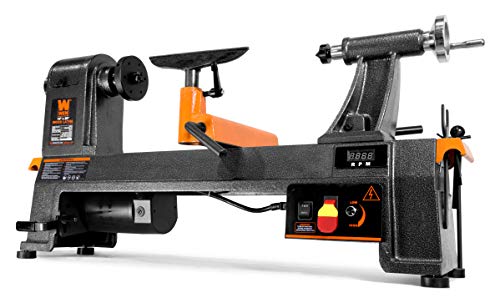
- 250-3550 RPM variable speed control
- Handles workpieces up to 20" long
- Includes faceplate, centers, and 8" tool rest
Best For: Woodworkers needing extra capacity in a benchtop design
Precision Metal Mini Lathe
VEVOR 7x12 Variable Speed Mini Metal Lathe

- 50-2500 RPM infinitely variable speed
- 3-jaw self-centering chuck with 0.01mm spindle accuracy
- Includes lamp, splash guard, and emergency stop
Best For: Compact precision metal projects and modeling work
Stable Variable-Speed Turner
JET JWL-1015VS 10x15 Wood Lathe
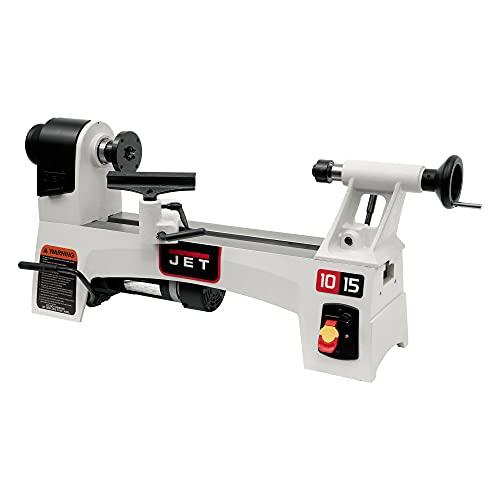
- Three speed ranges up to 3600 RPM
- 24-position indexing for repeatable alignment
- Wider bed ways for added stability
Best For: Woodturners wanting stability and precise control
Precision Metal Lathe
VEVOR 7x14 Metal Lathe with Digital Display

- 550W motor with 50-2500 RPM control
- 4-inch 3-jaw chuck and 4-way tool post
- Metal gears, LED lamp, and safety shutoff
Best For: Small-shop users needing precise variable-speed metal turning
Compact Wood Turner
Mini Benchtop Wood Lathe 8x12 with Variable Speed

- 750-3200 RPM infinitely variable speed
- 1/3HP motor and cast-iron construction
- Includes goggles and turning accessories
Best For: DIY woodworkers wanting a stable small lathe
High-Power Metal Lathe
VEVOR 7x16 Continuously Variable Metal Lathe

- 800W brushless direct-drive motor
- 150-2500 RPM continuously variable speed
- Emergency stop and overload protection
Best For: Precision metal users wanting power and safer controls
Compact Starter Pick – WEN 3421 8" x 12" Variable Speed Mini Lathe
If you want variable speed mini lathes for small turning projects, the WEN 3421 is a practical benchtop option for pens, bowls, cups, chess pieces, and other compact workpieces. Its soft-start motor and broad RPM range make it easy to dial in the speed for different stages of the job.
Best For: Beginners and hobbyists turning small pieces who want a simple, compact lathe with more motor power than many 8-inch models.
Pros:
- 3.2-amp motor delivers over 50% more power than most 8-inch wood lathes
- Variable speed adjusts from 750 to 3200 RPM with soft start
- Fits workpieces up to 12 inches long and 8 inches wide
- Includes a 2.3-inch face plate, MT1 spindle and tailstock taper, and two tool rests
Cons:
- Best suited to small workpieces rather than larger turning projects
- At 44.7 pounds, it is still a benchtop machine that needs a stable setup
This is a strong entry-level choice if you want a compact lathe with enough power and adjustment range for everyday small-project turning.
Heavy-Duty Midi Choice – RIKON 70-150VSR 12" x 16.5" VSR Midi Lathe
For shoppers comparing variable speed mini lathes but wanting more capacity, the RIKON 70-150VSR brings a bigger midi-lathe footprint with a 1 HP DC motor and electronic speed control. It also adds a digital RPM readout, forward and reverse operation, and a movable control box for easier positioning at the bench.
Best For: Woodturners who want a compact lathe with larger capacity, stronger motor performance, and more workshop-friendly controls.
Pros:
- Powerful 1 HP DC motor with electronic variable speed controls
- Digital RPM readout and forward/reverse drive capability
- Control box has a magnetic back for flexible placement along the bed
- Includes spur center, live center, faceplate, tool rest, knock-out bar, and more
Cons:
- Heavier at 102.8 pounds, so it is less portable than smaller mini lathes
- Bed extension for outboard turning is sold separately
This model stands out when you want a mini-to-midi lathe that behaves more like a serious shop machine, especially for turning work that benefits from extra power and capacity.
Budget-Friendly Beginner Option – 8×12 Benchtop Variable Speed Wood Lathe
This benchtop model fits well into the variable speed mini lathes category for beginners who want straightforward control over small woodworking projects. With an infinitely adjustable speed range and a 1/3 HP motor, it is designed for handling items like bowls, cups, candlesticks, and handles.
Best For: First-time woodturners who want a compact lathe with easy speed adjustment, useful extras, and a long warranty.
Pros:
- Infinitely variable speed from 750 to 3200 RPM
- 1/3 HP motor provides enough power for small woodworking tasks
- 360° rotatable forged tool rest helps adjust tool angles precisely
- Includes a spare belt, extra tool rest, 5-year warranty, and lifetime support
Cons:
- Best for small projects rather than larger or more demanding turning work
- At 45.4 pounds, it still requires a steady bench setup
For beginners, this is a feature-rich small lathe that balances simple speed control with helpful extras and strong after-sales coverage.
Shop-Ready Upgrade – JET JWL-1221VS 12" x 21" Variable-Speed Lathe
If you are comparing variable speed mini lathes and want a more advanced woodworking machine, the JET JWL-1221VS offers three optimized speed ranges and a 1 HP motor. Its redesigned controls, smooth forward-to-reverse transition, and integrated spindle lock make it feel geared toward frequent use.
Best For: Serious hobbyists and small-shop users who want a robust variable-speed lathe with refined controls and strong accessory support.
Pros:
- Three speed ranges: 60-900, 110-1,800, and 220-3,600 RPM
- 1 HP motor with smooth forward-to-reverse transition
- Large DRO, recessed power switch, spindle lock, and 24 indexing positions
- Includes tool supports, tool caddies, and a knockout rod
Cons:
- Weighs 121 pounds, so it is the least portable option here
- More machine than a casual small-project user may need
This JET model is the most feature-rich option in the group, making it a smart upgrade for users who want better controls, more versatility, and a lathe that can handle regular shop work.
Large-Capacity Wood Turner – WEN 34035 14×20 Variable Speed Wood Lathe
If you’re comparing variable speed mini lathes for bigger woodturning jobs, the WEN 34035 gives you a lot of reach in a benchtop footprint. It handles workpieces up to 20 inches long and 14 inches wide, with speed control from 250 to 3550 RPM so you can slow down for detail work or speed up for more aggressive shaping.
Best For: Woodworkers who want a benchtop lathe with extra capacity for bowls, cups, and longer turning projects.
Pros:
- Variable speed range from 250 to 3550 RPM for different turning tasks
- Large 14″ x 20″ capacity supports bigger wood projects
- Includes a 4-inch faceplate plus MT2 spur center and live center
- 1″-8 spindle thread improves accessory compatibility
Cons:
- Larger than a true mini lathe, so it needs more bench space
- Designed for wood turning only, not metal work
- Heavier setup may be less convenient for very small workshops
Overall, this is a practical pick if you want the flexibility of variable speed without giving up project size. The accessory support and included tooling make it a solid all-around wood lathe for home shops.
Precision Metal Mini Lathe – VEVOR 7×12 Variable Speed Mini Metal Lathe
For buyers looking at variable speed mini lathes for metal projects, this VEVOR 7″ x 12″ machine is aimed at precision parts processing and modeling work. Its DC motor and infinitely variable speed control from 50 to 2500 RPM make it easier to match the setup to the material and the task.
Best For: Hobbyists and small-shop users who need a compact metal lathe for precision work.
Pros:
- Infinitely variable spindle speed from 50 to 2500 RPM
- 3-jaw self-centering chuck helps hold cylindrical materials steadily
- Precision tapered roller bearings support spindle accuracy within 0.01mm
- Includes a lamp, emergency stop button, and splash guard
Cons:
- 7″ x 12″ size limits the scale of workpieces
- Weighs 85 pounds, so it is not especially lightweight
- Geared toward precision metal work rather than general-purpose turning
This model stands out if you want a compact metal lathe with strong speed control and accuracy-focused features. It is a sensible fit for detail-oriented projects where repeatability matters more than large capacity.
Stable Variable-Speed Turner – JET JWL-1015VS 10×15 Wood Lathe
If you want variable speed mini lathes with a more substantial shop feel, the JET JWL-1015VS is built for controlled wood turning. It offers three speed ranges from 200 to 3600 RPM, plus 15-1/2 inches between centers and wider bed ways for added stability on larger projects.
Best For: Woodturners who want a stable benchtop lathe with flexible speed ranges and repeatable indexing.
Pros:
- Three variable-speed ranges help match speed to the workpiece
- 24-position indexing supports precise alignment and repeatable results
- Wider bed ways add stability and support
- Includes live center, spur center, tool support, face plate, and knockout rod
Cons:
- Lower maximum capacity than larger benchtop wood lathes
- 1/2 HP motor is geared toward light-to-moderate turning tasks
- Primarily a wood lathe, so it is not meant for metal work
For woodworkers who value control and a solid platform, this JET brings useful speed flexibility without feeling flimsy. The indexing feature and included accessories make it especially appealing for repeatable turning jobs.
Precision Metal Lathe – VEVOR 7×14 Metal Lathe with Digital Display
If you’re comparing variable speed mini lathes for small metalworking projects, this VEVOR 7"x14" model stands out for its 550W power, 50-2500 RPM control, and built-in digital speed display. It’s aimed at users who want a compact benchtop machine with more control features than a basic starter lathe, including a 3-jaw chuck, 4-way tool post, and LED work light.
Best For: Hobbyists and small-shop users who want a compact metal lathe with strong speed control and precision features.
Pros:
- 550W motor with 50-2500 RPM variable speed and digital display
- 4-inch 3-jaw chuck and 4-way quick change tool post for better control
- Metal gear construction and aluminum handwheel for improved durability
- LED lamp and automatic power-off protection add practical convenience
Cons:
- At 103 pounds, it is not a lightweight portable option
- Best suited to small and medium projects rather than large workpieces
Overall, this is a feature-rich pick if you want a variable speed mini lathe with more precision-oriented controls and a sturdier build. It looks especially appealing for users who value speed readout, tool-post flexibility, and safer day-to-day operation.
Compact Wood Turner – Mini Benchtop Wood Lathe 8×12 with Variable Speed
For woodworkers shopping for variable speed mini lathes, this 8" x 12" benchtop model offers a practical range from 750 to 3200 RPM and a 1/3HP motor for everyday DIY turning tasks. The cast-iron construction, solid steel base, and included accessories make it a straightforward choice for home projects that need stability and easy setup.
Best For: DIY woodworkers who want a compact, stable lathe with broad variable-speed control.
Pros:
- Infinitely variable speed from 750 to 3200 RPM
- 1/3HP pure-copper motor for light woodworking tasks
- Cast-iron construction and steel base help minimize vibration
- Includes goggles, tool rests, faceplate, spur center, and live center
Cons:
- Designed for DIY and home use rather than heavy-duty production
- Smaller size limits the scale of projects it can handle
This is a sensible entry-level choice if your priority is a compact lathe with easy speed adjustment and a stable platform. The included accessories also help reduce the number of extra purchases needed to get started.
High-Power Metal Lathe – VEVOR 7×16 Continuously Variable Metal Lathe
If you’re focused on variable speed mini lathes for metal work, this 7" x 16" VEVOR model brings a direct-drive 800W brushless motor and a 150-2500 RPM continuously variable range. It’s built for users who want a benchtop machine with a broader thread-cutting range, a digital display, and multiple safety protections built in.
Best For: Users who want a compact metal lathe with higher power, continuous speed control, and safety features.
Pros:
- 800W brushless direct-drive motor with no belt changes needed
- 150-2500 RPM continuously variable speed with digital readout
- Supports 19 thread pitches, including metric and imperial options
- Safety features include emergency stop, overload protection, and chuck-cover switch
Cons:
- Weighs 123.6 pounds, so it is not easy to move around
- Primarily aimed at precision parts and models rather than oversized work
This is a strong option if you want a more powerful variable-speed mini lathe with low-maintenance direct drive and a wide threading range. Its safety systems and digital controls make it especially appealing for careful, repetitive metalworking.
How We Picked the Best Variable Speed Mini Lathes
For Variable Speed Mini Lathes, the most important filters are usable speed control, enough torque for the material, stable construction, and a size that fits the work you plan to do. We also looked for models with sensible capacity for bowls, spindles, pens, small parts, and light precision work, depending on whether the lathe is for wood or metal.
Quick Comparison
In general, smaller benchtop wood lathes are best for beginners, pen turning, and light spindle work. Mid-size wood lathes add more swing and bed length for larger projects. Metal mini lathes prioritize accuracy, carriage control, and stable feeds rather than raw swing. If you need one machine to cover a range of turning tasks, focus first on speed range and overall rigidity.
Key Buying Factors for Variable Speed Mini Lathes
Speed Range and Control
A wide, continuously variable speed range makes it easier to start safely at low RPM, then increase speed as the work is balanced. That flexibility is especially useful when moving between roughing, sanding, and finishing.
Motor Power and Torque
More power helps the lathe maintain speed under load. For wood, this matters when roughing larger blanks. For metal, steady low-speed torque is crucial for cleaner cuts and less chatter.
Bed Length and Swing
Bed length determines how long a workpiece can be, while swing determines the maximum diameter. Match both to your most common projects so you do not outgrow the machine too quickly.
Stability and Vibration
A heavier base, solid tool rest, and well-aligned components improve finish quality and make the machine easier to control. Stability matters even more when working at higher speeds.
Accessories and Support
Check whether the lathe includes centers, tool rests, chucks, or a tool kit, and confirm the availability of common accessories. For metal lathes, digital readouts, threading capability, and carriage features can be important upgrades.
Who Should Buy Which Variable Speed Mini Lathes?
Beginners and casual hobbyists should look for compact wood models with simple variable speed control and enough capacity for small projects. Intermediate woodturners may want a longer bed, more power, and better vibration control for bowls and spindle work. If you need precision machining rather than woodworking, a metal lathe is the better fit, especially for small parts, repair work, and detailed fabrication.
If you are comparing Variable Speed Mini Lathes for a home shop, choose the smallest machine that still covers your project list, then prioritize speed control, rigidity, and accessory support over extras you may not use.