
The best telescopes for planets make it easier to see the Moon’s craters, Jupiter’s cloud bands, Saturn’s rings, and the changing phases of Venus. The right choice depends less on extreme magnification than on useful aperture, focal length, optical quality, and a mount that stays steady.
We selected 10 beginner-friendly telescopes spanning compact travel refractors, smartphone-guided Celestron models, and larger Newtonian designs. Use the comparison and buying advice below to match your observing goals, experience level, and available space.
Best 10 Telescopes for Planets Picks for 2026
Best Beginner Classic

- 70mm fully coated refractor optics
- Simple manual alt-azimuth controls
- Includes two eyepieces and StarPointer finder
Best For: Beginners and families viewing the Moon and planets
Best Travel Bundle

- Portable 70mm, 400mm refractor
- Carry bag and adjustable tripod included
- Phone adapter and wireless remote included
Best For: Beginners who want portable, smartphone-friendly viewing
Best Smartphone Navigation
Celestron StarSense Explorer LT 80AZ

- App-guided target locating
- 80mm refractor for Moon and planets
- Manual mount with altitude slow-motion adjustment
Best For: Beginners who want smartphone-assisted navigation
Best Large-Aperture Starter

- 90mm aperture with 800mm focal length
- Fully multi-coated optical glass
- Includes phone adapter, bag, and 3x Barlow lens
Best For: Beginners wanting a larger refractor for backyard astronomy
Guided Beginner Pick
Celestron StarSense Explorer LT 114AZ
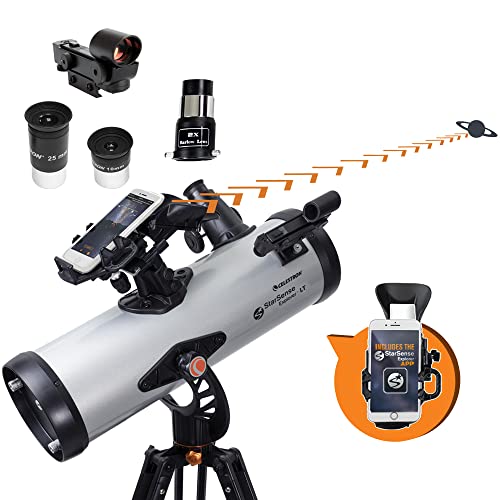
- Smartphone-guided target finding
- 114mm Newtonian reflector
- Includes 2x Barlow lens
Best For: Beginners seeking guided planetary and deep-sky viewing
Portable Family Choice
EACONN 80mm Refractor Telescope

- 80mm fully coated optics
- 30x–66x stated magnification
- Backpack and phone adapter included
Best For: Families and beginners wanting portable casual viewing
Higher-Aperture Guided Pick
Celestron StarSense Explorer DX 130AZ

- 130mm Newtonian reflector
- StarSense smartphone navigation
- Dual-axis slow-motion controls
Best For: Backyard observers wanting more aperture and guided setup
Best Travel Pick
ToyerBee 70mm Beginner Telescope

- 70mm fully multi-coated optics
- 15x-150x stated magnification
- Phone adapter and lightweight tripod included
Best For: Families and beginners who want portable planetary viewing
Best Deep-Sky Upgrade

- Large 130mm Newtonian reflector
- Equatorial mount with slow-motion controls
- Two eyepieces and StarPointer included
Best For: Beginners wanting planetary and deep-sky capability
Best High-Power Refractor

- 90mm fully coated refractor optics
- 36x-450x stated magnification range
- Adjustable altazimuth tripod and phone adapter
Best For: Beginners seeking flexible, hands-on planetary viewing
Best Beginner Classic – Celestron AstroMaster 70AZ
If you want one of the more straightforward telescopes for planets, the Celestron AstroMaster 70AZ is a practical entry-level refractor. Its 70mm fully coated optics are designed for Moon and planetary viewing, while the manual alt-azimuth mount keeps aiming simple for adults and kids.
Best For: Beginners and families who want an easy-to-set-up telescope for Moon, planet, and daytime viewing.
Pros:
- 70mm fully coated optics for bright views of the Moon and planets.
- Simple manual alt-azimuth mount with a convenient panhandle.
- Includes 20mm and 10mm eyepieces, a StarPointer finder, tripod, and astronomy software.
- Quick, tool-free setup with a two-year US warranty and unlimited support.
Cons:
- Manual operation requires you to locate and track targets yourself.
- The included 10.8-pound setup is less travel-focused than compact alternatives.
The AstroMaster 70AZ emphasizes ease of use over advanced automation. It is a sensible choice when simple controls, included accessories, and dependable beginner support matter more than computerized tracking.
Best Travel Bundle – Gskyer 70mm Travel Telescope
For shoppers comparing telescopes for planets that can also travel, the Gskyer 70mm model combines a compact 400mm refractor with a carry bag. Its 70mm aperture, 3x Barlow lens, and smartphone accessories make it a flexible starter kit for Moon viewing and casual astronomy.
Best For: Beginners and families seeking a portable telescope with smartphone-friendly accessories.
Pros:
- Compact 70mm refractor with a 400mm focal length.
- Includes two eyepieces, a 3x Barlow lens, and a 5×24 finder scope.
- Adjustable aluminum tripod and carry bag support travel and storage.
- Smartphone adapter and wireless camera remote are included.
Cons:
- Manual alt-azimuth mounting does not provide automatic tracking.
- The 5.7-pound setup is designed more for portability than maximum light gathering.
The Gskyer stands out as an accessory-rich travel option. Its shorter focal length and portable design suit casual observing, outdoor trips, and phone-based experimentation, provided you are comfortable aiming manually.
Best Smartphone Navigation – Celestron StarSense Explorer LT 80AZ
The Celestron StarSense Explorer LT 80AZ is a strong pick among telescopes for planets if finding targets is your biggest hurdle. Its smartphone dock and StarSense app use sky recognition to guide you toward planets, stars, and other objects, while the 80mm refractor provides sharp views of the Moon and bright targets.
Best For: Beginners and families who want app-assisted sky navigation without a motorized mount.
Pros:
- StarSense app provides guided target locating using your smartphone.
- 80mm refractor is suited to Moon, Jupiter, Saturn, and selected deep-sky objects.
- Manual mount includes altitude slow-motion adjustment for smoother positioning.
- Includes 25mm and 10mm eyepieces, a 2x Barlow lens, and StarPointer finder.
Cons:
- Tracking remains manual after locating an object.
- Using the navigation feature requires a compatible smartphone.
This model offers a useful middle ground between a basic manual telescope and a fully computerized system. The app reduces the frustration of finding targets, while the lightweight refractor keeps the setup approachable for first-time observers.
Best Large-Aperture Starter – MEEZAA 90mm 800mm Refractor
If you are looking for telescopes for planets with a larger objective lens, the MEEZAA 90mm refractor offers a substantial beginner-oriented setup. Its 90mm aperture and 800mm focal length are paired with fully multi-coated optics, two eyepieces, and a 3x Barlow lens for lunar and general astronomy viewing.
Best For: Adults and beginners who want a larger-aperture refractor with a broad accessory package.
Pros:
- 90mm aperture and 800mm focal length provide a larger optical setup than the other listed refractors.
- Fully multi-coated lenses are designed to improve brightness and clarity.
- Includes 10mm and 25mm eyepieces plus a 3x Barlow lens.
- Comes with a stainless steel tripod, phone adapter, carry bag, and accessory tray.
Cons:
- At 80cm long, the optical tube is less compact for transport.
- The manual alt-azimuth mount requires hands-on aiming and tracking.
- The supplied 32x-240x range may encourage magnification beyond practical viewing conditions.
The MEEZAA is the most substantial optical package in this group, but its larger tube favors backyard use over ultralight travel. It makes sense for buyers who prioritize aperture and included accessories and are willing to manage the telescope manually.
Guided Beginner Pick – Celestron StarSense Explorer LT 114AZ
For beginners comparing telescopes for planets, the Celestron StarSense Explorer LT 114AZ combines a 114mm Newtonian reflector with smartphone-guided navigation. Its StarSense app helps locate Jupiter, Saturn, the Moon, and other targets, while the manual altazimuth mount keeps operation straightforward.
Best For: Beginners who want guided backyard astronomy and a reflector capable of planetary and selected deep-sky viewing.
Pros:
- StarSense smartphone guidance uses sky recognition to help find targets.
- 114mm reflector is designed for bright views of the Moon, Jupiter, Saturn, and more.
- Includes 25mm and 10mm eyepieces, a 2x Barlow lens, tripod, and finderscope.
- Manual altitude slow-motion adjustment supports smoother target tracking.
Cons:
- Manual mount requires the user to make tracking adjustments.
- At 10.4 pounds, it is less travel-friendly than smaller portable refractors.
This is a practical entry-level choice when easy target-finding matters as much as optical capability. The included app and accessories reduce the learning curve, while the 114mm aperture gives it broader use than a basic moon-viewing telescope.
Portable Family Choice – EACONN 80mm Refractor Telescope
Among telescopes for planets, the EACONN 80mm refractor is a compact option for beginners and families. Its fully coated optics, 600mm focal length, phone adapter, and included backpack make it suitable for casual Moon and planetary observing at home or while traveling.
Best For: Kids, families, and beginners who prioritize portability, simple setup, and an included carrying backpack.
Pros:
- 80mm aperture and fully coated optics are designed to produce brighter, clearer images.
- Includes 20mm and 9mm eyepieces for stated 30x–66x magnification.
- Comes with a 5×24 finder scope, smartphone adapter, adjustable tripod, and backpack.
- Rough-adjustment gimbal with altitude and azimuth scales simplifies positioning.
Cons:
- Its 80mm aperture is smaller than the Celestron reflector options in this roundup.
- The mount uses rough adjustment rather than the listed slow-motion controls of the Celestron models.
The EACONN is a sensible starter package when easy transport and family use are priorities. It offers the core accessories needed to begin observing without requiring a separate phone holder or storage bag.
Higher-Aperture Guided Pick – Celestron StarSense Explorer DX 130AZ
For shoppers seeking telescopes for planets with more light-gathering capability, the Celestron StarSense Explorer DX 130AZ offers a 130mm Newtonian reflector and smartphone-assisted navigation. Its dual-axis slow-motion controls help with manual tracking, while the app points users toward planets and other recommended targets.
Best For: Backyard observers who want a larger beginner-friendly reflector with guided target finding and manual tracking controls.
Pros:
- 130mm reflector is designed for vivid views of the Moon, Jupiter, Saturn, and deep-sky objects.
- StarSense sky recognition helps locate targets through a compatible smartphone.
- Dual-axis slow-motion controls support more controlled manual tracking.
- Includes 25mm and 10mm eyepieces, tripod, accessory tray, and StarPointer finderscope.
Cons:
- At 18 pounds, it is the heaviest and least portable option here.
- It remains a manually operated telescope rather than a motorized tracking system.
The DX 130AZ is the strongest fit when aperture and steadier manual control matter more than compactness. Its guided app can make a larger reflector less intimidating for beginners, while the 130mm optical system supports a wide range of observing targets.
Best Travel Pick – ToyerBee 70mm Beginner Telescope
For shoppers seeking telescopes for planets that are easy to transport and simple to operate, this ToyerBee refractor is a practical starting point. Its 70mm aperture, 300mm focal length, fully multi-coated optics, and included 3x Barlow lens support views of the Moon, Jupiter, Saturn’s rings, and bright stars.
Best For: Kids, families, and beginners who want a lightweight telescope for backyard observing, camping, or road trips.
Pros:
- 70mm fully multi-coated optics support sharp day and night viewing.
- Includes 20mm and 6mm eyepieces plus a 3x Barlow lens for stated 15x-150x magnification.
- Comes with a 5×24 finderscope, phone adapter, wireless camera remote, tripod, and star chart.
- Quick, no-tools setup and lightweight 3.5-pound design suit beginners and travel.
Cons:
- Manual focusing and a beginner-oriented mount may feel limited for advanced observers.
- The 70mm aperture gathers less light than the larger-aperture options in this roundup.
This is a well-rounded entry-level choice when portability, family use, and phone-friendly accessories matter more than maximum light gathering. Its included maintenance support also adds reassurance for first-time buyers.
Best Deep-Sky Upgrade – Celestron AstroMaster 130EQ
The Celestron AstroMaster 130EQ is a stronger option for buyers comparing telescopes for planets with broader night-sky ambitions. Its 130mm Newtonian reflector provides greater light-gathering ability, while the equatorial mount and slow-motion controls help users aim and track targets manually.
Best For: Beginners who want a larger-aperture telescope for bright planetary views as well as deep-sky observing.
Pros:
- Large 130mm optics are designed to show bright Moon and deep-sky objects.
- German equatorial mount includes right-ascension and declination slow-motion controls.
- Includes 20mm and 10mm eyepieces plus a StarPointer red-dot finderscope.
- Backed by a two-year US warranty and unlimited support from Celestron.
Cons:
- At 17 pounds, it is substantially less portable than the smaller refractors.
- The equatorial mount may require more learning than a simple altazimuth setup.
- Manual controls mean it does not provide automated target tracking.
Choose this model if light gathering and upgrade potential are more important than compact travel. It offers a more substantial platform for exploring planets and deep-sky targets, though its heavier equatorial design suits a dedicated setup.
Best High-Power Refractor – HETEKAN 90mm 900mm Telescope
For shoppers prioritizing a long focal length among telescopes for planets, the HETEKAN 90900 offers a 90mm aperture and 900mm focal length. Fully coated optics, three eyepieces, and a 3x Barlow lens provide the supplied 36x-450x magnification range for lunar and planetary observation.
Best For: Adults and beginners who want a larger refractor with flexible magnification and an adjustable viewing setup.
Pros:
- 90mm aperture provides more light-gathering capacity than the 70mm refractor listed here.
- Includes 25mm, 10mm, and 6mm eyepieces plus a 3x Barlow lens.
- Adjustable tripod moves 360 degrees horizontally and 180 degrees vertically.
- Phone adapter, 5×24 finder scope, carry bag, and two-year manufacturer warranty are included.
Cons:
- Its 5.6kg weight and 90cm optical tube make it less convenient for casual travel.
- Manual focusing and an altazimuth mount require hands-on target positioning.
- The stated 450x maximum is accessory-based and may not be practical in all viewing conditions.
This HETEKAN is a sensible middle ground for users who want a larger refractor without moving to an equatorial reflector. Its long tube and extensive accessory kit favor a stable home setup and hands-on planetary viewing.
How We Picked the Best Telescopes for Planets
We focused on features that directly affect planetary viewing: aperture, focal length, optical design, mount stability, setup time, and ease of tracking. Refractors are typically simple to maintain and beginner-friendly, while Newtonian reflectors can provide more aperture for the money but require a little more care.
Smartphone-guided models earned attention for helping new observers locate targets without relying on traditional star-hopping. We also considered portability, included accessories, and whether each telescope is practical for families, casual observers, or beginners ready for more serious astronomy.
Quick Comparison
| Type | Best for | Typical advantage | Trade-off |
|---|---|---|---|
| 70–80mm refractor | Beginners and children | Simple setup and portability | Less detail in dimmer targets |
| 90mm refractor | Moon and planetary viewing | More light-gathering ability and focal length | Longer, heavier tube |
| 114–130mm Newtonian | Expanding beginners | More aperture for planetary and deep-sky use | Bulkier setup and alignment needs |
| Smartphone-guided mount | Easy target finding | Helpful navigation for new users | Requires phone compatibility and power |
Key Buying Factors for Telescopes for Planets
Aperture
Aperture is the diameter of the main lens or mirror. Larger apertures gather more light and can reveal finer planetary detail, but only when the atmosphere is steady and the mount is stable. For many beginners, 70mm to 90mm is a practical starting range; 114mm to 130mm models offer more resolving power when portability is less important.
Focal Length and Magnification
Longer focal lengths are useful for high-power views of the Moon and planets and can make focusing easier. Ignore exaggerated maximum-magnification claims. In real use, atmospheric conditions and optical quality usually limit useful magnification before the advertised figure does.
Mount Stability
A shaky mount can ruin an otherwise capable telescope. Look for a tripod and mount that feel solid when focusing or adjusting the tube. Equatorial mounts can support tracking, but a simple altazimuth mount is often quicker for casual planetary sessions.
Optics, Accessories, and Setup
Check whether the telescope includes useful eyepieces, a finder, a diagonal, and a stable tripod. Smartphone adapters can help document views, but phone photography through a small telescope is sensitive to alignment and vibration. A telescope that sets up quickly is more likely to be used regularly.
Who Should Buy Which Telescopes for Planets?
- For children and first-time users: Choose a compact 70mm or 80mm refractor with a straightforward altazimuth mount.
- For easy target locating: Select a StarSense Explorer model if guided smartphone navigation is more valuable than the simplest possible setup.
- For sharper planetary potential: Consider a 90mm refractor or a 114mm–130mm Newtonian, provided you have room for a larger tube and sturdier setup.
- For travel and casual observing: Prioritize low weight, a carry bag, fast setup, and a mount that is easy to aim manually.
- For broader astronomy interests: A 130mm Newtonian generally provides a stronger platform for viewing both planets and brighter deep-sky objects.
Whichever model you choose, allow the telescope to reach outdoor temperature, observe away from bright lights, and start with a low-power eyepiece before increasing magnification. Those habits often improve results more than simply choosing the highest advertised power.