
City lights do not have to end your astronomy hobby. The right telescope can still reveal the Moon’s craters, bright planets, and selected deep-sky targets from a balcony, backyard, or rooftop.
We selected 10 beginner-friendly options with an emphasis on portability, straightforward setup, useful smartphone features, and performance suited to bright urban skies.
Best 10 Telescopes for City Stargazing Picks for 2026
Best Guided Reflector
Celestron StarSense Explorer LT 114AZ
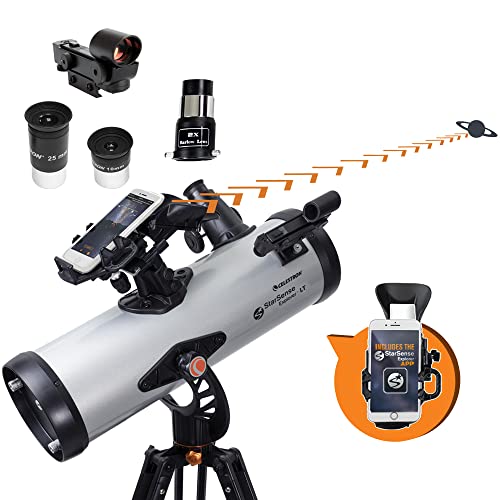
- 114mm reflector for lunar, planetary, and deep-sky viewing
- StarSense smartphone navigation simplifies target finding
- Includes two eyepieces, 2x Barlow lens, mount, and tripod
Best For: Beginners seeking guided eyepiece viewing from the city
Best Smart Imaging Pick
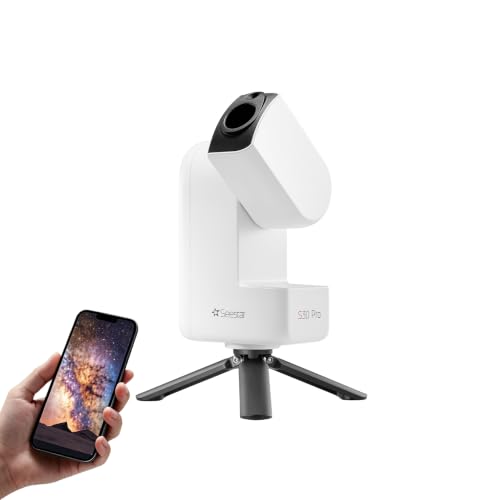
- App-controlled GoTo and automatic tracking
- Light-pollution filters support urban astrophotography
- Compact 3.6-pound design with AI image processing
Best For: Beginners focused on automated deep-sky imaging
Best Large-Aperture Guided Scope
Celestron StarSense Explorer DX 130AZ

- 130mm parabolic reflector gathers more light
- StarSense app guides users to recommended targets
- Dual-axis controls improve manual tracking
Best For: Users wanting a fuller traditional reflector experience
Best Lightweight Starter

- Portable 70mm refractor with adjustable tripod
- Includes carry bag, phone adapter, and wireless remote
- Two eyepieces plus 3x Barlow lens included
Best For: Kids, beginners, and casual portable viewing
Best All-Around Starter

- Fully coated 70mm refractor optics
- Simple alt-azimuth controls
- Includes two eyepieces and finderscope
Best For: Beginners and families wanting versatile backyard viewing
Best Portable 80mm Option

- 80mm multi-coated refractor optics
- Backpack and smartphone adapter included
- 30x–66x eyepiece magnification
Best For: Beginners seeking portable family stargazing
Best Lightweight Travel Kit

- Lightweight 4.2-pound design
- Backpack and no-tool setup included
- 70mm optics for day or night use
Best For: Beginners needing a portable family telescope
Large-Aperture Pick
MEEZAA 90mm Refractor Telescope

- 90mm aperture with fully multi-coated optics
- 32x–240x stated magnification range
- Includes tripod, phone adapter, and carry bag
Best For: Beginners wanting a larger refractor for lunar viewing and backyard astronomy
Easy-Setup Pick

- 80mm aperture with fully multi-coated optics
- No-tool setup and 24x–180x stated range
- Includes finder scope, phone adapter, remote, and bag
Best For: Families and beginners seeking simple, portable backyard viewing
Portable Family Pick

- 80mm aperture with coated optics
- Includes moon filter and 5x24 finder scope
- Backpack and height-adjustable tripod included
Best For: Families and beginners observing the moon and planets at home or while traveling
Best Guided Reflector – Celestron StarSense Explorer LT 114AZ
For beginners comparing telescopes for city stargazing, the Celestron StarSense Explorer LT 114AZ combines a 114mm reflector with smartphone-guided navigation. Its app helps identify targets from your location, while the manual altazimuth mount keeps operation straightforward.
Best For: Beginners who want guided access to the Moon, planets, and brighter deep-sky objects.
Pros:
- StarSense app uses sky recognition to help locate celestial targets.
- 114mm reflector is suited to lunar, planetary, and selected deep-sky viewing.
- Includes 25mm and 10mm eyepieces, a 2x Barlow lens, and a preassembled tripod.
Cons:
- Manual mount requires you to move and track the telescope yourself.
- At 10.4 pounds, it is less travel-friendly than compact smart telescopes.
The LT 114AZ is a practical choice if you want traditional eyepiece viewing with helpful smartphone navigation. Its larger reflector makes it more capable for city targets than many small beginner scopes, though it still benefits from darker skies.
Best Smart Imaging Pick – ZWO Seestar S30 Pro
The ZWO Seestar S30 Pro takes a different approach to telescopes for city stargazing: it is designed around app-controlled viewing and astrophotography. Automatic GoTo, tracking, built-in light-pollution filters, and AI image processing make it especially convenient for capturing targets from brighter urban locations.
Best For: Beginners prioritizing smartphone viewing and automated deep-sky astrophotography.
Pros:
- Automatic GoTo targeting and tracking reduce manual setup and adjustment.
- Built-in light-pollution filters support clearer imaging in urban environments.
- Compact 3.6-pound design includes one-tap capture, AI processing, and dual-camera imaging.
Cons:
- Designed for deep-sky imaging rather than planetary observation.
- Deep-sky imaging requires keeping the device stationary for stable tracking.
The S30 Pro is best viewed as a portable smart imaging system rather than a conventional eyepiece telescope. It is a strong fit for city users who want automated, shareable images without learning complex astrophotography workflows.
Best Large-Aperture Guided Scope – Celestron StarSense Explorer DX 130AZ
For city stargazing with a traditional telescope, the Celestron StarSense Explorer DX 130AZ offers a 130mm Newtonian reflector and smartphone-assisted target finding. Its dual-axis slow-motion controls provide more precise manual adjustments than a basic altazimuth setup.
Best For: Beginners and hobbyists wanting more light-gathering capacity for planets and brighter deep-sky objects.
Pros:
- 130mm parabolic reflector provides strong light-gathering capability.
- StarSense app helps locate recommended targets based on time and location.
- Dual-axis slow-motion controls support smoother manual tracking.
- Includes 25mm and 10mm eyepieces, mount, tripod, and StarPointer finder.
Cons:
- At 18 pounds, it is relatively heavy for frequent transport.
- Manual operation still requires tracking objects after locating them.
The DX 130AZ is the most capable conventional reflector in this group for users who can accommodate its larger, heavier setup. It offers useful smartphone guidance without replacing the hands-on experience of viewing through eyepieces.
Best Lightweight Starter – Gskyer 70mm Travel Telescope
The Gskyer 70mm refractor is a straightforward option for shoppers seeking telescopes for city stargazing, casual Moon viewing, and travel. Its compact tube, adjustable tripod, carry bag, smartphone adapter, and wireless remote make it easy to take outside or store between sessions.
Best For: Kids, beginners, and casual observers who value portability and simple smartphone capture.
Pros:
- 70mm aperture and fully coated optics are suitable for beginner observations.
- Includes two eyepieces and a 3x Barlow lens for multiple magnification options.
- Carry bag, adjustable tripod, phone adapter, and wireless remote support portable use.
Cons:
- Smaller aperture offers less light-gathering ability than the Celestron reflectors.
- Manual altazimuth operation does not provide automated target tracking.
- Its included accessories are aimed at basic rather than advanced astrophotography.
The Gskyer is a sensible entry-level pick when convenience matters more than maximum optical reach. It can work well for bright city targets and family use, especially for buyers who want a complete, portable kit.
Best All-Around Starter – Celestron AstroMaster 70AZ
For shoppers comparing telescopes for city stargazing, the Celestron AstroMaster 70AZ is a straightforward beginner refractor with fully coated 70mm optics, a manual alt-azimuth mount, and a compact setup suited to backyard viewing. It is designed for bright targets such as the Moon, planets, and star clusters, while also supporting daytime terrestrial viewing.
Best For: Beginners and families who want simple manual controls and a versatile telescope for both nighttime and daytime use.
Pros:
- Fully coated 70mm optics for clear views of the Moon, planets, and bright star clusters
- Easy-to-use alt-azimuth mount with a panhandle control
- Includes 20mm and 10mm eyepieces, a red dot finderscope, tripod, and astronomy software
- Two-year U.S. warranty and unlimited support from Celestron
Cons:
- Manual focusing and manual tracking require hands-on adjustments
- At 10.8 pounds, it is less travel-oriented than the included-backpack options
The AstroMaster 70AZ is a practical pick when ease of use and stable backyard setup matter more than maximum portability. Its included accessories and dual day-and-night capability make it a well-rounded entry point for city observers.
Best Portable 80mm Option – EACONN 80mm Travel Telescope
The EACONN 80mm refractor is a portable choice for telescopes for city stargazing, combining a larger 80mm aperture with a 600mm focal length and multi-coated optics. Its adjustable tripod, positioning gimbal, smartphone adapter, and carrying backpack make it convenient for moving between a balcony, backyard, or travel destination.
Best For: Beginners and families who want a larger-aperture starter telescope with phone-adapter support and easy transport.
Pros:
- 80mm aperture and multi-coated optics designed to improve light transmission
- Includes 20mm and 9mm eyepieces for approximately 30x–66x magnification
- Comes with a 5×24 finder scope, smartphone adapter, adjustable tripod, and backpack
- Manual gimbal with scale helps with altitude and azimuth positioning
Cons:
- Manual focusing and positioning require user adjustments
- The supplied notes emphasize beginner viewing rather than advanced tracking features
This model stands out when portability and a bit more light-gathering aperture are priorities. The backpack and phone adapter add practical value for casual observing, though users should expect a hands-on manual viewing experience.
Best Lightweight Travel Kit – Celestron Travel Scope 70
For city observers who need an easy-to-carry setup, the Celestron Travel Scope 70 pairs fully coated 70mm optics with a lightweight tube, full-height tripod, and included backpack. It is built for quick no-tool setup and can handle bright lunar and planetary views as well as daytime scenery.
Best For: Beginners who want a lightweight telescope kit for balconies, backyards, family outings, and travel.
Pros:
- Lightweight 4.2-pound design with a backpack for storage and transport
- Fully coated 70mm glass optics for bright views of the Moon, planets, and daytime targets
- Includes 20mm and 10mm eyepieces, a 5×24 finderscope, and erect-image diagonal
- No-tool setup and bundled Starry Night software support a beginner-friendly experience
Cons:
- Manual alt-azimuth operation requires hand adjustments
- The 70mm aperture is smaller than the EACONN model in this roundup
The Travel Scope 70 is a strong match for shoppers who value portability and fast setup over a larger aperture. Its backpack, accessories, and day-and-night capability make it especially convenient for casual city stargazing and travel.
Large-Aperture Pick – MEEZAA 90mm Refractor Telescope
For city stargazing, the MEEZAA 90mm refractor is a strong choice when you want a larger aperture and flexible magnification in a complete beginner-friendly package. Its fully multi-coated optics, phone adapter, tripod, and carry bag make it practical for backyard use or trips to darker locations.
Best For: Adults and astronomy beginners who want detailed lunar viewing, broad magnification options, and included photography accessories.
Pros:
- 90mm aperture and 800mm focal length capture more light than smaller models.
- 10mm and 25mm eyepieces plus a 3x Barlow lens provide a stated 32x–240x range.
- Includes a stainless steel adjustable tripod, phone adapter, carry bag, finder scope, and zenith mirror.
- Paper manual and claimed 10-minute assembly make setup approachable for beginners.
Cons:
- The 80cm optical tube is relatively large to transport and store.
- Manual focusing and an altazimuth mount require hands-on object tracking.
The MEEZAA stands out among telescopes for city stargazing when light-gathering capacity and high magnification matter most. Its generous accessory bundle adds convenience, though the larger tube may be less convenient for compact storage.
Easy-Setup Pick – Koolpte 80mm AZ Refractor
The Koolpte 80mm refractor is a practical option for city stargazing if you prioritize simple setup and portable accessories. Its no-tool assembly, 5×24 finder scope, phone adapter, and wireless remote are designed to help beginners start observing and capturing images quickly.
Best For: Adults and children who want an easy-to-assemble telescope for moon viewing, casual backyard astronomy, and portable use.
Pros:
- 80mm aperture and fully multi-coated optics are designed to improve brightness and clarity.
- 25mm and 10mm eyepieces with a 3x Barlow lens offer stated magnifications from 24x to 180x.
- No-tool setup, adjustable aluminum tripod, carrying bag, phone adapter, and wireless remote add convenience.
- Included 5×24 finder scope helps with locating objects.
Cons:
- The aluminum tripod may be less substantial than a heavier-duty support.
- Its manual-focus altazimuth design requires the user to track objects by hand.
For beginners comparing telescopes for city stargazing, the Koolpte offers a straightforward feature set and useful portability. It is especially appealing when quick assembly and phone-based image capture are higher priorities than maximum aperture.
Portable Family Pick – Celticbird 80mm Refractor
The Celticbird 80mm refractor suits city stargazing for families and beginners who want a portable kit with straightforward controls. A backpack, adjustable tripod, moon filter, finder scope, and phone adapter give it a useful balance for backyard observation and travel.
Best For: Families, children ages 8–12, and beginners seeking portable moon and planet viewing with an included moon filter.
Pros:
- 80mm aperture and multi-fully coated optics are designed to improve light transmission and image clarity.
- 20mm and 9mm eyepieces provide stated 30x and 66x magnification.
- Includes a moon filter, 5×24 finder scope, phone adapter, adjustable tripod, and backpack.
- Tripod height adjusts from 17.7 to 52 inches for adults and children.
Cons:
- The supplied magnification range is narrower than some competing kits.
- Manual focus and an altazimuth mount require hands-on operation.
The Celticbird is a convenient choice among telescopes for city stargazing when portability and family-friendly setup matter. Its moon filter and height-adjustable tripod are useful additions, while the modest two-eyepiece range keeps the system simple for new observers.
How We Picked the Best Telescopes for City Stargazing
We focused on telescopes that are practical in urban environments, where light pollution, limited storage, and short observing sessions matter. The selection includes refractors for simple lunar and planetary viewing, Newtonian reflectors for wider light-gathering capability, and smart telescopes that automate alignment and imaging.
We also considered aperture, mount stability, portability, setup complexity, included accessories, and suitability for beginners. A large specification alone does not guarantee a better experience; a stable mount and easy controls are often more valuable for first-time observers.
Quick Comparison
| Type | Best For | Main Advantage | Potential Limitation |
|---|---|---|---|
| Smart telescope | Automated observing and astrophotography | App guidance and image capture | Less traditional hands-on control |
| Newtonian reflector | Moon, planets, and brighter deep-sky objects | Strong light-gathering value | May require more setup and collimation |
| Refractor | Beginners and casual viewing | Simple, low-maintenance design | Smaller apertures limit faint-object performance |
Key Buying Factors for Telescopes for City Stargazing
Aperture and Urban Targets
Aperture determines how much light a telescope gathers and how much detail it can resolve. From a city, prioritize the Moon, planets, double stars, and bright star clusters. Apertures around 70mm to 90mm are portable and beginner-friendly, while 114mm to 130mm reflectors can provide a noticeable boost for brighter deep-sky targets.
Mount Stability and Ease of Use
Choose a solid alt-azimuth mount with smooth controls. Shaky tripods can make even sharp optics frustrating to use. Smartphone-guided models can simplify finding objects, while smart telescopes are useful if you prefer app-based control and automatic image processing.
Portability and Accessories
For balconies, travel, or quick sessions, consider overall weight, tripod size, carrying cases, and setup time. Useful accessories include multiple eyepieces, a phone adapter, a finderscope, and a reliable tripod. Treat unusually high magnification claims cautiously; optical quality and atmospheric conditions matter more.
Who Should Buy Which Telescopes for City Stargazing?
Choose a Smart Telescope If…
You want guided observing, app control, and an easy path into astrophotography without manually locating every target.
Choose a Newtonian If…
You want more aperture per dollar and do not mind learning basic alignment and maintenance. These are strong choices for observers focused on visual detail.
Choose a Refractor If…
You value simple setup, low maintenance, and portability. Compact 70mm to 90mm refractors are especially suitable for families, beginners, and casual lunar or planetary viewing.