
Finding useful telescope guide cameras under $100 is easier when you focus on compatibility, connection type, sensor performance, and the kind of celestial targets you want to capture. This roundup compares affordable USB and Wi-Fi eyepiece cameras suited to beginner skywatching, lunar imaging, planetary video, and basic guiding.
The models below vary widely in resolution, app support, included accessories, and telescope fit. Use the buying guide after the product listings to narrow your options by setup, skill level, and observing goals.
Best 10 Telescope Guide Cameras Under 100 Picks for 2026
Beginner Planetary Pick
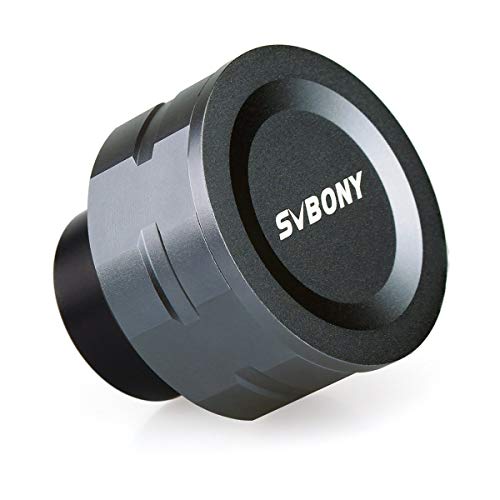
- 1080p video at up to 30 fps
- 1.25-inch barrel with filter thread
- Suitable for lunar and planetary imaging
Best For: Beginners recording the Moon and bright planets
Higher-Resolution USB Choice

- 7.05MP IMX415 color sensor
- 2K video at up to 30 fps
- Includes USB 3.0 cable and accessories
Best For: Higher-resolution lunar and planetary capture
Flexible Beginner Setup

- 1080p video at up to 30 fps
- Removable UV/IR cut filter included
- UVC plug-and-play with optional ASCOM support
Best For: Beginners, EAA, and classroom astronomy
Wireless Sharing Option

- Wireless phone viewing through its own hotspot
- 4MP stills and 2K video at 30 fps
- Up to four hours of battery use
Best For: Casual shared viewing with compatible 30–50mm eyepieces
Best 4K Lunar Camera

- Up to 4K video and 8MP imaging
- Standard 1.25-inch telescope connection
- UVC viewing with optional ASCOM support
Best For: Computer-based lunar and planetary imaging
Best Wireless Sharing Camera

- WiFi live viewing from a smartphone
- Connects with two phones simultaneously
- Four-hour battery and expandable storage
Best For: Shared observing and beginner smartphone capture
Best Screen-Equipped Camera
Telonixium WiFi Telescope Eyepiece

- Built-in 1.5-inch IPS viewing screen
- 1080p video with 2MP photos
- Includes 64GB storage and supports WiFi
Best For: Portable astronomy and wildlife viewing
Best Beginner Pick

- 1.25-inch plug-and-play electronic eyepiece
- Designed for lunar and planetary imaging
- Includes UHC filter for improved nebula contrast
Best For: Beginners using a computer or Android device
Best Wireless Value

- Wireless phone control through a built-in hotspot
- Captures 4MP photos and 2K video
- Up to four hours of battery use
Best For: Portable phone-based lunar and planetary viewing
Beginner Planetary Pick – SVBONY SV105
For shoppers comparing telescope guide cameras under 100, the SVBONY SV105 is a straightforward USB option for lunar, planetary, and terrestrial video. Its 1.25-inch barrel connects directly to many telescopes, while plug-and-play operation keeps setup approachable for beginners.
Best For: Beginners who want to record the Moon, bright planets, and live telescope views on a computer.
Pros:
- Records up to 30 fps at 1920×1080 resolution.
- Uses a standard 1.25-inch barrel with an M28.5×0.6 filter thread.
- Supports Windows, Linux, Android, and macOS laptops with compatible software.
- Dark-light compensation helps improve clarity in low-light viewing.
Cons:
- Designed mainly for lunar and planetary imaging rather than deep-sky astrophotography.
- Requires separate capture software depending on the operating system.
- Not compatible with Apple phones or tablets.
The SV105 makes sense when ease of use and direct telescope compatibility matter more than advanced imaging features. It is a practical entry point for quick planetary videos and live observing.
Higher-Resolution USB Choice – SVBONY SV205
Among telescope guide cameras under 100, the SVBONY SV205 stands out for its higher-resolution 7.05MP sensor and USB 3.0 connection. It can provide smooth 2K video for lunar and planetary work while also offering a higher-resolution uncompressed mode.
Best For: Beginners and hobbyists who want more resolution for Moon, planet, and live-view imaging.
Pros:
- 7.05MP IMX415 color sensor captures up to 3264×2160 in YUV mode.
- Supports 2K video at up to 30 fps in MJPG format.
- Standard 1.25-inch adapter barrel connects directly to many telescopes.
- Includes a USB 3.0 cable, dust cover, and lens-cleaning cloth.
Cons:
- Compatibility depends on the telescope’s eyepiece interface.
- Apple support applies to laptops, not iPhones or iPads.
- Its focus and telescope alignment remain manual.
The SV205 is a strong fit when resolution is a priority but you still want a compact electronic eyepiece. Its multiple video formats give users room to experiment as their capture workflow develops.
Flexible Beginner Setup – FIBONAX Nova200
The FIBONAX Nova200 is a practical contender among telescope guide cameras under 100 for users who want simple computer viewing with a little more flexibility. It combines 1080p 30fps capture, UVC plug-and-play support, and a removable UV/IR cut filter in a lightweight 1.25-inch body.
Best For: Beginners, classroom demonstrations, basic EAA, and lunar or planetary imaging.
Pros:
- Captures 1920×1080 video at up to 30 fps.
- Works as a UVC plug-and-play camera on compatible Windows, macOS, and Linux systems.
- Includes a removable UV/IR cut filter for added setup flexibility.
- Optional ASCOM driver support can support more astronomy-focused Windows workflows.
Cons:
- Its 2MP sensor offers less resolution than the SV205.
- Manual focusing is required.
- ASCOM support is optional and intended for compatible Windows software.
The Nova200 is appealing when easy live viewing and filter flexibility are more important than maximum resolution. Its compact aluminum housing also helps keep a telescope setup lightweight.
Wireless Sharing Option – EVGATSAUTO WiFi Eyepiece
For shoppers seeking telescope guide cameras under 100 without a cable to the viewing device, the EVGATSAUTO WiFi digital eyepiece offers a different approach. It creates its own WiFi hotspot for phone viewing, records 4MP stills and 2K video, and mounts to optical equipment with 30–50mm eyepieces.
Best For: Casual lunar, planetary, wildlife, and microscope viewing shared wirelessly with one or two devices.
Pros:
- Provides wireless live viewing through a phone app.
- Supports 4MP still images and 2K video at 30 fps.
- Built-in 800mAh battery provides up to four hours of continuous use.
- Supports memory cards up to 128GB and includes interval and time-lapse features.
Cons:
- Mounting is intended for 30–50mm eyepieces rather than a standard 1.25-inch barrel.
- Requires a phone app and WiFi connection instead of direct computer USB capture.
- Only a 90-day manufacturer warranty is specified.
The EVGATSAUTO is best when wireless sharing and portability are central to the observing experience. Check your telescope or optical device’s eyepiece diameter carefully before buying.
Best 4K Lunar Camera – FIBONAX 8MP Telescope Camera
For shoppers comparing telescope guide cameras under 100, the FIBONAX 8MP camera is a straightforward USB option for lunar and planetary imaging. Its standard 1.25-inch barrel, UVC viewing, and up-to-4K video support make it a practical fit for computer-based observing, provided your telescope can reach focus manually.
Best For: Beginners who want detailed Moon and bright-planet images on a Windows, macOS, or Linux computer.
Pros:
- 8MP sensor supports up to 4K video and high-frame-rate 1080p capture.
- Standard 1.25-inch connection fits many telescope focusers.
- UVC plug-and-play viewing works with compatible computer software.
- Removable IR-cut filter and lightweight aluminum body are useful for a compact setup.
Cons:
- Manual telescope focusing is required; the fit alone does not guarantee focus.
- Optional ASCOM support requires compatible Windows astronomy software and the ASCOM Platform.
- Designed primarily for lunar and planetary imaging rather than long-exposure deep-sky photography.
This is one of the more capable computer-connected choices in this group for high-resolution planetary work. Check your focuser travel and software compatibility before buying.
Best Wireless Sharing Camera – Sunicon 4MP 2K Eyepiece
Among telescope guide cameras under 100, this Sunicon electronic eyepiece stands out for wireless smartphone viewing. It supports 4MP photos, 2K video, and simultaneous connections to two phones, making it convenient for shared observing without a computer or trailing USB cable.
Best For: Beginners, families, and teaching groups that want to view and record through a telescope on two smartphones.
Pros:
- Built-in WiFi enables live viewing, remote control, and two-phone sharing.
- Records 4MP still images and 2K video at 30fps.
- Up to four hours of battery life supports extended observing sessions.
- Supports microSD cards up to 128GB for additional storage.
Cons:
- Requires the dedicated app and connection to the camera’s WiFi hotspot.
- MicroSD card is not included.
- Manual focus is required, and compatibility depends on 30–50mm eyepieces.
The wireless design makes this a flexible choice for casual astrophotography and group viewing. Confirm that your telescope or microscope has an eyepiece in the stated 30–50mm range.
Best Screen-Equipped Camera – Telonixium WiFi Telescope Eyepiece
For telescope guide cameras under 100 that can be used without immediately reaching for a phone, the Telonixium model includes a built-in 1.5-inch IPS screen. It combines 1080p video, WiFi recording, onboard storage, and broad 28–50mm compatibility for telescopes, binoculars, monoculars, and microscopes.
Best For: Beginners who want an all-in-one viewing camera for astronomy, wildlife, and shared remote observation.
Pros:
- Built-in 1.5-inch screen provides direct electronic viewing.
- 1080p video and 2MP photos include dark-light compensation.
- WiFi supports remote observation and dual-device connection within a stated 49-foot range.
- Includes a 64GB TF card and supports storage expansion up to 256GB.
Cons:
- Battery life is rated for up to three hours.
- Manual focus is required.
- Image resolution is lower than the 4K/8MP option in this roundup.
The integrated screen and included 64GB card make this a convenient grab-and-use option. Choose it over a computer-focused camera if direct viewing and multi-purpose compatibility matter more than maximum resolution.
Best Beginner Pick – SV105 Color Telescope Camera
For shoppers comparing telescope guide cameras under 100, the SVBONY SV105 is a straightforward starting point for lunar, planetary, and terrestrial imaging. Its 1.25-inch format connects to a laptop or PC for real-time viewing, while the included UHC filter can help improve nebula contrast under light-polluted skies.
Best For: Beginners who want simple computer-based lunar and planetary imaging.
Pros:
- Plug-and-play design with no driver required.
- Supports real-time viewing on Windows, Linux, and Android with the appropriate capture software.
- Includes a 1.25-inch UHC filter for darker sky backgrounds and improved nebula contrast.
- Suitable for lunar, planetary, and terrestrial targets.
Cons:
- Manual focus requires user adjustment.
- Best suited to bright targets rather than a broad range of deep-sky imaging.
- Computer or compatible Android device and capture software are needed.
The SV105 keeps the setup uncomplicated and adds useful filter value for beginners. Choose it if you prefer a wired camera connected to a computer or Android device and mainly plan to record the Moon and planets.
Best Wireless Value – Sanpyl WiFi Telescope Camera
The Sanpyl is a flexible option among telescope guide cameras under 100 for users who want wireless control. It fits eyepieces from 30mm to 50mm, sends a live view to a phone over WiFi, and records up to 2K video or 4MP still photos.
Best For: Mobile-first lunar and planetary viewing without a cable between the camera and phone.
Pros:
- WiFi connection allows phone-based viewing and control.
- Supports simultaneous viewing on two phones.
- Records 2K video at 30fps and captures up to 4MP photos.
- Built-in 800mAh battery provides up to four hours of use and charges via USB-C.
Cons:
- Supports 30mm–50mm eyepieces rather than a universal telescope fit.
- Memory card is not included.
- Phone control depends on connecting to the camera’s WiFi hotspot.
With wireless operation, internal battery power, and optional memory-card expansion up to 128GB, the Sanpyl is convenient for portable sessions. Verify your scope’s eyepiece size before choosing it.
Best App-Controlled 1.25-Inch Option – NEEWER LS-T22 Camera
The NEEWER LS-T22 is a 1.25-inch electronic eyepiece for shoppers seeking telescope guide cameras under 100 with wireless app control. Its integrated WiFi hotspot supports phone viewing, while the camera offers 1080p video at 60fps, time-lapse recording, and adjustable image settings through the NEEWER Mic app.
Best For: Users who want a 1.25-inch eyepiece with phone-based controls and multiple recording modes.
Pros:
- Integrated WiFi hotspot enables wireless phone viewing and control.
- Supports 1920×1080 video at 60fps and up to 16MP still images.
- Offers photo, video, and time-lapse modes.
- 1900mAh battery provides up to four hours of recording and recharges via USB-C.
Cons:
- Requires a telescope or spotting scope to form an image.
- TF card is required for storage and is sold separately.
- Phone internet access is unavailable while connected to the eyepiece hotspot.
The LS-T22 combines a familiar 1.25-inch format with convenient wireless operation and detailed app adjustments. It is a practical choice when phone control and time-lapse recording matter, provided you have separate TF-card storage.
How We Picked the Best Telescope Guide Cameras Under 100
We focused on cameras priced for beginners and casual astrophotographers, then compared their stated sensor resolution, video capability, connection options, eyepiece size, compatibility, and ease of use. The selection includes 1.25-inch USB cameras, Wi-Fi electronic eyepieces, and models with built-in screens or storage.
Specifications in this price range can vary by seller and version, so verify the current listing before buying. In particular, check whether the camera supports your operating system, telescope adapter, phone, tablet, or preferred astronomy software.
Quick Comparison
| Camera type | Best suited to | Main advantage |
|---|---|---|
| USB 1.25-inch camera | Laptops and astronomy software | Direct computer control and recording |
| Wi-Fi eyepiece camera | Phones, tablets, and group viewing | Wireless live previews |
| Camera with screen or storage | Portable observing | Less dependence on external devices |
| Higher-resolution model | Lunar and planetary imaging | More detail when conditions allow |
Key Buying Factors for Telescope Guide Cameras Under 100
Compatibility and Fit
Most traditional astronomy cameras in this roundup use a 1.25-inch barrel, but Wi-Fi electronic eyepieces may list a different supported scope diameter. Measure the telescope’s focuser or eyepiece opening rather than relying only on the product title. Also confirm that the included cable, adapter, or filter will work with your setup.
Resolution and Frame Rate
Higher megapixel counts can help with lunar and planetary detail, but resolution alone does not guarantee better results. A camera with reliable video capture, suitable frame rates, and manageable file sizes may be more useful than a higher-resolution model with limited software support. For guiding, consistency and software compatibility generally matter more than headline resolution.
USB, Wi-Fi, or Built-In Display
USB cameras are usually the better choice if you plan to connect a laptop and use capture or guiding software. Wi-Fi models are more convenient for phone-based viewing and sharing, though wireless range, app quality, and battery requirements deserve attention. A built-in screen or internal storage can simplify portable use but may add bulk.
Target and Observing Conditions
These affordable cameras are most practical for the Moon, bright planets, terrestrial viewing, and basic electronic observing. Deep-sky imaging typically requires longer exposures, tracking, stacking, and more capable accessories than many entry-level eyepiece cameras provide. Atmospheric turbulence and telescope aperture will also affect results.
Who Should Buy Which Telescope Guide Cameras Under 100?
Choose a 1.25-inch USB model if you already use a laptop, want software-based control, or plan to experiment with guiding and recorded video. A Wi-Fi camera is a better fit for casual observers who want to display live views on a phone or tablet without running a computer beside the telescope.
Buy a higher-resolution option if lunar and planetary imaging are your priority and your telescope and seeing conditions can support the extra detail. Models with a screen, storage, or wireless control suit portable observers and families who value simple setup. For a first purchase, prioritize dependable compatibility and easy operation over the largest advertised megapixel number.