
A good focuser can make the difference between a frustrating observing session and a crisp, confidently focused view. The right upgrade improves adjustment precision, stability, and compatibility with your telescope and accessories.
We compared 10 telescope focusers across manual, Crayford-style, helical, electronic, and motorized designs to help you find the best match for visual astronomy, guiding, or astrophotography.
Best 10 Telescope Focusers Picks for 2026
Best Budget Rack-and-Pinion Pick
SV181 1.25-Inch Reflector Focuser

- 65mm travel with gear-based fine adjustment
- Brass ring helps prevent eyepiece barrel marks
- Threaded interior and included dust cover
Best For: Compatible Newtonian reflectors using 1.25-inch eyepieces
Best Electronic SCT Upgrade
Celestron Focus Motor for SCT and EdgeHD

- Computer-controlled electronic focusing
- Multiple speeds and backlash compensation
- Two-year warranty with US-based support
Best For: Compatible Celestron SCT, EdgeHD, and RASA optical tubes
Best 2-Inch Manual Upgrade
Skyoptikst Crayford-Style Focuser
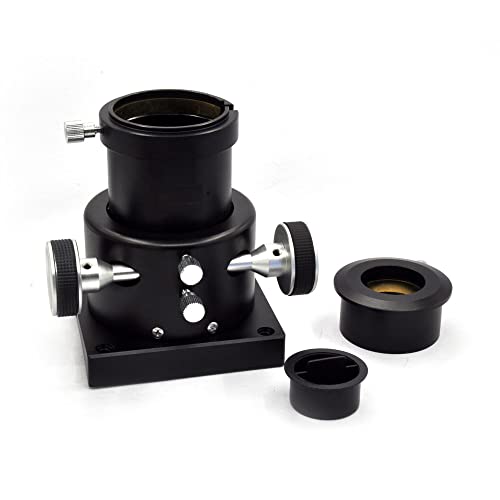
- Fully metal Crayford-style construction
- Accepts 2-inch and 1.25-inch accessories
- Intended for 6-inch to 8-inch reflectors
Best For: Manual focusing on compatible 150mm–203mm reflector telescopes
Best Temperature-Aware Automation
Auto/Manual Motorized Telescope Focuser

- Automatic and manual focusing modes
- Temperature sensor supports software compensation
- Plug-and-play design with 3.5mm interface
Best For: Astrophotography and deep observation requiring automated focus
Best All-Metal Upgrade
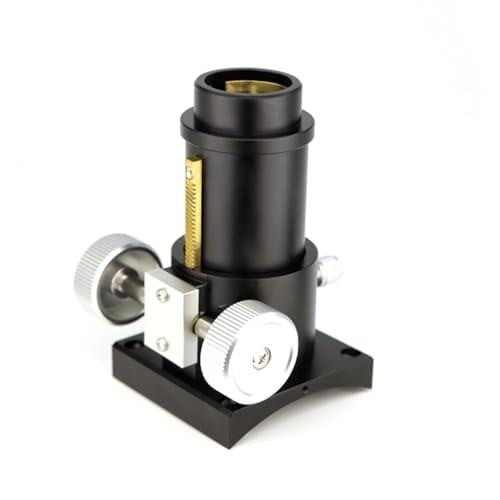
- Full-metal rack-and-pinion design
- Fits listed 6- to 8-inch Newtonians
- Threaded interior minimizes reflections
Best For: Manual focusing on compatible Newtonian reflectors
Best Electronic Control

- Motorized focusing with adjustable speeds
- Pushbutton control reduces vibration
- Includes brackets and installation hardware
Best For: Battery-powered precision focusing
Best for Guide Scopes
Astromania Double Helical Focuser

- 0.05 mm precision with 10 mm travel
- Fixed orientation prevents accessory rotation
- All-metal design for guide-scope imaging
Best For: Fine focusing on guide and finder scopes
Astrophotography Precision Pick

- Almost no light leakage for deep-space photography
- High-precision locking ring interface
- Large two-speed wheels and 360° rotation
Best For: Astrophotography and precise manual observing
DIY Refractor Value Pick

- Fine-tuning gear for accurate adjustment
- Locking screw secures the eyepiece
- Threaded interior helps minimize reflections
Best For: DIY refractor telescope projects
Vibration-Free Upgrade Pick

- Pushbutton motorized focusing
- Adjustable coarse-to-fine speed control
- Brackets and hardware included
Best For: Smooth electronic focusing on compatible telescopes
Best Budget Rack-and-Pinion Pick – SV181 1.25-Inch Reflector Focuser
For reflector-telescope owners comparing telescope focusers, the SVBONY SV181 offers manual rack-and-pinion adjustment with 65mm of travel. It accepts 1.25-inch eyepieces and adds practical details such as a brass retaining ring and threaded interior.
Best For: Newtonian reflector telescopes using 1.25-inch eyepieces, including compatible 114mm and 150mm models.
Pros:
- 65mm of focuser travel with gear-based fine adjustment.
- Internal brass ring helps hold eyepieces without marking the barrel.
- Fully threaded interior helps minimize reflections, and a dust cover is included.
Cons:
- Manual focus only.
- Designed for 1.25-inch eyepieces rather than 2-inch accessories.
The SV181 is a practical replacement or upgrade for compatible Newtonian reflectors when smooth manual control and eyepiece protection matter more than electronic operation.
Best Electronic SCT Upgrade – Celestron Focus Motor for SCT and EdgeHD
Among telescope focusers for remote observing and imaging, the Celestron focus motor stands out for computer-controlled operation. It supports electronic focusing from a computer or compatible Celestron computerized mount hand controller, helping reduce focus vibration during adjustments.
Best For: Owners of compatible Celestron Schmidt-Cassegrain, EdgeHD, or Rowe-Ackermann Schmidt Astrograph optical tubes who want hands-free focusing.
Pros:
- Supports computer and computerized-mount control.
- Offers multiple speed rates, automatic goto, indexed focuser position, and backlash compensation.
- Focuser Utility software works with Windows, and Celestron PWI is also supported.
- Includes a two-year limited warranty and US-based support.
Cons:
- Compatibility is limited to listed Celestron telescope systems.
- Requires a computer or compatible Celestron computerized mount for electronic operation.
This is a focused choice for Celestron users prioritizing repeatable, vibration-reducing electronic control rather than a traditional manual focuser.
Best 2-Inch Manual Upgrade – Skyoptikst Crayford-Style Focuser
This Skyoptikst model is a telescope focuser option for reflector users who want a fully metal, Crayford-style design. It supports both 2-inch and 1.25-inch accessories and is intended for reflector telescopes in the 150mm to 203mm aperture range.
Best For: 6-inch to 8-inch reflector telescopes that need manual focusing for 2-inch or 1.25-inch eyepieces.
Pros:
- Crayford-style mechanism is designed for smooth, accurate focusing.
- Fully metal body provides a substantial construction.
- Accepts both 2-inch/50.8mm and 1.25-inch/31.7mm accessories.
- Threaded interior helps minimize reflections.
Cons:
- Manual focusing only.
- Specified for reflector telescopes rather than a broad range of optical designs.
For compatible medium-aperture reflectors, this focuser emphasizes broad accessory compatibility and a solid manual design without adding motorized controls.
Best Temperature-Aware Automation – Auto/Manual Motorized Telescope Focuser
For astrophotography setups comparing telescope focusers, this motorized model combines automatic and manual control. Its plug-and-play design, temperature sensor, and standard 3.5mm interface are intended to simplify focusing across changing observing conditions.
Best For: Astrophotographers and deep-observation users who want one-click automatic focusing with the option of hand-controller adjustment.
Pros:
- Automates focuser positioning for accuracy and repeatability.
- Temperature sensor can work with software to compensate for environmental changes.
- Supports automatic software control and manual operation with the included hand controller.
- Uses a plug-and-play design and standard 3.5mm interface.
Cons:
- Software and compatibility requirements should be checked for the specific telescope system.
- The supplied notes do not identify a specific brand or telescope model list.
This is the most automation-oriented option in the roundup, particularly suited to users who want temperature-aware focusing while retaining manual control when needed.
Best All-Metal Upgrade – 1.25-Inch Newtonian Focuser
If you need a durable replacement among telescope focusers, this full-metal 1.25-inch model is designed for 6- to 8-inch Newtonian reflector telescopes. Its rack-and-pinion design and threaded interior support practical manual focusing while helping minimize internal reflections.
Best For: Owners of 6- to 8-inch Newtonian reflector telescopes seeking a manual 1.25-inch focuser.
Pros:
- Full-metal construction for a sturdy upgrade.
- Rack-and-pinion design provides manual focus adjustment.
- Fully threaded interior helps minimize reflections.
- Includes a 1.25-inch dust cover and curved base plate.
Cons:
- Compatibility is specifically listed for 6- to 8-inch Newtonian reflectors.
- Manual operation does not provide electronic focusing.
This is a straightforward choice when durability and basic manual control matter more than motorized convenience. Confirm your telescope’s tube size and mounting interface before ordering.
Best Electronic Control – AccuFocus Motorized Focuser
For easier sharp focusing, the AccuFocus adds motorized control to compatible telescope focusers. Its adjustable speed knob and pushbutton hand controller are designed to make fine adjustments without the vibration associated with turning a manual focuser by hand.
Best For: Users who want smooth, battery-powered electronic focusing and adjustable focus speeds.
Pros:
- Motorized operation helps simplify achieving sharp focus.
- Adjustable control ranges from coarse to very fine speeds.
- Pushbutton controller supports precise, low-vibration adjustments.
- Includes mounting hardware, cable, and brackets for rack-and-pinion and Crayford focusers.
Cons:
- Requires one 9-volt battery, which is not included.
- Installation depends on compatibility with the telescope’s focuser and supplied brackets.
The AccuFocus is a practical convenience upgrade for observers who prefer electronic control over manual focusing. Check the included bracket options and your focuser type before installation.
Best for Guide Scopes – Astromania Double Helical Focuser
This compact 1.25-inch focuser is built for guide scopes and finder-scope interfaces, making it a specialized option among telescope focusers for astrophotography. Its double-helical mechanism offers 0.05 mm precision, a 10 mm travel range, and fixed orientation to help keep cameras or eyepieces from rotating during focusing.
Best For: Guide-scope and finder-scope users who need repeatable fine focus for visual observing or astrophotography.
Pros:
- 0.05 mm precision scale supports repeatable adjustments.
- 10 mm focusing stroke provides useful travel for eyepieces and cameras.
- Fixed orientation keeps the field of view stable while focusing.
- All-metal construction helps limit flexure and thermal expansion.
Cons:
- Requires an M42x0.75 male thread for the listed upgrade application.
- The M42x0.75 female-to-female adapter is not included.
- Its 1.25-inch design is specialized for guide or finder scopes rather than general telescope replacement.
Choose this model when fine, stable guide-scope focusing is the priority. Its compact size and threaded connections are useful, but thread and accessory compatibility should be verified first.
Astrophotography Precision Pick – 16-Bearing Travel Focuser
Telescope Focuser 16-Bearing Travel with Round Adapter Ring for Astrophotography
Check Price On AmazonThis telescope focuser is designed for manual focusing during astrophotography and visual observing. Its round adapter ring, high interface precision, large hand-wheels, and 360-degree rotation make it a practical choice when stable, carefully controlled adjustments matter.
Best For: Astrophotographers and visual observers who want precise manual control and flexible composition.
Pros:
- Designed for almost no light leakage, supporting deep-space photography.
- Standard locking ring helps maintain coaxiality and a secure fit.
- Quick-release two-speed components allow feel adjustments without removing the entire focuser.
- Large coarse and fine adjustment wheels help reduce slipping during manual focusing.
Cons:
- Manual focusing does not provide motorized or remote adjustment.
- Compatibility details beyond telescope use and the round adapter ring should be checked before purchase.
The 360-degree rotation is especially useful for photographic framing and visual inspection. Consider this model if your priority is a precise, low-light-leakage manual telescope focuser with convenient adjustment controls.
DIY Refractor Value Pick – 80mm Toothed Focusing Seat
This telescope focuser is a straightforward manual focusing seat for DIY refractor telescopes. It uses a toothed focusing tube with a fine-tuning gear, a 120mm focusing length, and a 1.25-inch eyepiece interface for compatible setups.
Best For: DIY refractor builders seeking an economical manual focuser with geared adjustment.
Pros:
- Fine-tuning gear supports more accurate focusing, including at high magnification.
- Locking screw helps hold the eyepiece securely during observation.
- Fully threaded interior is designed to minimize reflections.
- Durable ABS plastic construction keeps the unit lightweight at 0.2 kg.
Cons:
- Compatibility is centered on DIY refractor telescopes and 1.25-inch eyepieces.
- Manual operation lacks electronic or remote focusing control.
- The ABS plastic construction may be less substantial than a metal focuser.
Its geared focusing tube and internal anti-reflection design make it a practical upgrade or replacement for a compatible DIY refractor. Verify the 80mm application, 120mm focusing length, and 1.25-inch interface before ordering.
Vibration-Free Upgrade Pick – AccuFocus Electronic Focuser
This electronic telescope focuser adds motorized adjustment to compatible astronomy telescopes. A pushbutton hand controller provides smooth focusing without vibration, while the speed control knob lets you move from coarse adjustments to finer focusing.
Best For: Telescope users who want controlled electronic focusing without manually turning the focuser.
Pros:
- Motorized operation makes achieving sharp focus easier.
- Pushbutton control is designed for smooth, precise adjustments without vibration.
- Adjustable speed control supports both coarse and very fine focusing.
- Includes brackets and hardware for rack-and-pinion and Crayford focuser installations.
Cons:
- Requires one 9-volt battery, which is not included.
- Installation depends on compatibility with the telescope and focuser style.
- Electronic operation adds components compared with a basic manual focuser.
With included mounting hardware, a control box, cable, and shaft coupler, this is a useful telescope focuser upgrade for users who value steady electronic adjustment. Confirm your telescope’s mounting arrangement before installation.
How We Picked the Best Telescope Focusers
We evaluated these Telescope Focusers by focusing on the specifications that matter most in real use: telescope compatibility, drawtube size, adjustment control, construction, load handling, installation requirements, and suitability for visual observing or imaging. Manual models were considered for smoothness and simplicity, while electronic options were assessed for remote control and repeatable fine adjustment.
Because focuser standards vary considerably, we also gave priority to products with clearly stated interfaces, mounting formats, and intended telescope types. Buyers should still confirm dimensions and accessory compatibility before ordering.
Quick Comparison
| Focuser Type | Best For | Main Advantage | Potential Limitation |
|---|---|---|---|
| Rack-and-pinion | Basic reflector upgrades | Positive, dependable adjustment | May have more mechanical play than premium designs |
| Crayford-style | Visual observing and imaging | Smooth motion without gear backlash | Needs proper tension adjustment |
| Helical | Guide scopes and fine focusing | Compact, precise control | Limited travel or load capacity on some models |
| Electronic or motorized | Astrophotography and remote setups | Repeatable, vibration-free adjustments | Requires power, mounting, and control compatibility |
Key Buying Factors for Telescope Focusers
Compatibility and Mounting
Check whether the focuser is designed for a reflector, refractor, Schmidt-Cassegrain, EdgeHD, guide scope, or another optical system. Tube diameter, mounting-hole spacing, adapter rings, and required modifications can determine whether installation is straightforward or complex.
Eyepiece and Accessory Size
A 1.25-inch focuser suits standard 1.25-inch eyepieces and accessories, while a 2-inch model offers a wider optical path and supports larger eyepieces, filters, cameras, and coma correctors. Confirm whether adapters are included.
Travel, Capacity, and Stability
Focusing travel must be sufficient to bring your eyepieces or camera to focus. Imaging setups also place greater demands on rigidity. Look for a solid drawtube, dependable locking, and enough capacity for the camera and accessories without slipping.
Manual Versus Motorized Control
Manual focusers are inexpensive, fast to install, and ideal for casual observing. Motorized focusers are better for astrophotography, automated sequences, and situations where touching the telescope could introduce vibration. Temperature-sensor support can be useful when focus shifts during long imaging sessions.
Who Should Buy Which Telescope Focusers?
Choose a rack-and-pinion or compact all-metal manual focuser if you want a practical upgrade for a Newtonian or reflector telescope. A Crayford-style unit is a strong choice when smooth, backlash-free adjustment matters for both observing and imaging.
Guide-scope users should consider a compact helical focuser, especially when precise small adjustments are more important than long travel. For serious astrophotography, an electronic or motorized model is usually the better investment, provided it matches your telescope, control system, and power setup.
Finally, verify measurements before buying. A focuser that appears suitable may still require an adapter, drilling, an extension tube, or a different visual back to reach focus.