
Sharp astrophotos depend on more than optics and tracking. A stable, precise focuser helps you reach critical focus quickly and maintain it as temperature, filters, and camera weight change.
This roundup covers motorized focusers, manual upgrades, and telescope systems with imaging-friendly focusing features, so you can match the setup to your camera, optical tube, and observing goals.
Best 10 Telescope Focusers for Astrophotography Picks for 2026
Adaptive Precision
Akozon Automatic Telescope Focuser

- Temperature sensor supports environmental adaptation
- Automatic or hand-controller focusing
- Compatible with drivers and third-party software
Best For: Astrophotographers wanting flexible automated focusing
Proven Remote Control
Celestron Focus Motor for SCT and EdgeHD

- Computer and mount-hand-controller operation
- Backlash compensation and indexed positioning
- Two-year US warranty with expert support
Best For: Compatible Celestron SCT and EdgeHD imaging rigs
Simple Automated Control
Motorized Telescope Focuser for Astrophotography

- Automatic and manual focusing modes
- Onboard temperature sensor
- Plug-and-play 3.5mm interface
Best For: Users seeking an adaptable motorized focusing upgrade
Imaging-Ready Optics
SVBONY SV503 102mm ED Refractor

- Dual-speed 1:10 manual focuser
- 90mm focus travel for imaging accessories
- 360-degree camera field rotator
Best For: Astrophotographers wanting a precise manual-focus ED refractor
Precision Travel Focuser
16-Bearing Astrophotography Focuser

- Low-light-leakage design for deep-space imaging
- Dual-speed quick-release focusing components
- 360-degree rotation with large adjustment wheels
Best For: Manual astrophotography setups needing precise adjustment and rotation
Integrated APO Upgrade

- 2.5-inch dual-speed focuser with 1:10 gearing
- 122mm aperture and 854mm focal length
- FPL-51 triplet APO optics for reduced color fringing
Best For: Deep-sky imaging and observing with an integrated precision focuser
Reflector Focuser Value
2-Inch Crayford Reflector Focuser
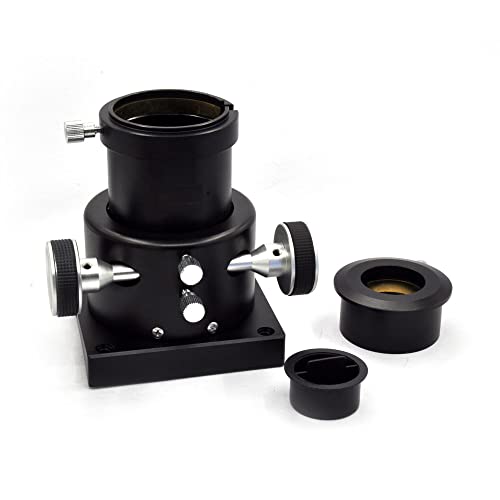
- Smooth manual Crayford-style focusing
- Supports 2-inch and 1.25-inch accessories
- Threaded interior helps minimize reflections
Best For: 6- to 8-inch reflector telescope upgrades
Best Full-Frame APO Scope
SV555 APO Astrophotography Telescope

- Petzval triplet design for flat-field imaging
- 44mm full-frame compatibility
- EAF mount kit and 2-inch filter holder included
Best For: Wide-field astrophotographers using full-frame cameras
Best 1.25-Inch Rack-and-Pinion Upgrade

- 65mm travel with geared fine adjustment
- Brass ring protects eyepiece barrels
- Threaded interior helps reduce reflections
Best For: Compatible 114mm or 150mm Newtonian reflectors
Best Versatile Flat-Field OTA
Askar 71F Flat-Field Telescope

- Quadruplet APO design with ED glass
- Self-flattened optical system for imaging
- 360-degree focus rotation and Vixen dovetail
Best For: Portable deep-sky imaging and visual observation
Adaptive Precision – Akozon Automatic Telescope Focuser
For astrophotographers who want automated control without giving up manual adjustment, this electric focuser combines software-driven focusing with a hand controller. Its onboard temperature sensor can help compensate for environmental changes, making it a practical option among telescope focusers for astrophotography.
Best For: Astrophotographers seeking temperature-aware automatic focusing and broad software compatibility.
Pros:
- Onboard temperature sensor supports environmental focus adaptation.
- Offers one-click automatic focusing through compatible software.
- Manual focusing remains available through the included hand controller.
- Designed to work with drivers and third-party software.
Cons:
- Compatibility should be confirmed with your specific telescope and software setup.
- The supplied notes do not identify included mounting hardware or a detailed compatibility list.
This Akozon focuser is a flexible choice when temperature changes and remote software control matter. Verify fitment before purchase, particularly if your telescope uses a specialized focuser interface.
Proven Remote Control – Celestron Focus Motor for SCT and EdgeHD
The Celestron Focus Motor is built for electronic, hands-free focusing on compatible Schmidt-Cassegrain and EdgeHD optical tubes. Computer control, mount-hand-controller operation, backlash compensation, and multiple speed rates make it a strong contender among telescope focusers for astrophotography.
Best For: Celestron SCT, EdgeHD, and compatible Rowe-Ackermann Schmidt Astrograph users building a computer-controlled imaging setup.
Pros:
- Supports remote focusing through a computer or Celestron computerized mount hand controller.
- Includes multiple speed rates, automatic goto, indexed focuser position, and backlash compensation.
- Can draw power from a compatible Celestron mount or directly through computer USB.
- Backed by a two-year US warranty and US-based support.
Cons:
- Compatibility is centered on specified Celestron telescope families.
- Its feature set may be unnecessary for observers who only need manual focusing.
For owners of supported Celestron optical tubes, this motor offers a well-integrated route to vibration-reduced, computer-controlled focusing. Check the manufacturer’s compatibility list before ordering.
Simple Automated Control – Motorized Telescope Focuser for Astrophotography
This motorized focuser is designed to make automated focusing accessible while retaining manual control. Its plug-and-play design, temperature sensor, and standard 3.5mm interface make it worth considering when comparing telescope focusers for astrophotography across a range of telescope systems.
Best For: Users who want a straightforward automatic/manual focuser with temperature-aware operation.
Pros:
- Provides one-click automatic focusing through supported software.
- Includes a hand controller for manual focus adjustments.
- Onboard temperature sensor helps software respond to temperature changes.
- Uses a standard 3.5mm interface and is described as compatible with many focuser systems.
Cons:
- The supplied information does not specify an exact telescope compatibility list.
- Software support details are somewhat limited.
This focuser emphasizes convenience and adaptability rather than a brand-specific ecosystem. Confirm the 3.5mm connection and software requirements with your telescope before purchasing.
Imaging-Ready Optics – SVBONY SV503 102mm ED Refractor
Unlike standalone motors, the SVBONY SV503 includes a telescope with a built-in dual-speed manual focuser. Its 1:10 adjustment, 90mm focus travel, and 360-degree field rotator support careful camera alignment and critical focus, making it a complete optical platform to consider alongside telescope focusers for astrophotography.
Best For: Astrophotographers and visual observers wanting a 102mm ED refractor with a precise manual focuser.
Pros:
- Dual-speed 1:10 focuser enables fine manual adjustments.
- 90mm of focus travel accommodates accessories such as filter wheels and field flatteners.
- 360-degree field rotator helps align a camera without rotating the optical tube.
- S-FPL51 ED glass and fully multi-coated optics are designed to reduce color fringing and reflections.
Cons:
- Focus control is manual rather than motorized.
- At 3.95 kg, the optical tube requires a suitably capable mount.
- The notes describe an OTA and accessories, not an included automatic focuser.
This refractor is a strong foundation for imaging workflows that value smooth, precise manual focusing and generous accessory clearance. Choose a separate motor if remote or automated focusing is essential.
Precision Travel Focuser – 16-Bearing Astrophotography Focuser
Telescope Focuser 16-Bearing Travel with Convex Adapter Ring for Astrophotography
Check Price On AmazonFor photographers comparing telescope focusers for astrophotography, this manual 16-bearing travel focuser emphasizes precise connections, low light leakage, and flexible composition control. Its dual-speed controls and rotating design are practical additions for deep-space imaging setups.
Best For: Astrophotographers who want manual dual-speed focusing, a rotating interface, and a low-light-leakage design.
Pros:
- Designed for almost no light leakage, supporting deep-space photography.
- Standard locking ring helps with interface precision and secure alignment.
- Quick-release two-speed components can be removed without taking apart the entire focuser.
- 360-degree rotation helps with photographic composition and visual inspection.
Cons:
- Manual focus requires hands-on adjustment.
- Compatibility with a specific telescope setup should be confirmed before purchase.
Large 38mm coarse and 28mm fine-focus wheels make adjustments easier to control, while the rotating body can help preserve the desired camera angle. Verify the adapter and mounting requirements for your telescope before ordering.
Integrated APO Upgrade – SV550 122mm Triplet Telescope
The SV550 combines a 122mm f/7 triplet APO refractor with a 2.5-inch dual-speed toothed focuser, making it a complete option for shoppers seeking telescope focusers for astrophotography rather than a replacement focuser alone. Its 1:10 gear ratio is intended to help with fine focusing for imaging and observation.
Best For: Deep-sky astrophotography and visual observing with a larger-aperture refractor and integrated fine-focus control.
Pros:
- 2.5-inch dual-speed focuser offers fast and fine focusing through a 1:10 gear ratio.
- 122mm aperture and 854mm focal length suit detailed observation and deep-sky imaging.
- FPL-51 triplet APO design helps reduce chromatic aberration and improve image clarity.
- 300mm dovetail helps with balance and adjustment.
Cons:
- At approximately 6.44kg, the OTA is substantial for a travel setup.
- This is a complete telescope rather than a standalone focuser replacement.
With 87mm of listed focus travel and coaxial dual-speed controls, the focuser is the main imaging-oriented feature here. The telescope’s size and mount compatibility should be considered alongside its optical performance.
Reflector Focuser Value – 2-Inch Crayford Reflector Focuser
This fully metal Crayford-style unit is a straightforward candidate for telescope focusers for astrophotography on compatible reflector telescopes. It supports both 2-inch and 1.25-inch accessories and uses a threaded interior to help minimize internal reflections.
Best For: Owners of 6- to 8-inch reflector telescopes who need a manual metal focuser for 1.25-inch or 2-inch accessories.
Pros:
- Smooth, accurate Crayford-style focusing.
- Fully metal body provides a solid construction.
- Accepts both 2-inch/50.8mm and 1.25-inch/31.7mm accessories.
- Threaded interior helps minimize reflections.
Cons:
- Listed specifically for 150mm to 203mm reflector telescopes.
- Manual focus lacks integrated motorized control.
- Compatibility and mounting dimensions should be checked before installation.
Its broad accessory support makes it versatile for reflector-based imaging and observing, while the Crayford mechanism is aimed at smooth manual adjustment. Confirm the telescope’s mounting pattern and optical requirements before buying.
Best Full-Frame APO Scope – SV555 APO Astrophotography Telescope
For shoppers comparing telescope focusers for astrophotography, the SVBONY SV555 stands out as a complete APO imaging telescope with an upgraded precision-focus system. Its Petzval triplet design, 44mm full-frame support, adjustable aperture, and included EAF mount kit make it a versatile option for wide-field imaging.
Best For: Astrophotographers using DSLR, mirrorless, or astronomy cameras who want full-frame compatibility and EAF-ready focusing.
Pros:
- Petzval triplet lens is designed for clear, flat-field deep-sky images.
- Enhanced focus travel and fine adjustment support accurate framing.
- Supports 44mm full-frame sensors without vignetting.
- Includes an EAF mount kit, 2-inch filter holder, and 360-degree rotatable tube.
Cons:
- Manual focus is listed, so electronic focusing requires a compatible EAF setup.
- This is a complete telescope rather than a standalone replacement focuser.
- Its 54mm aperture may be less suitable for users seeking a larger light-gathering system.
The SV555 is a strong choice when precise manual focusing and future electronic-focusing compatibility matter more than buying a basic focuser alone. Its full-frame design and included imaging accessories add practical value for wide-field astrophotography.
Best 1.25-Inch Rack-and-Pinion Upgrade – SV181 Telescope Focuser
If you need telescope focusers for astrophotography on a compatible Newtonian reflector, the SVBONY SV181 offers a practical rack-and-pinion replacement. It accepts 1.25-inch eyepieces, provides 65mm of travel, and uses geared adjustment with dual knobs for smoother manual focusing.
Best For: Owners of compatible 114mm or 150mm Newtonian reflectors who want a manually adjusted 1.25-inch focuser.
Pros:
- 65mm focuser travel provides useful adjustment range.
- Rack-and-pinion gearing and dual knobs support fine manual tuning.
- Internal brass ring helps hold eyepieces without marking the barrel.
- Fully threaded interior is designed to minimize reflections.
Cons:
- Limited to 1.25-inch eyepieces and accessories.
- Compatibility is specifically listed for 114mm and 150mm Newtonian reflectors.
- Manual operation may not suit users seeking built-in motorized focusing.
The SV181 is a focused, budget-conscious upgrade for compatible reflector telescopes. Its geared travel, brass retaining ring, and threaded interior make it more imaging-friendly than a basic single-adjustment focuser, provided your telescope accepts its 1.25-inch format.
Best Versatile Flat-Field OTA – Askar 71F Flat-Field Telescope
The Askar 71F is a versatile flat-field refractor to consider alongside telescope focusers for astrophotography. Its quadruplet air-spaced APO design, ED glass, and self-flattened optical layout are aimed at imaging, while the rotating focus section and included Vixen dovetail support practical field use.
Best For: Astrophotographers and visual observers seeking a portable, self-flattened OTA for deep-sky images, scenery, and birding.
Pros:
- Quadruplet air-spaced APO design with ED glass is suited to astrophotography.
- Self-flattened optical system is designed for convenient imaging.
- 360-degree focus rotation helps with photographic composition.
- Controlled weight and included 230mm Vixen dovetail make it practical to carry and mount.
Cons:
- The supplied notes do not specify detailed focuser travel or electronic-focuser compatibility.
- At 71mm aperture and F6.9, it is not intended as a large-aperture telescope.
- Users should confirm mounting and camera accessories for their particular setup.
The Askar 71F makes the most sense for buyers prioritizing a compact, dual-purpose refractor over a standalone focuser. Its flat-field design and rotating focus section support imaging, while the manageable 2.5kg OTA weight keeps field deployment straightforward.
How We Picked These Telescope Focusers for Astrophotography
We focused on the features that matter during imaging: mechanical stability, fine adjustment, compatibility with common telescope designs, support for motorized control, and the ability to handle camera and accessory weight without noticeable shift. The selection includes dedicated electric focus motors, replacement focusers, and complete telescope systems whose optical designs appeal to astrophotographers.
Compatibility is especially important. A focuser that works well on a Schmidt-Cassegrain may not fit a reflector or refractor without the correct bracket, adapter, drawtube, or mounting hardware. Always verify the telescope model, focuser interface, barrel size, and available back focus before ordering.
Quick Comparison
| Type | Best For | Main Advantage | Watch For |
|---|---|---|---|
| Motorized add-on | Remote and repeatable focusing | Fine adjustments without touching the telescope | Mounting and controller compatibility |
| Crayford focuser | Reflector and refractor upgrades | Smooth, backlash-resistant movement | Tube fit and load capacity |
| Rack-and-pinion focuser | Durable manual focusing | Positive engagement and rigidity | Coarse feel on some models |
| Complete imaging telescope | Building a matched setup | Optics and focusing system are designed together | Higher total cost and less interchangeability |
Key Buying Factors for Telescope Focusers for Astrophotography
Compatibility and Back Focus
Confirm the focuser’s mounting pattern, telescope type, drawtube travel, and adapter requirements. Your camera, filter wheel, reducer, and accessories must reach focus within the available travel. A generous range is useful, but excessive extension can reduce rigidity.
Precision, Backlash, and Load Capacity
Astrophotography exposes small mechanical errors. Look for fine focusing control, minimal image shift, and a locking mechanism that holds position after adjustment. Check the stated load capacity against your complete imaging train rather than the camera alone.
Motor Control and Temperature Compensation
Motorized focusers are valuable for unattended sessions because they reduce vibration and allow software-controlled adjustments. Temperature compensation can help maintain focus as the optical tube cools, but it requires a compatible sensor, controller, and imaging software.
Drawtube Size and Construction
Two-inch focusers generally provide a broader light path and better support for larger accessories, while 1.25-inch systems suit smaller cameras and compact setups. Metal construction, a rigid housing, and secure compression rings are preferable for repeated imaging use.
Who Should Buy Which Telescope Focusers for Astrophotography?
- Remote or automated imagers: Choose a motorized focuser with dependable software support and, ideally, temperature sensing.
- Schmidt-Cassegrain owners: Select a model specifically designed for the telescope family, since brackets and drive interfaces vary.
- Reflector owners: Consider a rigid 2-inch Crayford or rack-and-pinion replacement sized for the tube and camera load.
- Portable visual and imaging users: A smooth manual focuser may offer the best balance of simplicity, weight, and cost.
- New astrophotographers: A matched refractor telescope system can reduce compatibility issues when starting with a camera and basic accessories.