
Planetary imaging rewards precise control over color, contrast, and light levels. The right filter wheel lets you switch filters efficiently without repeatedly disturbing focus, framing, or camera alignment.
This roundup covers compact 1.25-inch wheels, larger 2-inch options, filter drawers, and useful planetary filter sets. Use the buying guide below to match capacity, thread standards, optical format, and workflow to your telescope and camera.
Best 10 Telescope Filter Wheels for Planetary Imaging Picks for 2026
Color-Filter Starter Kit
Astromania 5-Position Filter Wheel

- Five-position 1.25-inch wheel
- Includes four planetary color filters
- Metal enclosure and filter cells
Best For: 1.25-inch planetary viewing and imaging
Budget Manual Wheel

- Manual metal accessory
- Listed for 1.25-inch systems
- Included contents need verification
Best For: Basic setups where specifications are confirmed first
Large-Format Drawer
SVBONY SV226 M54 Filter Holder
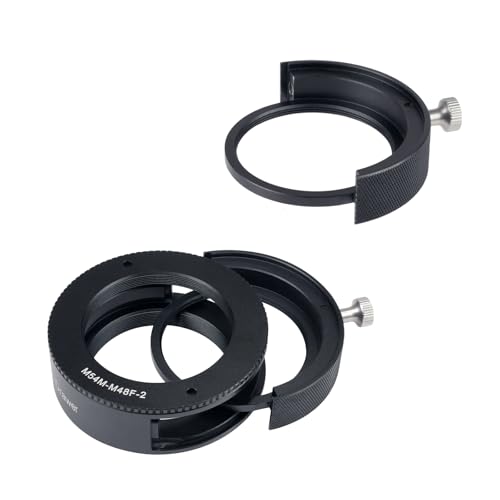
- Accepts 2-inch filters
- Includes two magnetic holders
- M54-to-M48 adapter included
Best For: Full-frame and larger-format astrophotography
Flexible 5-Position Wheel
1.25-Inch Eyepiece Filter Changer

- Five filter positions
- Metal wheel construction
- 1.25-inch adapter and T-thread mounting
Best For: Modular 1.25-inch planetary setups
Specialized Planetary Filters

- Three 1.25-inch imaging filters
- Targets atmospheric and high-contrast details
- Includes protective storage case
Best For: Monochrome planetary imaging with a compatible filter wheel
Five-Position Filter Wheel

- Five numbered filter positions
- Light-tight housing for imaging
- Includes multiple 2-inch adapters
Best For: 2-inch telescope and camera setups needing quick filter changes
Versatile Visual Filter Kit

- Ten 1.25-inch filters included
- Five planetary color filters
- Adds polarizing, UHC, and lunar options
Best For: Mixed lunar, planetary, and visual observing with 1.25-inch equipment
Best 9-Position Versatility
Astromania 1.25-inch Filter Wheel

- Holds up to nine 1.25-inch filters
- Numbered positions enable quick selection
- Light-tight design supports imaging
Best For: Planetary, lunar, and tricolor imaging with 1.25-inch filters
Best Optical-System Flexibility
5-Position Dichroic Filter Wheel

- Holds five dichroic filters or beam splitters
- Magnetic holders speed filter replacement
- Supports multiple optical configurations
Best For: Modular optical and experimental astronomy setups
Best for 2-Inch Filters
Astromania 5-Position 2-Inch Filter Wheel

- Accepts five standard 2-inch filters
- Sturdy aluminum housing supports cameras
- Short design can help with limited back focus
Best For: 2-inch planetary and lunar imaging systems
Color-Filter Starter Kit – Astromania 5-Position Filter Wheel
For observers comparing telescope filter wheels for planetary imaging, this Astromania setup combines a five-position 1.25-inch wheel with four commonly used planetary color filters. It is designed for quick filter changes while viewing or photographing the Moon and planets.
Best For: Planetary observers and imagers using 1.25-inch accessories who want red, blue, yellow, and green filters in one organized wheel.
Pros:
- Includes four color filters for enhancing features on Mars, Jupiter, Saturn, and the Moon.
- Five-position wheel allows filters to be installed and selected by dialing the wheel.
- Metal enclosure and filter cells provide storage and protection between sessions.
- Attaches directly to a telescope and includes T-adapter and eyepiece-adapter functionality.
Cons:
- Limited to 1.25-inch accessories and filters.
- Requires an additional 20 mm of focus travel.
- The package is focused on color filters rather than a broader filter selection.
This is a practical all-in-one option when planetary work is your priority and your optical train accepts 1.25-inch accessories. Check available focus travel and thread compatibility before ordering.
Budget Manual Wheel – 1.25-Inch Metal Filter Mount
For shoppers seeking telescope filter wheels for planetary imaging on a basic setup, this manual metal wheel is listed as a 1.25-inch accessory with mounting holes. The listing also references planetary filters, moon filters, and Barlow lenses, although the supplied details do not identify specific included filters.
Best For: Buyers looking for a simple, manually operated 1.25-inch astronomy accessory and who can confirm the exact contents and fit before purchase.
Pros:
- Metal construction is suited to repeated astronomy use.
- Designed around a 1.25-inch format.
- Listing references planetary and moon-filter use alongside other telescope accessories.
Cons:
- The supplied information does not clearly specify the number of wheel positions.
- Included filters or adapters are not clearly identified.
- Brand and product specifications are limited in the listing details.
This option may suit a budget-minded setup, but its incomplete specifications make compatibility verification especially important. Confirm wheel capacity, included parts, and connection standards before buying.
Large-Format Drawer – SVBONY SV226 M54 Filter Holder
Although the SVBONY SV226 is a filter drawer rather than a rotating wheel, it is relevant to telescope filter wheels for planetary imaging when fast filter swaps and a larger 2-inch format are priorities. Its M54 design includes an M54-to-M48 adapter and two magnetic filter holders.
Best For: Astrophotographers using 2-inch filters, M54 connections, or full-frame cameras who want quick manual filter changes.
Pros:
- Supports 2-inch filters and includes two filter holders for faster swaps.
- Dual magnets and a locking screw help secure the holders and limit light leaks.
- Designed for full-frame cameras with a wide, vignetting-free field of view.
- CNC aluminum construction and included storage box support durability and organization.
Cons:
- It is a drawer system, not a multi-position rotating wheel.
- Designed for 2-inch filters, so it is not a direct match for 1.25-inch planetary filters.
- Requires compatible M54/M48 connections and manual filter changes.
The SV226 is better suited to larger-format astrophotography than a compact planetary eyepiece setup. Choose it when your camera train and filters match its M54, M48, and 2-inch specifications.
Flexible 5-Position Wheel – 1.25-Inch Eyepiece Filter Changer
This metal five-position wheel is a straightforward candidate for telescope filter wheels for planetary imaging with 1.25-inch equipment. It can attach through the supplied 1.25-inch nosepiece adapter or via a T-thread, giving users two listed connection approaches.
Best For: Planetary observers and imagers who want a compact five-position wheel with either nosepiece or T-thread attachment.
Pros:
- Five positions allow multiple filters to remain installed for quick selection.
- Metal construction provides a durable wheel body.
- Supplied 1.25-inch nosepiece adapter supports a direct accessory connection.
- T-thread attachment offers an alternative connection method.
Cons:
- The supplied notes do not identify any included filters.
- Compatibility beyond the listed 1.25-inch adapter and T-thread is not specified.
- It may require separate planetary or moon filters to complete the setup.
This wheel is a useful basis for a modular planetary setup if you already own compatible filters. Verify the T-thread standard and confirm that your telescope or camera train provides the required focus and clearance.
Specialized Planetary Filters – UV, IR & CH4 Imaging Set
For photographers building telescope filter wheels for planetary imaging, this Astromania set supplies three specialized 1.25-inch filters for monochrome cameras. It combines ultraviolet, infrared, and methane-band filtration for targeting atmospheric details beyond ordinary visible-light imaging.
Best For: Monochrome planetary astrophotographers who want dedicated UV, IR, and CH4 filters.
Pros:
- Includes UV, IR, and narrowband CH4 filters in one set.
- The IR filter is designed for high-contrast lunar and planetary imaging and steadier results in poor seeing.
- Supplied with a protective plastic case and die-cut foam insert.
Cons:
- These filters are intended for imaging use only and require a monochrome astrophotography camera.
- At three filters, the set offers fewer positions than a multi-position filter wheel.
This is a focused choice rather than an all-purpose visual filter kit. It makes the most sense when your imaging setup already includes a compatible 1.25-inch wheel and you specifically want UV, IR, and methane-band planetary data.
Five-Position Filter Wheel – SVBONY SV133 2-Inch Wheel
Among telescope filter wheels for planetary imaging, the SVBONY SV133 stands out as the complete wheel-and-adapter option for 2-inch accessories. Its five numbered positions make filter changes quick, while the light-tight housing helps limit reflections and stray light during imaging.
Best For: Planetary imagers using 2-inch filters, eyepieces, DSLR cameras, CCD cameras, or CMOS cameras.
Pros:
- Provides five numbered filter positions for repeatable filter selection.
- Includes a 2-inch eyepiece adapter, focuser nosepiece, conversion interface, M48 camera adapter, and rotation lock ring.
- Light-tight aluminum construction is designed for heavy cameras and reflection-free imaging.
- Filters can be changed while a camera or eyepiece remains mounted.
Cons:
- The M48-to-M42 adapter is excluded.
- Its 2-inch format may be unsuitable for setups built around 1.25-inch filters.
This is the most directly wheel-focused option in the group. Choose it when your optical train supports 2-inch components and you want fast, organized access to several filters without repeatedly disassembling the camera connection.
Versatile Visual Filter Kit – NEEWER 10-Pack Planetary Set
For users assembling telescope filter wheels for planetary imaging on a 1.25-inch setup, this NEEWER 10-pack offers broad filter coverage at once. It includes five color filters, two variable polarizing filters, UHC filtration, and two lunar-oriented options for visual observation and selected imaging applications.
Best For: 1.25-inch telescope users who want a varied collection for planetary, lunar, and general sky observation.
Pros:
- Includes red, orange, yellow, green, and blue planetary filters for emphasizing details and contrast.
- Two variable polarizing filters adjust transmission from 40% to 1% to reduce glare and control brightness.
- UHC, 13% lunar, and lunar-and-starglow filters expand the kit beyond planetary color work.
- Polarizing filters can be stacked to create a variable ND2-2000 filter.
Cons:
- This is a filter set, not a filter wheel, so filters must be changed individually unless paired with a compatible 1.25-inch wheel.
- The kit is oriented toward eyepiece observation as well as photography, rather than specialized monochrome planetary imaging.
The NEEWER kit is a flexible starting point for a 1.25-inch system, especially if you observe as well as image. It provides more filter types than the specialized Astromania set, but lacks dedicated UV, IR, or CH4 imaging filters and does not include the wheel itself.
Best 9-Position Versatility – Astromania 1.25-inch Filter Wheel
For anyone comparing telescope filter wheels for planetary imaging, the Astromania 1.25-inch model emphasizes quick filter changes and broad compatibility. It holds up to nine standard 1.25-inch filters, uses numbered positions, and includes connections for telescope accessories and cameras.
Best For: Planetary, lunar, nebula, and tricolor astrophotography setups using 1.25-inch filters.
Pros:
- Holds up to nine filters and allows changes within seconds.
- Numbered wheel positions make filter selection easy to track.
- Light-tight interior is designed to reduce reflections and stray light.
- Includes a 1.25-inch adapter, T-thread connection, and eyepiece adapter.
Cons:
- Limited to 1.25-inch filters and compatible adapters.
- Filters need to be installed carefully and stored with dust protection.
This is the most flexible option of the three when carrying many filters matters. Its nine-position capacity suits observers who want to switch among planetary, lunar, and other filters without repeatedly opening the optical train.
Best Optical-System Flexibility – 5-Position Dichroic Filter Wheel
This five-position dichroic filter wheel is a specialized choice among telescope filter wheels for planetary imaging and other optical applications. Its magnetic holders, multiple light-path ports, and SM1-threaded interfaces make it better suited to modular optical assemblies than a conventional eyepiece filter wheel.
Best For: Experimental astronomy and optical setups using dichroic filters or beam splitters with 30 mm cage components.
Pros:
- Accommodates up to five dichroic filters or beam splitters.
- Magnetic holders allow filter changes without dismantling the system.
- Four 45-degree light-passing ports support inline and perpendicular configurations.
- SM1 threads, cage-rod holes, and bottom M4 mounting holes provide setup flexibility.
Cons:
- Designed around dichroic filters and beam splitters rather than standard 1.25- or 2-inch filters.
- Its specialized mounting interfaces may require compatible optical hardware.
Choose this model when your imaging system needs modular optical routing and fast access to dichroic components. It is less of a general-purpose planetary filter wheel and more of a configurable optical component holder.
Best for 2-Inch Filters – Astromania 5-Position 2-Inch Filter Wheel
For telescope filter wheels for planetary imaging that use standard 2-inch filters, this Astromania model offers five numbered positions in a sturdy aluminum housing. Its short design and light-tight interior are useful considerations for camera, DSLR, and Dobsonian or Newtonian setups.
Best For: Planetary, lunar, and narrowband imaging with 2-inch filters and heavier camera equipment.
Pros:
- Accepts up to five standard 2-inch filters and switches between them quickly.
- Aluminum housing is designed to support heavy cameras with reduced flexure or tilt.
- Short form factor can suit systems with limited back focus.
- Light-tight interior helps prevent reflections and stray light during imaging.
Cons:
- Requires approximately 22.5 mm of inward focusing distance.
- Camera connection uses M48x0.75 threads; an M48-to-T2 adapter is not included.
- Five positions provide less capacity than the nine-position 1.25-inch model.
This is the practical pick for imagers already invested in 2-inch filters. Before buying, verify your focuser has the stated inward travel and plan for the required camera adapter if your setup uses a T-ring.
How We Picked the Best Telescope Filter Wheels for Planetary Imaging
We focused on the practical requirements of planetary capture: dependable filter retention, compatibility with common telescope and camera standards, usable position counts, and straightforward operation in the field. The selection includes manual wheels, larger-format holders, a filter drawer, and filter sets that can complement an existing wheel.
Because planetary imaging often involves rapid changes between red, green, blue, luminance, infrared, or specialized contrast filters, we also considered how easily each format supports repeatable filter changes without forcing you to rebuild the imaging train.
Quick Comparison
- Best for compact setups: A 1.25-inch, five-position wheel keeps weight and optical length relatively low.
- Best for larger optical paths: A 2-inch wheel or filter drawer suits telescopes and cameras built around 2-inch accessories.
- Best for many filters: A nine-position wheel minimizes filter changes during complex imaging sessions.
- Best for starting out: A wheel bundled with filters can provide a ready-to-use planetary setup.
- Best for flexible upgrades: A standalone wheel lets you choose filters separately and replace them over time.
Key Buying Factors for Telescope Filter Wheels for Planetary Imaging
Filter Size and Thread Compatibility
Match the wheel to your filters first. A 1.25-inch wheel is common for planetary cameras and keeps the system compact, while 2-inch models can reduce vignetting in wider optical paths but may add size, weight, and cost. Check whether the wheel accepts standard threaded filters and confirm the required adapter threads, such as M48 or M54, before ordering.
Capacity and Mechanical Access
Five positions are usually enough for a basic RGB or color-and-luminance workflow. More positions are useful if you regularly add infrared, ultraviolet, methane-band, or light-pollution filters. Look for a mechanism that turns smoothly, holds each position securely, and leaves enough clearance for filter cells and camera housings.
Back Focus, Spacing, and Balance
A wheel adds optical length between the telescope and camera. Verify available back focus and account for adapters, especially with reducers, correctors, or compact planetary cameras. Heavier 2-inch assemblies can also affect balance on small mounts.
Manual Versus Drawer-Style Operation
Manual wheels are simple and quick for visual confirmation or hands-on imaging. A drawer-style holder can be convenient when you need to swap a filter without rotating through multiple positions, but it may offer less immediate access to a loaded set of filters.
Who Should Buy Which Telescope Filter Wheels for Planetary Imaging?
Choose a compact five-position 1.25-inch wheel if you use a small planetary camera, standard 1.25-inch filters, and want the lightest practical setup. Choose a nine-position model if your imaging routine uses several specialized filters and you want fewer interruptions.
Choose a 2-inch wheel or drawer when your telescope, camera, or existing adapters are built around 2-inch accessories. Choose a bundled filter wheel and set if you are assembling a first planetary imaging system and want basic filters included. If you already own quality filters, prioritize a well-matched standalone holder instead of paying for duplicates.