
The right diagonal can make a beginner telescope easier and more comfortable to use, especially when viewing objects high overhead. It also determines whether the image appears upright, reversed, or correctly oriented.
This roundup compares 10 telescope diagonals for beginners, including 90-degree star diagonals, 45-degree erect-image models, 1.25-inch and 2-inch options, and choices ranging from basic prisms to dielectric mirrors.
Best 10 Telescope Diagonals for Beginners Picks for 2026
Bright-View Beginner Pick
SV188P 1.25-Inch Dielectric Diagonal
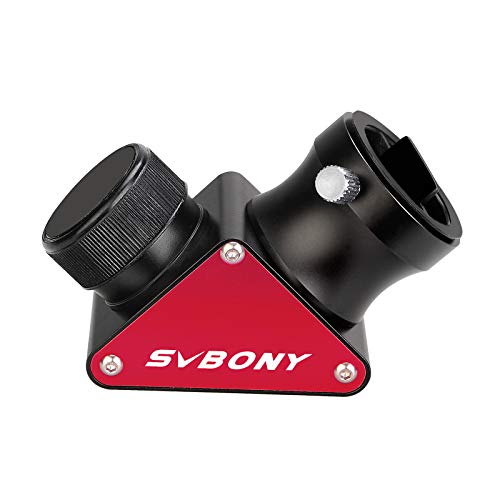
- Over 99% reflective dielectric coating
- Comfortable 90-degree viewing angle
- Brass compression ring protects eyepieces
Best For: Bright astronomical viewing with 1.25-inch telescopes
Trusted Beginner Standard
Celestron 1.25-Inch Star Diagonal
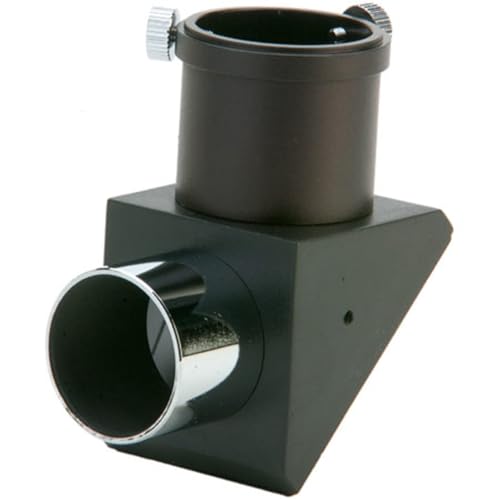
- Fits 1.25-inch focusers and visual backs
- Comfortable 90-degree viewing angle
- Accepts standard 1.25-inch accessories
Best For: General astronomical viewing with compatible refractors and SCTs
Correct-Image Versatility
SV221 45-Degree Prism Diagonal

- Produces an erect, correct-image view
- Supports 1.25-inch filters
- Not compatible with Newtonian or Dobsonian reflectors
Best For: Terrestrial and general viewing with refractors or compatible catadioptrics
Daytime Viewing Choice
Celestron 45-Degree Erect Diagonal

- Provides upright, correctly oriented images
- Designed for daytime terrestrial viewing
- Fits compatible 1.25-inch telescope connections
Best For: Daytime use with refractors, SCTs, and spotting scopes
Clear-View Starter
SV188 1.25-Inch Dielectric Diagonal

- 90% reflective mirror for clearer views
- Comfortable 90-degree viewing angle
- Works with refractors and catadioptric telescopes
Best For: Beginners with compatible 1.25-inch refractor or catadioptric telescopes
High-Reflectivity Upgrade
Astromania 2-Inch 99% Diagonal

- 99% reflective dielectric coating
- Adapters support SCT and 1.25-inch accessories
- Includes brass compression ring and 2-inch filter thread
Best For: Flexible visual setups using compatible refractors or compound telescopes
Simple Comfort Pick
Alstar 1.25-Inch Star Diagonal

- Comfortable 90-degree viewing position
- Multi-coated optics with internal reflection control
- Quick installation with thumbscrew and filter threads
Best For: Beginners using 1.25-inch refracting telescopes
Wide-Field Upgrade

- 2-inch format for wider fields
- 1/10-wave mirror with 93% reflectivity
- Brass compression ring protects eyepieces
Best For: Refractor owners with 2-inch focusers seeking bright, expansive views
Versatile Starter Choice

- Fits 1.25-inch connectors
- Works with refractors and Schmidt-Cassegrains
- Includes a filter thread
Best For: Beginners with compatible 1.25-inch refractors or compound telescopes
Correct-Image Comfort
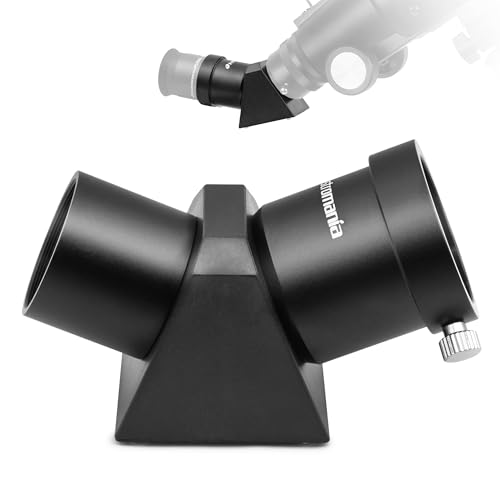
- Upright, non-reversed images
- Comfortable 45-degree viewing angle
- Accepts 1.25-inch eyepieces and filters
Best For: Refractor users combining astronomy with birdwatching or terrestrial viewing
Bright-View Beginner Pick – SV188P 1.25-Inch Dielectric Diagonal
For beginners comparing telescope diagonals for beginners, the SVBONY SV188P is a practical 90-degree mirror diagonal for comfortable astronomical viewing. Its 1.25-inch nosepiece fits compatible telescopes and accepts standard eyepieces, filters, and Barlow lenses.
Best For: Beginners who want bright overhead views and secure eyepiece handling with a compatible 1.25-inch telescope.
Pros:
- Dielectric coating provides over 99% reflectivity for bright, sharp views.
- 90-degree angle makes observing overhead objects more comfortable.
- Brass compression ring helps secure eyepieces without scratching their barrels.
- Produces an upright image and supports standard 1.25-inch accessories.
Cons:
- Compatible with 1.25-inch telescope connections and accessories only.
- The image remains reversed left to right when used at 90 degrees.
The SV188P is a well-rounded choice when optical brightness and easy accessory compatibility matter. Its compression ring is especially useful for new observers who frequently adjust or change eyepieces.
Trusted Beginner Standard – Celestron 1.25-Inch Star Diagonal
The Celestron 1.25-inch Star Diagonal is a straightforward option for beginners choosing telescope diagonals for beginners. It fits telescopes with 1.25-inch focusers or visual backs, offers a comfortable 90-degree viewing angle, and accepts common 1.25-inch accessories.
Best For: Beginners with compatible refractor or SCT telescopes who want a simple 90-degree diagonal from an established telescope brand.
Pros:
- Fits 1.25-inch focusers and visual backs.
- 90-degree angle is comfortable for observing overhead objects.
- Accepts standard 1.25-inch eyepieces, Barlow lenses, and other accessories.
- Dielectric coatings support enhanced brightness.
Cons:
- Limited to telescopes and accessories using 1.25-inch connections.
- The supplied specifications do not identify a compression-ring eyepiece clamp.
This model keeps the buying decision simple: check your telescope’s connection size, then use the diagonal with standard 1.25-inch accessories. It is a sensible general-purpose choice for comfortable astronomical viewing.
Correct-Image Versatility – SV221 45-Degree Prism Diagonal
The SVBONY SV221 stands out among telescope diagonals for beginners because it provides a 45-degree correct image rather than an inverted view. Its 1.25-inch connection supports compatible refractors and some Schmidt-Cassegrain and Maksutov-Cassegrain telescopes.
Best For: Beginners who want upright, correctly oriented views for terrestrial or general observing with a compatible refractor or catadioptric telescope.
Pros:
- 45-degree prism design provides an erect, correct-image view.
- Multi-coated surfaces and a 19mm clear aperture support clear viewing.
- Brass lock screw and compression ring help protect and secure accessories.
- Supports 1.25-inch filters and includes a dustproof cover.
Cons:
- Not compatible with Newtonian or Dobsonian reflector telescopes.
- Its 45-degree angle may be less suitable than a 90-degree diagonal for high overhead astronomical viewing.
- The housing combines molded ABS plastic and aluminum alloy components.
The SV221 is a strong fit when image orientation matters more than maximizing a conventional astronomical viewing angle. Confirm telescope compatibility before buying, particularly if you use a Newtonian or Dobsonian reflector.
Daytime Viewing Choice – Celestron 45-Degree Erect Diagonal
For beginners evaluating telescope diagonals for beginners, this Celestron 45-degree erect diagonal is designed primarily for comfortable daytime and terrestrial viewing. It produces right-side-up, left-to-right correct images with compatible refractor and catadioptric telescopes.
Best For: Beginners using refractors, SCTs, or spotting scopes for daytime observation and correctly oriented views.
Pros:
- Corrects the image to be upright and left-to-right accurate.
- 45-degree angle provides comfortable terrestrial viewing.
- Fits 1.25-inch focusers or visual backs.
- Accepts standard 1.25-inch eyepieces.
Cons:
- Its 45-degree design is less specialized for overhead astronomical viewing than a 90-degree diagonal.
- Compatibility is specified for refractors, SCTs, and spotting scopes rather than all telescope types.
- It is intended especially for daytime terrestrial use.
This diagonal makes the most sense for users who want their telescope to function more like a spotting scope during the day. Verify that your instrument uses a compatible 1.25-inch connection before ordering.
Clear-View Starter – SV188 1.25-Inch Dielectric Diagonal
For beginners comparing telescope diagonals for beginners, the SVBONY SV188 is a straightforward 1.25-inch option for refractor and catadioptric telescopes. Its 90-degree viewing angle makes overhead viewing more comfortable, while the dielectric mirror is rated at 90% reflectivity.
Best For: Beginners using compatible refractor or catadioptric telescopes with 1.25-inch eyepieces.
Pros:
- 90-degree angle helps reduce neck strain during overhead viewing.
- 90% reflective flat mirror is designed for clearer, sharper views.
- Metal body, brass compression ring, and included dust cover support durability and eyepiece security.
Cons:
- Not suitable for reflector telescopes.
- Limited to 1.25-inch telescope accessories.
The SV188 is a practical entry-level choice when compatibility is confirmed. It keeps the setup simple and adds a more comfortable viewing position without moving to a larger 2-inch system.
High-Reflectivity Upgrade – Astromania 2-Inch 99% Diagonal
For beginners who want a flexible upgrade among telescope diagonals for beginners, this Astromania model combines a 2-inch format with a 99% reflective dielectric coating. It includes adapters for SCT and 1.25-inch accessories, making it useful across several visual observing setups.
Best For: Users with refractor, Schmidt-Cassegrain, ACF, EdgeHD, or Maksutov-Cassegrain telescopes who want broad accessory compatibility.
Pros:
- 99% reflective dielectric surface is designed for bright, sharp, true-to-color images.
- Includes SCT-to-2-inch and 2-inch-to-1.25-inch adapters.
- Brass compression ring helps hold eyepieces without scratching their barrels.
- Built-in 2-inch filter thread supports compatible moon, UHC, and narrowband filters.
Cons:
- Not recommended for reflector telescopes, especially Newtonians.
- The 2-inch body is heavier than smaller 1.25-inch diagonals.
- May be more capability than needed for a basic 1.25-inch setup.
This is the most adaptable option in the group, particularly if you expect to use both 2-inch and 1.25-inch eyepieces. Confirm your telescope type and available clearance before choosing this larger diagonal.
Simple Comfort Pick – Alstar 1.25-Inch Star Diagonal
The Alstar 90-degree diagonal is a simple choice for beginners evaluating telescope diagonals for beginners and using a 1.25-inch refracting telescope. Its multi-coated optics, aluminum housing, and quick-install thumbscrew focus on comfortable, uncomplicated visual observing.
Best For: Beginners with 1.25-inch refracting telescopes who want easy installation and a comfortable viewing angle.
Pros:
- 90-degree design makes overhead viewing more comfortable.
- Multi-coated lenses and internal extinction treatment are intended to improve clarity and contrast.
- Threaded and barrel mounting options support flexible installation.
- Filter threads accept standard 1.25-inch filters.
Cons:
- Designed specifically for refracting telescopes.
- Limited to 1.25-inch fittings and accessories.
- Produces erect images with lateral inversion rather than a fully corrected left-right orientation.
The Alstar is a sensible match for a basic refractor setup. Its compact 1.25-inch format and straightforward mounting make it approachable, while the 90-degree angle helps make longer observing sessions more comfortable.
Wide-Field Upgrade – 2-Inch Star Diagonal
For beginners comparing telescope diagonals for beginners, this 2-inch Astromania mirror diagonal is an upgrade aimed at refractor users who want wider views with 2-inch eyepieces. Its 90-degree design also makes viewing more comfortable when the telescope points near the zenith.
Best For: Refractor owners with a 2-inch focuser who want bright, wide-field lunar, planetary, and deep-sky views.
Pros:
- 2-inch format supports the wider field of view available from 2-inch eyepieces.
- 1/10-wave mirror and 93% dielectric reflectivity are designed for crisp, bright, true-to-color images.
- Brass compression ring secures eyepieces without marring their barrels.
- Durable dielectric coatings resist oxidation and cleaning damage.
Cons:
- Not a universal fit: it requires a 2-inch focuser or an SCT adapter for Schmidt-Cassegrain telescopes.
- The SCT adapter is not included.
- Its 2-inch format is heavier and less compact than a 1.25-inch diagonal.
This is the strongest choice here for beginners who already have compatible 2-inch equipment and want to prioritize field width and optical performance. Confirm your focuser size before buying.
Versatile Starter Choice – 1.25-Inch 90-Degree Diagonal
This 1.25-inch 90-degree diagonal is a practical option when shopping for telescope diagonals for beginners. It fits telescopes with a 1.25-inch connector, accepts standard eyepieces and filters, and provides a comfortable viewing angle for astronomy or daytime use.
Best For: Beginners using refractor or Schmidt-Cassegrain telescopes with 1.25-inch accessories.
Pros:
- Compatible with standard 1.25-inch eyepieces and filters.
- 90-degree orientation makes observing more comfortable from above.
- Filter thread supports moon, UHC, and polarizing filters.
- Metal barrel provides secure seating in the focuser.
Cons:
- Not suitable for Newtonian telescopes or other reflector designs.
- Its 1.25-inch format does not provide the wider field potential of 2-inch accessories.
- The notes specify a protective coating rather than dielectric mirror coatings.
Choose this model if your telescope has a 1.25-inch connector and you want one diagonal for comfortable nighttime viewing and terrestrial observation. Check compatibility carefully, especially if you use a reflector.
Correct-Image Comfort – 45-Degree Prism Diagonal
Among telescope diagonals for beginners, this 45-degree prism stands out for producing upright, correct-image views. It is designed for 1.25-inch refractors and is especially useful when you want one accessory for stargazing, birdwatching, and other daytime observations.
Best For: Refractor users who value upright images and a relaxed viewing angle for astronomy and terrestrial viewing.
Pros:
- 45-degree orientation supports a comfortable viewing posture.
- Erecting prism provides upright, non-reversed images for nature and landscape viewing.
- Accepts standard 1.25-inch eyepieces and filters.
- Filter thread works with moon and UHC filters.
Cons:
- Designed for 1.25-inch refractors and not recommended for reflectors.
- A 45-degree diagonal may be less convenient than a 90-degree model for some astronomical targets.
- The prism design is primarily suited to correct-image viewing rather than a 2-inch wide-field setup.
This is a particularly beginner-friendly pick for users who split their time between the night sky and daytime targets. Its correct-image prism and comfortable angle make it more versatile than a conventional astronomy-only diagonal.
How We Picked the Best Telescope Diagonals for Beginners
We focused on the features that matter most during real-world observing: compatibility, viewing comfort, image orientation, optical design, stated reflectivity, build quality, and price. The selection includes common 1.25-inch models for beginner refractors and Schmidt-Cassegrain telescopes, plus 2-inch diagonals for compatible wide-field setups.
We also separated star diagonals from erect-image diagonals. A star diagonal is usually the better choice for astronomical viewing, while an erect-image design can be more useful for terrestrial observation because it presents a correctly oriented image.
Quick Comparison
| Type | Best For | What to Check |
|---|---|---|
| 90° mirror or dielectric diagonal | Comfortable astronomy viewing | Barrel size, reflectivity, and focuser compatibility |
| 45° erect-image diagonal | Daytime and terrestrial viewing | Correct image orientation and available clearance |
| 1.25-inch diagonal | Most beginner telescopes | Whether the telescope accepts 1.25-inch accessories |
| 2-inch diagonal | Wide-field eyepieces and compatible scopes | Back-focus, focuser capacity, and accessory weight |
Key Buying Factors for Telescope Diagonals for Beginners
Choose the Correct Barrel Size
Most entry-level telescopes use 1.25-inch eyepieces and therefore need a 1.25-inch diagonal. A 2-inch model is not automatically better; it only makes sense when the telescope has a 2-inch focuser or visual back and you plan to use larger eyepieces.
Pick the Right Viewing Angle
A 90-degree diagonal is generally the most comfortable option for astronomy, particularly when the telescope is pointed high in the sky. A 45-degree diagonal is more natural for daytime viewing and often provides an erect image, but it may be less comfortable for objects near the zenith.
Understand Mirror and Prism Designs
Mirror diagonals are common for refractors and many catadioptric telescopes. Dielectric coatings can offer high reflectivity and strong durability when manufactured well. Prism diagonals can provide a compact, sturdy design, but the best choice depends on the telescope, focal ratio, and intended use.
Check Compatibility and Fit
Confirm the diagonal’s barrel diameter, nosepiece style, and connection method before ordering. Some refractors use a standard visual-back connection, while SCTs may require a model designed for an SCT rear thread or a suitable adapter. Make sure thumbscrews secure the diagonal without interfering with the eyepiece.
Consider Image Orientation and Optical Quality
Astronomical views through standard star diagonals may appear mirrored, which is normal and usually unimportant for stars and planets. For landscapes, wildlife, or navigation, choose an erect-image design. Clean optical surfaces, reliable internal alignment, and smooth eyepiece retention are often more important than a high reflectivity figure alone.
Who Should Buy Which Telescope Diagonals for Beginners?
- Most beginner astronomers: Choose a 1.25-inch, 90-degree star diagonal that matches your telescope.
- Users upgrading a basic diagonal: Consider a well-built dielectric model with high stated reflectivity and secure eyepiece retention.
- Daytime observers: Choose a 45-degree erect-image diagonal for a correctly oriented view.
- Wide-field enthusiasts: Select a 2-inch diagonal only if the telescope supports 2-inch accessories and can accommodate the added size and weight.
- Budget-conscious buyers: Prioritize exact compatibility and solid fit over premium coating claims that your telescope or observing conditions may not fully exploit.
For most first-time buyers, the safest starting point is a compatible 1.25-inch 90-degree diagonal for astronomy or a 45-degree erect-image model for terrestrial use.