
The right diagonal can make a noticeable difference in an astrophotography setup, affecting optical throughput, mechanical stability, focus, and accessory compatibility. The best choice depends on more than mirror reflectivity alone.
This roundup compares 10 telescope diagonals for astrophotography, including dielectric mirror, standard mirror, prism, erect-image, 1.25-inch, and 2-inch designs. Use the guide below to narrow the options by telescope type, imaging hardware, and budget.
Best 10 Telescope Diagonals for Astrophotography Picks for 2026
Best 1.25-Inch Value
SVBONY SV188P Dielectric Diagonal
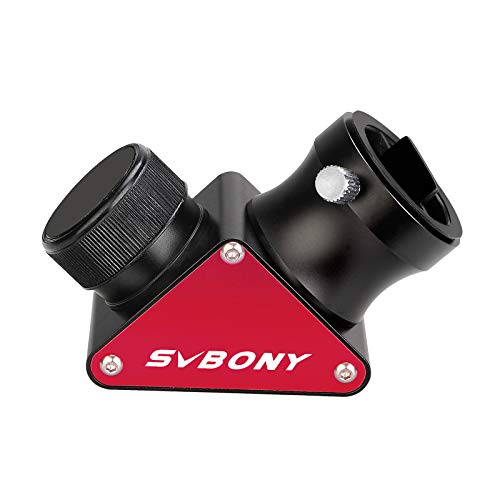
- Over 99% dielectric reflectivity
- Fits 1.25-inch accessories
- Brass compression ring
Best For: 1.25-inch telescopes and comfortable visual observing
Best Premium SCT Option
Celestron 2-Inch XLT Star Diagonal

- 1/10th-wave tested mirror
- XLT coatings for light transmission
- Includes adapter and aluminum case
Best For: SCT users seeking a premium 2-inch diagonal
Best Wide-Format SVBONY
SV188P 2-Inch Dielectric Diagonal

- 2-inch accessory compatibility
- Includes 1.25-inch converter
- Up to 99% reflectivity
Best For: 2-inch setups with mixed eyepiece sizes
Best Twist-Lock Design
Celestron 1.25-Inch Dielectric Diagonal

- Over 99% reflective surface
- Twist-lock secures eyepieces
- Fits refractors and SCTs
Best For: Users prioritizing centered, secure 1.25-inch eyepieces
High-Reflectivity Upgrade
SV223 2-Inch Dielectric Diagonal

- 99% reflective dielectric coating
- Click-lock accessory holder
- 1/10λ surface accuracy
Best For: 2-inch telescope setups needing secure accessory retention
Daytime Viewing Pick
Celestron 45° Erect Image Diagonal

- Corrects image orientation
- 45-degree viewing angle
- Accepts 1.25-inch eyepieces
Best For: Terrestrial viewing with refractors and catadioptric telescopes
Compact 1.25-Inch Option
SV188 Dielectric Star Diagonal

- 90% reflective flat mirror
- Standard 1.25-inch fit
- Full-metal body with dust cover
Best For: Refractor and catadioptric telescope owners using 1.25-inch accessories
Versatile Erect-Image Pick
Astromania 1.25-inch Prism Diagonal
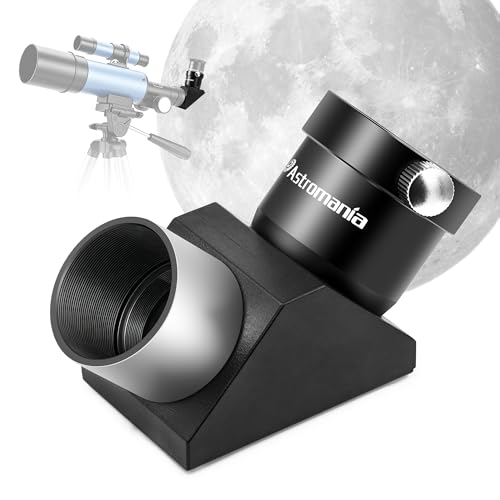
- Upright, non-reversed images
- Multi-coated optics and glare control
- Supports 1.25-inch eyepieces and filters
Best For: Refractor owners wanting comfortable astronomy and terrestrial viewing
Filter-Ready Mirror Option
SVBONY SV221 90-Degree Diagonal

- Enhanced aluminum optical coating
- Brass pressure ring protects eyepieces
- Built-in 1.25-inch filter thread
Best For: Refractor users wanting secure, filter-compatible viewing
Durable Refractor Accessory
Alstar 1.25-inch Star Diagonal

- Comfortable 90-degree viewing angle
- Multi-coated optics with internal extinction
- Metal barrel and secure thumbscrew mounting
Best For: Refractor users seeking a sturdy visual diagonal
Best 1.25-Inch Value – SVBONY SV188P Dielectric Diagonal
For shoppers comparing telescope diagonals for astrophotography, the SVBONY SV188P is a practical 1.25-inch option with dielectric coatings rated at over 99% reflectivity. Its 90-degree viewing angle and compression-ring design make it a straightforward fit for compatible visual observing setups.
Best For: 1.25-inch telescopes and users who need a bright, comfortable diagonal that accepts standard eyepieces, filters, and Barlow lenses.
Pros:
- Over 99% reflectivity from dielectric coatings.
- Accepts standard 1.25-inch eyepieces, filters, and Barlow lenses.
- Brass compression ring helps secure eyepieces without scratching their barrels.
- Provides an upright image and a comfortable 90-degree viewing angle.
Cons:
- Limited to 1.25-inch accessories.
- The image remains left-right reversed.
This diagonal is a sensible budget-conscious choice when your telescope uses a 1.25-inch format and comfortable overhead viewing matters. Its supplied specifications emphasize visual brightness and secure accessory handling rather than specialized imaging features.
Best Premium SCT Option – Celestron 2-Inch XLT Star Diagonal
Among telescope diagonals for astrophotography, this Celestron model is designed for Schmidt-Cassegrain telescopes and uses a 2-inch format for compatible eyepieces. Its XLT coatings, tested 1/10th-wave mirror, and precision-machined housing target strong optical performance and alignment.
Best For: Schmidt-Cassegrain users who want a 2-inch diagonal with a 1.25-inch adapter, premium optical specifications, and included storage protection.
Pros:
- High-performance XLT coatings support enhanced light transmission.
- 1/10th-wave mirror is interferometer-tested.
- Accepts 2-inch eyepieces and includes a 2-inch-to-1.25-inch adapter.
- Includes an aluminum carry case and a two-year US warranty.
Cons:
- Designed specifically for SCT telescopes and 2-inch accessories.
- Heavier than the smaller diagonals in this roundup.
The Celestron stands out when build quality, optical testing, and 2-inch compatibility take priority. The included adapter adds flexibility, while the carry case is useful for protecting the relatively substantial diagonal during transport.
Best Wide-Format SVBONY – SV188P 2-Inch Dielectric Diagonal
If you are evaluating telescope diagonals for astrophotography and want a 2-inch accessory path, the SVBONY SV188P offers a dielectric mirror with up to 99% reflectivity. It also includes a 1.25-inch converter, making it more versatile for mixed eyepiece collections.
Best For: 2-inch telescopes and observers who want broad accessory compatibility, stray-light treatment, and secure eyepiece retention.
Pros:
- 2-inch format supports 2-inch eyepieces and filters.
- Included converter accommodates 1.25-inch eyepieces and accessories.
- Dielectric coating provides up to 99% reflectivity.
- Brass pressure ring, anti-contact block, and matte interior help protect accessories and reduce stray light.
Cons:
- Heavier than the 1.25-inch SVBONY model.
- The supplied notes do not specify astrophotography-specific connection features.
This is the more flexible SVBONY choice for setups built around 2-inch accessories. Its converter and internal stray-light treatment add practical value, although buyers should confirm their telescope has sufficient clearance and compatibility.
Best Twist-Lock Design – Celestron 1.25-Inch Dielectric Diagonal
For telescope diagonals for astrophotography used with refractors or SCTs, this Celestron 1.25-inch model combines diffraction-limited optics with dielectric coatings. Its twist-lock mechanism centers the eyepiece, supporting consistent optical alignment without relying on a conventional thumbscrew.
Best For: Refractor and Cassegrain-type telescope users who prefer a secure twist-lock system for standard 1.25-inch accessories.
Pros:
- Over 99% reflective surface from 58 dielectric coating layers.
- Diffraction-limited optics support premium viewing performance.
- Twist-lock centers and secures the eyepiece.
- Accepts eyepieces, Barlow lenses, threaded filters, and other 1.25-inch accessories.
Cons:
- Limited to 1.25-inch accessories.
- The supplied notes do not include a carry case or adapter.
The twist-lock is the main differentiator here, especially for users who value centered eyepiece placement and convenient handling. It is a well-targeted option for compatible refractor and SCT setups where a 1.25-inch diagonal is sufficient.
High-Reflectivity Upgrade – SV223 2-Inch Dielectric Diagonal
For telescope diagonals for astrophotography, the SVBONY SV223 stands out with a 2-inch format, 99% reflective dielectric coating, and 1/10λ surface accuracy. Its 90-degree design is aimed at comfortable viewing, while the click-lock mechanism helps keep accessories securely installed.
Best For: Astrophotographers and visual observers who want a 2-inch diagonal with high reflectivity and a twist-lock accessory holder.
Pros:
- 99% reflective dielectric coating helps reduce light loss.
- Click-lock mechanism secures eyepieces and accessories.
- 1/10λ surface accuracy and internal baffling support contrast.
- Includes a 1.25-inch adapter for broader accessory compatibility.
Cons:
- Its 0.69 kg weight may be substantial for smaller setups.
- The supplied information does not specify camera-thread compatibility.
The SV223 is the most feature-rich option here for users prioritizing reflectivity, mechanical security, and a 2-inch optical path. Confirm your focuser and imaging accessories can accommodate its format and weight.
Daytime Viewing Pick – Celestron 45° Erect Image Diagonal
Among telescope diagonals for astrophotography, the Celestron 1.25-inch 45-degree erect-image diagonal is better suited to daytime terrestrial viewing than dedicated deep-sky imaging. It corrects the image orientation for refractors and catadioptric telescopes while accepting standard 1.25-inch eyepieces.
Best For: Telescope users who want correctly oriented daytime views with refractors, Schmidt-Cassegrain telescopes, or spotting scopes.
Pros:
- Produces right-side-up, left-to-right correct images.
- 45-degree angle can provide comfortable terrestrial viewing.
- Works with standard 1.25-inch eyepieces.
- Compatible with refractors and catadioptric telescopes.
Cons:
- Its 45-degree erect-image design is less tailored to astronomical imaging.
- Limited to 1.25-inch accessories.
This is a practical choice when image orientation matters more than astrophotography-specific performance. For primarily nighttime imaging, consider a 90-degree star diagonal instead, but verify compatibility with your telescope.
Compact 1.25-Inch Option – SV188 Dielectric Star Diagonal
For telescope diagonals for astrophotography on a 1.25-inch setup, the SVBONY SV188 offers a straightforward 90-degree viewing solution. Its 90% reflective flat mirror, full-metal body, brass compression ring, and dust cover provide a practical balance for compatible refractor and catadioptric telescopes.
Best For: Owners of refractors or catadioptric telescopes using 1.25-inch eyepieces and Barlow lenses.
Pros:
- 90% reflectivity helps reduce light loss.
- Standard 1.25-inch format supports common eyepieces and Barlow lenses.
- 90-degree angle provides a comfortable viewing position.
- Full-metal body, brass compression ring, and dust cover add practical convenience.
Cons:
- Not suitable for reflector telescopes.
- Its 90% reflectivity is lower than the SV223’s stated 99%.
- Limited to 1.25-inch accessories.
The SV188 is a sensible entry-level or compact choice when your telescope accepts 1.25-inch accessories. Check telescope type carefully, since the supplied specifications exclude reflector telescopes.
Versatile Erect-Image Pick – Astromania 1.25-inch Prism Diagonal
For shoppers comparing telescope diagonals for astrophotography, the Astromania 90-degree prism diagonal stands out as a versatile option for refractors and mixed daytime/nighttime viewing. Its erect-image design, multi-layer coatings, filter thread, and glare-reducing interior make it practical for observers who also value comfortable visual use.
Best For: Refractor owners who want upright views for astronomy and terrestrial observation.
Pros:
- Amici prism produces upright, non-reversed images.
- Multi-layer dielectric coatings support bright, high-contrast views.
- Accepts standard 1.25-inch eyepieces and filters.
- Compact, lightweight housing includes dust covers and glare-reducing threads.
Cons:
- Not recommended for reflector telescopes.
- Designed for 1.25-inch focusers, limiting compatibility with larger setups.
The Astromania is a strong all-around visual accessory when correct image orientation matters. Its erecting prism and comfortable 90-degree layout are particularly useful for terrestrial targets, while the filter compatibility adds flexibility for lunar and deep-sky observing.
Filter-Ready Mirror Option – SVBONY SV221 90-Degree Diagonal
For telescope diagonals for astrophotography and general refractor observing, the SVBONY SV221 offers a straightforward 1.25-inch mirror design with enhanced aluminum coating and internal extinction treatment. Its 90-degree angle, brass pressure ring, and filter thread provide useful practical features for routine observing.
Best For: Refractor users seeking a compact 1.25-inch diagonal with filter support and secure eyepiece handling.
Pros:
- Enhanced aluminum coating is designed for higher light transmission.
- Internal extinction treatment helps reduce unwanted reflections.
- Brass pressure ring helps protect eyepieces from scratches.
- M28.5×0.6mm thread supports standard 1.25-inch filters.
Cons:
- Produces an image that is upright vertically but reversed left to right.
- Its 1.25-inch format is not intended for larger focuser systems.
The SV221 is a sensible choice when you want comfortable 90-degree viewing without giving up filter compatibility. The brass compression ring and internal light control are valuable touches for frequent visual use, although the laterally reversed image may matter for terrestrial viewing.
Durable Refractor Accessory – Alstar 1.25-inch Star Diagonal
The Alstar 90-degree diagonal is a practical contender among telescope diagonals for astrophotography when your setup uses a 1.25-inch refractor connection. It combines multi-coated optics, internal extinction treatment, a metal barrel, and flexible threaded or barrel mounting for dependable visual observing.
Best For: Beginners and experienced refractor users who prioritize sturdy construction and comfortable viewing.
Pros:
- 90-degree angle reduces neck strain during overhead viewing.
- Multi-coated optics support light transmission and clarity.
- Internal extinction treatment helps reduce reflections.
- Includes a thumbscrew, metal barrel, and 1.25-inch filter thread.
Cons:
- Designed specifically for refracting telescopes.
- Images are vertically erect but laterally inverted.
- Manual-focus design offers no focusing adjustment.
The Alstar balances convenience and durability for standard 1.25-inch refractor setups. Its secure mounting options and protective thumbscrew make installation easy, while the optical coatings and internal light control support clear, comfortable visual sessions.
How We Picked the Best Telescope Diagonals for Astrophotography
We evaluated these diagonals according to the factors that matter most in a practical imaging or observing setup: optical design, stated reflectivity and coatings, barrel size, connection style, mechanical fit, image orientation, and compatibility with common refractors and Schmidt-Cassegrain telescopes. We also considered whether each model is better suited to visual astronomy, electronically assisted viewing, or a camera configuration where backfocus and rigidity are critical.
Product specifications can vary by seller and production run, so confirm thread standards, clear aperture, included adapters, and backfocus requirements before ordering. A diagonal that works well visually may not be the best choice for a long camera train.
Quick Comparison
| Type | Typical advantage | Best fit |
|---|---|---|
| 2-inch mirror diagonal | Larger light path and broader accessory compatibility | Wide-field eyepieces, larger refractors, and substantial setups |
| 1.25-inch dielectric mirror | Good durability and efficient light transmission in a compact format | Small refractors, SCTs, planetary viewing, and lightweight rigs |
| Standard mirror diagonal | Lower-cost route to a right-angle viewing position | Budget-conscious visual users |
| Prism or erect-image diagonal | Corrected orientation for terrestrial or general-purpose viewing | Daytime observation and casual mixed-use setups |
Key Buying Factors for Telescope Diagonals for Astrophotography
Optical Format and Telescope Compatibility
Choose 1.25 inches or 2 inches based on your focuser, visual back, eyepieces, filter sizes, and camera adapters. A 2-inch diagonal is not automatically better if your telescope or imaging train is built around 1.25-inch accessories. For SCTs, check whether the diagonal connects through a visual back, SCT thread, or another dedicated interface.
Mirror, Dielectric, or Prism Design
Dielectric mirror diagonals are generally valued for high reflectivity and a hard, durable coating. Standard mirrors can provide good value, while prisms may offer a different optical behavior and are often selected for specific telescope designs or corrected-image use. For deep-sky imaging, prioritize the complete optical path and camera compatibility rather than a headline reflectivity number alone.
Mechanical Stability and Backfocus
A secure compression ring, precise nosepiece, solid housing, and minimal play help keep a camera aligned. Measure available backfocus before buying: adding a diagonal can move the focal plane beyond the telescope’s usable range, especially with reducers, filter wheels, off-axis guiders, or extension tubes.
Image Orientation and Intended Use
Standard astronomical diagonals may produce an inverted or mirrored view, which is normally acceptable for astronomy. Erect-image models are more useful for terrestrial viewing but may not be the preferred choice for demanding astrophotography.
Who Should Buy Which Telescope Diagonals for Astrophotography?
Choose a 2-inch model if you use a compatible telescope, large eyepieces, or a wider accessory path. Choose a 1.25-inch dielectric diagonal for a compact, durable setup that prioritizes general observing, planetary work, or a smaller camera train. A lower-cost mirror diagonal makes sense for occasional visual use, while a prism or erect-image model suits users who also want corrected views during daytime observation.
Before checkout, verify the telescope connection, camera nosepiece size, clear aperture, focus travel, and return policy. Those details are more important than choosing solely by brand or reflectivity rating.