
Finding reliable streaming hardware does not require a four-figure budget. The best streaming encoders under $500 can convert HDMI, SDI, or DisplayPort sources into network video for platforms, IPTV systems, and private broadcasts.
This roundup compares ten affordable encoder options by resolution, codec support, protocols, connectivity, and workflow flexibility so you can choose hardware that fits your production setup.
Best 10 Streaming Encoders Under 500 Picks for 2026
Best Multi-Platform 4K Encoder

- 4K HDMI encoding at up to 30fps
- Supports up to four simultaneous streams
- Lifetime warranty and technical support
Best For: Multi-platform HDMI streaming and customized output
Best Compact NDI Encoder

- Converts HDMI to NDI, SRT, RTMP, or RTSP
- 4K passthrough with compact portable design
- Supports PoE, USB-C power, and tripod mounting
Best For: Portable gaming, NDI workflows, and small live productions
Best SDI Streaming Encoder

- Built for HD-SDI video and audio sources
- Outputs up to four simultaneous streams
- Supports H.265/H.264 and many protocols
Best For: SDI-based broadcast, event, and production streaming
Best Storage-Enabled 4K Encoder
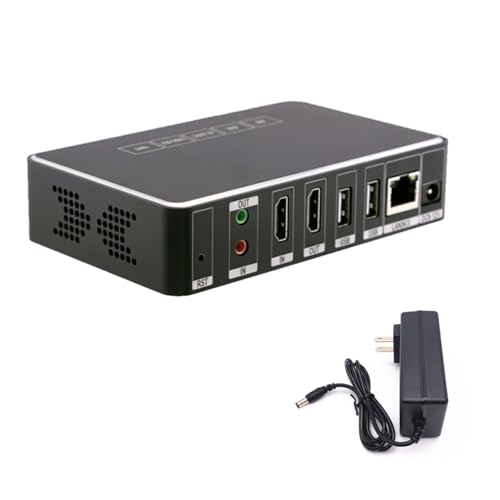
- Encodes 4K HDMI video at up to 30fps
- Includes 8GB flash storage and 2GB RAM
- Supports NDI, SRT, RTMP, RTSP, HLS, and UDP
Best For: 4K HDMI streaming with network storage or recording workflows
Simple Full-HD Streaming

- 1080p60 HDMI input and output
- Broad IP protocol compatibility
- Browser setup with overlay tools
Best For: Full-HD streaming and basic IP video distribution
Efficient 1080p60 Streaming

- Hardware H.265/H.264 at 1080p60
- Supports major streaming and IP protocols
- OSD overlays and external audio input
Best For: Live events, IPTV, monitoring, and digital signage
Advanced 4K Distribution
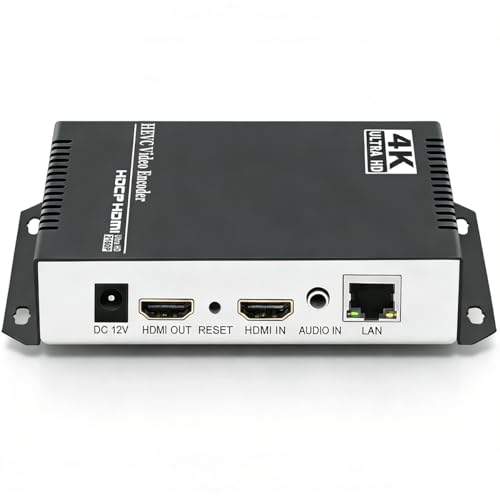
- 4K30 H.265/H.264 encoding support
- Up to four protocol outputs simultaneously
- Extensive overlays and video controls
Best For: 4K streaming and multi-platform IP distribution
Best 4K DisplayPort Pick

- 4K30 DisplayPort encoding
- Four simultaneous protocol outputs
- Built-in overlays and image controls
Best For: DisplayPort-based 4K broadcasts
Best 1080p Multi-Protocol Pick

- 1080p streaming up to 60 fps
- Four simultaneous protocol outputs
- HDMI and line-in audio options
Best For: HDMI-based Full HD streaming
Best 4K HDMI Flexibility

- 4K30 HDMI input and output
- Up to 120 fps at 2K or lower
- Broad protocol and WebRTC support
Best For: Flexible 4K HDMI streaming workflows
Best Multi-Platform 4K Encoder – URayCoder UHE265-1L-4K
If you need streaming encoders under 500 for a flexible HDMI-based setup, the URayCoder UHE265-1L-4K offers a strong mix of 4K input support, broad protocol compatibility, and multi-platform output. It can encode HDMI video using H.265 or H.264 and supports up to four simultaneous streams.
Best For: Creators, organizations, and live-production users who need to send one HDMI source to multiple platforms or streaming servers.
Pros:
- Supports 4K input at up to 30fps and up to 120fps at 2K or lower resolutions.
- Works with RTMP(S), SRT, RTSP, HLS, HTTP, UDP, WebRTC, and other protocols.
- Allows text, logos, timestamps, cropping, rotation, mirroring, and bitrate adjustments.
- Includes lifetime warranty and technical support.
Cons:
- Designed for HDMI sources rather than SDI equipment.
- Its extensive configuration options may be more than casual streamers need.
This is a particularly versatile choice when simultaneous streaming and detailed output customization matter more than a simple plug-and-play workflow.
Best Compact NDI Encoder – Zowietek ZowieBox
Among streaming encoders under 500, the Zowietek ZowieBox stands out for its compact design and unusually broad workflow support. It can encode HDMI to NDI, RTMP, RTSP, or SRT, decode IP streams back to HDMI, and provide zero-lag HDMI passthrough for compatible gaming setups.
Best For: Gamers, mobile production teams, and broadcasters needing a portable encoder/decoder with NDI and network-streaming support.
Pros:
- Supports NDI|HX3, NDI|HX2, NDI, SRT, RTMP(S), and RTSP workflows.
- Offers 4K passthrough and decoding up to 4K at 30fps or 1080p at 60fps.
- Can be managed through a web interface on a computer, phone, or tablet.
- Supports USB-C power, PoE, DC output, and tripod mounting.
Cons:
- Encoder and decoder modes cannot operate simultaneously.
- USB capture-card functionality is not currently supported.
- Full NDI signals are not supported.
The ZowieBox is a flexible choice for users who value portability and IP-video integration, especially when NDI compatibility and HDMI passthrough are central to the setup.
Best SDI Streaming Encoder – URayCoder USE265-1L
For buyers searching streaming encoders under 500 for broadcast-oriented equipment, the URayCoder USE265-1L is built around an SDI input. It supports H.265 and H.264 encoding, multiple professional streaming protocols, and up to four simultaneous outputs for distributing video to different servers.
Best For: Broadcast, event, and production setups that use HD-SDI sources and require flexible IP delivery.
Pros:
- Designed for SDI video and audio sources.
- Supports RTMP(S), SRT, RTSP, HLS, HTTP, UDP, RTP, multicast, and other protocols.
- Can output four video streams simultaneously with different protocols.
- Offers overlays, text, logos, timestamps, cropping, rotation, and bitrate controls.
Cons:
- Not suitable for HDMI-only source devices without an appropriate converter.
- Its SDI-focused design is less relevant for basic home streaming.
This encoder makes the most sense when SDI connectivity and broadcast-style distribution are priorities, particularly for sending one source to multiple streaming destinations.
Best Storage-Enabled 4K Encoder – youyeetoo Link Pi ENC1-V3
The youyeetoo Link Pi ENC1-V3 is a practical option among streaming encoders under 500 for users who want 4K HDMI encoding alongside onboard storage. Its quad-core processor, 2GB of RAM, and 8GB of flash storage support live streaming, network video storage, and workflows using NDI or SRT.
Best For: HDMI streaming, surveillance recording, and content-sharing setups that benefit from local network video storage.
Pros:
- Supports 4K video at up to 30fps with H.264 or H.265/HEVC encoding.
- Works with RTSP, RTMP, HLS, UDP, NDI, and SRT-based workflows.
- Includes 2GB of RAM and 8GB of onboard flash storage.
- Designed for applications including YouTube live streaming and surveillance recording.
Cons:
- Uses HDMI connectivity, so it is not a direct SDI encoder.
- Its listed warranty is one year, shorter than some competing options in this roundup.
Choose the ENC1-V3 if local storage and protocol flexibility are useful alongside 4K HDMI streaming; it is less compelling if you only need a basic encoder with no recording function.
Simple Full-HD Streaming – Compact H.264 HDMI Encoder
ISEEVY Mini H.264 1080P HDMI Video Encoder Support RTMP RTMPS SRT RTSP RTP UDP HTTP FLV Protocols
Check Price On AmazonIf you need streaming encoders under 500 for a straightforward 1080p workflow, the ISEEVY Mini H.264 encoder offers broad protocol support in a compact box. It accepts HDMI video up to 1920×1080 at 60 fps and is configured through a browser.
Best For: Full-HD streaming, basic IP video distribution, and setups needing RTMP, RTMPS, SRT, or RTSP support.
Pros:
- Supports 1080p60 HDMI input and H.264/AVC encoding.
- Works with RTMP, RTMPS, SRT, RTSP, HTTP, FLV, UDP, RTP, multicast, and unicast protocols.
- Browser-based setup includes text, logo, and timestamp overlays.
Cons:
- Does not list H.265 encoding support.
- Limited to 1080p output rather than 4K.
This is a practical choice when reliable Full-HD streaming matters more than advanced resolution or codec features. Its small footprint and customizable overlays add flexibility for broadcasts and network video applications.
Efficient 1080p60 Streaming – H.265/H.264 HDMI Encoder
For buyers comparing streaming encoders under 500, this UNISHEEN model stands out for combining 1080p60 hardware encoding with H.265 and H.264 support. Browser-based configuration, compact dimensions, and extensive network protocol compatibility make it suitable for flexible installations.
Best For: Live events, IPTV, remote monitoring, digital signage, and browser-based video distribution.
Pros:
- Provides hardware H.265/H.264 encoding at 1080p60.
- Supports SRT, RTMP(S), RTSP, UDP, HTTP, HLS, WebRTC, and additional protocols.
- Offers HDMI embedded audio, external 3.5mm audio input, and OSD overlays.
- Compact design and a 1-year limited manufacturer warranty.
Cons:
- Advanced configurations require basic networking knowledge.
- Uses a 12V DC power input and does not include a power plug according to the listed details.
With modern codec support and a broad protocol list, this encoder is a strong all-around option for bandwidth-conscious Full-HD deployments. Its browser setup avoids dedicated configuration software, though network-focused users will get the most from it.
Advanced 4K Distribution – Multi-Protocol HEVC Encoder
If your search for streaming encoders under 500 includes 4K input and multi-platform distribution, this URayCoder hardware encoder offers a more advanced feature set. It supports H.265 and H.264, accepts up to 4K video at 30 fps, and can output multiple streams using different protocols.
Best For: 4K video transmission, multi-platform streaming, enterprise-style IP distribution, and customized broadcast workflows.
Pros:
- Supports up to 3840×2160 input and output at 30 fps, plus up to 120 fps at 2K and lower resolutions.
- Compatible with RTSP, RTMP(S), HLS, SRT, WebRTC, UDP, FLV, and other protocols.
- Can simultaneously output four video streams with different protocols.
- Includes overlay, audio, cropping, rotation, mirroring, and other configuration options.
Cons:
- 4K operation is limited to 30 fps.
- The broad feature set may be more than needed for simple 1080p streaming.
- The supplied details do not provide complete physical or power specifications.
This is the most capable option in the group for users who need 4K handling and simultaneous distribution across platforms. It is especially appealing for customized or professional workflows, provided its extra configuration options match your requirements.
Best 4K DisplayPort Pick – Unisheen BM3350DP-A-Plus
For shoppers comparing streaming encoders under 500, the Unisheen BM3350DP-A-Plus stands out when a DisplayPort source and 4K output matter. It supports 3840×2160 video at 30 fps, H.264/H.265 encoding, and up to four simultaneous streams using different protocols.
Best For: DisplayPort-based 4K broadcasts, multi-platform streaming, and users who need built-in image adjustments or overlays.
Pros:
- Supports 4K30 input and output with H.264 and H.265 codecs.
- Can send four streams simultaneously through different protocols, including SRT, RTSP, RTMPS, and UDP.
- Includes de-interlacing, noise reduction, sharpening, cropping, rotation, mirroring, and OSD overlays.
Cons:
- Uses DisplayPort connectivity rather than HDMI.
- Its 4K frame rate is limited to 30 fps.
This is a feature-rich choice for a DisplayPort workflow, especially if you want 4K delivery and flexible protocol support in a compact encoder. Confirm that your source device uses DisplayPort before buying.
Best 1080p Multi-Protocol Pick – URayCoder UHE265-1S
Among streaming encoders under 500, the URayCoder UHE265-1S is a practical HDMI option for 1080p production. Its H.264/H.265 dual encoding, 60 fps support, and broad protocol compatibility suit live streaming, IPTV, OBS, and NVR applications.
Best For: HDMI 1080p streaming, simultaneous platform distribution, and creators who need flexible audio and branding controls.
Pros:
- Supports 1920×1080 input and output at up to 60 fps.
- Can output four streams simultaneously using protocols such as RTSP, RTMPS, SRT, HLS, and UDP.
- Accepts HDMI or 3.5 mm line-in audio and supports logos, captions, timestamps, cropping, and rotation.
Cons:
- Does not provide 4K input or output according to the supplied specifications.
- Its feature set may be more than needed for a simple single-platform stream.
The UHE265-1S offers a strong balance of 1080p performance, protocol variety, and customization. Choose it over a 4K model if your workflow is HDMI-based and Full HD is sufficient.
Best 4K HDMI Flexibility – URayCoder 4K HDMI Encoder
For buyers evaluating streaming encoders under 500, this URayCoder model is the most versatile HDMI choice in the group. It handles 4K video at up to 30 fps, supports up to 120 fps at 2K and lower resolutions, and offers an unusually broad selection of streaming protocols.
Best For: 4K HDMI capture, multi-platform distribution, and advanced workflows involving WebRTC, SRT, HLS, or NVR systems.
Pros:
- Supports 4K UHD input and output at up to 30 fps.
- Supports up to 120 fps at 2K and lower resolutions.
- Offers RTSP, RTMPS, SRT, HLS, WebRTC, ICECAST, ONVIF, and other protocol options, with up to four simultaneous streams.
Cons:
- 4K operation is limited to 30 fps.
- Its extensive settings may be unnecessary for basic streaming setups.
This encoder is a strong fit when protocol flexibility matters as much as resolution. It is especially appealing for HDMI users who may need both 4K production and high-frame-rate lower-resolution output.
How We Picked the Best Streaming Encoders Under 500
We evaluated these encoders around the features that matter most in real streaming workflows: input type, maximum resolution and frame rate, H.264 or H.265 support, available output protocols, network connectivity, and compatibility with common platforms and production tools. We also considered whether each unit is better suited to simple HDMI streaming, professional SDI feeds, NDI environments, IPTV distribution, or flexible point-to-point links.
Because specifications and firmware can vary by seller, verify the current listing before buying—especially supported frame rates, audio handling, included power supplies, and whether features such as NDI, WebRTC, or hardware decoding are available on the exact model.
Quick Comparison
| Priority | Look for | Best fit |
|---|---|---|
| Basic live streaming | HDMI input, RTMP/RTMPS, H.264 | YouTube, Facebook, and similar platforms |
| Higher efficiency | H.265/HEVC and SRT | Lower-bandwidth or long-distance links |
| Broadcast integration | SDI input, genlock-friendly workflow, balanced audio options | Professional cameras and studio systems |
| IP production | NDI, multiple network protocols, reliable Ethernet | Networked video teams and AV systems |
| 4K workflows | 4K input, documented frame-rate support, H.265 | UHD capture and future-ready installations |
Key Buying Factors for Streaming Encoders Under $500
Input and Resolution
Match the encoder to your source. HDMI models suit cameras, laptops, consoles, and media players, while SDI models are more appropriate for longer cable runs and professional cameras. A product labeled “4K” may support only specific frame rates or encode at a lower output resolution, so check the detailed specification.
Codec and Bandwidth
H.264 offers broad compatibility and is usually the safest choice for mainstream platforms. H.265 can reduce bandwidth at similar quality but may have more limited playback or platform support. Hardware encoding is preferable for continuous broadcasts because it avoids tying up a computer.
Protocols and Network Reliability
RTMP or RTMPS is commonly used for public platforms. RTSP, UDP, and HLS are useful for local distribution and IPTV, while SRT can improve resilience across unstable or long-distance connections. Ethernet is generally more dependable than Wi-Fi for unattended streams.
Administration and Audio
Look for a clear web interface, firmware support, status monitoring, and configurable bitrate, keyframe interval, and audio settings. Confirm how embedded or external audio is handled before purchasing.
Who Should Buy Which Streaming Encoders Under 500?
Choose a straightforward HDMI H.264 encoder if you want an affordable, easy-to-configure feed for occasional YouTube or Facebook broadcasts. Pick an H.265 model when bandwidth efficiency matters and your receiving platform or decoder supports HEVC. An SDI encoder is the stronger choice for cameras, studios, houses of worship, and event production where cable reliability is important.
For networked production, prioritize NDI support and documented compatibility with your switcher or software. For remote contribution, SRT support is especially valuable. If you need UHD sources, select a model with clearly stated 4K input and output behavior rather than relying on the product title alone.