
When you’re camping beyond cell coverage, a satellite communicator can be the difference between a minor inconvenience and a major emergency. The best models keep you connected with two-way messaging, location sharing, and SOS access when it matters most.
This guide compares the top satellite communicators for remote camping so you can choose the right balance of size, battery life, coverage, and ease of use for your trips.
Best 10 Satellite Communicators for Remote Camping Picks for 2026
Ultralight Global Messaging Pick

- Compact 3.5 oz design
- Two-way messaging and SOS
- Up to 14 days battery life
Best For: Campers who want a tiny, lightweight safety communicator
Simple SOS Tracker

- Globalstar GPS messaging and SOS
- Tracking while moving or stopped
- Includes batteries and quick-start kit
Best For: Campers who want a straightforward GPS messenger
Touchscreen Power User Pick

- Color touchscreen and rugged build
- Up to 350 hours battery life
- Two-way texting, SOS, and weather
Best For: Campers who want a rugged, feature-rich communicator
Map-Loaded Navigation Choice
- Preloaded topo maps and GPS routing
- Two-way texting and SOS
- Compass, altimeter, and accelerometer
Best For: Campers who want built-in maps and navigation tools
Most Budget-Friendly All-in-One
- Works over satellite, cell, or Wi‑Fi
- Includes SOS, check-ins, and GPS sharing
- IP68-rated with over 200 hours battery life
Best For: Campers wanting affordable off-grid messaging and emergency coverage
Best Compact Premium Pick

- Compact design with two-way global messaging
- Up to 28 days battery in 10-minute tracking mode
- Includes SOS, location sharing, and group chats
Best For: Campers who want a compact communicator with excellent battery life
Best Feature-Rich Tracking Option
ACR Bivy Stick Satellite Communicator

- Global Iridium coverage with SMS, email, and tracking
- Offline maps, GPS, weather, and GroupTrack
- 24/7 SOS monitoring with live location sharing
Best For: Campers who want tracking, mapping, and group sharing in one device
Ultra-Compact GPS Pick
Garmin inReach Mini 2 Satellite Communicator

- Iridium global coverage with two-way messaging
- Interactive SOS to Garmin Response 24/7
- Compact 3.5 oz build with up to 14-day battery life
Best For: Campers who want a tiny rugged communicator with full emergency features
Phone-Paired Messenger

- Adds satellite texting to a paired iPhone or Android
- Check-in button and SOS assist for emergencies
- IP68 rugged design with up to 4 days standby
Best For: Campers who want a compact phone-linked satellite messenger
Group Messaging Option
Garmin inReach Messenger Handheld
- Global two-way messaging with group chats
- Interactive SOS plus GPS location sharing
- Up to 28 days battery life in tracking mode
Best For: Campers who want long-lasting messaging and group check-ins
Ultralight Global Messaging Pick – Garmin inReach Mini 2
If you want satellite communicators for remote camping that stay out of the way until you need them, the Garmin inReach Mini 2 is a strong compact option. It offers two-way messaging, interactive SOS, and TracBack routing, plus MapShare location sharing when paired with a satellite subscription.
Best For: Campers who want a tiny, lightweight safety communicator with strong battery life and basic navigation tools.
Pros:
- Very compact and lightweight at 3.5 oz for easy carry.
- Two-way messaging and interactive SOS over the global Iridium network.
- TracBack routing, digital compass, and Garmin Explore app support.
- Up to 14 days battery life in 10-minute tracking mode.
Cons:
- Satellite subscription required for core messaging and SOS features.
- Small monochrome screen limits on-device viewing.
- Not the best choice if you want a full map display on the device.
For remote camping, this model makes sense when size and battery endurance matter more than a large screen. It covers the essentials well and adds helpful trip-planning tools without much bulk.
Simple SOS Tracker – Spot Gen 4
Among satellite communicators for remote camping, the Spot Gen 4 focuses on simple emergency communication and location tracking. It uses the Globalstar network to send GPS coordinates, check in with family, and trigger SOS when you need help beyond cell coverage.
Best For: Campers who want a straightforward GPS messenger for check-ins, tracking, and emergency SOS.
Pros:
- Lets you send location updates and SOS messages using GPS coordinates.
- Tracking works while moving and when you stop.
- Includes strap, carabiner, USB cable, batteries, and quick start guide.
- Designed for hiking, camping, and outdoor activities.
Cons:
- Subscription required to use the service.
- Not a two-way text communicator like some competitors.
- Less feature-rich than full navigation-focused devices.
This is a practical pick if your priority is emergency signaling and basic location sharing rather than advanced messaging or mapping. It keeps the feature set simple, which can be appealing for occasional backcountry use.
Touchscreen Power User Pick – Garmin inReach Mini 3
If you want satellite communicators for remote camping with a more modern interface, the Garmin inReach Mini 3 stands out with its color touchscreen and long battery life. It supports two-way texting, interactive SOS, weather reports, LiveTrack sharing, and trip tools through the Garmin Messenger and Explore apps.
Best For: Campers who want a rugged, feature-rich communicator with a touchscreen and long battery endurance.
Pros:
- Color touchscreen makes typing and navigation easier on-device.
- Up to 350 hours battery life with 10-minute inReach tracking.
- Two-way texting, SOS, weather reports, and LiveTrack sharing.
- IP67 water rating and rugged design for harsh conditions.
Cons:
- Active satellite subscription required for messaging and SOS.
- Still relatively compact, so the screen is smaller than a phone.
- Advanced features depend on compatible apps and smartphone pairing.
For remote camping trips where you want easier on-device interaction and exceptional battery endurance, this is the most polished option here. It balances ruggedness, messaging, and navigation support better than a basic emergency-only unit.
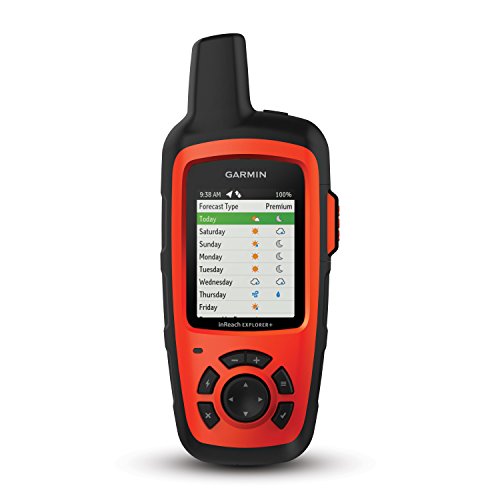
Map-Loaded Navigation Choice – Garmin inReach Explorer+
For satellite communicators for remote camping that double as a handheld navigator, the Garmin inReach Explorer+ brings built-in topo maps and GPS routing into the mix. It also supports two-way texting, interactive SOS, location tracking, and Earthmate app pairing for extra map content.
Best For: Campers who want built-in maps and navigation tools alongside satellite messaging.
Pros:
- Preloaded topo maps with onscreen GPS routing.
- Two-way texting and interactive SOS over global Iridium coverage.
- Built-in digital compass, barometric altimeter, and accelerometer.
- Pairs with the Earthmate app for downloadable maps and imagery.
Cons:
- Older model with shorter battery life than newer Garmin options.
- Bulkier and heavier than ultra-compact communicators.
- Subscription required for satellite messaging and SOS.
This model makes the most sense if you value navigation support as much as emergency communication. It is less compact than newer devices, but the included maps and routing can be a real advantage in unfamiliar camp country.
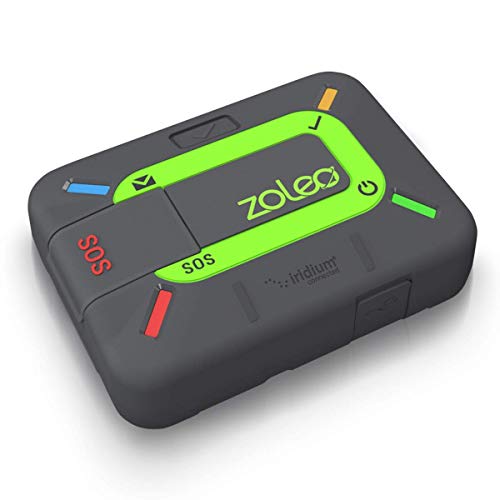
Most Budget-Friendly All-in-One – ZOLEO Satellite Communicator
If you want a practical satellite communicator for remote camping, the ZOLEO is built around simple, off-grid messaging and a lower-cost service approach. It works through satellite, cell, or Wi‑Fi with the lowest-cost network available, and it keeps the essentials covered with SOS, check-ins, GPS location sharing, and long-form messages.
Best For: Campers who want dependable emergency messaging, check-ins, and email/text support without paying for more device than they need.
Pros:
- Uses satellite, cellular, or Wi‑Fi to send texts and emails through the ZOLEO app.
- Includes SOS alerting with GPS location and 24/7 emergency monitoring.
- Unlimited check-ins are included, plus location sharing and optional waypoint sharing.
- Rugged IP68 build and over 200 hours of battery life support long trips.
Cons:
- Requires a service plan, with the device depending on the app for core communication.
- Location sharing waypoints are an optional add-on.
- Not as feature-rich for navigation as some more advanced outdoor communicators.
For remote camping where the priorities are reliability, battery life, and affordable messaging, the ZOLEO covers the core needs well. Its mix of messaging modes and included check-ins makes it a strong no-frills choice.
Best Compact Premium Pick – Garmin inReach Messenger
Garmin inReach® Messenger Handheld Satellite Communicator, Global Two-Way Messaging
Check Price On AmazonThe Garmin inReach Messenger is a compact satellite communicator for remote camping when you want straightforward two-way texting and reliable emergency tools. It supports global messaging through the Garmin Messenger app, lets you share your location, and can optimize message sending through cellular and satellite connections.
Best For: Campers who want a lightweight communicator with long battery life, group messaging, and Garmin’s emergency ecosystem.
Pros:
- Small, rugged, lightweight design is easy to carry on camping trips.
- Two-way global messaging and group chats work through the smartphone app.
- Preset check-in messages do not count toward allotted text messages.
- Up to 28 days of battery life in 10-minute tracking mode, plus safety charging for a depleted phone.
Cons:
- Active satellite subscription is required for satellite features.
- Screen is small and monochrome, so it’s more functional than flashy.
- Core features depend on pairing with a smartphone app.
This is a strong pick if you value portability and battery endurance over a larger interface. For remote camping, its combination of group messaging, SOS support, and long runtime makes it an efficient carry.
Best Feature-Rich Tracking Option – ACR Bivy Stick Satellite Communicator
For remote camping, the ACR Bivy Stick stands out if you want a satellite communicator with more than basic texting. It combines global Iridium coverage, SOS monitoring, GPS tracking, offline maps, weather, and group communication in one app-driven system.
Best For: Campers, hiking groups, and families who want tracking, maps, and group sharing along with satellite messaging.
Pros:
- Uses 100% global Iridium coverage for SMS, email, GPS tracking, and weather updates.
- Includes 24/7 SOS monitoring through Global Rescue and shares real-time location.
- Offers unlimited check-ins, live tracking, and GroupTrack for up to 12 people.
- Supports offline maps and built-in GPS for navigation without cell service.
Cons:
- Plans come with a 3-month commitment per device after activation.
- More features may mean more app dependence than a simpler communicator.
- Battery life is solid, but not as long as some top endurance-focused rivals.
If you want satellite communicators for remote camping that also handle navigation and group coordination, the Bivy Stick is especially versatile. It’s a strong fit for people who want tracking and mapping alongside emergency communication.
Ultra-Compact GPS Pick – Garmin inReach Mini 2 Satellite Communicator
For satellite communicators for remote camping, the Garmin inReach Mini 2 is a strong choice if you want the smallest possible device without giving up core safety features. It uses the Iridium network for global coverage, supports two-way text messaging, and adds interactive SOS, weather updates, and TracBack routing for backcountry trips.
Best For: Campers and hikers who want a lightweight, rugged communicator with long battery life and full SOS support.
Pros:
- Global Iridium satellite coverage with two-way texting and email support
- Interactive SOS to Garmin Response, staffed 24/7
- Very compact at 3.5 oz with MIL-STD-810 toughness and IPX7 water resistance
- Up to 14 days of battery life in 10-minute tracking mode
Cons:
- Requires a satellite airtime plan
- Small 0.9-inch screen limits on-device viewing
- Setup and control are easier when paired with a phone or Garmin device
This is the most trail-friendly option here if pack space matters. It combines emergency coverage, navigation support, and long runtime in a compact build that fits remote camping well.
Phone-Paired Messenger – Motorola Defy Satellite Link
If you’re shopping satellite communicators for remote camping and already carry a smartphone, the Motorola Defy Satellite Link offers a simple way to add satellite texting and SOS. It pairs with iOS and Android phones, includes check-in messaging, and is built with an IP68 rugged rating for dust and water exposure.
Best For: Smartphone users who want a compact satellite add-on for check-ins and emergency alerts.
Pros:
- Two-way satellite-enabled messaging through a paired phone
- Check-in button sends coordinates or a preset message
- SOS assist works without a connection, with unlimited SOS included on service plans
- IP68 dustproof and waterproof construction
Cons:
- Service plans are required
- Battery standby is rated at up to 4 days
- Depends on a compatible iOS or Android smartphone for full use
This is a practical option if you want satellite contact without carrying a full standalone handheld. It favors simplicity and phone integration over advanced onboard mapping or navigation tools.
Group Messaging Option – Garmin inReach Messenger Handheld
Garmin inReach® Messenger Handheld Satellite Communicator, Global Two-Way Messaging (Renewed)
Check Price On AmazonAmong satellite communicators for remote camping, the Garmin inReach Messenger stands out if you want simple global messaging with group chat support. It enables two-way texting, preset check-ins, GPS location sharing, and interactive SOS, while also working through cellular and satellite pathways to help optimize delivery.
Best For: Campers who want a rugged messenger for group updates, location sharing, and long battery life.
Pros:
- Global two-way messaging through the Garmin Messenger app
- Group messaging lets you share updates with multiple contacts
- Interactive SOS to Garmin IERCC and GPS location sharing
- Up to 28 days of battery life in 10-minute tracking mode
Cons:
- Active satellite subscription required
- Messaging is centered on app pairing rather than a large standalone display
- Renewed condition may not suit buyers who want brand-new gear
This model is a strong pick for campers who value communication over navigation extras. Its long battery life, safety charging, and group chat features make it especially useful for longer off-grid trips.
How We Picked the Best Satellite Communicators for Remote Camping
We focused on the features that matter most off-grid: dependable satellite network support, SOS capability, two-way messaging, battery efficiency, and portability. We also looked at app support, navigation features, and how easy each device is to use when you’re cold, tired, or far from help.
Quick Comparison
Some satellite communicators are built for ultra-light backpacking, while others add mapping, touchscreen controls, or broader messaging options. In general, Garmin inReach models are strong all-around picks, ZOLEO and Bivy Stick are appealing app-connected options, and Spot and Motorola offer simpler or more budget-friendly approaches.
Key Buying Factors for Satellite Communicators for Remote Camping
Network Coverage and Reliability
Coverage matters more than almost anything else. Look for devices that use a proven satellite network and support the regions where you actually camp. If you travel internationally or into very remote terrain, confirm coverage before buying.
Messaging and SOS Features
Two-way texting is especially useful because it lets you confirm plans, share delays, and coordinate rescues if needed. SOS support should be easy to activate and backed by a monitoring service you trust.
Battery Life and Portability
For Satellite Communicators for Remote Camping, battery life can be a deciding factor on multi-day trips. Compact devices are easier to carry, but larger models may offer better screens or navigation tools.
App Experience and Navigation
Many devices rely on a smartphone app for typing messages and managing contacts. If you prefer standalone use, prioritize onboard controls and navigation. If you like a lighter device with a bigger interface on your phone, app-based models may fit better.
Who Should Buy Which Satellite Communicators for Remote Camping?
Backpackers and minimalist campers should lean toward small, lightweight models with strong battery performance. Campers who want extra navigation features may prefer devices with maps and GPS tools. If your main goal is dependable emergency communication with straightforward texting, an app-connected messenger can be a smart value. For families, overland travelers, and frequent backcountry visitors, a more full-featured communicator may be worth the higher cost.
The best choice depends on how far you travel, how often you camp off-grid, and whether you want simple SOS protection or a more complete communication tool for remote trips.