
Choosing among the best resin printers for jewelry design means balancing fine detail, dependable dimensional accuracy, workflow speed, and the materials your casting process requires. A high-resolution printer can reveal intricate settings and textures, but successful jewelry production also depends on resin compatibility, support strategy, post-processing, and ventilation.
This roundup covers compact and large-format MSLA printers, castable resins, and useful workflow equipment. The guide below explains what to compare so you can select a setup suited to custom pieces, prototypes, production batches, or learning at home.
Best 10 Resin Printers for Jewelry Design Picks for 2026
Wax-Enhanced Detail

- Wax-containing formula supports easier burnout.
- Smooth, high-resolution prints for jewelry models.
- Works with most LCD and DLP printers.
Best For: Detailed rings, pendants, and small cast-metal parts
High-Wax Casting Value
JAMG HE Jewelry Castable Resin
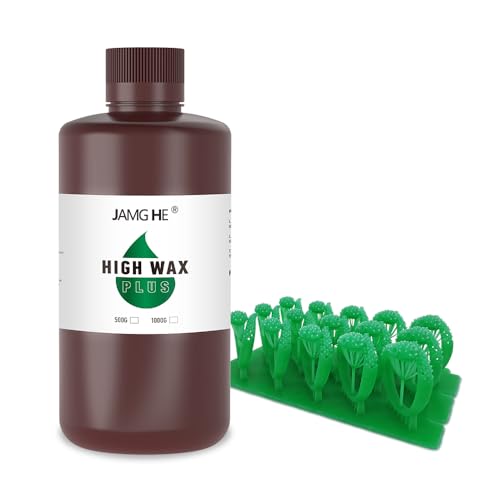
- 60% wax content is designed for easier casting.
- 1kg package supports multiple jewelry projects.
- Works with DLP, LCD, and mono LCD printers.
Best For: Thick-part jewelry and repeat casting projects
10K Precision Platform

- 7-inch 10K LCD delivers fine print detail.
- 153.4 × 87 × 165 mm build volume.
- Four-point leveling and power-loss recovery.
Best For: Detailed jewelry models and beginner-friendly resin printing
Ventilated Workspace Upgrade

- Fits two printers or a printer and curing machine.
- Carbon filter, fans, and expandable exhaust pipes.
- Viewing window and enclosed dust-resistant design.
Best For: Larger resin-printing stations needing workspace ventilation
High-Resolution Pick

- 16K LCD with 14 x 19 μm XY resolution
- Automatic resin heating below 25°C
- 150 mm/h printing with AI monitoring
Best For: Detailed jewelry models and larger batch prints
Beginner-Friendly Pick
- One-click automatic leveling
- 4K mono LCD for intricate details
- Residue detection and overheat protection
Best For: New users seeking simple, monitored resin printing
Best Entry-Level Precision

- 4K monochrome LCD with 35 × 35 μm XY resolution
- Automatic leveling and smart issue detection
- Print speeds up to 70 mm/h
Best For: Accessible jewelry prototyping and small detailed models
Best High-Speed Detail

- 16K resolution with 14 × 19 μm XY detail
- Tilt-release printing up to 150 mm/h
- AI camera and 25°C tray heating
Best For: Fast, highly detailed jewelry model production
Wax-Enhanced Detail – Siraya Tech Cast Resin
For jewelry makers comparing resin printers for jewelry design, Siraya Tech Cast is a castable 405nm photopolymer resin designed for detailed rings, pendants, and small metal parts. Its purple color, smooth surface, and wax-containing formula make it a practical option for users who want straightforward printing and easier burnout.
Best For: Jewelry designers producing high-resolution rings, pendants, and small cast-metal components.
Pros:
- Wax-containing formula is easier to burn than many non-wax-based casting resins.
- Designed for smooth, high-resolution prints with precise details.
- Does not require a very dry environment or special additive to print and burn well.
- Compatible with most LCD and DLP printers and listed as 8K capable.
Cons:
- It is a material purchase rather than a complete resin printer.
- Its 500g quantity may be less suitable for high-volume production than larger bottles.
This is a versatile castable resin for jewelers who value ease of use and detailed results. Confirm your printer’s compatibility and casting workflow before ordering.
High-Wax Casting Value – JAMG HE Jewelry Castable Resin
JAMG HE Jewelry Castable Resin is formulated for jewelry casting and 3D printing, making it a strong material candidate for resin printers for jewelry design. Its 60% wax content is intended to simplify casting, while the 1kg package supports multiple projects.
Best For: Beginners and jewelry studios casting thicker parts across DLP, LCD, and mono LCD printers.
Pros:
- High wax content is designed to simplify the casting process.
- Handles thick-part jewelry and aims to avoid cracking during casting.
- Supports rapid printing at listed DLP and mono LCD exposure ranges.
- Compatible with DLP, LCD, and MONO 3D printers.
Cons:
- Actual exposure settings and results will depend on the specific printer.
- The notes do not specify the resin’s color or surface appearance before casting.
With its large 1kg quantity and high-wax formulation, this resin is geared toward repeat jewelry casting. Use the manufacturer’s recommended exposure ranges as a starting point and test on your printer.
10K Precision Platform – Anycubic Photon Mono 4
The Anycubic Photon Mono 4 is a complete resin printer for jewelry design, with a 7-inch 10K monochrome LCD and 17-micron XY pixel size. Its detailed imaging, uniform light source, and useful build volume make it suitable for intricate jewelry models and other small, precision-focused prints.
Best For: Beginners and jewelry designers who want a high-resolution resin printer with a straightforward leveling system.
Pros:
- 10K resolution supports highly detailed models and fine surface features.
- LighTurbo matrix lighting is designed to provide balanced, uniform exposure.
- Build volume measures approximately 153.4 × 87 × 165 mm.
- Four-point leveling and power-loss resume features improve ease of use.
Cons:
- Anycubic APP service is not supported for this model.
- A 4-point leveling process still requires careful initial setup.
This printer combines high pixel density with beginner-oriented setup features, making it a compelling foundation for detailed jewelry workflows. Its build area is practical for individual pieces and small batches, though larger designs may require splitting.
Ventilated Workspace Upgrade – YOOPAI Large Resin Enclosure
The YOOPAI Large Resin 3D Printer Enclosure is an accessory for resin printers for jewelry design rather than a printer itself. Its oversized interior can accommodate two resin printers or a printer and curing machine, while carbon filtration, exhaust fans, and a transparent viewing window help create a more controlled workspace.
Best For: Jewelry-printing workspaces needing room for a printer and curing equipment with odor and dust management features.
Pros:
- Large 30 × 19.7 × 28.3-inch interior can hold two resin printers or a printer and curing machine.
- Built-in carbon filter, exhaust fans, and expandable pipes support odor and emissions management.
- Six-sided enclosure helps shield equipment from dust and resin splashes.
- Transparent front window allows monitoring without opening the cover.
Cons:
- Users must measure their equipment before ordering to confirm fit.
- Activated-carbon filtration can slow airflow, so ventilation may require additional wait time or exhaust piping.
- It adds a large footprint to the workspace.
This enclosure is useful for organizing a resin-printing station and reducing exposure to odors, dust, and splashes. It is especially practical when the printer and curing equipment need to share one enclosed area, but workspace dimensions and external venting should be planned first.
High-Resolution Pick – ELEGOO Saturn 4 Ultra 16K
For resin printers for jewelry design, the ELEGOO Saturn 4 Ultra 16K emphasizes fine detail, a large build area, and features intended to improve print reliability. Its 16K screen and 14 x 19 μm XY resolution are suited to intricate models, while automatic resin heating helps maintain more consistent material conditions.
Best For: Jewelry designers who need highly detailed prints, a generous build volume, and automated monitoring features.
Pros:
- 16K LCD with 15120 x 6230 px resolution and 14 x 19 μm XY resolution
- Automatic resin-tank heating activates below 25°C
- 150 mm/h printing with tilted release technology
- AI camera, automatic leveling, resin monitoring, and Wi-Fi transfer
Cons:
- Its 35.4-pound weight and larger footprint may require dedicated workspace
- The extensive feature set may be more than needed for occasional small prints
The Saturn 4 Ultra 16K is the strongest detail-focused option here for complex jewelry models. Automatic setup and monitoring can also reduce routine intervention during longer print jobs.
Beginner-Friendly Pick – ELEGOO Mars 5
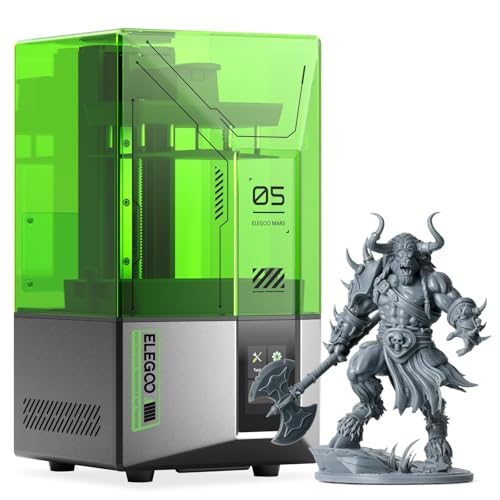
The ELEGOO Mars 5 is a practical entry point among resin printers for jewelry design, pairing a 4K mono LCD with automatic leveling and a one-click self-check. Its sensors and overheat protection are designed to reduce common setup and monitoring problems.
Best For: Beginners and makers who want a straightforward printer for detailed, smaller-scale resin projects.
Pros:
- One-click automatic leveling simplifies initial setup
- 4K mono LCD and COB light source reproduce intricate details
- Residue detection and resin-shortage alerts help prevent interruptions
- Overheat protection stops printing if LED temperature exceeds 80°C
Cons:
- Its 4K resolution is lower than the 16K Saturn models in this roundup
- The supplied notes do not specify its printing size or print speed
Choose the Mars 5 when ease of use matters more than maximum resolution or documented build capacity. Automatic leveling and self-checks make it approachable for jewelry-design newcomers.
Complete Workflow Bundle – Saturn 4 Ultra 16K with Mercury Plus V3.0
This bundle combines the Saturn 4 Ultra 16K with the Mercury Plus V3.0 wash and cure station, making it a convenient package for resin printers for jewelry design. The printer supplies high-resolution, high-speed production, while the included station provides a 7.5-liter capacity for post-processing.
Best For: Jewelry makers who want a printer and dedicated wash-and-cure setup in one purchase.
Pros:
- Includes the Saturn 4 Ultra 16K printer and Mercury Plus V3.0 station
- Printer offers a 16K display, 150 mm/h speed, and 8.33 x 4.66 x 8.66-inch print size
- Mercury Plus V3.0 has a 7.5-liter capacity
- Wash-and-cure station is compatible with Mars, Saturn, Photon, Halot, and other listed printer types
Cons:
- The combined package requires more workspace than a printer alone
- Bundled equipment may be unnecessary if you already own a wash-and-cure station
This is the most complete option for buyers building a dedicated resin-printing workflow. Its value comes from pairing the Saturn’s detailed production capabilities with dedicated post-processing equipment.
Best Entry-Level Precision – Mars 5 MSLA
For shoppers comparing resin printers for jewelry design, the ELEGOO Mars 5 combines a compact footprint with 4K monochrome detail and automated leveling. Its 35 × 35 μm XY resolution, COB light source, and laser-engraved build plate support detailed models while keeping setup approachable.
Best For: Jewelry designers who want an easy-to-use printer for detailed prototypes, patterns, and small models.
Pros:
- 4K monochrome LCD delivers 35 × 35 μm XY resolution.
- Automatic leveling and a laser-engraved plate simplify setup and improve adhesion.
- Mechanical sensor checks for low resin, debris, release-film replacement, and overheating.
- Print speeds reach up to 70 mm/h, with cooling hardware for temperature management.
Cons:
- Its smaller format is less suited to large batches or oversized models.
- Successful results still depend on correct settings, supports, and prompt tank cleaning.
The Mars 5 is a practical choice when accessible operation and fine detail matter more than maximum build capacity or speed.
Best High-Speed Detail – Saturn 4 Ultra 16K
The ELEGOO Saturn 4 Ultra 16K is built for jewelry workflows that prioritize extremely fine detail and faster production. Its 14 × 19 μm XY resolution, tilt-release technology, and large-format design can help streamline repeated model printing.
Best For: Designers producing highly detailed jewelry models who value speed, monitoring, and controlled resin temperature.
Pros:
- 16K monochrome LCD provides 14 × 19 μm XY resolution for fine details.
- Tilt-release technology supports speeds up to 150 mm/h.
- AI camera monitors for empty build plates and model warping.
- Automatic tray heating maintains resin at 25°C, with power-loss recovery.
Cons:
- Its larger 40.7-pound body requires more workspace than a compact printer.
- Advanced features may be more than needed for occasional small prints.
Choose the Saturn 4 Ultra when production efficiency and exceptionally detailed surfaces are central to your jewelry design process.
Best for Batch Production – Jupiter 2 Large 16K
For jewelry studios needing volume, the ELEGOO Jupiter 2 offers a 302.4 × 161.98 × 300 mm build volume that can accommodate larger objects or many smaller models in one job. Its 16K imaging system, automated resin supply, and temperature control are aimed at longer, more demanding workflows.
Best For: Jewelry businesses and advanced makers printing multiple models or larger pattern and prototype assemblies.
Pros:
- Large build volume supports bigger objects or multiple smaller prints.
- 16K resolution and 20 × 26 μm XY resolution target detailed results.
- Smart tank heating maintains 30°C, while automated resin replenishment helps prevent mid-print shortages.
- Auto leveling, power-loss recovery, monitoring, and resin safety alarms support unattended operation.
Cons:
- At 63.8 pounds, it needs substantial workspace and a stable setup.
- Its large format and extensive features may be excessive for occasional small jewelry projects.
- The notes describe manual leveling with real-time feedback, so setup is not entirely hands-off.
The Jupiter 2 is the strongest fit here for scaling up jewelry production, especially when build volume and workflow automation justify its larger footprint.
How We Picked the Best Resin Printers for Jewelry Design
We focused on the features that matter most when printing rings, pendants, settings, models, and casting patterns: resolution, print consistency, build volume, speed, ease of use, and support for jewelry-oriented workflows. We also included castable resins because the material can be just as important as the printer when the goal is burnout or investment casting. Wash-and-cure equipment and enclosure options were considered for buyers building a more complete workstation.
Resolution alone does not guarantee a successful finished piece. Exposure control, accurate calibration, stable Z-axis movement, reliable bed adhesion, and well-prepared supports all affect whether delicate prongs, pavé details, and thin walls print correctly.
Quick Comparison
| Best For | What to Prioritize | Recommended Type |
|---|---|---|
| Small custom jewelry and learning | Simple setup, dependable detail, manageable operating cost | Compact MSLA printer |
| Detailed prototypes | High XY resolution and precise exposure control | High-resolution 10K or 16K printer |
| Multiple pieces per batch | Build area, print speed, and platform stability | Medium or large-format resin printer |
| Direct casting workflows | Low-ash burnout and tested material profiles | Castable or high-wax resin |
| Cleaner home operation | Ventilation, enclosure, washing, and curing | Printer plus enclosure and post-processing setup |
Key Buying Factors for Resin Printers for Jewelry Design
Resolution and Detail
Look at XY pixel size, not only the headline 10K or 16K figure. Smaller pixels can reproduce fine engraving and surface texture, while consistent exposure and accurate mechanics help preserve those details. A sharp screen is most useful when your CAD files, supports, and resin profile are equally well optimized.
Build Volume and Workflow Speed
A compact printer can be economical for one-off rings, but a larger platform lets you arrange several pieces or print larger masters. Compare usable build dimensions and layer speed rather than relying solely on advertised maximum speed. Faster printing may require more careful support design and exposure tuning.
Resin Compatibility and Casting
Standard model resin is suitable for visual prototypes but may leave ash or residue during burnout. For casting patterns, select a jewelry-specific castable resin and follow its recommended investment, burnout, and exposure settings. Confirm that the printer’s wavelength and profile support the material before purchasing in bulk.
Post-Processing and Safety
Resin prints require washing and UV curing, and uncured resin should be handled with appropriate gloves, eye protection, and ventilation. An enclosure with filtration or ducted ventilation can make a home workspace more practical, but it does not replace safe chemical handling. Plan for wash containers, curing capacity, spill control, and resin disposal.
Who Should Buy Which Resin Printers for Jewelry Design?
Choose a Compact MSLA Printer If You Are Learning or Making Occasional Pieces.
Smaller models are easier to place, generally use less resin per job, and can deliver enough detail for many rings, charms, and prototype components.
Choose a High-Resolution Mid-Size Printer for Detailed Production Work.
Models with 10K or 16K screens are a strong fit for jewelers who need crisp features while still wanting a practical footprint and reasonable batch capacity.
Choose a Large-Format Printer for Batches or Oversized Masters.
A larger build platform is worthwhile when you regularly print multiple designs at once or need larger models. Make sure your washing and curing equipment can handle the resulting parts.
Choose Castable Resin When the Printed Pattern Is Headed for Casting.
Match the resin to your investment and burnout process, and test a small design before committing valuable metal or production time. For the cleanest workflow, pair a suitable printer and resin with dependable supports, ventilation, washing, and curing equipment.