
A good transmitter makes an airplane easier to set up and gives you confidence when it’s time to fly. The right choice depends less on a headline channel count than on your aircraft, receiver ecosystem, and the functions you actually need.
These 10 options range from basic six-channel bundles to radios with more channels and model-management features. Here’s what to check before choosing one for your current plane—or your next few builds.
Best 10 Rc Airplane Transmitters Picks for 2026
Simple Starter Set
FLYSKY FS-i6 with FS-iA6 Receiver

- Six-channel AFHDS 2A system
- FS-iA6 receiver included
- Requires four AA batteries
Best For: Pilots wanting a transmitter-and-receiver package
Telemetry-Ready Pick
Radiolink AT10II 12-Channel Set

- 12 channels and R12DS receiver
- PRM-01 voltage module included
- Up to 2.5-mile listed in-air range
Best For: Pilots seeking more channels and voltage monitoring
Multi-Model Choice
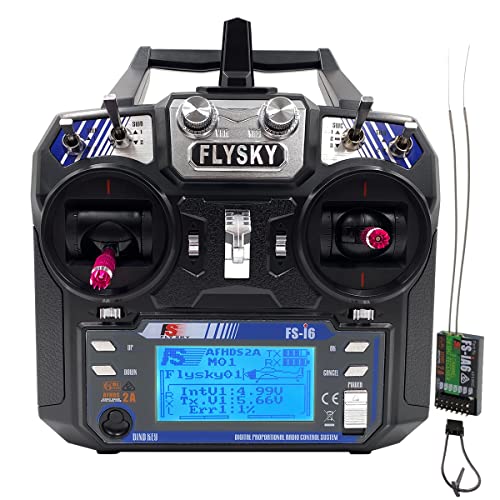
- 20-model programming memory
- FS-iA6 receiver included
- Six-channel AFHDS 2A system
Best For: Hobbyists managing several compatible models
Large Fleet Pick
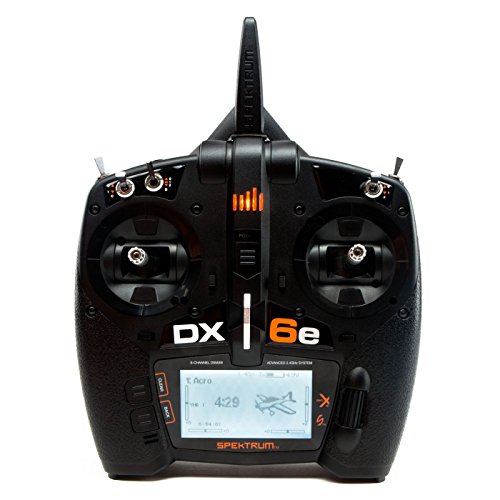
- 250-model memory
- Wireless DSMX/DSM2 trainer link
- Receiver sold separately
Best For: Pilots managing many models with compatible receivers
Most Model Memory
Flysky FS-i6X with FS-iA10B 10-Channel Receiver

- Stores up to 20 model setups
- Included receiver offers multiple output modes
- LCD displays TX and RX voltage
Best For: Pilots managing several aircraft setups
Best for Telemetry Options
Radiolink AT9S Pro with R9DS Receiver

- 10/12 channels and eight programmable mixes
- RSSI, low-voltage, and failsafe features
- Expanded telemetry needs separate accessories
Best For: Pilots seeking configurable controls and optional telemetry
Best for Basic Receiver Pairing
Flysky FS-i6X with FS-iA6B Receiver
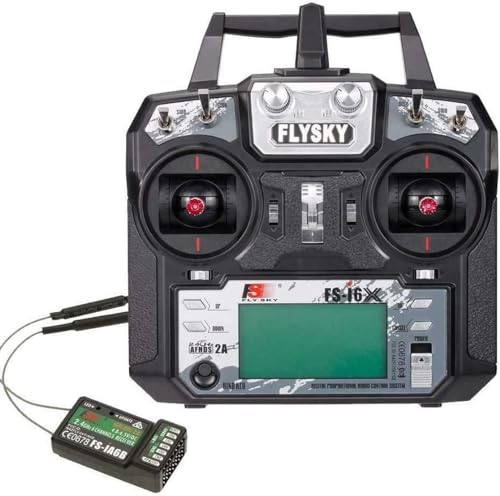
- Six channels by default; supports up to ten
- Unique IDs help secure paired communication
- Bidirectional data and i-BUS support
Best For: Pilots wanting an FS-i6X and FS-iA6B bundle
Best for PWM Channel Access
DTXMX Flysky FS-i6X with FS-iA10B

- 10-channel transmitter and FS-iA10B included
- Frequency hopping helps reduce interference
- Power-battery telemetry needs an extra module
Best For: Fixed-wing pilots seeking an FS-i6X/FS-iA10B bundle
Best for Multi-Model Controls
HAWK'S WORK FS-i6X with FS-iA6B
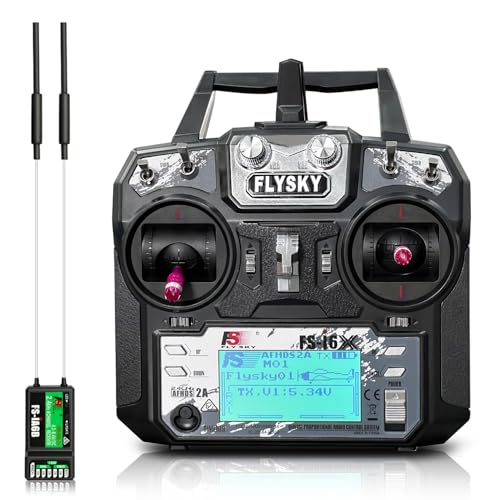
- User-selectable 6–10-channel setting
- Four switches and two knobs
- Includes FS-iA6B, not FS-iA10B
Best For: Pilots controlling airplanes and other RC models
Best for Output Flexibility

- PWM, PPM, S.bus, and i.bus options
- Stores 20 model groups
- 10-channel PWM needs another receiver
Best For: Aircraft builds suited to FS-iA6B output modes
Simple Starter Set – FLYSKY FS-i6 with FS-iA6 Receiver
Among rc airplane transmitters, this FLYSKY FS-i6 is a straightforward six-channel choice that comes with an FS-iA6 receiver. Its 2.4GHz AFHDS 2A system supports planes, gliders, helicopters, and quadcopters.
Best For: Pilots who want a six-channel transmitter and matching receiver in one package.
Pros:
- Includes the transmitter, FS-iA6 receiver, bind cable, and manual.
- Uses AFHDS 2A with transmitter-specific receiver binding.
- Listed maximum range is 500 meters.
Cons:
- Requires four AA batteries, which are not included.
- Six channels may limit setups needing more controls.
Choose this set when included receiver hardware and simple six-channel operation matter more than a larger channel count.
For shoppers comparing rc airplane transmitters with more control options, the Radiolink AT10II offers 12 channels and includes an R12DS receiver. Its listed in-air control range is up to 2.5 miles, with DSSS and FHSS communication.
Best For: Pilots who want extra channels, included voltage monitoring hardware, and configurable flight controls.
Pros:
- Includes the R12DS receiver and PRM-01 voltage telemetry module.
- Offers channel mixing, endpoint adjustment, throttle lock, and failsafe settings.
- Provides RSSI alerts and a low-voltage alarm on its 3.5-inch screen.
Cons:
- Requires eight AA batteries.
- Expanded telemetry such as speed and altitude needs a separately sold PRM-03 module and compatible flight controller.
The AT10II is the feature-rich option here, but check which telemetry readings your setup can actually support before buying accessories.
If you fly more than one aircraft, this DTXMX Flysky FS-i6 stands out among rc airplane transmitters for its 20-model programming memory. The six-channel AFHDS 2A package includes an FS-iA6 receiver and is listed for fixed-wing aircraft, gliders, and helicopters.
Best For: Hobbyists programming multiple compatible models with one six-channel radio.
Pros:
- Stores programming data for up to 20 models.
- Includes an FS-iA6 receiver; other listed AFHDS 2A receivers can be purchased separately.
- Provides auxiliary channels, throttle curve, three mixes, and elevon functions.
Cons:
- Requires four AA batteries.
- Limited to six channels; the listed warranty covers manufacturer defects for 90 days.
This set is worth considering when model memory and mixing options are priorities, provided six channels cover your aircraft’s needs.
For pilots managing a varied fleet, the Spektrum DX6e brings 250-model memory to the rc airplane transmitters lineup. This six-channel DSMX/DSM2-compatible radio includes programming for airplanes, helicopters, sailplanes, and multirotors, but it is sold without a receiver.
Best For: Pilots who already have compatible receiver plans and want extensive model storage.
Pros:
- Stores settings for up to 250 models.
- Offers a wireless trainer link for use with another DSMX/DSM2 transmitter.
- Lets users change gimbal spring configurations with a rear slider switch.
Cons:
- Receiver is not included.
- Built-in telemetry requires separately sold sensors and a telemetry-enabled receiver.
The DX6e makes the most sense if its model memory and trainer features justify buying a compatible receiver separately.
Most Model Memory – Flysky FS-i6X with FS-iA10B 10-Channel Receiver
Among rc airplane transmitters, this FS-i6X package is worth considering if you want to keep several aircraft setups on one radio. It pairs the transmitter with an FS-iA10B receiver and supports up to 20 stored models.
Best For: Pilots managing multiple fixed-wing, glider, or helicopter models who want a receiver with several output options.
Pros:
- Included FS-iA10B supports 10-channel PWM, S.bus, and i.bus output, plus 8-channel PPM output.
- Three two-position switches, one three-position switch, and two knobs provide physical control options.
- LCD can display transmitter and receiver voltage.
Cons:
- Requires four AA batteries.
- Receiver output mode must be selected in the transmitter menu.
The 20-model memory and included 10-channel receiver make this a practical pick for a growing fleet; check that its output modes suit your particular aircraft setup.
Best for Telemetry Options – Radiolink AT9S Pro with R9DS Receiver
The Radiolink AT9S Pro stands out among rc airplane transmitters for its 10/12-channel controls, included R9DS receiver, and expandable telemetry. Its stated air-range capability is up to 2.1 miles, though actual range depends on operating conditions.
Best For: Experienced pilots who want configurable controls, safety alerts, and optional on-screen flight data.
Pros:
- Offers dual/triple rates, eight programmable mixes, endpoint adjustment, and assignable switches.
- Includes RSSI alerts, low-voltage alarm, and failsafe settings.
- Supports additional telemetry through separately sold PRM-01 or PRM-03 accessories.
Cons:
- Expanded telemetry requires separate accessories and, for PRM-03 data, a compatible flight controller.
- Listed unit weight is 880 g, which may matter if you prefer a lighter radio.
Choose this set if its programming and alert features will be useful to you. Budget separately for the modules needed to display more than the radio’s standard information.
Best for Basic Receiver Pairing – Flysky FS-i6X with FS-iA6B Receiver
Flysky FS-i6X 6-10(Default 6)CH 2.4GHz AFHDS RC Transmitter w/ FS-iA6B Receiver
Check Price On AmazonThis Flysky FS-i6X bundle is a straightforward option among rc airplane transmitters if you want a radio and FS-iA6B receiver together. The listing describes six channels by default, with support for up to ten channels.
Best For: Pilots seeking an FS-i6X and FS-iA6B pairing with bidirectional communication and i-BUS support.
Pros:
- Transmitter and receiver use unique IDs after pairing to help prevent unintended connections.
- Bidirectional communication supports data from compatible sensors.
- Listing notes servo calibration and i-BUS support.
Cons:
- Six channels are the default; confirm the channel configuration your model needs.
- Not water resistant.
This package makes sense when the FS-iA6B is the receiver you want. If you need ten receiver channels and clearly specified PWM, PPM, S.bus, or i.bus output counts, compare the FS-iA10B bundle above.
Best for PWM Channel Access – DTXMX Flysky FS-i6X with FS-iA10B
Among rc airplane transmitters, this FS-i6X package is a practical choice if you want a 10-channel radio with the FS-iA10B receiver already included. Its 2.4GHz AFHDS 2A system uses frequency hopping, and the paired transmitter and receiver recognize each other by unique ID.
Best For: Fixed-wing pilots who want an FS-i6X and FS-iA10B bundle rather than buying the receiver separately.
Pros:
- Includes the FS-iA10B receiver with the 10-channel FS-i6X transmitter.
- Hops among 16 channels to help reduce interference from other transmitters.
- Can display receiver voltage on the transmitter.
Cons:
- Requires four AA batteries.
- Displaying the power battery’s voltage requires a separately purchased FS-CVT01 module.
The included receiver is the main reason to choose this bundle. Check your model’s connection needs before buying, and budget for the extra module if power-battery voltage monitoring matters to you.
Best for Multi-Model Controls – HAWK'S WORK FS-i6X with FS-iA6B
If you use the same radio across several RC vehicles, this is one of the more flexible rc airplane transmitters in the roundup. The FS-i6X lets you set the channel count from 6 to 10 and provides two joysticks, four switches, and two knobs; this package includes an FS-iA6B receiver.
Best For: Hobbyists who want one transmitter for an airplane and other models, such as a multirotor, helicopter, car, or boat.
Pros:
- Adjustable 6–10-channel transmitter setting.
- Four switches and two knobs provide controls for different model setups.
- Bind key and unique-ID pairing are intended to help prevent accidental interference.
Cons:
- The included receiver is the FS-iA6B, not the FS-iA10B option.
- Requires four AA batteries.
Choose this bundle for its adaptable transmitter controls and broad stated model compatibility. If your build specifically calls for an FS-iA10B receiver, account for that before ordering.
Best for Output Flexibility – FS-i6X with FS-iA6B Receiver
For shoppers comparing rc airplane transmitters by receiver output, this FS-i6X and FS-iA6B package offers several connection options: 6-channel PWM, 8-channel PPM, and 10-channel S.bus or i.bus, selected through the transmitter menu. It is listed for fixed-wing, glider, and helicopter models.
Best For: Pilots whose aircraft setup can use the included FS-iA6B receiver’s available output modes.
Pros:
- Supports PWM, PPM, S.bus, and i.bus output modes on the included receiver.
- Transmitter can store 20 model groups.
- LCD displays transmitter and receiver voltage values.
Cons:
- The included FS-iA6B provides only six channels in PWM mode; 10-channel PWM requires a separately purchased FS-iA10B.
- Requires four AA batteries.
This is a useful pick when its receiver outputs match your aircraft’s wiring. Do not mistake the transmitter’s 10-channel capability for 10 PWM outputs from the included FS-iA6B.
How We Picked These Rc Airplane Transmitters
We focused on what buyers can verify from the listed configurations: channel count, included receiver, radio protocol, model-management features, and suitability for common fixed-wing setups. Several listings pair the same Flysky transmitter family with different receivers or sellers, so check the exact bundle rather than assuming similarly named products include the same hardware. We did not treat a claimed range or channel count as a substitute for a safe installation and ground range check.
Quick Comparison: Which Type Fits Your Plane?
A six-channel Flysky FS-i6 bundle is a practical starting point for a conventional trainer with throttle, aileron, elevator, rudder, and a couple of auxiliary functions. FS-i6X bundles offer a path to more channels, but their included receivers differ: an FS-iA6B and an FS-iA10B do not provide the same number of receiver outputs. Radiolink AT9S Pro and AT10II packages suit buyers considering more complex models, provided the bundled receiver supports the connections they need. The Spektrum DX6e is a transmitter-only option; budget for a compatible DSMX receiver separately.
Key Buying Factors for Rc Airplane Transmitters
Count Functions, Then Check Receiver Outputs
List every control and switchable feature your aircraft needs, including flaps, retracts, lights, or a flight controller mode. Confirm both the transmitter’s configured channel count and the included receiver’s usable outputs. An advertised 10-channel transmitter does not automatically make a six-output receiver sufficient for a 10-servo installation.
Stay Within a Compatible Radio Ecosystem
Receivers must match the transmitter’s supported protocol and binding requirements; a shared 2.4GHz frequency is not enough. Verify the specific Flysky AFHDS generation, Radiolink compatibility, or Spektrum DSMX support before buying replacement receivers. If you already own aircraft, staying with their receiver ecosystem may save time and money.
Prioritize Setup Tools Over Headline Specs
Look for the mixes, servo reversing, endpoints, rates, and model memories your fleet requires. Telemetry and a trainer function can be useful, but check which features require a compatible receiver, sensor, or second radio. Consider the cost of additional receivers, batteries, and any charging equipment not clearly included in the listing.
Check the Installation Before Flight
Mount the receiver and antennas according to its instructions, set a throttle failsafe, verify every control surface moves correctly, and perform the manufacturer’s ground range check. Marketing claims about long range do not guarantee performance in a particular aircraft.
Who Should Buy Which Rc Airplane Transmitters?
First fixed-wing plane: Choose a six-channel FS-i6 bundle if its included receiver covers your control layout. Growing Flysky fleet: Consider an FS-i6X package, choosing the receiver version by the outputs you need now. More complex aircraft: Compare the Radiolink bundles’ channel and receiver configurations against your wiring plan. Existing Spektrum setup: The DX6e may be convenient if you want to use compatible DSMX receivers and do not need one included in the box.