
Measuring rainfall does not have to involve complicated weather equipment. The best rain gauges for beginners make it easy to check precipitation at a glance, whether you are watering a garden, monitoring a lawn, or simply learning more about local weather.
This roundup compares 10 practical outdoor rain gauges, including clear acrylic models, tall designs, decorative options, freeze-resistant picks, and gauges with mounting or stake holders.
Best 10 Rain Gauges for Beginners Picks for 2026
Simple Visibility Pick
Easy-to-Read Magnifying Rain Gauge
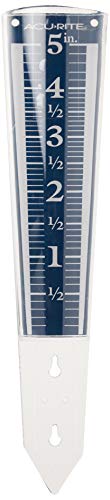
- 5-inch rainfall capacity
- Magnified numbers and white markings
- Hangs or stakes into the ground
Best For: Beginners who prioritize quick, clear rainfall readings
Tall Decorative Choice
Adjustable Floating-Buoy Rain Gauge

- Adjustable 19- to 29-inch height
- Red buoy and bold scale improve visibility
- Stable H-shaped stake base
Best For: Visible garden placement around grass or flowers
Flexible Mounting Pick
Stainless Steel Rack Rain Gauge

- 5-inch rainfall capacity
- Ground spike and post brackets included
- 304 stainless steel rack
Best For: Yards, patios, decks, or fence-post installation
Watering Helper
2-in-1 Rain and Sprinkler Gauge
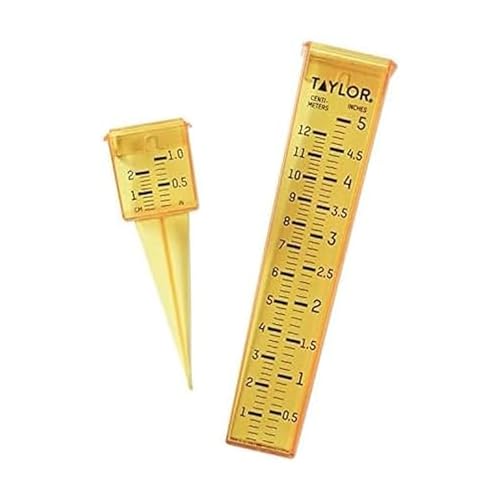
- 5-inch rain gauge plus 1-inch sprinkler gauge
- Use together or in two locations
- Ground stake or post mounting
Best For: Tracking rainfall and sprinkler output together
Best Overall
Upgraded Adjustable Rain Gauge

- Large scale and colored strips improve visibility.
- Adjusts between 19 and 29 inches tall.
- Stake or fence mounting with removable tube.
Best For: Beginners needing a visible, flexible garden rain gauge
Best Glass Option

- Weather-resistant glass tube with red float.
- Measures up to 7 inches and 17 centimeters.
- Ground or wall mounting is included.
Best For: Beginners wanting clear dual-scale readings
Best Fence Mount
Stainless Steel Rack Rain Gauge

- 7-inch capacity with large 0.1-inch markings.
- Thickened plastic tube supports outdoor use.
- Bracket and screws enable fence mounting.
Best For: Beginners seeking a compact fixed-mount gauge
Winter-Ready Pick
Upgraded Freeze-Proof Rain Gauge

- Freezer-tested for year-round outdoor use
- Large, clear scale with 0.1-inch increments
- Adjustable height and stable H-shaped stake
Best For: Gardeners needing an easy-to-see gauge for cold climates
Best Value Set
Yexiya Two-Pack Acrylic Rain Gauges

- Includes two reusable gauges
- Magnified scale is easy to read
- Installs in soil or on a fence
Best For: Beginners monitoring rainfall in multiple locations
Accuracy-Focused Pick
7-Inch Rain Gauge with Metal Holder
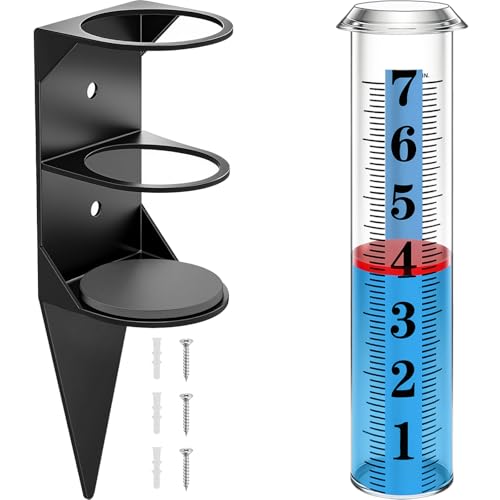
- Redesigned opening helps limit excess water entry
- Large scale, blue strip, and red float improve reading
- Cast-iron holder supports ground or fence mounting
Best For: Gardeners wanting clear readings and sturdy installation
Simple Visibility Pick – Easy-to-Read Magnifying Rain Gauge
For beginners comparing rain gauges for beginners, the AcuRite 5-inch model is a straightforward choice focused on quick, at-a-glance readings. Its magnified markings and simple mounting options make it easy to add to a garden or yard.
Best For: Beginners who want a compact, easy-to-read gauge for basic rainfall tracking.
Pros:
- Measures up to 5 inches of rainfall.
- Numbers are magnified by more than 35% for easier viewing.
- Weather-resistant acrylic construction with hanging or ground-staking options.
Cons:
- It uses a basic manual reading design rather than offering additional watering measurements.
- The acrylic body may be less substantial than a metal-framed alternative.
This is a practical starter gauge when readable markings matter most. Choose it for uncomplicated placement and routine rainfall checks.
Tall Decorative Choice – Adjustable Floating-Buoy Rain Gauge
Among rain gauges for beginners, the JMBay model stands out for its tall adjustable design and highly visible red floating buoy. Its stable H-shaped base and large scale are useful when the gauge will sit in a lawn, garden, or area with taller plants.
Best For: Beginners who want a prominent, decorative outdoor gauge with adjustable height and easy visibility.
Pros:
- Adjusts from 19 to 29 inches to clear grass and flowers.
- Large scale, colored strip, and red floating buoy help show the water level.
- Thickened plastic tube and rust-proof cast-iron frame are designed for outdoor use.
- Removable tube simplifies checking and emptying.
Cons:
- Its taller frame requires more assembly and space than a compact gauge.
- The decorative metal-and-stake construction is more elaborate than a basic wall-mounted model.
This model is a strong fit when visibility and presentation are as important as measurement. Its adjustable height also gives beginners more flexibility when choosing a planting location.
Flexible Mounting Pick – Stainless Steel Rack Rain Gauge
For beginners selecting rain gauges for beginners, this 5-inch model offers a useful choice of mounting locations. Its 2-in-1 stainless steel rack can be staked into the ground or attached to a post, deck, or fence.
Best For: Beginners who need flexible installation in a yard, lawn, patio, or on a fence post.
Pros:
- Includes both a ground spike and post-mounting brackets.
- 304 stainless steel rack is designed for outdoor conditions.
- Mounting screws are included for deck or fence-post installation.
- Provides a 5-inch measurement capacity.
Cons:
- The supplied gauge is relatively compact, so its readings may be less visible from a distance.
- It is a basic rainfall gauge without a floating indicator or sprinkler-measuring function.
This is a sensible option when installation flexibility matters more than decorative styling. Beginners can place it where readings are convenient, either in the soil or on a nearby post.
Watering Helper – 2-in-1 Rain and Sprinkler Gauge
For beginners looking beyond simple rainfall tracking, the Taylor 2-in-1 is one of the more versatile rain gauges for beginners. It combines a 5-inch rain gauge with a 1-inch sprinkler gauge, helping you compare natural precipitation with irrigation output.
Best For: Beginners who want to monitor rainfall and fine-tune lawn sprinkler coverage.
Pros:
- The nested design works as one rain gauge or separates into two monitoring locations.
- The 1-inch sprinkler gauge helps measure irrigation delivery.
- Weather-resistant construction is intended to handle sun, rain, and temperature changes.
- Can be staked directly into the ground or mounted to a post.
Cons:
- The sprinkler gauge has a 1-inch capacity, so it is intended specifically for irrigation output.
- Using both gauges in separate locations requires more placement space.
This is the most useful choice for beginners who want rainfall data to inform watering decisions. Its bright yellow color and flexible mounting also make it easy to locate around the landscape.
Best Overall – Upgraded Adjustable Rain Gauge
For beginners comparing rain gauges for beginners, this model combines an easy-to-read display with flexible placement and height. Its large markings, colored rear strips, and sturdy stake are practical touches for tracking rainfall in a garden or yard.
Best For: Beginners who want a highly visible, adjustable rain gauge for garden or fence placement.
Pros:
- Large, clearly marked scale with 0.1-inch divisions for easier readings.
- Adjustable 19- or 29-inch height helps keep the gauge visible above plants.
- Thickened plastic tube and cast-iron frame are designed for outdoor durability.
- Can be staked into soil or hung from a fence.
Cons:
- The taller setup may be more noticeable in smaller garden spaces.
- Assembly is required before installation.
Its combination of readability, flexible mounting, and a removable tube makes this a beginner-friendly choice for routine rainfall checks.
Best Glass Option – Dual-Scale Glass Rain Gauge
This glass model is a straightforward pick for rain gauges for beginners who want clear rainfall readings in both inches and centimeters. The red float provides a quick visual reference, while the included stand supports ground or wall installation.
Best For: Beginners who prefer a glass tube and dual-scale measurements for garden or lawn tracking.
Pros:
- Dual scale measures up to 7 inches or 17 centimeters.
- Ten graduations per inch support more detailed readings.
- Bright red float makes the water level easy to see.
- Stand supports ground insertion or wall mounting.
Cons:
- Glass construction may require more care than a plastic tube.
- The product details do not specify an adjustable-height design.
Choose this option if clear visual tracking and flexible mounting matter more to you than adjustable height or a plastic construction.
Best Fence Mount – Stainless Steel Rack Rain Gauge
For beginners exploring rain gauges for beginners, this compact fence-mount model offers a simple way to monitor rainfall without driving a stake into the ground. Its 7-inch capacity, large markings, and removable plastic tube make routine checks and emptying uncomplicated.
Best For: Beginners who want a compact rain gauge mounted to a fence, wall, or other fixed surface.
Pros:
- Large 0.1-inch markings make readings easier to interpret.
- Thickened plastic tube is designed to resist freezing cracks.
- Stainless steel rack is intended for durable outdoor use.
- Post-mount bracket and screws are included for installation.
Cons:
- Designed primarily for fixed mounting rather than freestanding placement.
- Its compact dimensions may provide less visual presence than taller models.
This is a practical choice when you have a fence or suitable mounting surface and want a low-profile gauge that is easy to remove and empty.
Winter-Ready Pick – Upgraded Freeze-Proof Rain Gauge
For beginners comparing rain gauges for beginners, this model focuses on easy visibility, stable placement, and year-round outdoor use. Its larger markings and adjustable height make routine rainfall checks straightforward.
Best For: Gardeners who want a visible, adjustable gauge that can remain outdoors through freezing weather.
Pros:
- Freezer-tested design stayed intact with frozen water inside.
- Large numbers and 0.1-inch increments support quick, precise reading.
- Adjustable three-section height and an H-shaped metal stake improve visibility and stability.
- Removable tube makes emptying and cleaning simple.
Cons:
- Its 28.5-inch assembled dimensions may be more substantial than compact gauges.
- Reading accuracy still depends on placing it in a suitable open location.
This is a practical choice if winter durability and easy reading matter most. The adjustable stake is especially useful where grass or plants could hide a shorter gauge.
Best Value Set – Yexiya Two-Pack Acrylic Rain Gauges
If you are starting with rain gauges for beginners, this two-piece set offers a simple way to monitor rainfall in more than one location. The clear scale is magnified by collected water, helping make readings easier to see.
Best For: Beginners who want two lightweight gauges for a garden, yard, fence, or shared use.
Pros:
- Two gauges provide a spare or allow monitoring in separate areas.
- Measures rainfall up to 5 inches.
- Clear scale is enlarged by the water for easier observation.
- Can be inserted into the ground or mounted on a fence, then removed and reused.
Cons:
- The PS material is less explicitly winter-focused than a freeze-tested design.
- Its 5-inch capacity may be limiting during unusually heavy rainfall.
This set keeps setup uncomplicated and adds flexibility through two gauges. It is a sensible starting point for basic rainfall tracking without committing to a more elaborate mounting system.
Accuracy-Focused Pick – 7-Inch Rain Gauge with Metal Holder
For shoppers evaluating rain gauges for beginners, this model combines a redesigned collection opening with a readable tube and sturdy mounting options. The red float and blue backing strip are intended to make rainfall levels easier to see.
Best For: Gardeners who prioritize clear readings, stable mounting, and flexible installation.
Pros:
- Patented tube-mouth design matches the collection area to the tube body to help avoid excess water entry.
- Large-font scale, blue backing strip, and red float improve readability.
- Cast-iron 2-in-1 holder supports ground or post/fence installation.
- Removable replacement tube is easy to check, empty, and reuse.
Cons:
- The holder and mounting options may require more installation decisions than a basic push-in gauge.
- The supplied notes do not specify whether the tube is freezer tested.
This option suits beginners who want more than a minimal rain collector. Its readable indicators and durable holder make it useful for tracking watering needs while also fitting into a garden setting.
How We Picked the Best Rain Gauges for Beginners
We focused on the features that matter most to first-time buyers: clear measurement markings, easy-to-read displays, useful capacity, outdoor durability, and straightforward installation. The selection includes basic acrylic gauges as well as models with metal or stainless-steel holders, red floats, decorative styling, and designs intended to remain readable in changing weather.
Because product names and listings can vary, check the current specifications before buying. Pay particular attention to dimensions, included mounting hardware, measurement units, and whether the gauge is described as freeze-proof or merely weather-resistant.
Quick Comparison
| Type | Best For | What to Look For |
|---|---|---|
| Basic acrylic gauge | Simple garden monitoring | Clear markings and stable placement |
| Gauge with stake | Lawns, beds, and loose soil | Secure insertion and readable height |
| Rack-mounted gauge | Patios, fences, and hard surfaces | Durable holder and mounting options |
| Large or tall gauge | Older users and easier visibility | Large numerals and a prominent float |
| Freeze-resistant model | Cold-weather monitoring | Clear freeze-proof claims and construction details |
Key Buying Factors for Rain Gauges for Beginners
Readability and Capacity
Choose large, high-contrast markings if the gauge will be viewed from a walkway or window. A 5-inch capacity is sufficient for many everyday storms, while a 7-inch model offers more room during heavy rainfall and reduces the need to empty it frequently.
Placement and Stability
Rain gauges should sit in an open area away from roofs, trees, fences, and sprinklers, which can distort readings. Stakes work well in soil, while rack holders are more suitable for fences, posts, patios, or other fixed surfaces. A stable holder is especially important in windy locations.
Material and Weather Resistance
Acrylic is lightweight and easy to read, but it can become cloudy or brittle over time. Metal holders may provide better support. If you leave the gauge outdoors during winter, consider a model specifically described as freeze-proof and follow the manufacturer’s care instructions.
Measurement Style
Some gauges use a simple water level, while others include a float or magnifying section. A prominent float can make small amounts of rain easier to see, but the markings must align accurately with the water level. Combined rain and sprinkler gauges may be useful for lawn-care routines.
Who Should Buy Which Rain Gauges for Beginners?
For a first purchase, choose a clear 5-inch acrylic gauge with a stable stake or holder. Gardeners who need quick readings from a distance may prefer a tall, large-font model with a red float. If you plan to attach the gauge to a fence or patio structure, select a rack-mounted design. Buyers in cold climates should prioritize explicit freeze-proof construction rather than assuming every outdoor gauge can remain outside all winter.
For monitoring watering, a 2-in-1 rain and sprinkler gauge can help compare natural rainfall with irrigation. If you want coverage in more than one location, a two-pack may be more practical than moving a single gauge. Whichever style you choose, accurate placement and regular emptying matter just as much as the gauge itself.