
Choosing the right PTZ camera for a television studio means balancing image quality, control, connectivity, and installation flexibility. The best models can deliver smooth remote operation while keeping production crews, cabling, and setup time manageable.
Our roundup covers 10 options ranging from 1080p broadcast cameras with SDI and XLR audio to 4K NDI systems with AI tracking, PoE, USB, and HDMI connectivity.
Best 10 Ptz Camera for Television Studio Picks for 2026
Studio Audio Pick

- 1080p at 60 fps with 30x optical zoom
- XLR audio plus 3G-SDI and HDMI outputs
- VISCA and VISCA over IP control
Best For: Indoor broadcast studios prioritizing audio and SDI connectivity
Tracking Powerhouse

- 4K video at up to 60 fps
- Auto-tracking and auto-framing
- NDI, USB, IP, SDI or HDMI options
Best For: Studios needing automated tracking and versatile control
Compact Workhorse

- 4K video with 12x optical zoom
- Native NDI HX2 plus SDI, HDMI, USB, and IP
- Compact body for fixed studio angles
Best For: Multi-camera studios needing a discreet 4K network camera
Complete Production Kit

- Three 4K PTZ cameras with 20x optical zoom
- AI human and face auto-tracking
- Includes joystick, quad-screen preview, and PoE switch
Best For: Multi-camera productions needing an integrated control and PoE package
Best 4K NDI Pick

- 4K HDMI output at 30fps
- Official NDI HX3 with license included
- Customizable Gen 3 AI tracking
Best For: Networked 4K studio and multi-camera productions
Best SDI Connectivity

- HDMI, SDI, USB 3.0, and NDI outputs
- SDI cable runs up to 300 feet
- Three Gen 3 AI tracking modes
Best For: SDI-based studios and mixed-output production systems
Best HD Value
FoMaKo FMK20SDI Pro PTZ Camera

- HDMI, 3G-SDI, USB, and IP outputs
- 20x optical zoom with 1080p60
- Free NDI upgrade available
Best For: HD studios needing flexible SDI and HDMI connectivity
Best AI-Tracked NDI Pick
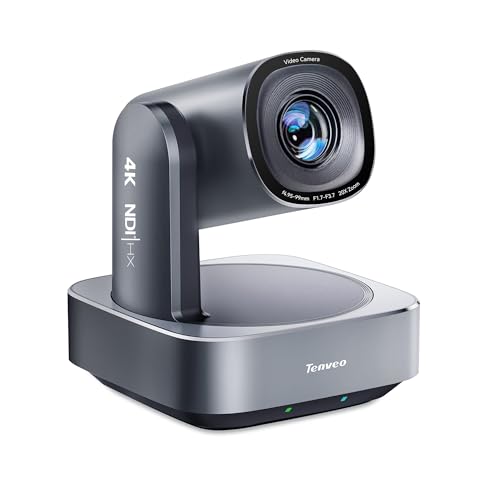
- 4K 30fps HDMI/USB output
- NDI HX2 with PoE connectivity
- AI tracking and gesture control
Best For: NDI-enabled studios needing automated framing
Best 4K60 Production Pick
FoMaKo K600N 4K60 NDI PTZ Camera

- 4K60 HDMI, NDI HX3, USB, and LAN
- 3G-SDI output at 1080p60
- Customizable Gen 3 AI tracking
Best For: Multi-camera studios requiring 4K60 routing
Best SDI and NDI Value

- 4K HDMI/USB with 20x optical zoom
- SDI supports long cable runs
- NDI, PoE, and AI auto-tracking
Best For: Small studios combining SDI and network workflows
Studio Audio Pick – V5925 Broadcast PTZ Camera
For buyers seeking a ptz camera for television studio work, the V5925 emphasizes broadcast-friendly connections and studio audio. It records HDTV 1080p at 60 fps, adds 30x optical zoom, and provides both 3G-SDI and HDMI outputs for integration with professional video equipment.
Best For: Indoor studios and live-streaming setups that need XLR audio, SDI connectivity, and smooth 1080p production.
Pros:
- 1080p video at 60 fps with 30x optical zoom
- XLR inputs support studio-grade stereo audio connections
- 3G-SDI and HDMI outputs suit broadcast workflows
- VISCA and VISCA over IP enable flexible control
Cons:
- Indoor-only design
- Does not provide 4K video capture
The V5925 is a practical choice when audio and conventional broadcast outputs matter more than 4K resolution. Its included wall-mount bracket and wired connectivity can also simplify a permanent studio installation.
Tracking Powerhouse – PTZOptics Move 4K 30x
The PTZOptics Move 4K 30x is a strong ptz camera for television studio environments where presenter movement and remote operation are part of the workflow. Its 4K sensor, auto-tracking, auto-framing, and broad selection of control and output options make it suited to multi-camera productions.
Best For: Studios, broadcast rooms, conferences, and education productions that need 4K capture with automated subject framing.
Pros:
- Captures 4K video at up to 60 fps
- 30x optical zoom with 16x digital zoom
- Auto-tracking and auto-framing modes
- Supports NDI, USB, IP, and either SDI or HDMI output
Cons:
- The supplied specifications do not identify a built-in microphone
- Requires a wired setup for network and production connections
Choose the Move 4K when automated tracking and flexible control are central to your studio workflow. IR, network, RS-232, RS-485, web, app, and platform controls give operators several ways to manage the camera.
Compact Workhorse – PTZOptics Studio 4K
The PTZOptics Studio 4K offers a compact alternative for a ptz camera for television studio installations, especially when the camera will serve as a fixed or complementary angle. It combines 4K video with SDI, HDMI, USB, and native NDI HX2 connectivity in a discreet body.
Best For: Permanent studio angles, municipal meetings, worship productions, sports, and multi-camera systems paired with Move-series cameras.
Pros:
- 4K video resolution
- SDI, HDMI, USB, and IP output options
- Native NDI HX2 for low-latency IP video
- Compact design with multiple mounting options
Cons:
- 12x optical zoom is shorter than the other PTZOptics option listed
- Manual focus may require more operator adjustment
This model makes sense when unobtrusive installation and network integration are more important than extended zoom. Its 5-year manufacturer warranty, noted in the supplied details, may also appeal to buyers planning continuous operation.
Complete Production Kit – Tenveo 4K NDI Bundle
This Tenveo package is more than a single ptz camera for television studio: it bundles three 4K NDI PTZ cameras, a joystick controller with a 7-inch quad-screen preview, and an eight-port PoE switch. The package is designed for live production teams that want cameras, control, monitoring, and network power in one kit.
Best For: Multi-camera studios, churches, schools, events, and productions that need AI tracking plus an included control surface.
Pros:
- Includes three cameras, a quad-screen joystick controller, and PoE switch
- 4K video with 20x optical zoom and AI human/face tracking
- HDMI, USB 3.0, LAN, NDI, and PoE support
- Controller provides real-time previews and variable-speed PTZ control
Cons:
- No built-in microphone
- NDI streaming output is specified at 1080p
- Bundle may be more equipment than a small studio requires
The Tenveo kit is compelling for buyers starting or expanding a coordinated multi-camera production system. Its included controller and PoE switch reduce the need to source core accessories separately, while gesture and AI controls add hands-free operating options.
Best 4K NDI Pick – FoMaKo K20UH PTZ Camera
For buyers seeking a ptz camera for television studio production, the FoMaKo K20UH combines 4K HDMI output, official NDI HX3 certification, and customizable Gen 3 AI tracking. Its 20x optical zoom and broad pan/tilt range suit studio sets, conferences, and multi-camera productions.
Best For: Studios and production teams that need 4K video, NDI networking, and flexible presenter tracking.
Pros:
- Outputs up to 4K at 30fps through HDMI 2.0, with 1080p at 60fps.
- Official NDI HX3 certification with the NDI license included.
- Gen 3 AI tracking offers adjustable modes, sensitivity, target size, and lost-target actions.
- Supports PoE, browser control, and desktop, tripod, wall, or ceiling mounting.
Cons:
- 4K output is limited to 30fps.
- AI tracking configuration may require setup to match the studio environment.
This is the strongest option here for a networked 4K workflow, especially when NDI compatibility and detailed tracking controls matter more than a lower purchase price.
Best SDI Connectivity – AVKANS LV20N AI PTZ Camera
The AVKANS LV20N is a practical ptz camera for television studio setups that need HDMI, SDI, USB, and NDI outputs in one unit. Its locking SDI connection supports cable runs up to 300 feet without extra devices, making it useful for larger production spaces.
Best For: Studios that use SDI infrastructure, ATEM switchers, or mixed HDMI and NDI workflows.
Pros:
- Provides HDMI, SDI, USB 3.0, and NDI HX2/HX3 video outputs.
- SDI supports runs up to 300 feet without additional devices, according to the supplied specifications.
- Gen 3 AI tracking includes presenter, zone, and hybrid tracking modes.
- Built-in tally light indicates preview and program status in supported NDI workflows.
Cons:
- AI tracking is designed to follow one person and is not intended for fast-running subjects.
- The listed output capability emphasizes 1080p60 rather than 4K.
Choose this model when dependable SDI cabling and broad output compatibility are more important than 4K resolution. The tally light is an added advantage for live studio direction.
Best HD Value – FoMaKo FMK20SDI Pro PTZ Camera
For a cost-conscious ptz camera for television studio installation, the FoMaKo FMK20SDI Pro offers 1080p video, 20x optical zoom, HDMI, 3G-SDI, USB, IP streaming, and PoE support. It also includes Gen 3 AI tracking and a free NDI upgrade option.
Best For: HD studios, education spaces, churches, and live productions that want flexible connectivity without requiring native 4K.
Pros:
- Supports simultaneous 3G-SDI, IP, USB, and HDMI connectivity.
- 20x optical zoom with 1080p video formats up to 60fps.
- Gen 3 AI tracking includes adjustable modes, sensitivity, target size, and tracking speed.
- PoE support, LCD status display, and included wall and ceiling mounting hardware simplify installation.
Cons:
- Maximum listed resolution is 1080p rather than 4K.
- NDI requires a free upgrade rather than being included out of the box.
This model makes sense for HD studio environments that already use SDI or HDMI and want the option to add NDI later. Its gear-driven positioning and configurable tracking are useful for repeatable camera moves.
Best AI-Tracked NDI Pick – Tenveo 4K NDI PTZ Camera
For a ptz camera for television studio workflows that need flexible connectivity and hands-free framing, the Tenveo combines 4K HDMI/USB output, NDI HX2 networking, 20x optical zoom, and AI tracking. Its PoE support can simplify installation, while the wide-angle lens and image-processing features suit studio, worship, and event production.
Best For: Studios and live productions that want AI auto-tracking, NDI HX2, and multiple physical outputs.
Pros:
- 4K 30fps video with a 20x optical and 8x digital zoom.
- NDI HX2 support is designed for low-latency IP video and PTZ control.
- AI human/face tracking, auto-framing, presenter mode, and gesture controls.
- HDMI, USB 3.0, RJ45, and PoE provide flexible installation options.
Cons:
- IP/NDI output is limited to 1080p at 30fps, while 4K output is available through HDMI and USB 3.0.
- No built-in microphone.
- Best focusing performance requires at least 2.5 meters from the subject.
The Tenveo is a feature-rich choice when automated subject framing and NDI integration matter more than 4K network output. Verify your camera distance and audio setup before buying.
Best 4K60 Production Pick – FoMaKo K600N 4K60 NDI PTZ Camera
The FoMaKo K600N is a strong ptz camera for television studio setups where smooth 4K60 output and broad switching compatibility are priorities. It supports simultaneous HDMI, NDI HX3, USB 3.0, LAN, and 3G-SDI connections, giving production teams several ways to route video.
Best For: Live studios and multi-camera productions that need 4K60 output and 3G-SDI compatibility.
Pros:
- Supports 4K at 60fps through HDMI, NDI HX3, USB 3.0, and LAN.
- Offers 3G-SDI output at 1080p60 for professional video infrastructure.
- Gen 3 AI tracking includes adjustable modes, sensitivity, framing, and lost-target behavior.
- 20x optical zoom, adjustable movement speed, and fast autofocus support controlled studio shots.
Cons:
- 3G-SDI output is limited to 1080p60 rather than 4K.
- The camera’s extensive settings may require more setup than a basic PTZ model.
Choose the K600N if your studio benefits from 4K60 and multiple simultaneous outputs. Its included NDI license, PoE support, presets, and stated technical assistance also make it practical for larger or evolving installations.
Best SDI and NDI Value – TONGVEO 4K NDI PTZ Camera
For buyers comparing a ptz camera for television studio with both broadcast-style cabling and network streaming, the TONGVEO offers 4K HDMI/USB video, 20x optical zoom, SDI, NDI integration, and PoE. It is aimed at studios and live events using systems such as ATEM, OBS, vMix, or other supported platforms.
Best For: Small studios that need SDI for longer cable runs alongside HDMI, USB, and NDI/streaming options.
Pros:
- 4K 30fps output is available through HDMI and USB 3.0.
- Professional SDI output supports cable runs up to 300 feet according to the supplied notes.
- Official NDI integration works with popular production and streaming software.
- AI presenter tracking and auto-framing use face and body recognition.
Cons:
- IP/NDI output supports up to 1080p, not 4K.
- AI tracking handles one person at a time and is not intended for high-speed motion.
- A joystick controller for multi-camera operation is purchased separately.
The TONGVEO is a sensible fit when SDI reliability and flexible studio integration are more important than 4K network streaming. Its tracking limitations should be considered for fast-moving or multi-person productions.
How We Picked the Best Ptz Camera for Television Studio
We compared these cameras by the features that matter most in studio production: resolution and frame-rate support, optical zoom, output options, network compatibility, remote-control features, tracking performance, audio integration, and installation requirements. We also considered whether each model suits a compact production room, a multi-camera control room, a house of worship, or a larger broadcast workflow.
Because product configurations can vary, confirm the exact included accessories, supported formats, and software compatibility before buying. NDI, SDI, HDMI, USB, and PoE capabilities are especially important when matching a camera to existing switchers, encoders, controllers, and network infrastructure.
Quick Comparison
| Best For | What to Look For |
|---|---|
| Traditional broadcast workflows | 3G-SDI, reliable presets, smooth movement, and professional audio inputs |
| IP-based studios | NDI support, PoE, LAN control, and compatibility with production software |
| 4K live production | 4K output, suitable frame rates, strong low-light performance, and adequate bandwidth |
| Solo or small crews | AI auto-tracking, preset recall, gesture control, and simple USB or HDMI output |
| Multi-camera installations | Centralized control, consistent color, tally support, and matching camera features |
Key Buying Factors for a Ptz Camera for Television Studio
Resolution, Frame Rate, and Image Quality
Choose 1080p when dependable broadcast compatibility and lower bandwidth are priorities. Choose 4K when you need cropping flexibility, sharper wide shots, or future-ready production. A 60fps option can produce smoother motion, but verify that your switcher and recording system support it.
Zoom and Camera Placement
Optical zoom is more important than digital zoom for maintaining detail at a distance. A 20x or 30x lens is useful for large studios, stages, and auditoriums, while a compact 12x camera may be sufficient for close-range presenters.
Connectivity and Control
SDI is a strong choice for long, dependable cable runs in broadcast environments. HDMI is convenient for shorter connections, while USB simplifies computer-based production. NDI and PoE can reduce cabling by combining video, control, and power over a network, but they require suitable network capacity and configuration.
Tracking and Audio
AI tracking can help a small crew follow presenters, but it should not replace manual control for complex scenes or multiple subjects. If the camera must capture professional microphones directly, prioritize models with appropriate audio inputs, such as XLR, rather than relying solely on embedded or USB audio.
Who Should Buy Which Ptz Camera for Television Studio?
Choose a broadcast-focused 1080p model if your studio relies on SDI, dedicated operators, and professional audio equipment. Select a 4K NDI camera if your workflow is network-based and you want flexible routing or high-resolution cropping. A compact 12x model fits interview rooms and smaller stages, while a 20x or 30x camera is better for distant subjects and larger sets.
For churches, schools, event producers, and lean streaming teams, AI tracking plus HDMI, USB, LAN, or PoE can simplify operation. For a television studio with a larger crew, prioritize consistent image matching, dependable manual control, low-latency outputs, and compatibility with your existing switcher and controller over automated features alone.