
The right projector screen can make a bigger difference than upgrading the projector itself. Screen size, surface gain, setup style, and ambient-light performance all affect how sharp, bright, and immersive your image looks.
We selected 10 projector screens spanning compact portable models, pull-down designs, electric screens, large outdoor setups, and inflatable options. Use the guide below to match your space and viewing habits with the best format.
Best 10 Projector Screens Picks for 2026
Best Foldable Screen
120-Inch Portable Projector Screen

- 120-inch 16:9 viewing area
- Supports front and rear projection
- Folds compactly for transport
Best For: Portable indoor and outdoor movie setups
Best Retractable Screen
VIVOHOME 100-Inch Pull-Down Screen
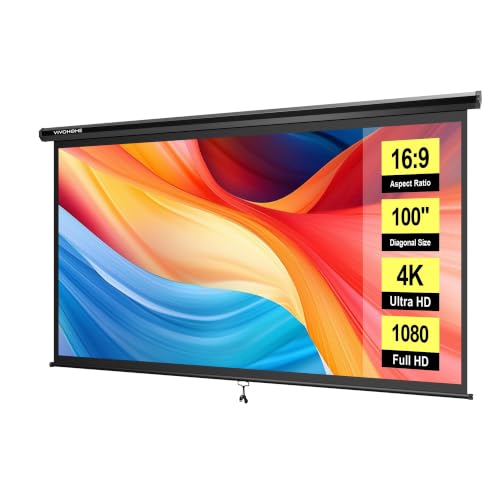
- Manual self-locking pull-down design
- 160-degree matte viewing surface
- Wall or ceiling mounting options
Best For: Permanent or semi-permanent indoor setups
Best Fixed-Frame Screen
Silver Ticket 120-Inch STR Series

- Rigid 120-inch 16:9 wall-mounted design
- Black velvet aluminum frame
- Supports Full HD, 4K, 8K, and 3D
Best For: Dedicated home theater installations
Best Outdoor Screen
150-Inch Portable Screen with Stand

- Large 150-inch front/rear projection screen
- Includes stakes, ropes, and sandbags
- Portable frame with carrying bag
Best For: Backyard movies, camping, and tailgating
Best Motorized Pick
120-Inch Electric Projector Screen

- 120-inch matte screen for large indoor viewing
- Remote-controlled motorized drop-down operation
- Wall or ceiling mount with 4K/3D/HD support
Best For: Home theaters, offices, and classrooms needing a large retractable screen
Best Outdoor Pick
16-Foot Inflatable Movie Screen

- Large 16-foot screen for outdoor events
- Front- and rear-projection support
- Includes blower, stakes, tethers, and carry bag
Best For: Backyard movie nights, parties, camping, and portable outdoor viewing
Best Manual Value
84-Inch Pull-Down Projector Screen

- 84-inch matte white viewing surface
- Auto-locking height adjustment
- Wall, ceiling, or surface mounting
Best For: Everyday home, office, classroom, and covered-space projection
Best Portable Pick

- Lightweight 5.62-pound aluminum design
- Tool-free setup with carrying bag
- 160-degree viewing angle and washable polyester
Best For: Camping, picnics, and small backyard movie nights
Best Large Outdoor Setup

- Large 120-inch 16:9 display
- Stakeable base with steel bracket
- Front and rear projection support
Best For: Large outdoor movie nights and events
Best Foldable Screen – 120-Inch Portable Projector Screen
If you need flexible projector screens for movie nights, presentations, or outdoor viewing, this 120-inch foldable model emphasizes portability and simple setup. Its 16:9 format provides a 104-by-58-inch viewing area, while the lightweight polyester fabric supports front and rear projection.
Best For: Portable home theaters, backyard movies, presentations, and users who need a screen that folds into a backpack or suitcase.
Pros:
- Large 120-inch diagonal display with a 160-degree viewing angle.
- Foldable, lightweight design weighs 1.7 pounds for easy storage and transport.
- Supports both front and rear projection and can be hand- or machine-washed.
- Can be mounted with hooks, ropes, brackets, nails, or double-sided tape.
Cons:
- It has no integrated frame or stand, so mounting hardware and a suitable support surface are needed.
- The manual mounting approach may take more effort than a retractable screen.
This is a practical choice when portability matters more than a rigid, permanently tensioned installation. The washable, anti-crease polyester fabric adds convenience for frequent indoor and outdoor use.
Best Retractable Screen – VIVOHOME 100-Inch Pull-Down Screen
For a cleaner, more permanent setup, these projector screens use a manual pull-down design with a self-locking mechanism. This 100-inch 16:9 screen mounts to a wall or ceiling and uses a matte white, three-layer PVC surface designed for broad viewing and straightforward maintenance.
Best For: Living rooms, classrooms, meeting rooms, gaming spaces, and other installations where a roll-up screen is preferable.
Pros:
- Self-locking mechanism holds the screen at different heights.
- Matte surface provides a 160-degree viewing angle and supports 3D, 1080P, 4K, and 8K content.
- Metal casing and waterproof PVC fabric help protect against deformation, creases, and humidity changes.
- Can be mounted on a wall or ceiling and rolled up for storage.
Cons:
- Screws and L-brackets are not included.
- The overall 92-by-57.5-inch size requires adequate installation space.
- A slight odor may be noticeable when first opened and needs airing out.
Choose this model if you want the convenience of retractable storage without motorized controls. Its manual operation and multiple mounting options suit regular indoor viewing, while the durable surface can also work in suitable outdoor settings.
Best Fixed-Frame Screen – Silver Ticket 120-Inch STR Series
If you want projector screens with a cinema-style appearance, this fixed-frame Silver Ticket model uses a tensioned white surface surrounded by a beveled aluminum frame wrapped in black velvet. Its 120-inch 16:9 viewing area is designed for wall mounting and works with long-, short-, and ultra-short-throw projectors, with a compatibility caveat for some UST models.
Best For: Dedicated home theaters and viewers who want a rigid, wall-mounted screen with a polished frame.
Pros:
- 120-inch diagonal viewing area with a 104.5-by-58.875-inch image area.
- 1.1-gain white surface offers a 160-degree viewing angle.
- Black velvet-wrapped aluminum frame helps absorb stray light around the image.
- Supports Full HD, 4K, 8K, and active 3D content.
Cons:
- Fixed-frame design is less portable and requires wall installation.
- It does not include legs or a stand.
- Some ultra-short-throw projectors may not be compatible; the S7 series is recommended for UST use.
This screen is best suited to a dedicated viewing room where image presentation and a clean, theater-like installation take priority. Before buying, verify the projector’s throw requirements and available wall space.
Best Outdoor Screen – 150-Inch Portable Screen with Stand
For outdoor projector screens, this 150-inch model combines a freestanding frame with a reinforced base and windproof accessories. It supports front and rear projection, includes stakes, ropes, and sandbags, and comes with a storage bag for movie nights at home, camping trips, or tailgating.
Best For: Backyard screenings, camping, tailgating, and buyers who need a large portable screen with added outdoor stabilization.
Pros:
- Large 150-inch display with a 160-degree viewing angle.
- Includes four ground stakes, two ropes, and two sandbags for outdoor stability.
- Washable milk silk fabric is designed to deliver 4K HD visuals and a wrinkle-free fit on the frame.
- Folds flat and includes a dedicated carrying bag.
Cons:
- The large screen and stand require more setup and storage space than compact foldable screens.
- Windproof accessories still need to be installed and used in windy conditions.
- The supplied dimensions list the screen size as 150 inches but do not specify the viewing-area width and height.
This is the strongest fit for buyers who regularly move between indoor and outdoor locations and want more stability than a wall-hung sheet provides. Its included securing kit makes it better equipped for outdoor use, though setup remains important in changing weather.
Best Motorized Pick – 120-Inch Electric Projector Screen
For a dedicated indoor setup, this 120-inch electric projector screen combines a large viewing surface with convenient motorized operation. Its drop-down design can mount to a wall or ceiling and retract when the screen is not in use.
Best For: Home theaters, offices, and classrooms that need a large, remotely controlled screen.
Pros:
- Large 120-inch screen supports an immersive viewing experience.
- Remote-controlled motorized lowering and retraction simplify setup.
- Designed for 4K, 3D, and HD projection with a matte finish and 160-degree viewing angle.
- Wall- or ceiling-mounted design helps save room space.
Cons:
- Its 120-inch size and 11.79 kg weight require careful mounting.
- Automatic operation depends on an indoor power setup.
- The listed 4:3 model dimensions may not suit buyers seeking a widescreen format.
This DINAH screen is a practical choice when convenience and size matter most. Choose it if you want a retractable indoor screen operated from a remote rather than a manual pull-down model.
Best Outdoor Pick – 16-Foot Inflatable Movie Screen
For backyard events and portable viewing, this 16-foot inflatable movie screen provides a large outdoor display with front- and rear-projection flexibility. The included blower, stakes, tethers, frame, and carry bag support setup and transport.
Best For: Backyard movie nights, camping, picnics, parties, and other outdoor gatherings.
Pros:
- Supports both front and rear projection with a 160-degree viewing angle.
- Included 110V, 180W blower inflates the screen in about two minutes.
- Carry bag and floor-mounted frame make it portable for different locations.
- Removable screen can be machine washed for easier maintenance.
Cons:
- The blower must remain plugged in and running throughout the show.
- Setup requires yard stakes, tethers, and access to a 110V outlet.
- The 90-day manufacturer warranty is relatively limited.
This XHYCPY screen is built around flexibility and scale rather than quick indoor storage. It makes sense for hosts who want a movable outdoor theater and can accommodate continuous blower operation.
Best Manual Value – 84-Inch Pull-Down Projector Screen
This 84-inch manual projector screen is a straightforward option for everyday indoor presentations, movies, sports, and gaming. Its matte white surface, auto-locking height adjustment, and wall- or ceiling-mount design make it easy to position and retract without motorized hardware.
Best For: Home theaters, offices, classrooms, garages, and covered spaces needing a practical manual screen.
Pros:
- Auto-locking system lets you stop the screen at the desired height.
- Matte white surface is designed for bright color and contrast.
- Supports wall, ceiling, or surface mounting.
- Retracts neatly for clutter-free storage after use.
Cons:
- Manual operation lacks the convenience of a remote-controlled screen.
- Its 84-inch size provides less viewing area than the larger options here.
- The listed dimensions may require careful measurement before mounting.
The Pyle screen is a sensible fit for buyers who want reliable pull-down functionality without adding motorized components. It offers adjustable positioning and flexible mounting for routine home, school, or business use.
Best Portable Pick – 80-Inch Outdoor Screen
If you want portable projector screens for occasional movie nights, camping, or backyard use, this 80-inch model keeps transport and setup simple. Its aluminum construction weighs 5.62 pounds, while the included carrying bag, tool-free assembly, and securing accessories support flexible indoor and outdoor use.
Best For: Small family movie nights, camping trips, picnics, and buyers prioritizing easy portability.
Pros:
- Lightweight, foldable design with a padded carrying bag.
- Assembles and disassembles without tools.
- 80-inch, 16:9 screen with a 160-degree viewing angle.
- Washable polyester screen is designed to resist wrinkles.
Cons:
- Smaller viewing area than the 100- and 120-inch alternatives.
- The included support system is intended for breezy conditions, not severe weather.
This is a practical choice when convenience matters more than maximum screen size. The compact design and relatively low weight make it easier to move and store, while the stand and included stabilization accessories add versatility for outdoor viewing.
Best Versatile Size – 100-Inch Front/Rear Screen
For shoppers comparing projector screens for a larger group, this 100-inch TOWOND model offers a useful balance of viewing size and portability. The 16:9 wrinkle-resistant polyester screen supports both front and rear projection, and the tripod, sandbag, ropes, and ground stakes are designed for indoor or outdoor setups.
Best For: Backyard theaters, school or office events, weddings, churches, and larger home movie gatherings.
Pros:
- 100-inch 16:9 screen with a 160-degree viewing angle.
- Supports both front and rear projection.
- Foldable, washable screen packs into the included carry bag.
- Includes tripod, sandbag, ground nails, and windproof ropes.
Cons:
- At about 7.4 pounds, it is heavier than the 80-inch option.
- Outdoor stability requires proper use of the sandbag, ropes, and stakes.
- No warranty is listed in the supplied specifications.
The TOWOND stands out for flexibility: its larger display suits groups, while rear projection and the included anchoring equipment expand placement options. Plan to spend a little extra time securing the stand, especially outdoors.
Best Large Outdoor Setup – 120-Inch Stake-Down Screen
If your projector screens shortlist favors maximum viewing area and outdoor stability, this 120-inch model is built for larger movie nights and events. Its widened stakeable base, steel bracket, wind ropes, and ground stakes are designed to secure the screen without relying on heavy sandbags outdoors.
Best For: Large backyard screenings, sports viewing, parties, churches, schools, and event spaces.
Pros:
- Large 120-inch, 16:9 screen for group viewing.
- Stake-down base and steel frame provide a stability-focused setup.
- Supports front and rear projection with a 160-degree viewing angle.
- Tool-free installation is designed to take about eight minutes.
Cons:
- Larger size requires more space than the 80- and 100-inch screens.
- Ground stakes and wind ropes are most useful when outdoor anchoring is possible.
- A 120-inch frame may be less convenient for very compact indoor rooms.
This is the strongest fit for buyers who want a big communal display and a purpose-built outdoor anchoring system. The modular frame stores in the included bag, but its larger footprint makes site selection and setup space important considerations.
How We Picked These Projector Screens
We evaluated these Projector Screens by comparing the features that matter most in real homes and outdoor viewing areas: image format, available sizes, portability, installation method, screen material, front or rear projection support, and setup effort. We also considered whether each design suits occasional movie nights or more permanent home theater use.
Because no single screen works best for every room, the selection includes manual and electric roll-down screens, aluminum-frame models, portable screens with stands, foldable surfaces, and inflatable screens. Size and convenience were weighed alongside viewing performance so the recommendations work across different budgets and spaces.
Quick Comparison
- Best for a permanent home theater: An aluminum-frame or wall-mounted screen offers a taut, clean viewing surface.
- Best for simple installation: Pull-down screens mount to a wall or ceiling and store neatly when not in use.
- Best for convenience: An electric screen with a remote provides fast, repeatable setup.
- Best for backyard viewing: A portable stand-mounted screen balances decent size with easier transport.
- Best for very large events: An inflatable screen creates a dramatic image and generally supports front or rear projection.
Key Buying Factors for Projector Screens
Screen Size and Viewing Distance
A larger screen is not automatically better. Match the diagonal size to your room, projector brightness, and seating distance. A 100- to 120-inch screen is often a practical range for home movies, while 150-inch and inflatable models are better suited to spacious yards or group events.
Aspect Ratio and Image Format
Most models here use a 16:9 aspect ratio, which fits modern movies, streaming services, and HDTV content. Confirm that your projector can fill the selected screen without excessive unused space or cropping.
Surface, Gain, and Ambient Light
A matte white surface usually provides broad viewing angles and predictable color. Higher-gain materials can make an image appear brighter from the ideal seating position, but they may narrow viewing angles. For outdoor use, schedule viewing after dark whenever possible; no screen can fully overcome strong sunlight.
Installation and Portability
Pull-down and electric screens are convenient for dedicated rooms but require a secure wall or ceiling mount. Stand-mounted and foldable screens are easier to move, while inflatable designs need access to power for the blower and enough clear ground space for anchoring.
Front Versus Rear Projection
Front projection is the standard choice and usually offers the simplest placement. Rear-compatible screens can keep the projector behind the image, which helps prevent shadows and keeps foot traffic away from the beam, but they require additional space behind the screen.
Who Should Buy Which Projector Screens?
Choose a wall-mounted or pull-down screen if you watch regularly and want a tidy installation without assembling a frame before every movie. Choose an electric model if remote-controlled operation matters or the screen will be used frequently.
Choose a portable stand screen for camping, occasional backyard movies, or rooms where permanent mounting is not practical. Choose a foldable screen when storage space and transport matter most. For large parties and impressive outdoor presentations, an inflatable screen is the better fit, provided you can anchor it securely and supply continuous power.
Before purchasing, measure the installation or viewing area, check the projector’s throw distance and brightness, and confirm the included stand, stakes, frame, blower, remote, or mounting hardware meets your setup needs.