
A dedicated theater room deserves more than a basic white wall. The right projector screen can improve image uniformity, viewing size, contrast, and installation flexibility while helping your projector perform at its best.
We’ve gathered 10 projector screens for dedicated theater rooms, covering fixed-frame, motorized, manual pull-down, ambient-light-rejecting, and large-format designs. Use the guide below to match screen type, size, aspect ratio, and material to your room and projector.
Best 10 Projector Screens for Dedicated Theater Rooms Picks for 2026
Best Fixed-Frame Pick
Akia 135-Inch 4K/8K Fixed Frame
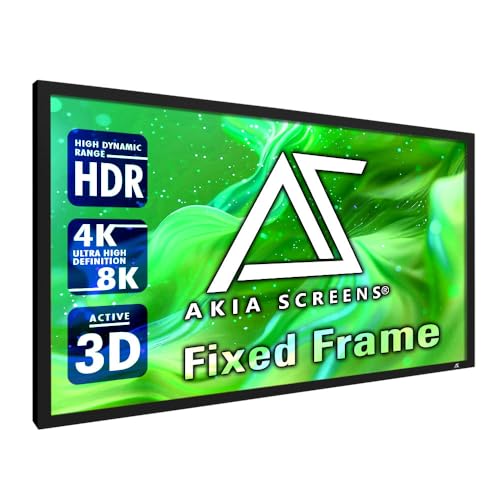
- 135-inch 16:9 fixed-frame design
- 1.3-gain ISF-certified surface
- Black velvet border and 180-degree viewing
Best For: Large dedicated theaters needing a permanent cinema-style screen
Best Retractable Value
DINAH 120-Inch Motorized Screen

- 120-inch motorized drop-down design
- Remote-controlled retracting operation
- 160-degree viewing angle
Best For: Multipurpose theater rooms needing a retractable screen
Best Large Motorized Screen
Elite Screens 150-Inch Spectrum

- 150-inch 16:9 motorized screen
- ISF-certified 1.1-gain surface
- Programmable drop and control integration
Best For: Large dedicated theaters using standard-throw projectors
Best Manual Option
MageScreen 120-Inch 16:9 Pull-Down

- 120-inch 16:9 manual screen
- 1.2-gain matte-white surface
- Auto-lock height adjustment without electricity
Best For: Simple, low-maintenance theater setups
Premium Laser Detail
Valerion PureVision 150-Inch Fixed Frame

- PET matte surface helps reduce laser speckle.
- 1.0 gain supports natural brightness and color.
- 8K-ready fixed frame with a 170-degree viewing angle.
Best For: Dedicated theaters with premium long-throw or UST laser projectors
Flexible Motorized Value
Kayle 120-Inch Electric Projector Screen

- Motorized 16:9 screen retracts with an RF remote.
- 1.2 gain and wide viewing angle support bright images.
- Includes wall/ceiling hardware and a three-way wall switch.
Best For: Retractable 120-inch theater setups needing automatic operation
Ambient-Light Control
Elite Screens Aeon CLR5 150-Inch

- Rejects 80% of overhead light with CLR5 material.
- Designed for UST tabletop or bottom-ceiling projection.
- Edge-free fixed frame includes adjustable sliding wall brackets.
Best For: Large UST theaters where overhead-light rejection is important
Best Large Freestanding Screen

- 135-inch 16:9 matte PVC surface
- Black backing for reduced light bleed
- Portable frame with stability kit
Best For: Large home theaters and indoor/outdoor movie nights
Best Retractable Theater Mount

- Manual roll-down matte white surface
- Auto-locking height adjustment
- Wall or ceiling mounting options
Best For: Dedicated rooms needing a tidy retractable installation
Best Flexible Large-Surface Screen
Iolieo 120-Inch Foldable Screen

- 120-inch 16:9 foldable display
- Black backing improves contrast
- Washable with multiple mounting methods
Best For: Large, flexible setups that move between rooms and outdoor spaces
Best Fixed-Frame Pick – Akia 135-Inch 4K/8K Fixed Frame
For dedicated theater rooms, the Akia 135-inch fixed-frame screen offers a permanently installed, cinema-style presentation. Its 16:9 CINEWHITE UHD-B surface is ISF certified, 4K/8K ready, and designed to maintain consistent brightness across wide seating positions.
Best For: Large dedicated theaters that prioritize a flat, permanent screen and a polished appearance.
Pros:
- Large 135-inch 16:9 image with a 117.7-by-66.1-inch viewable area
- 1.3-gain ISF-certified surface with a 180-degree viewing angle
- Black velvet frame helps absorb overshoot and enhance perceived contrast
- Supports standard, short-throw, and ultra-short-throw projectors
Cons:
- Requires substantial wall space, with an assembled size of 122.4 by 70.9 inches
- Fixed installation cannot be retracted when the room is used for other purposes
This is a strong fit when your room is dedicated to movie viewing and you want a large, flat screen with a theater-style border. Verify the wall dimensions and projector placement before installation.
Best Retractable Value – DINAH 120-Inch Motorized Screen
The DINAH 120-inch electric screen is a practical option for projector screens in dedicated theater rooms that may also serve other purposes. Its motorized drop-down design retracts into storage, while the included remote makes operation convenient.
Best For: Theater rooms where a retractable screen and simple remote-controlled operation are important.
Pros:
- 120-inch screen designed for 4K, 3D, and HD projection
- Motorized operation lowers and retracts the screen at the touch of a button
- Ceiling- or wall-mounted drop-down format saves wall space
- 160-degree viewing angle supports seating across the room
Cons:
- The listed model is 4:3 rather than the widescreen 16:9 format common for movies
- Requires access to power and a suitable ceiling or wall mounting location
Its retractable design adds flexibility, but the 4:3 format deserves careful consideration for a movie-focused theater. Confirm that the screen proportions match your projector and preferred content before buying.
Best Large Motorized Screen – Elite Screens 150-Inch Spectrum
For a large dedicated theater room, the Elite Screens Spectrum provides a 150-inch 16:9 image with motorized control. Its ISF-certified MaxWhite 2 surface is 4K/8K ready, while programmable drop positions make it easier to integrate into a controlled room setup.
Best For: Large theaters that want a motorized 16:9 screen with automation-friendly controls.
Pros:
- Very large 150-inch 16:9 viewing area
- 1.1-gain ISF-certified surface with a 180-degree viewing angle
- Includes IR remote, wall controller, and programmable vertical drop positions
- GREENGUARD and GREENGUARD Gold certified for low chemical emissions
Cons:
- Not compatible with ultra-short-throw or short-throw projectors
- Large housing requires significant wall or ceiling clearance
- Designed for standard-throw projectors only
This model is compelling when the room can accommodate its 142.6-inch-wide overall housing and uses a standard-throw projector. If your projector is short-throw or ultra-short-throw, choose a compatible screen instead.
Best Manual Option – MageScreen 120-Inch 16:9 Pull-Down
The MageScreen 120-inch manual screen is a straightforward choice for projector screens in dedicated theater rooms where electrical controls are unnecessary. Its 16:9 matte-white surface supports 4K/8K projectors, and the auto-lock mechanism lets you set the screen at a preferred height.
Best For: Buyers who want a low-maintenance retractable screen without a motor or remote.
Pros:
- 120-inch 16:9 viewing area for movies, gaming, and streaming
- 1.2-gain matte-white surface with a 175-degree viewing angle
- Manual pull-down operation needs no electricity or remote
- Wall- or ceiling-mount hardware is included
Cons:
- Manual operation is less convenient than a motorized screen
- Installation must be anchored to wood studs or concrete; drywall alone is not supported
- Recommended viewing distance is approximately 10 to 12 feet
This screen makes sense for a dedicated room that favors simple, quiet operation and easy storage. Measure the listed overall dimensions and confirm your seating distance before mounting.
Premium Laser Detail – Valerion PureVision 150-Inch Fixed Frame
For dedicated theater rooms built around a premium laser projector, the AWOL Valerion PureVision is a strong large-format option. Its PET matte surface is designed to reduce laser speckle while preserving natural color, brightness, and fine detail across a broad seating area.
Best For: Dedicated home theaters using long-throw or UST laser projectors, especially viewers prioritizing color accuracy and a permanently flat 150-inch image.
Pros:
- PET matte material is engineered to reduce laser speckle and support smoother-looking textures.
- 1.0 gain aims to preserve the projector’s original brightness with balanced contrast and color.
- Supports up to 8K resolution and uses a spring-tensioned fixed frame for a flat surface.
- 170-degree viewing angle helps maintain consistent image quality from many seats.
Cons:
- Fixed-frame installation is less flexible than a retractable screen.
- The 150-inch size requires substantial wall space and careful planning.
- Its laser-speckle benefit is most relevant to laser-projector owners.
The PureVision is tailored to a permanent cinema installation rather than occasional use. Choose it when a large, flat screen, wide seating coverage, and laser-projector compatibility matter more than retractability.
Flexible Motorized Value – Kayle 120-Inch Electric Projector Screen
The Kayle 120-inch motorized screen suits projector screens for dedicated theater rooms where convenient retractability is useful. Its 16:9 format, wireless remote, and included mounting hardware provide a straightforward setup for movie viewing, presentations, and other screen-based activities.
Best For: Home theater rooms that need a retractable 120-inch screen with automatic operation and flexible wall- or ceiling-mount installation.
Pros:
- Motorized retractable design can be controlled with the included RF remote.
- 16:9 widescreen format fits most HD movie content.
- 1.2 gain and a 180-degree viewing angle support bright viewing across the room.
- Ships assembled and includes a three-way wall switch and installation kit.
Cons:
- A motorized screen has more operating components than a fixed-frame design.
- The listed dimensions may require careful wall or ceiling clearance planning.
- The notes do not specify compatibility with ultra-short-throw projectors.
With plug-and-play positioning and automatic retraction, the Kayle is a practical choice for a theater room that also needs a cleaner, less permanent screen appearance. Its 120-inch format offers a substantial image without moving to the largest screen sizes.
Ambient-Light Control – Elite Screens Aeon CLR5 150-Inch
For projector screens for dedicated theater rooms that may not stay completely dark, the Elite Screens Aeon CLR5 adds ceiling-light rejection to a large fixed-frame design. Its CLR5 material is intended for UST projection and absorbs 80% of overhead light, helping maintain image clarity and contrast in less-than-perfect lighting conditions.
Best For: Large home theaters using a UST projector where overhead-light control, a sleek edge-free appearance, and a 150-inch image are priorities.
Pros:
- CLR5 material is designed to reject 80% of overhead light.
- Supports UST tabletop or bottom-ceiling-mounted projectors.
- Edge-free fixed-frame design creates a streamlined, flat-panel-style appearance.
- Sliding wall brackets allow horizontal adjustment for centered installation.
Cons:
- Its 0.8 gain may produce a less bright image than higher-gain screens with the same projector.
- Fixed-frame mounting does not provide retractable storage.
- The 150-inch screen requires significant wall space and weighs 40.3 pounds.
The Aeon CLR5 is particularly compelling when a UST projector shares space with ambient overhead light. Its large size and edge-free styling make it a theater-focused installation, while the adjustable brackets help simplify alignment.
Best Large Freestanding Screen – 135-Inch JWSIT Outdoor Screen
For shoppers comparing projector screens for dedicated theater rooms, the 135-inch JWSIT offers a very large 16:9 image area with a freestanding aluminum frame. Its black backing, matte PVC surface, and 160-degree viewing angle are suited to movie viewing when you want a screen that can also move outdoors.
Best For: Large-scale home theater viewing and flexible indoor or outdoor movie nights.
Pros:
- 135-inch 16:9 screen supports 4K Ultra HD and active 3D projection.
- Black backing helps limit excessive light penetration.
- Tool-free frame and detachable-leg assembly, with a padded carrying bag.
- Includes stakes, rigging cords, and support rings for added outdoor stability.
Cons:
- The freestanding design requires floor space and assembly.
- Its large size may be more screen than smaller rooms need.
- Outdoor stability accessories are most relevant when using the screen outside.
The JWSIT is a strong choice if your dedicated theater room can accommodate a 135-inch freestanding screen and you value portability. Its included support kit and carrying case add versatility beyond a permanently installed setup.
Best Retractable Theater Mount – Pyle 84-Inch Pull-Down Screen
For dedicated theater rooms where you want the screen out of the way between viewings, the Pyle 84-inch pull-down model provides a manual wall- or ceiling-mounted design. Its matte white surface, black border, and adjustable auto-locking height support straightforward movie setup.
Best For: Permanent rooms that need a compact, retractable screen for movies, sports, and presentations.
Pros:
- Manual roll-down design retracts neatly for clutter-free storage.
- Auto-locking adjustment lets you stop the screen at different heights.
- Matte white viewing surface is designed for bright color and contrast.
- Supports both wall and ceiling mounting.
Cons:
- At 84 inches, it offers less image area than the larger alternatives.
- Manual operation requires pulling the screen down and retracting it by hand.
- Installation hardware or mounting requirements may need to be planned for your room.
The Pyle is a practical fit when a dedicated theater room benefits from a clean, retractable installation rather than a portable frame. Choose it when 84 inches suits your seating distance and available wall space.
Best Flexible Large-Surface Screen – Iolieo 120-Inch Foldable Screen
If you want projector screens for dedicated theater rooms that can also serve elsewhere, the Iolieo 120-inch foldable screen offers a large 16:9 viewing area without a permanent frame. Its black backing, washable polyester material, and multiple hanging options make it adaptable to changing setups.
Best For: Theater rooms that need a large screen with easy storage and flexible mounting.
Pros:
- 120-inch 16:9 format provides a 102-by-58-inch viewing area.
- Black backing helps reduce light bleed and improve contrast.
- Washable, wrinkle-resistant material is designed for repeated use.
- Can be hung on a wall, attached to a frame, or tied to trees and tents.
Cons:
- It does not include a dedicated freestanding frame.
- Installation depends on hooks, ropes, or a separately built DIY frame.
- A foldable screen may require careful hanging to keep its borders straight.
The Iolieo makes sense for buyers who want a theater-sized image but do not want to commit to permanent wall or ceiling hardware. Its flexible mounting system and washable construction are useful when the same screen moves between indoor and outdoor spaces.
How We Picked the Best Projector Screens for Dedicated Theater Rooms
We focused on screen designs that suit permanent or semi-permanent home theater installations, then compared size, aspect ratio, screen material, mounting style, projector compatibility, and everyday usability. The lineup includes fixed-frame screens for a clean theater-room installation, motorized and manual models for flexible mounting, and specialty options for ultra-short-throw projectors or occasional outdoor use.
Because room dimensions and projector throw distances vary, no single screen is ideal for every setup. We prioritized products with clearly stated dimensions and compatibility details, while noting practical features such as black backing, ambient-light rejection, remote controls, tensioned surfaces, and 4K/8K readiness.
Quick Comparison
| Screen Type | Best For | Main Advantage | Potential Trade-Off |
|---|---|---|---|
| Fixed frame | Dedicated theater rooms | Flat, stable viewing surface | Requires permanent wall space |
| Motorized | Multi-purpose rooms | Convenient retractable operation | Needs power and careful installation |
| Manual pull-down | Budget-conscious setups | Simple, affordable mounting | May show waves over time |
| UST-compatible or CLR | Ultra-short-throw projectors | Better resistance to ceiling or room light | Usually costs more and needs precise placement |
| Foldable or outdoor | Portable viewing | Easy storage and relocation | Less permanent and potentially less uniform |
Key Buying Factors for Projector Screens for Dedicated Theater Rooms
Screen Size and Viewing Distance
Choose a size that fits the wall without forcing viewers to sit too close. A 120- to 150-inch diagonal can create an immersive image, but the ideal choice depends on seating distance, projector brightness, and your preferred field of view. Confirm the screen’s overall width and frame dimensions, not just the diagonal measurement.
Aspect Ratio and Projector Compatibility
A 16:9 screen is the standard choice for HDTV, streaming, and most home theater content. Match the screen to your projector’s native resolution and lens geometry. Ultra-short-throw projectors generally require a compatible CLR or ALR screen with the correct viewing-angle design; a conventional matte-white screen may not deliver the intended contrast.
Screen Material and Room Lighting
Matte-white materials are versatile for dark rooms and wide seating arrangements. Black-backed materials can help limit light passing through the screen, while ambient-light-rejecting surfaces may improve perceived contrast when some room lighting is unavoidable. In a dedicated, light-controlled theater, uniformity and accurate color may matter more than maximum light rejection.
Installation and Surface Tension
Fixed-frame screens typically provide the flattest surface and are a strong choice for permanent rooms. Motorized screens offer a cleaner look when retraction is important, but they require suitable power and mounting support. Manual screens are economical, though the viewing surface may develop waves depending on construction and use.
Who Should Buy Which Projector Screens for Dedicated Theater Rooms?
- Choose a fixed-frame model if you want the most theater-like installation, a consistently flat surface, and a screen that stays in place.
- Choose a motorized screen if the room serves more than one purpose or you want remote-controlled deployment.
- Choose a manual pull-down screen if you need a lower-cost solution or occasional use without adding a motor.
- Choose a CLR or ALR screen for a compatible ultra-short-throw projector or a room where controlling ambient light is difficult.
- Choose a foldable or outdoor screen when portability, storage, and flexible placement matter more than a permanent theater finish.
Before ordering, verify the projector’s throw distance, image size range, mounting location, screen dimensions, power requirements, and viewing angle. Those checks will help you select the best match from these Projector Screens for Dedicated Theater Rooms.