
A 150-inch screen can turn a dedicated room, living space, or backyard into a true big-screen theater—but the right model depends on your projector, lighting, installation space, and viewing habits.
We compare fixed-frame, motorized, manual, portable, and short-throw-compatible options to help you choose a screen that delivers the size and image quality you want without unnecessary installation compromises.
Best 10 Projector Screens for 150 Inch Home Theater Picks for 2026
Best Fixed-Frame Value
Silver Ticket STR Series 150-inch Screen

- 16:9 white surface with 1.1 gain
- Velvet-wrapped aluminum frame
- Supports 4K/8K, HDR, and active 3D
Best For: Dedicated rooms with standard or short-throw projectors
Best Premium Fixed Frame
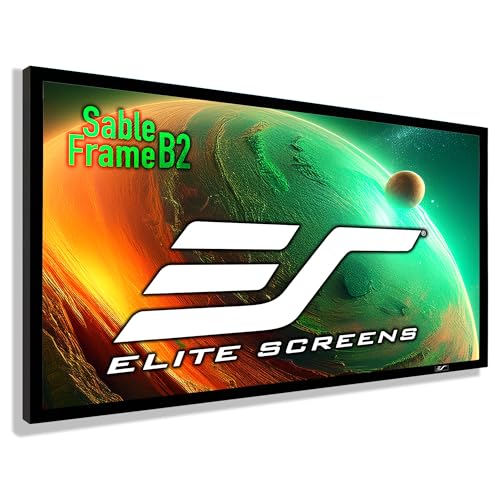
- 1.3-gain CineWhite UHD-B surface
- ISF certified and 4K/8K ready
- Velvet-coated frame with installation kit
Best For: Permanent home theater installations
Best for UST Projectors
IN&VI 150-inch Motorized ALR Screen
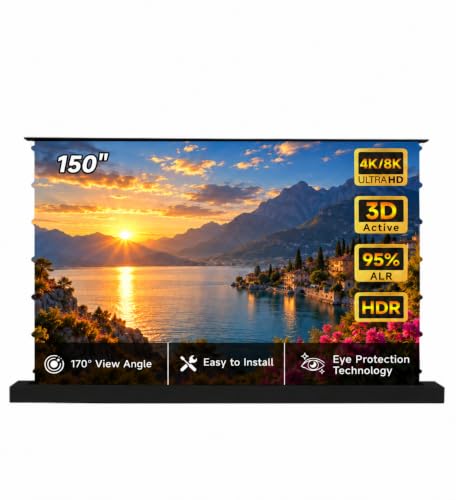
- Floor-rising motorized design
- Rejects up to 95% of overhead ambient light
- Designed for ultra-short-throw projection
Best For: Laser TV setups and rooms with ambient light
Best Portable Outdoor Option
ZUVMITG 150-inch Screen with Stand

- Front and rear projection support
- Includes stakes, ropes, and sandbags
- Folds for transport with a storage bag
Best For: Backyard movies, camping, and portable indoor viewing
Premium Fixed-Frame Pick
150-Inch Valerion Matte White Screen

- 1.3 gain matte-white PVC surface
- 170° half-gain viewing angle
- Supports long-, short-, and ultra-short-throw projectors
Best For: Dedicated wall-mounted home theaters
Motorized Theater Upgrade
Elite Screens Spectrum Swift-RC1 150-Inch

- Electric 16:9 drop-down operation
- 1.1 gain MaxWhite material with 180° viewing angle
- Includes remote, wall switch, and 12V trigger
Best For: Permanent movie and gaming rooms
Best with Extra Features
Akia CineWhite UHD-B 150-Inch Screen
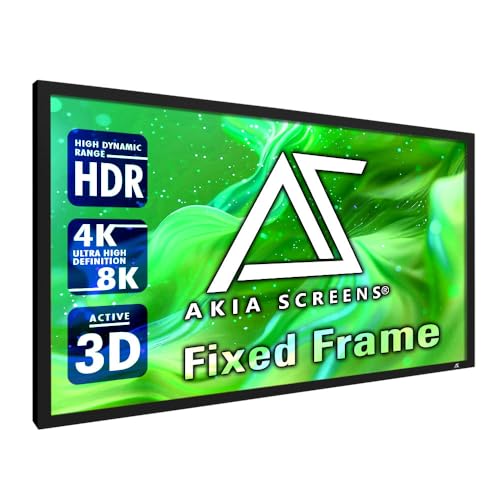
- 1.3-gain ISF-certified material
- Supports 8K, 4K, HDR, and 3D
- Black velvet fixed frame
Best For: Dedicated indoor theaters seeking a smooth, high-contrast installation
Best Manual Value
Elite Screens Manual Series 150-Inch Screen

- Auto-locking pull-down operation
- 1.1-gain matte-white surface
- Wall or ceiling mounting
Best For: Flexible retractable setups using standard long-throw projectors
Best Motorized Pick
Elite Screens Spectrum 150-Inch Electric Screen

- Remote-controlled motorized drop-down
- RJ45 control-system integration
- Supports 4K and 8K content
Best For: Automated indoor theaters using standard-throw projectors
Best Fixed-Frame Value – Silver Ticket STR Series 150-inch Screen
For shoppers comparing projector screens for 150 inch home theater setups, the Silver Ticket STR Series is a practical fixed-frame option for a dedicated room. Its 16:9 white screen supports Full HD, 4K/8K, HDR, and active 3D content, while the 160-degree viewing angle helps maintain a consistent image for off-center seating.
Best For: Dedicated home theaters using standard, short-throw, or compatible ultra-short-throw projectors.
Pros:
- 1.1-gain white surface with a 160-degree viewing angle.
- Black velvet-wrapped aluminum frame helps absorb overshoot and improve perceived contrast.
- Supports Full HD, 4K/8K, HDR, and active 3D projection.
- Tensioning-rod assembly and adjustable mounting brackets simplify installation.
Cons:
- Wall-mounted design does not include legs or a stand.
- Some UST projectors may not be compatible with the STR frame.
- The large frame requires a substantial wall area.
This screen is a strong fit when you want a traditional cinema-style installation and broad projector compatibility. Before buying, test the projected image on your wall and verify UST compatibility if applicable.
Best Premium Fixed Frame – Elite Screens Sable Frame B2
The Elite Screens Sable Frame B2 is a polished choice among projector screens for 150 inch home theater installations. Its 1.3-gain CineWhite UHD-B material is ISF certified and ready for 4K/8K, HDR, and active 3D, making it well suited to a permanent, theater-style setup.
Best For: Viewers who want a high-contrast fixed-frame screen with a velvet border and included installation hardware.
Pros:
- 150-inch, 16:9 viewing area with 1.3-gain CineWhite UHD-B material.
- ISF-certified surface supports 4K/8K, HDR, and active 3D projection.
- Velvet-coated aluminum frame helps absorb projector overshoot.
- Includes wall brackets, anchors, screws, and tensioning hardware.
Cons:
- Fixed wall-mount design is not portable.
- Its approximately 135.5-by-78.3-inch overall size needs considerable wall space.
- Manual operation provides no motorized retracting option.
Choose this model when installation quality and presentation matter as much as screen size. The supplied mounting components and tensioned design help create a clean, flat finish for a dedicated theater room.
Best for UST Projectors – IN&VI 150-inch Motorized ALR Screen
For ultra-short-throw owners seeking projector screens for 150 inch home theater use, the IN&VI floor-rising model is designed around near-wall projection. Its 0.6-gain CLR/ALR surface is rated to reject 95% of overhead ambient light, helping reduce the washed-out appearance that can affect bright rooms.
Best For: Laser TV and ultra-short-throw projector setups where floor placement and ambient-light control are priorities.
Pros:
- Purpose-built for ultra-short-throw projectors.
- CBSP ALR surface blocks 95% of overhead ambient light.
- Motorized floor-rising design avoids wall drilling.
- Supports 4K/8K and active 3D content with a 170-degree viewing angle.
Cons:
- Designed specifically for UST projection rather than general projector placement.
- Floor-rising format requires clear floor space in front of the viewing area.
- Includes a one-year manufacturer warranty.
This is the most specialized option in the group, but it can be especially convenient for apartments or finished rooms where wall drilling is undesirable. Confirm that your UST projector supports the screen’s automatic synchronization features before relying on smart control.
Best Portable Outdoor Option – ZUVMITG 150-inch Screen with Stand
The ZUVMITG 150-inch screen is a flexible alternative for shoppers who want projector screens for 150 inch home theater viewing indoors and outdoors. Its stand-mounted frame uses washable milk-silk fabric, and the package includes stakes, ropes, and sandbags for more stable backyard, camping, or tailgating setups.
Best For: Portable movie nights, backyard screenings, camping, and indoor spaces that need a screen that can be packed away.
Pros:
- Supports front and rear projection with a 160-degree viewing angle.
- Includes windproof stakes, ropes, and sandbags.
- Washable fabric and a storage bag support repeated portable use.
- Tool-free-style assembly is designed for quick setup.
Cons:
- Outdoor use still requires securing the screen when wind conditions change.
- Tripod/stand setup is less permanent than a fixed-frame installation.
- Portable fabric construction may not provide the same rigid presentation as a dedicated theater frame.
This model makes the most sense when portability matters more than a permanent, wall-mounted finish. The included stabilizing accessories broaden its outdoor usefulness, while the washable material helps with routine maintenance.
Premium Fixed-Frame Pick – 150-Inch Valerion Matte White Screen
For shoppers comparing projector screens for 150 inch home theater setups, this fixed-frame Valerion model emphasizes a smooth viewing surface, enhanced brightness, and broad seating flexibility. Its 1.3 gain matte-white PVC material is designed for 4K/8K and 3D projection, and it supports long-throw, short-throw, and ultra-short-throw projectors.
Best For: Dedicated wall-mounted home theaters seeking a bright, wrinkle-free 150-inch screen.
Pros:
- 1.3 gain surface helps enhance brightness and contrast.
- 170-degree half-gain viewing angle accommodates wide seating arrangements.
- Wrinkle-free PVC surface supports a smooth, uninterrupted image.
- Available in sizes from 100 to 220 inches for flexible installation planning.
Cons:
- Fixed-frame wall mounting is less portable than a foldable screen with a stand.
- The supplied dimensions list an item width of 86.6 inches, so verify fit and installation measurements before ordering.
This is a strong option when image consistency and a permanent theater presentation matter more than portability. Its wide viewing angle and projector compatibility add flexibility, while the fixed-frame design suits a dedicated room.
Best for Everyday Use – 150-Inch Projector Screen with Stand
This portable 150-inch screen is a practical choice for projector screens for 150 inch home theater use when the setup may move between a living room, backyard, campsite, or event. The foldable polyester screen includes a stand, carry bag, ground nails, and rigging ropes for a flexible indoor/outdoor cinema setup.
Best For: Backyard movie nights, travel, parties, presentations, and temporary indoor projection setups.
Pros:
- Large 150-inch, 16:9 format delivers an immersive viewing area.
- Foldable, anti-crease material is designed to resist wrinkles and is easy to clean.
- Tool-free assembly and included carrying bag improve portability.
- Ground nails and rigging ropes help stabilize the stand outdoors in light winds.
Cons:
- A floor-standing design requires setup space and a level location.
- The supplied dimensions list 150 by 150 inches, so confirm the actual layout and available clearance before use.
Choose this model if portability and outdoor versatility are priorities. It offers a complete stand-based kit rather than a permanent installation, making it especially convenient for backyard cinema and temporary displays.
Motorized Theater Upgrade – Elite Screens Spectrum Swift-RC1 150-Inch
For a polished installation among projector screens for 150 inch home theater systems, the Elite Screens Spectrum Swift-RC1 adds electric operation and a concealed black case. Its 16:9 MaxWhite screen is 4K/8K and active-3D ready, with wall- or ceiling-mounting options for a streamlined theater or gaming setup.
Best For: Permanent home theaters and gaming rooms that benefit from automatic screen deployment.
Pros:
- Motorized drop-down operation supports convenient, plug-and-play use.
- 150-inch 16:9 screen provides a 130.7-by-73.6-inch viewable area.
- MaxWhite material offers 1.1 gain and a 180-degree viewing angle.
- Includes IR remote, detachable three-way wall switch, and 12V trigger cable.
Cons:
- At 45 pounds, installation requires planning for a substantial wall- or ceiling-mounted unit.
- The motorized housing is less portable than a foldable stand-based screen.
This model is a good fit when convenience and a clean installation outweigh portability. Its automatic drop-down design, wide viewing angle, and included control options make it well suited to dedicated movie and gaming spaces.
Best with Extra Features – Akia CineWhite UHD-B 150-Inch Screen
For shoppers comparing projector screens for 150 inch home theater setups, this Akia fixed-frame model emphasizes a permanently flat viewing surface, wide viewing angles, and compatibility with high-resolution content. Its 16:9 CineWhite UHD-B material is designed for controlled-light indoor spaces and supports 8K, 4K, HDR, and Active 3D sources.
Best For: Dedicated indoor home theaters using standard, short-throw, or ultra-short-throw projectors.
Pros:
- 1.3-gain ISF-certified material with a 180-degree viewing angle.
- Supports 8K, 4K Ultra HD, HDR, and Active 3D content.
- Black velvet frame helps absorb overshoot and improve perceived contrast.
- Rod-and-spring tensioning keeps the screen surface smooth and wrinkle-free.
Cons:
- Fixed installation requires dedicated wall space and does not retract.
- The large frame measures approximately 135.4 inches wide by 78.3 inches high.
- Best suited to controlled-light environments for optimal results.
This is a strong choice when image presentation and a theater-style installation matter more than portability. Confirm the available wall dimensions and projector placement before purchasing.
Best Manual Value – Elite Screens Manual Series 150-Inch Screen
This Elite Screens Manual Series model is a practical option among projector screens for 150 inch home theater use when you want a retractable design without motorized controls. Its 16:9 MaxWhite 2 surface supports 4K, HDR, and Active 3D content, while the auto-locking mechanism allows multiple viewing heights.
Best For: Home theaters, classrooms, offices, and other spaces that need a manually retractable screen.
Pros:
- Auto-locking pull-down design supports flexible screen-height adjustment.
- 1.1-gain matte-white material provides a 180-degree viewing angle.
- Black backing and four-sided masking support uniform brightness and a clean border.
- Supports wall or ceiling installation and includes a lanyard for overhead mounting.
Cons:
- Not compatible with short-throw or ultra-short-throw projectors.
- Manual operation requires reaching the screen or using the included lanyard.
- Optional 6-inch and 12-inch L-brackets are sold separately.
Choose this model if your projector is a compatible standard long-throw design and you value a simple retractable setup. Check the overall 137-inch width and mounting clearance before installation.
Best Motorized Pick – Elite Screens Spectrum 150-Inch Electric Screen
For a convenient 150-inch home theater installation, the Elite Screens Spectrum adds powered drop-down operation and programmable height control. Its 16:9 MaxWhite 2 surface is designed for standard-throw projectors and supports 4K and 8K Ultra HD content in indoor viewing spaces.
Best For: Home theaters and presentation rooms where remote operation and integration are priorities.
Pros:
- Motorized operation includes an IR remote and detachable wall-box controller.
- RJ45 input supports integration with third-party control systems.
- 1.1-gain ISF-certified material offers a 180-degree viewing angle.
- Arrives fully assembled with hardware for wall or ceiling mounting.
Cons:
- Not compatible with short-throw or ultra-short-throw projectors.
- Requires access to power for the motorized mechanism.
- The housing measures approximately 142.6 inches wide by 84 inches high.
This screen is a good fit when one-button deployment and control-system compatibility justify choosing an electric model. Verify projector throw distance, power placement, and the substantial housing width before ordering.
How We Picked the Best Projector Screens for 150 Inch Home Theater
We selected these screens based on the needs of large-screen home theater buyers: image-format compatibility, screen construction, installation method, portability, projector compatibility, and practical room use. The lineup includes fixed-frame screens for dedicated theaters, retractable models for multipurpose rooms, portable screens for indoor and outdoor viewing, and an ambient-light-rejecting option for ultra-short-throw projectors.
We also considered advertised support for 4K, 8K, HDR, and 3D content, while recognizing that the projector, source material, screen surface, and room conditions all affect final image quality.
Quick Comparison
| Screen type | Best for | Main advantage | Potential trade-off |
|---|---|---|---|
| Fixed frame | Dedicated theaters | Taut, consistent viewing surface | Requires permanent wall space |
| Motorized | Multipurpose rooms | Retracts when not in use | Needs power and careful installation |
| Manual pull-down | Budget-conscious rooms | Simple, affordable operation | May show more surface variation over time |
| Portable with stand | Indoor and outdoor movie nights | Easy to move and store | Less convenient for permanent setups |
| CLR or ALR | Rooms with ambient light | Can improve perceived contrast | Requires projector and viewing-angle compatibility |
Key Buying Factors for Projector Screens for 150 Inch Home Theater
Measure the Room First
A 150-inch diagonal 16:9 screen is roughly 131 inches wide and 74 inches tall, before accounting for borders, housing, legs, or mounting hardware. Confirm wall width, ceiling height, seating distance, projector placement, and clearance for speakers or furniture.
Match the Screen to the Projector
Most standard long-throw projectors work well with conventional white screen surfaces. Ultra-short-throw projectors generally need a compatible CLR or ALR surface designed for their steep projection angle. Check the screen’s stated compatibility before buying; a surface optimized for one projector type may produce poor uniformity with another.
Choose Gain and Surface Characteristics Carefully
Higher gain can make an image appear brighter but may narrow viewing angles or increase hotspotting. A neutral-gain white surface is often the safest choice for a dark, dedicated theater, while ambient-light-rejecting materials can help in brighter rooms when used from the intended seating positions.
Consider Installation and Maintenance
Fixed frames usually provide the most uniformly tensioned surface but need a permanent installation. Motorized and manual screens save wall space when retracted, while portable models prioritize flexibility. Look for included mounting hardware, sturdy stands, tensioning systems, washable materials, and a protective storage solution.
Who Should Buy Which Projector Screens for 150 Inch Home Theater?
Choose a fixed-frame screen if you are building a dedicated theater and want a clean, permanently aligned surface. Select a motorized screen for a living room, media room, or gaming space that needs to convert back to everyday use. A manual pull-down model is a practical lower-cost solution when occasional use matters more than automation.
Buy a portable screen with a stand for backyard films, parties, travel, or flexible indoor setups. If your room has significant ambient light and you use an ultra-short-throw projector, prioritize a compatible CLR or ALR screen rather than choosing solely by size. Whichever model you choose, verify the aspect ratio, mounting dimensions, projector throw distance, power requirements, and return policy before ordering.