
The best portable weather stations make it easier to track temperature, humidity, pressure, rainfall, and wind without relying entirely on a distant forecast.
We compared ten practical options, from simple indoor-outdoor thermometers to Wi-Fi-connected systems with app alerts, smart-home support, and expanded sensor data.
Best 10 Portable Weather Stations Picks for 2026
Best Everyday Value
Newentor Wireless Weather Station

- Color LCD with temperature, humidity, forecast, and clock data
- Supports up to three wireless sensors
- Adapter-powered display with battery eco mode
Best For: Everyday indoor and outdoor temperature monitoring
Best Smart-Home Pick
Ambient Weather WS-2902 Wi-Fi Station
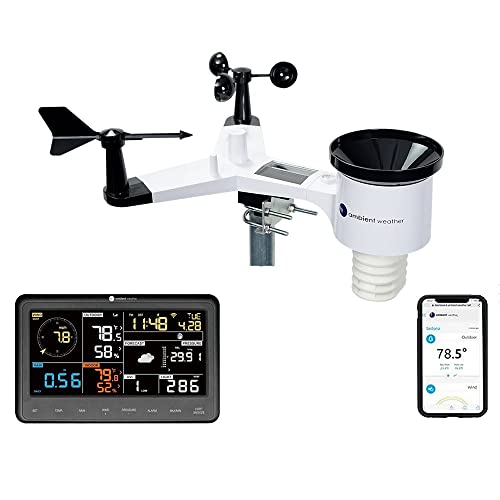
- Tracks wind, rain, temperature, UV, and solar radiation
- Wi-Fi enables remote monitoring and alerts
- Supports Alexa, Google Home, and IFTTT
Best For: Connected homes and detailed backyard weather tracking
Best Data-Rich Console
AcuRite Iris Wireless Weather Station
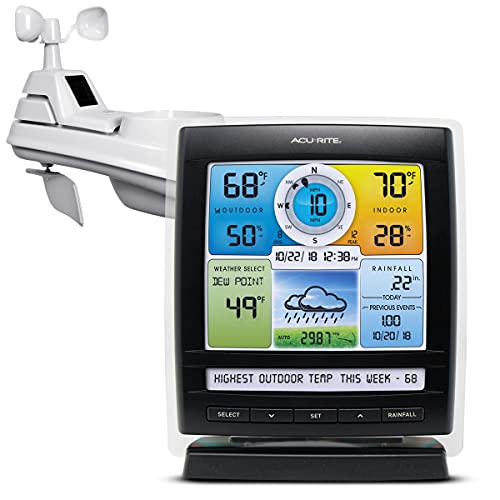
- Reports more than 55 weather data points
- Color display covers wind, rain, pressure, and comfort readings
- Includes adjustable dimming and a mounting bracket
Best For: Detailed local weather information without Wi-Fi
Best Maintenance-Free Sensor
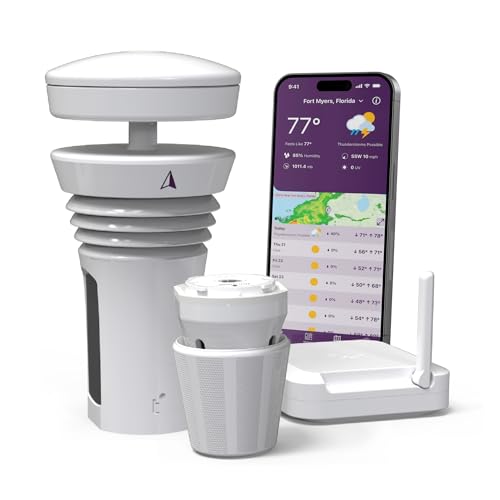
- Tracks weather, lightning, UV, wind, and rainfall
- Solar-powered with updates every three seconds
- No moving parts and smart-home integration
Best For: Low-maintenance connected backyard monitoring
Best for Bright, At-a-Glance Monitoring
DreamSky Atomic Weather Station

- Large colorful display with adjustable backlight
- Supports up to three outdoor sensors
- Atomic time, alerts, and 12-to-24-hour forecast
Best For: Homes, offices, RVs, and patios needing an easy-to-read display
Best for Battery-Powered Forecasting
La Crosse 308-1417 Wireless Weather Station

- Wireless sensor range reaches up to 330 feet
- 24-hour barometric pressure history graph
- Battery-operated with atomic time and alerts
Best For: Flexible home placement and users prioritizing wireless range
Best for Clear Color-Coded Data
AcuRite 02077M Color Weather Station
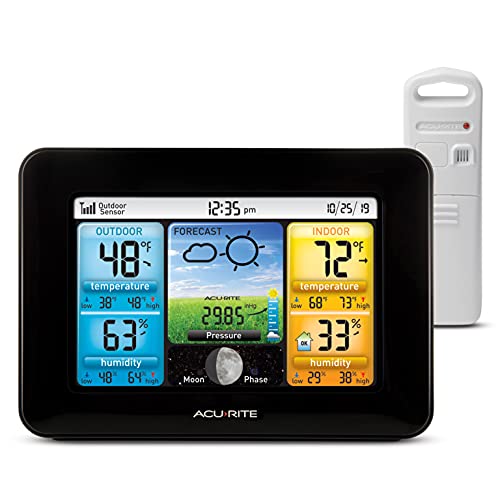
- Color LCD with adjustable dimmer
- Tracks more than 15 weather data points
- Simple wireless outdoor sensor setup
Best For: Homes, offices, and RVs needing clear, detailed weather information
Solar-Assisted All-Rounder
Wireless Solar Weather Station with Backlight

- 328-foot wireless range with 30-second updates
- Solar-assisted automatic backlight
- 12-hour forecast and comfort indicators
Best For: Everyday home, patio, nursery, and greenhouse monitoring
Best Rechargeable Pick
BALDR Rechargeable Weather Station with Dual Forecast

- 2000mAh battery offers up to three weeks cordless use
- 1-hour and 12-hour forecast views
- 330-foot sensor range with adjustable dimming
Best For: Portable home and patio monitoring with minimal battery swaps
Best for Detailed Readings
Wireless Thermometer Hygrometer with Mold Index

- Sensirion sensor with ±0.5°F temperature accuracy
- Shows heat index, dew point, and mold index
- Supports up to three wireless sensors
Best For: Detailed humidity and air-condition monitoring at home or work
Best Everyday Value – Newentor Wireless Weather Station
For shoppers seeking portable weather stations for everyday indoor and outdoor monitoring, the Newentor offers a useful mix of temperature, humidity, forecast, clock, and barometric-pressure readings in a compact color display. Its included wireless sensor supports a straightforward home setup.
Best For: Bedrooms, living rooms, offices, and basic multi-location temperature monitoring.
Pros:
- Large color LCD shows temperature, humidity, forecasts, moon phase, time, and pressure.
- Supports up to three wireless sensors for monitoring multiple locations.
- Offers adjustable backlight, customizable alerts, atomic time, and dual alarms.
- Can run from a wall adapter with an always-on display or batteries in eco mode.
Cons:
- Only one remote sensor is included.
- Battery-only operation dims the screen after a 15-second glance.
- It does not provide the wind, rainfall, or UV readings offered by more advanced stations.
The Newentor is a practical choice when a readable display and household comfort readings matter more than full outdoor-weather analytics. Its expandable sensor setup adds flexibility for homes with several monitoring points.
Best Smart-Home Pick – Ambient Weather WS-2902 Wi-Fi Station
Ambient Weather WS-2902 Wi-Fi Smart Weather Station | With Wi-Fi Remote Monitoring and Alerts
Check Price On AmazonThe Ambient Weather WS-2902 is one of the more connected portable weather stations, combining an outdoor sensor array with Wi-Fi access and a color console. It measures core conditions such as wind, rain, temperature, humidity, UV intensity, and solar radiation.
Best For: Homeowners who want hyper-local readings, remote access, alerts, and smart-home integrations.
Pros:
- Measures wind speed and direction, rainfall, temperature, humidity, UV, and solar radiation.
- Wi-Fi connectivity enables remote monitoring and alerts.
- Works with IFTTT, Google Home, Alexa, and other smart-home tools.
- Can optionally transmit data to the Ambient Weather network.
Cons:
- Its broad feature set may be more than needed for simple temperature checks.
- The system requires three AAA batteries in addition to its solar-powered setup.
- Wi-Fi features depend on a 2.4 GHz connection.
Choose the WS-2902 if remote data access and automation are priorities. Its sensor array delivers substantially more outdoor information than basic indoor/outdoor thermometers, while the console keeps local readings visible.
Best Data-Rich Console – AcuRite Iris Wireless Weather Station
The AcuRite Iris is a strong option among portable weather stations for shoppers who want a broad set of readings on a dedicated color screen. Its wireless outdoor sensor reports temperature, humidity, wind, rain, and pressure, while the console adds historical and comfort-related data.
Best For: Gardeners and households that want detailed local conditions without relying on Wi-Fi.
Pros:
- Provides more than 55 data points, including heat index, dew point, and feels-like temperature.
- Displays indoor and outdoor temperature, humidity, wind, rainfall, and pressure.
- Large color LCD includes time, date, adjustable dimming, and pressure trends.
- Includes a mounting bracket and a setup designed around installing the outdoor sensor.
Cons:
- The system requires 10 AA batteries according to the supplied specifications.
- Its outdoor operating range begins at 32°F.
- It uses radio-frequency connectivity rather than Wi-Fi remote access.
The Iris suits users who prefer an information-rich local console and a broad selection of weather metrics. It is less appropriate for remote monitoring, but its historical and comfort readings make it useful for home and garden decisions.
Best Maintenance-Free Sensor – Tempest Smart Weather Station
The Tempest is a specialized choice among portable weather stations, using a solar-powered outdoor sensor with no moving parts and app-based access instead of a physical display. It delivers frequent updates on temperature, wind, rain, lightning, UV, solar radiation, and related conditions.
Best For: Tech-focused users who want low-maintenance backyard monitoring and smart-home automation.
Pros:
- Monitors temperature, humidity, pressure, wind, rainfall, UV, solar radiation, and lightning.
- Solar-powered sensor transmits wirelessly up to 1,000+ feet with updates every three seconds.
- No moving parts are designed to support near-zero maintenance.
- Integrates with Alexa, Rachio, IFTTT, and other smart-home platforms.
Cons:
- There is no built-in display, so readings require the associated app or integration.
- It is designed for outdoor use rather than bedside or console-based viewing.
- Its advanced connected features may be excessive for basic temperature monitoring.
The Tempest stands out for automation, rapid updates, and a low-maintenance sensor design. Pick it when app access and smart-home triggers matter more than having a dedicated indoor screen.
Best for Bright, At-a-Glance Monitoring – DreamSky Atomic Weather Station
The DreamSky is one of the more readable portable weather stations for home, office, RV, or patio use. Its large color display combines indoor and outdoor temperature, humidity, atomic time, date, calendar information, and a 12-to-24-hour forecast in one screen.
Best For: Households wanting a highly visible display, automatic atomic time, and flexible placement around the home.
Pros:
- Large colorful numbers and adjustable five-level backlight are easy to read from a distance.
- Supports up to three outdoor sensors for monitoring multiple locations; one sensor is included.
- Provides customizable high/low temperature alerts, maximum/minimum records, and a 12-to-24-hour forecast.
- WWVB atomic time and automatic daylight-saving adjustment reduce manual clock maintenance.
Cons:
- The main unit is adapter powered, while the backup batteries are not included.
- Battery-only operation dims the display after 10 seconds to conserve power.
Choose the DreamSky if readability and clock convenience matter as much as weather data. Its large screen and multi-sensor support are useful, though it is better suited to a stationary indoor setup than fully battery-powered travel.
Best for Battery-Powered Forecasting – La Crosse 308-1417 Wireless Weather Station
308-1417 Wireless Barometric Pressure Weather Station with WWVB Time, 330ft | Advanced Forecast
Check Price On AmazonThe 308-1417 is a practical choice among portable weather stations when wireless range and battery operation are priorities. It tracks indoor and outdoor temperature, humidity, pressure trends, and forecast changes while displaying a 24-hour barometric pressure history.
Best For: Users who want a battery-operated station with long wireless sensor range and pressure-based forecast information.
Pros:
- Weather-resistant sensor has a stated wireless range of up to 330 feet without obstructions.
- Shows dynamic forecast changes, tendency indicators, and a 24-hour barometric pressure graph.
- Records minimum and maximum temperature and humidity values and supports customizable alerts.
- Atomic time, automatic daylight-saving reset, and selectable U.S. time zones simplify setup.
Cons:
- The display and sensor require five AA batteries total, which are not included.
- Its listed temperature accuracy is within plus or minus 2 degrees Fahrenheit.
This model stands out for its combination of battery operation, pressure history, and extended sensor range. It is a strong fit for flexible placement, provided you are comfortable supplying and periodically replacing the required batteries.
Best for Clear Color-Coded Data – AcuRite 02077M Color Weather Station
The AcuRite 02077M offers a straightforward way to view hyperlocal conditions, making it a useful option for portable weather stations used in a home, office, or RV. Its color LCD displays indoor and outdoor temperature, humidity, pressure trends, forecast icons, moon phase, and additional monitoring details.
Best For: Users who prefer a colorful, organized screen with broad weather information and simple wireless sensor setup.
Pros:
- Illuminated color LCD has an adjustable dimmer for easier viewing in different rooms.
- Wireless sensor reports outdoor temperature, humidity, and conditions for a personalized 12-hour forecast.
- Displays more than 15 data points, including signal strength, high/low records, trend arrows, and moon phase.
- The outdoor sensor uses two AA batteries and includes an integrated hanger for installation on a post or tree branch.
Cons:
- The main display is outlet powered, limiting placement where no outlet is available.
- The supplied notes do not list a product warranty.
The AcuRite is a sensible pick for shoppers who want more than a basic thermometer without a complicated setup. Its colorful screen and broad data display make everyday monitoring approachable, while outlet power favors indoor placement near a receptacle.
Solar-Assisted All-Rounder – Wireless Solar Weather Station with Backlight
This solar-assisted option is one of the more convenient portable weather stations for everyday home monitoring. It tracks indoor and outdoor temperature and humidity, refreshes readings every 30 seconds, and adds a 12-hour forecast, pressure trends, and automatic backlighting.
Best For: Bedrooms, nurseries, patios, garages, greenhouses, and households that want low-maintenance monitoring.
Pros:
- Measures indoor and outdoor temperature and humidity with a wireless range of up to 328 feet in open areas.
- Solar-assisted automatic backlight adjusts to ambient light and helps reduce battery consumption.
- Includes 12-hour forecasting, barometric pressure history, comfort indicators, and max/min records.
- Pre-paired sensor and 30-second updates make setup and routine monitoring straightforward.
Cons:
- The display and sensor require a total of five AA batteries, despite the solar-assisted design.
- The indoor temperature range starts at 14.2°F, which may be limiting for unusually cold indoor spaces.
This is a practical choice if you want broad at-a-glance information without adding complicated connectivity. Its solar-assisted display and clear comfort readings make it especially appealing for routine indoor and outdoor checks.
Best Rechargeable Pick – BALDR Rechargeable Weather Station with Dual Forecast
For shoppers prioritizing portability, this BALDR model stands out among portable weather stations with a built-in 2000mAh rechargeable battery. It combines cordless operation, dual 1-hour and 12-hour forecasts, and indoor/outdoor readings in a compact station with a 4-inch LCD.
Best For: Users who want a rechargeable weather station for a home, patio, or garden and prefer fewer routine battery changes.
Pros:
- Built-in rechargeable battery provides up to three weeks of cordless use, with a USB-C cable included.
- Offers both 1-hour alerts and 12-hour forecasts after learning local weather patterns.
- Tracks temperature, humidity, trends, min/max values, and 12-hour barometric pressure changes.
- 330-foot remote-sensor range and three dimming modes support flexible placement and viewing.
Cons:
- The remote sensor still requires two AA batteries.
- The forecast requires about one day to learn local patterns before providing its full benefit.
- It supports one compatible sensor, limiting multi-location expansion.
The rechargeable main unit makes this a strong fit for portable use and rooms where a power cable would be inconvenient. Choose it for battery convenience and forecasting features, provided one remote sensor is enough for your setup.
Best for Detailed Readings – Wireless Thermometer Hygrometer with Mold Index
This compact unit is a useful choice among portable weather stations when detailed environmental information matters. Along with temperature and humidity, it displays heat index, dew point, and mold index readings, while its wireless sensor updates data every 30 seconds.
Best For: Homes, offices, gardens, and other spaces where humidity details and specialized comfort indicators are useful.
Pros:
- Uses a Swiss-made Sensirion sensor with stated temperature accuracy of ±0.5°F and humidity accuracy of ±2%.
- Displays heat index, dew point, and mold index alongside indoor and outdoor temperature and humidity.
- Provides a 330-foot transmission range and updates readings every 30 seconds.
- Can sit on a tabletop or mount on a wall, with support for up to three sensors.
Cons:
- The backlight activates for only 10 seconds when the button is pressed.
- The display and sensor setup requires three AAA batteries, which are not included.
- Additional sensors must use different channels.
This model is particularly compelling for users who want more than basic temperature readings. Its heat-index, dew-point, and mold-index information gives the display a more analytical focus, while the multi-sensor support allows broader coverage.
How We Picked the Best Portable Weather Stations
We focused on the features that matter in everyday use: measurement range, sensor connectivity, display readability, power options, forecast tools, installation flexibility, and overall convenience. The lineup includes straightforward battery-powered monitors as well as more advanced systems with Wi-Fi, smartphone apps, voice-assistant compatibility, wind readings, rain gauges, and solar-assisted operation.
Because “portable” can mean different things, we considered both compact units that are easy to move between rooms and complete wireless systems that avoid complicated wiring. We also looked for useful details such as atomic time synchronization, backlighting, rechargeable power, multiple forecast periods, and dependable indoor/outdoor temperature and humidity monitoring.
Quick Comparison
| Best For | What to Look For |
|---|---|
| Simple home monitoring | Large display, temperature and humidity readings, easy sensor pairing |
| Smart-home integration | Wi-Fi connectivity, app access, Alexa or other voice-assistant support |
| Detailed outdoor data | Wind speed, wind direction, rainfall, barometric pressure, and forecast tools |
| Low-maintenance setup | Wireless sensors, long battery life, solar assistance, or rechargeable power |
| Nighttime viewing | Adjustable backlight, high contrast, and a readable viewing angle |
Key Buying Factors for Portable Weather Stations
Sensor Range and Placement
Check the stated transmission range before installing the outdoor sensor. Walls, metal siding, windows, and nearby electronics can reduce real-world distance. A weather-resistant sensor and simple mounting options are especially important for exposed locations.
Measurements and Accuracy
Basic models typically measure indoor and outdoor temperature and humidity. If you want a fuller picture of local conditions, choose a system that adds barometric pressure, wind, rainfall, UV, or solar data. More measurements are useful only if the sensors can be placed correctly and maintained.
Display, App, and Alerts
A color screen can make trends easier to read, while a mobile app is more convenient for checking conditions away from home. Consider whether you need historical graphs, severe-weather notifications, forecast updates, or voice control—or simply a glanceable desktop display.
Power and Portability
Battery-powered stations are easiest to relocate, but frequent battery changes can become inconvenient. Solar-assisted outdoor sensors, USB charging, and battery backup offer a useful balance between portability and reliability.
Who Should Buy Which Portable Weather Stations?
Choose a simple thermometer-style station if you mainly need dependable indoor and outdoor temperature or humidity readings. A model with an atomic clock and backlight is a strong choice for bedrooms, offices, and kitchens where quick readability matters.
For gardeners, homeowners, and weather enthusiasts, prioritize systems with pressure, wind, and rain measurements. Wi-Fi-enabled options are better for users who want remote access, app history, smart-home compatibility, or alerts. If you move the display frequently or have limited outlets, favor compact wireless designs with rechargeable or flexible battery power.
Finally, confirm the sensor count, mounting requirements, operating range, and included accessories before buying. The best Portable Weather Stations are not necessarily the most feature-packed; they are the ones whose measurements, controls, and power setup fit the way you will actually use them.