
Portable star trackers for travel can make the difference between a blurry night-sky snapshot and a sharp, high-detail astro image. They help your camera follow the stars, so you can use longer exposures without trails.
Below, we focus on compact, travel-friendly options for photographers who want better results without hauling a full-sized rig.
Best 6 Portable Star Trackers for Travel Picks for 2026
Best for Travel Tracking
Sky-Watcher Star Adventurer 2i Pro Pack
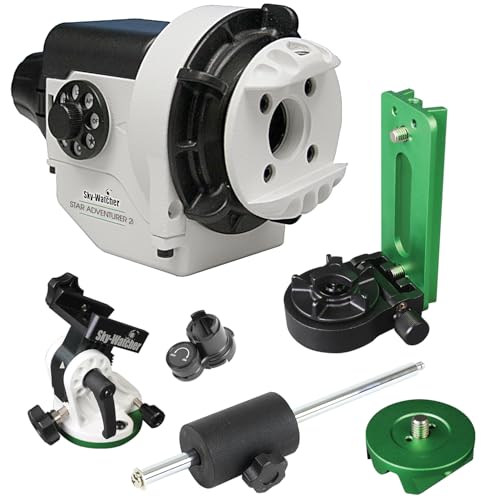
- Only 2.4 pounds for easy packing and transport
- Tracks long exposures for Milky Way and nightscape shots
- Wi-Fi app control and modular tripod-based setup
Best For: Traveling astrophotographers who need a lightweight tracker for wide-field night sky imaging.
Best for Travel-Friendly Astrophotography
DWARFLAB Dwarf 3 Smart Telescope

- Only 3 lb and backpack-friendly for easy travel
- Smart auto-tracking with 4K capture and app processing
- Dual-lens design works for sky, wildlife, and landscapes
Best For: Travelers and beginners who want an ultra-portable all-in-one imaging setup.
Best for Open-Source Control

- Open-source, ESP32-based control
- Runs from a power bank with no app needed
- Dual use for astrophotography and time-lapse
Best For: Travel photographers who want a configurable tracker with simple power-bank operation.
Best for GoTo Travel Tracking
Sky-Watcher Star Adventurer GTi Kit

- Full GoTo tracking with Wi‑Fi app control
- Illuminated polar scope simplifies alignment
- Tripod, pier extension, and counterweight included
Best For: Traveling astrophotographers who want a lightweight GoTo mount with room to expand.
Best for DSLR Travel Tracking
OGST Single-Axis Travel Star Tracker

- Lightweight and easy to pack for trips
- Single-axis tracking for cleaner long exposures
- Polar alignment options help improve setup accuracy
Best For: Traveling DSLR and mirrorless shooters who need a compact star tracker for small rigs.
Best for Ultra-Light Travel Tracking
Xiaoran Single-Axis Star Tracker
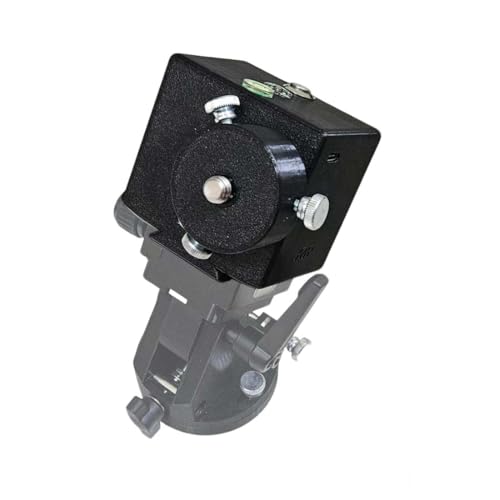
- 340g ultra-light design for easy packing
- Quick-release plate, level, and compass speed setup
- 4.2kg payload with 5V power bank compatibility
Best For: Traveling astrophotographers who need a lightweight, fast-setting tracker for mirrorless cameras and small lenses.
Best for Travel Tracking – Sky-Watcher Star Adventurer 2i Pro Pack
The Sky-Watcher Star Adventurer 2i Pro Pack is a strong pick if you want portable star trackers for travel without giving up real tracking performance. At just 2.4 pounds, it’s easy to pack, mounts to a standard photo tripod, and gives DSLR shooters a practical way to capture sharper Milky Way shots, panoramas, and nightscapes on the road.
Best For: Traveling astrophotographers who want a lightweight, modular tracker for wide-field night sky imaging and time-lapse work.
Pros:
- Very portable at 2.4 pounds, making it easy to travel with
- Tracks long exposures for Milky Way, eclipses, and nightscapes
- Wi-Fi app control adds convenient smartphone operation
- Modular design works with existing tripods and optional accessories
Cons:
- Best suited to wide-field imaging rather than larger telescope setups
- Polar alignment takes a little practice for first-time users
- Counterweight and some accessories may add to the travel load
For portable star trackers for travel, this one stands out because it balances true astrophotography capability with a compact, packable design. It’s a smart choice if you want one tracker that can handle vacation skies, time-lapses, and lightweight nightscape sessions.
Best for Travel-Friendly Astrophotography – DWARFLAB Dwarf 3 Smart Telescope
If you want one of the most compact portable star trackers for travel, the DWARFLAB Dwarf 3 is built around convenience. At just 3 lb, it fits easily in a backpack, yet still gives you smart auto-tracking, dual imaging, and built-in processing for quick results without a laptop.
Best For: Travelers, beginners, and casual astrophotographers who want a lightweight all-in-one system for stars, wildlife, and daytime scenery.
Pros:
- Very lightweight and easy to pack for trips and spontaneous observing sessions
- Dual-lens design handles wide-field sky shots and telephoto subjects
- Auto-tracking plus app-based processing makes setup and editing simple
- Useful for both night-sky imaging and daytime wildlife or landscape capture
Cons:
- Not as specialized for advanced manual astrophotography workflows
- Cloud-based processing may be less appealing if you prefer offline editing
- Smaller, integrated design may sacrifice some flexibility versus larger rigs
For buyers comparing portable star trackers for travel, the Dwarf 3 stands out more as an ultra-light smart imaging system than a traditional tracker. That makes it a strong pick if you value simplicity, backpackability, and multi-use versatility over hands-on control.
Best for Open-Source Control – Equatorial Mount Star Tracker
If you want one of the more customizable portable star trackers for travel, this equatorial mount stands out for its open-source design, dual-core ESP32 control, and hemisphere switching. It is also useful beyond astrophotography, since it can double as a time-lapse gimbal head for lightweight travel shooting.
Best For: Travel photographers who want a compact, power-bank-friendly tracker with hands-on control and no app dependency.
Pros:
- Supports stellar, moon, and custom rotation speeds
- No app required; powers directly from a USB power bank
- 38mm quick-release baseplate makes it easier to integrate with travel rigs
- Works in both northern and southern hemispheres
Cons:
- Requires a ball head and likely a 1/4-to-3/8 sleeve for camera mounting
- No built-in battery, so you’ll need an external USB power source
- USB A to C cable is required; USB-C to USB-C is not supported
For travelers who prefer flexibility over a sealed, app-driven system, this is a practical pick among portable star trackers for travel. The tradeoff is a little more setup, but the payoff is a compact mount that can adapt to different shooting styles and power options.
Best for GoTo Travel Tracking – Sky-Watcher Star Adventurer GTi Kit
If you want portable star trackers for travel that do more than basic sidereal tracking, the Sky-Watcher Star Adventurer GTi is a strong step up. It combines GoTo control, smartphone Wi‑Fi operation, and a built-in polar scope in a compact kit, making it easier to find targets and keep setup manageable on the road.
Best For: Traveling astrophotographers who want a lightweight EQ mount with GoTo, solid alignment tools, and room for a DSLR, mirrorless camera, or a small telescope.
Pros:
- Full GoTo mount head with Wi‑Fi smartphone control
- Built-in illuminated polar scope for faster, more precise alignment
- 11 lb payload is useful for cameras, lenses, and small scopes
- Includes tripod, pier extension, and counterweight hardware
Cons:
- More complex than simpler star trackers
- Heavier and bulkier than ultra-compact travel trackers
- Overkill if you only need basic camera tracking
This is a compelling option if you want portable star trackers for travel but also need automation and alignment features that make deep-sky sessions less fiddly. It is especially appealing for users who plan to grow beyond a camera-and-lens setup.
Best for DSLR Travel Tracking – OGST Single-Axis Travel Star Tracker
If you want one of the more practical portable star trackers for travel, this OGST single-axis mount is built for lightweight DSLR and mirrorless astrophotography without adding much bulk to your kit. Its travel-friendly design and polar alignment options make it a sensible pick for shooters who need tracking support on the road.
Best For: Backpackers, road-trippers, and traveling astrophotographers who want a compact equatorial tracker for cameras and small lens setups.
Pros:
- Lightweight, travel-oriented design that’s easier to pack than larger equatorial mounts
- Single-axis tracking helps reduce star trailing for longer exposures
- Polar alignment options improve setup accuracy in the field
- Works well with DSLR and mirrorless camera rigs
Cons:
- Single-axis tracking is less versatile than multi-axis systems
- Best suited to smaller camera-and-lens combinations, not heavy telescope loads
For travelers who want a straightforward way to improve night-sky shots, this OGST model strikes a good balance between portability and tracking performance. Among portable star trackers for travel, it stands out as a focused option for photographers who value compact gear and reliable alignment over extra features.
Best for Ultra-Light Travel Tracking – Xiaoran Single-Axis Star Tracker
If you want one of the more travel-friendly portable star trackers for travel, this Xiaoran single-axis mount stands out for its 340g weight, quick setup, and built-in alignment tools. It’s designed for backpacking, mobile astrophotography, and compact rigs where every ounce and minute matter.
Best For: Traveling astrophotographers who want a lightweight tracker with fast polar alignment and enough payload for mirrorless cameras or short telephoto lenses.
Pros:
- Only 340g, making it easy to pack for trips and backpacking setups
- Built-in quick-release plate, bubble level, and compass for fast field setup
- High-brightness polar pointer helps simplify alignment in dark conditions
- 4.2kg payload and 5V power support suit a wide range of portable rigs
Cons:
- Single-axis tracking is less versatile than multi-axis mounts
- Polar alignment still takes practice for the best long-exposure results
- Not ideal for heavier telescope setups despite the rated payload
For portable star trackers for travel, this model is a strong fit if you prioritize low weight and fast deployment over advanced features. It’s a practical choice for shooters who want dependable tracking without carrying a bulky mount.
How We Picked These Portable Star Trackers for Travel
We prioritized true portability, reliable sidereal tracking, ease of polar alignment, and compatibility with common DSLR and mirrorless setups. For travel use, weight, size, battery life, and setup simplicity matter as much as raw precision.
We also looked at whether each option suits different styles of shooting, from wide-field Milky Way images to more advanced astro and hybrid field use.
Quick Comparison: Which Type Fits Your Trip?
Not all Portable Star Trackers for Travel are built for the same job. Single-axis trackers are usually the lightest and simplest choice for wide-field astrophotography. More advanced equatorial mounts offer greater payload support and tracking flexibility, but they add bulk and setup time. Smart telescopes and hybrid astro platforms can be appealing if you want imaging assistance beyond traditional camera tracking.
Key Buying Factors for Portable Star Trackers for Travel
Weight and Packability
For carry-on or backpack travel, compact dimensions and low total system weight are essential. Remember that the tracker, head, tripod, counterweights, and mounting plates all affect what you actually carry.
Tracking Accuracy and Alignment
Better polar alignment usually means better results at longer focal lengths and longer exposures. If you plan to shoot frequently, look for alignment aids that are fast to use in the field.
Payload and Camera Compatibility
Check the recommended load capacity with your actual camera, lens, ball head, and accessories. A tracker that seems adequate on paper can feel limiting once a heavier lens or intervalometer is added.
Power and Field Convenience
Travel shooting often means remote locations, so battery options, USB power, and straightforward controls are important. The less time you spend managing power, the more time you can spend shooting.
Who Should Buy Which Portable Star Trackers for Travel?
If you want the lightest possible setup for Milky Way shots, a compact single-axis model is usually the best starting point. If you need more capacity or plan to grow into deeper astrophotography, consider a stronger equatorial mount kit. If you want an all-in-one imaging system with less manual camera work, a smart telescope-style option may fit better than a traditional tracker.
For most buyers, the best choice among Portable Star Trackers for Travel is the one that matches your shooting style, your typical lens weight, and how much setup time you are willing to accept in the field.