
If you want reliable off-grid power without hauling a heavy setup, the right panel can keep your phone, GPS, and power bank charged on the trail.
These portable solar panels for backpacking focus on low weight, packability, and useful real-world output rather than lab specs alone.
Best 10 Portable Solar Panels for Backpacking Picks for 2026
Ultra-Portable 28W Direct-Charge Panel
BigBlue 28W Dual USB-C/USB-A Charger

- 28W panel with claimed 25.4% conversion efficiency
- Dual USB-C and USB-A ports support multiple small devices
- Folds compactly and weighs 1.5 lbs for backpacking
Best For: Backpackers needing a lightweight direct-charge panel for phones, GPS, and power banks
Minimalist 5W Trail Charger

- 5W monocrystalline panel with USB-A output
- Built-in adjustable kickstand helps with positioning
- Very light at 360 grams for easy carry
Best For: Ultralight hikers who want a tiny panel for small-device charging
High-Efficiency 28W Monitoring Panel
BigBlue 28W Solar Charger with Ammeter

- 28W foldable panel with 25.4% claimed efficiency
- Digital ammeter displays real-time current output
- USB-A and USB-C ports for phones, tablets, and GPS
Best For: Backpackers who want output monitoring and broad compatibility in a compact solar panel
Lightweight 10W Backpacking Panel
Goal Zero Nomad 10 Solar Panel
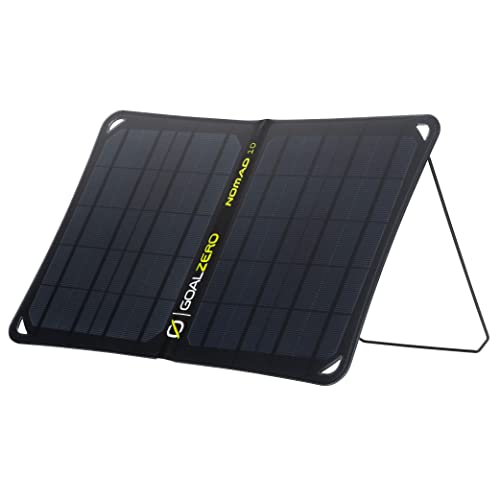
- 10W monocrystalline panel with built-in USB port
- Weighs 1.2 lbs and packs into a small footprint
- Includes an adjustable kickstand and backpack-hanging option
Best For: Hikers who want a lightweight, easy-to-use solar panel for small devices
Ultra-Compact 25W Pick
BigBlue 25W Pocket-Size Charger

- 0.84 lbs and pocket-size folded design
- USB-A plus USB-C for two-device charging
- IP68 water resistance for outdoor use
Best For: Backpackers prioritizing the lightest packable solar charger
Best Power-to-Weight Balance
FlexSolar 40W Foldable Charger

- 40W output with USB-C, USB-A, and DC ports
- 1.76 lb folded design stays backpack-friendly
- IP67 waterproof rating with ETFE coating
Best For: Backpackers wanting more charging power without a bulky panel
Smart Shade-Tolerant Choice
BigBlue 35W PD 25W Solar Charger

- 35W panel with PD 25W USB-C and QC 18W USB-A
- Dual parallel circuit helps in partial shade
- 1.54 lbs with IP68 waterproof protection
Best For: Backpackers who want better shade handling and faster USB-C charging
Trail-Ready Power
SOLUPUP 30W Foldable Solar Charger

- 23%+ monocrystalline efficiency
- USB-A and USB-C dual output
- 2.4 lb with carabiners and stand
Best For: Backpackers wanting a compact, weather-resistant charger for small devices
Lightweight Fast Charge
35W Folding Solar Panel with USB-C PD
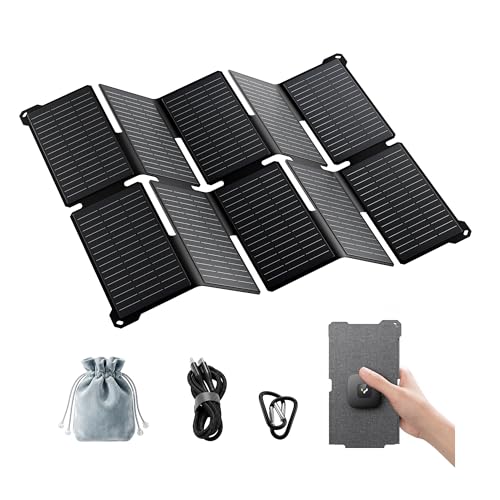
- 25.4% conversion rate
- 20W USB-C PD and 18W USB-A
- Only 1.54 lb and IP68 rated
Best For: Backpackers prioritizing low weight and faster charging for small devices
Ultralight Backup Charging
Renogy 30W Ultralight Portable Solar Panel

- Only 1.23 lb and laptop-size folded
- USB-C, USB-A, and DC outputs
- IP67 rating with shading-resistant design
Best For: Minimalist backpackers wanting the lightest, most versatile panel
Ultra-Portable 28W Direct-Charge Panel – BigBlue 28W Dual USB-C/USB-A Charger
If you want portable solar panels for backpacking, this BigBlue 28W panel is aimed at travelers who need a compact way to top up small devices in direct sun. It folds down small, weighs just 1.5 lbs, and is built for phone, power bank, GPS, and headlamp charging when you’re away from outlets.
Best For: Backpackers who want a lightweight, high-output panel for charging phones and small electronics in camp.
Pros:
- 28W output with 25.4% claimed conversion efficiency
- Dual USB-C plus one USB-A port for multi-device charging
- Folds to 11 x 6 x 1.4 inches and weighs 1.5 lbs
- IP44 water resistance and rugged polymer surface for outdoor use
Cons:
- Does not store power and must be used in direct sunlight
- Output can vary with sun angle, temperature, and device type
- Not suitable for laptops or large power stations
This is a practical pick if you want more charging flexibility than a tiny panel but still need something easy to pack. Its direct-charging design makes it a good fit for daylight use at camp rather than all-day energy storage.
Minimalist 5W Trail Charger – Goal Zero Nomad 5 Solar Panel
The Goal Zero Nomad 5 is one of the simplest portable solar panels for backpacking if you only need a small amount of sun-powered charging. With a 5W monocrystalline panel, USB-A output, and an adjustable kickstand, it’s built for lightweight use on the move or paired with a power bank.
Best For: Ultralight backpackers who want a compact panel for topping off small devices or keeping a power bank going.
Pros:
- Very lightweight at 360 grams
- Built-in adjustable kickstand for better sun angle
- USB-A output can directly charge small devices
- Works well with power banks, headlamps, lanterns, and fitness trackers
Cons:
- Only 5 watts, so charging will be limited
- USB-A only, with no USB-C output listed
- Best suited to small devices rather than heavier charging needs
This is a sensible grab if weight and simplicity matter more than speed. It’s the kind of panel you bring for slow, steady top-offs rather than high-demand charging.
High-Efficiency 28W Monitoring Panel – BigBlue 28W Solar Charger with Ammeter
For backpacking trips where you want more insight into your charging, this BigBlue 28W panel adds a digital ammeter to its foldable solar design. It’s built for direct charging in full sun, with a rugged, water-resistant build and enough output for phones, tablets, GPS units, and power banks.
Best For: Backpackers who want a foldable 28W panel with real-time output monitoring and multi-device charging.
Pros:
- 25.4% claimed conversion efficiency with high-efficiency solar cells
- Digital ammeter shows real-time current output
- USB-A and USB-C ports support phones, tablets, GPS units, and power banks
- IP44 water resistance and included carabiners help with outdoor use
Cons:
- Does not store energy and requires direct sunlight
- Real output depends on sun intensity, angle, temperature, and device compatibility
- Not designed for laptops or large power stations
If you want a backpacking panel that feels a little more informative and capable, this is a strong option. The ammeter adds useful feedback, while the foldable build keeps it travel-friendly for camp setup.
Lightweight 10W Backpacking Panel – Goal Zero Nomad 10 Solar Panel
If you’re looking for portable solar panels for backpacking and want something easier to carry than a larger charging mat, the Goal Zero Nomad 10 is a balanced middle-ground choice. Its 10W monocrystalline panel, built-in USB port, and adjustable kickstand make it a straightforward option for trail use and travel.
Best For: Backpackers who want a lightweight 10W panel with simple setup and backpack-friendly carry.
Pros:
- 10W output is a step up from ultra-small panels
- Weighs 1.2 lbs and folds to a compact size
- Built-in USB port keeps setup simple
- Can hook to a backpack or prop up with the 180° kickstand
Cons:
- Lower wattage than 28W options
- Only one USB port is listed
- Best for small-device charging rather than larger electronics
This panel makes sense if you want a modest boost in charging ability without adding much bulk. It’s best viewed as a practical trail companion for lightweight, small-device power needs.
Ultra-Compact 25W Pick – BigBlue 25W Pocket-Size Charger
If you want portable solar panels for backpacking that disappear into your pack until you need them, this BigBlue 25W model is built for the job. At just 0.84 lbs and folding down to pocket-size dimensions, it’s easy to clip onto a backpack or tent and use for light day-to-day charging in direct sun.
Best For: Backpackers who want the lightest possible solar option for phones, small accessories, and emergency top-offs.
Pros:
- Very lightweight at 0.84 lbs and folds to a compact pocket-size form.
- USB-A and USB-C outputs can charge two devices at once.
- IP68 rating adds solid protection against splashes, spills, and light rain.
- 25.4% conversion efficiency and N-type cells help it make better use of sunlight.
Cons:
- 25W output is better for small devices than for faster multi-device charging.
- Requires direct sunlight and unobstructed placement to perform well.
This is a strong minimalist pick if weight and packability matter more than raw power. For backpacking trips where you mainly need to keep a phone, power bank, or light accessory topped off, it offers a practical balance of size, durability, and charging convenience.
Best Power-to-Weight Balance – FlexSolar 40W Foldable Charger
Among portable solar panels for backpacking, this FlexSolar 40W panel stands out if you want more output without giving up easy carry. Its 1.76 lb folded design is still backpack-friendly, while the USB-C, USB-A, and DC ports give you flexibility for phones, power banks, tablets, and small stations in direct sun.
Best For: Backpackers who want a lighter panel with stronger charging output for longer trips and more devices.
Pros:
- 40W output gives more charging headroom than smaller pocket panels.
- USB-C, USB-A, and 19V DC ports cover multiple device types.
- 1.76 lbs folded weight keeps it reasonably easy to pack.
- IP67 construction and ETFE coating add durability for outdoor use.
Cons:
- It only works in direct sunlight and has no built-in storage.
- The junction box is not fully waterproof, so heavy rain needs caution.
This is a smart middle-ground choice for backpackers who need a bit more charging capacity than ultra-light 20–25W models. It is especially appealing if you carry a power bank or want the option to support a small station in camp.
Smart Shade-Tolerant Choice – BigBlue 35W PD 25W Solar Charger
If you’re comparing portable solar panels for backpacking and want a panel that handles real-world campsite conditions better, this BigBlue 35W charger is worth a look. It folds compactly, weighs 1.54 lbs, and uses a dual parallel circuit design so one section can keep charging even when part of the panel is shaded.
Best For: Backpackers who deal with changing sun angles, partial shade, or want faster USB-C charging for supported devices.
Pros:
- Dual parallel circuit design helps keep charging even if part of the panel is shaded.
- 35W output with PD 25W USB-C and QC 18W USB-A offers faster charging options.
- Folds to 8.29 × 4.84 × 1.89 inches and weighs 1.54 lbs.
- IP68 waterproof protection adds durability for dust and harsh outdoor conditions.
Cons:
- Type-C1 is not compatible with Apple devices.
- Does not store electricity and only works under direct sunlight.
- The USB junction box is not waterproof.
This model makes sense if you want a backpacking solar panel that is still portable but more forgiving when conditions are less than perfect. It is a practical upgrade for users who value faster phone charging and better real-world consistency over the absolute lowest weight.
Trail-Ready Power – SOLUPUP 30W Foldable Solar Charger
If you want portable solar panels for backpacking that are simple to pack and easy to clip to your gear, the SOLUPUP 30W is a practical choice. It uses high-efficiency monocrystalline cells, folds compactly, and includes both USB-A and USB-C outputs for charging phones, power banks, and other small devices on the trail.
Best For: Backpackers who want a lightweight, weather-resistant solar panel with basic dual-device charging.
Pros:
- 23%+ monocrystalline efficiency helps it convert sunlight efficiently for a 30W panel.
- USB-A and USB-C outputs can charge two devices at once under ample sunlight.
- Lightweight 2.4 lb design folds to 10.63 inches and includes carabiners for pack attachment.
- IPX5 waterproof and dustproof rating adds durability for outdoor use.
Cons:
- Maximum output is limited to 15W total across the USB ports.
- Performance still depends on sunlight, angle, season, and cloud cover.
Overall, this is a straightforward backpacking solar charger for keeping small electronics topped up without adding much bulk. Its mix of compact size, dual ports, and simple carry options makes it a good fit for shorter trips and day-to-day trail use.
Lightweight Fast Charge – 35W Folding Solar Panel with USB-C PD
For portable solar panels for backpacking, this 35W folding charger stands out for its strong efficiency and very low carry weight. It is built to power phones, earbuds, and GPS devices, with USB-C PD and USB-A QC ports that make it more useful when you need to charge two essentials on the trail.
Best For: Backpackers who want a very light, high-efficiency panel with faster phone and accessory charging.
Pros:
- 25.4% conversion rate from premium monocrystalline cells.
- 20W USB-C PD and 18W USB-A QC ports support two-device charging.
- Weighs just 1.54 lb and folds to a compact 4.76″ x 8.29″ size.
- IP68 waterproof rating and puncture-resistant PET shell improve trail durability.
Cons:
- It is still a 5V-output panel, so it is mainly aimed at small electronics.
- Some product text and included cable details are specific to USB-C use.
This model is a strong pick if you care most about keeping pack weight down without giving up charging speed. It offers a good balance of efficiency, fast output, and rugged build quality for backpacking trips.
Ultralight Backup Charging – Renogy 30W Ultralight Portable Solar Panel
If you want portable solar panels for backpacking that are especially easy to carry, the Renogy 30W is one of the lightest options here. It folds down to laptop size, includes USB-C, USB-A, and DC outputs, and is designed to keep small devices powered during camping, hiking, and off-grid trips.
Best For: Backpackers who want the lightest panel in this group with flexible device and small power station charging.
Pros:
- At 1.23 lb, it is the lightest panel in this set and packs down very small.
- USB-C PD 20W, USB-A QC 18W, and 30W DC output add charging flexibility.
- Full parallel design helps maintain at least 75% output when one panel is shaded.
- IP67 water and dust resistance supports use in rough outdoor conditions.
Cons:
- 30W output is better suited to phones, tablets, and power banks than larger electronics.
- Maximum USB charging rates are still limited to small-device use.
This is the most carry-friendly option for hikers who count every ounce. The strong shading tolerance and multiple output types make it a dependable backpacking companion when you want lightweight solar without much setup fuss.
How We Picked These Portable Solar Panels for Backpacking
We focused on panels that make sense for trail use: low weight, foldable designs, USB charging support, weather resistance, and a practical wattage range for day hikes, weekend trips, and extended backpacking. We also favored models with USB-C and USB-A outputs, since most hikers now carry mixed-device gear.
Quick Comparison
For ultralight trips, smaller 5W to 10W panels are easiest to pack but charge slowly. Mid-range 25W to 35W models offer a better balance of size and usable output for phones and power banks. Higher-output 40W panels are better if you carry larger battery banks, tablet-sized devices, or expect inconsistent sun and want more headroom.
Key Buying Factors for Portable Solar Panels for Backpacking
Weight and Packability
Weight matters more on the trail than almost anywhere else. Look for compact folding designs that strap to a pack or fit cleanly inside an outer pocket. A lighter panel is usually easier to deploy, but extremely small models may not generate enough power for day-to-day use.
Output and Charging Speed
Match the panel to what you actually charge. Phones and earbuds can do fine with lower wattage, but a power bank or multiple devices benefit from 25W or more. Keep in mind that solar charging is variable, so a panel’s rated wattage is only part of the story.
Port Selection
USB-C is increasingly important for modern phones and accessories, while USB-A still matters for older cables and many backup devices. If you travel with a mix of gear, dual-port setups are more flexible.
Durability and Weather Resistance
Backpacking gear gets handled roughly, exposed to dust, and often used in unpredictable weather. Water-resistant or waterproof construction is a major plus, especially for shoulder-season trips and emergency kits.
Who Should Buy Which Portable Solar Panels for Backpacking?
Choose a smaller 5W to 10W panel if your top priority is minimal weight and you only need emergency top-offs. Choose a 25W to 35W panel if you want the best all-around option for most backpacking trips, especially when charging a phone plus a power bank. Choose a 40W panel if you carry more electronics, want faster recovery in weaker sun, or plan longer off-grid stretches.
In short, the best Portable Solar Panels for Backpacking are the ones that fit your pack weight, device list, and charging expectations. A slightly larger panel is often worth it if you rely on solar as a genuine backup instead of an occasional convenience.