
Portable power stations with solar input make it easier to keep essentials running during outages, road trips, and off-grid weekends. The right model balances battery capacity, AC output, charging speed, and solar compatibility.
In this roundup, we focused on practical options for different needs, from lightweight backup units to higher-capacity home-ready stations.
Best 10 Portable Power Stations with Solar Input Picks for 2026
UltraFast Home-Ready Pick
Anker SOLIX C1000 Portable Power Station

- 80% charge in 43 minutes
- Up to 600W solar recharging
- 1800W output, 11 ports
Best For: Fast home backup and camping power with optional solar charging
Budget Solar Starter
powkey Solar Powered Generator 200W

- Includes 40W solar panel
- 146Wh battery with 200W output
- 2 AC outlets with pure sine wave power
Best For: Entry-level solar power for light camping and emergency charging
Fast-Charge Camping Favorite

- 1500W output with 3000W surge
- 1-hour emergency charging mode
- 1070Wh LiFePO4 battery
Best For: Camping, RV, and emergency backup with fast recharging
All-in-One Panel Bundle

- 60W solar panel included
- 296Wh battery with 300W output
- Pure sine wave power for small devices
Best For: Compact solar charging with the panel included
Whole-Home Backup Pick
ABOK Elux1 1024Wh 1800W Solar Generator

- 1024Wh LiFePO4 battery with 1800W pure sine wave output
- Up to 1000W solar input and expandable to 5120Wh
- 10ms UPS, 12 ports, including 140W USB-C
Best For: Home backup, RV use, and users needing expandable solar power
Compact Solar Starter
DARAN 600W 288Wh Portable Power Station

- 288Wh LiFePO4 battery with 600W output
- Includes 80W solar panel and supports solar input
- Lightweight 8.2 lb design with multiple device ports
Best For: Camping, emergency prep, and lightweight solar charging
Budget Travel Choice
GRECELL 288.6Wh 330W Solar Generator

- 288.6Wh capacity with 330W output
- 120V pure sine wave AC plus 60W USB-C PD
- Compact solar generator for travel and blackout backup
Best For: Travel, camping, and light backup for small electronics
Home Backup Pick
Anker SOLIX S2000 2010Wh Portable Power Station
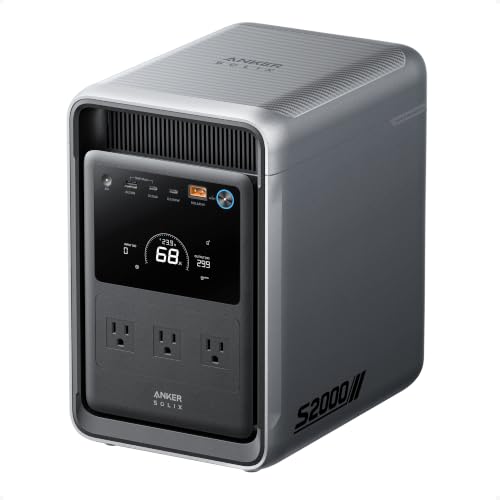
- 2,010Wh LFP battery with 1,500W output
- Up to 35-hour fridge backup claimed
- Supports up to 400W solar input
Best For: Home backup, outages, and longer-runtime emergency power
Budget Solar Kit
ZeroKor 300W Power Station with 60W Panel

- 280Wh battery with 300W output limit
- Includes foldable 60W solar panel
- Multiple charging ports and SOS flashlight
Best For: Light camping, phones, and small-device charging
Fast-Charge Solar Backup
1000W LiFePO4 Power Station with 400W Solar Input

- 614Wh LiFePO4 battery with 3000+ cycles
- 1.5-hour AC charging and 400W solar input
- <10ms EPS backup switching
Best For: Fast charging, app control, and small-device emergency backup
UltraFast Home-Ready Pick – Anker SOLIX C1000 Portable Power Station
If you want portable power stations with solar input that can pull double duty for home backup and outdoor use, the Anker SOLIX C1000 is built around speed and flexibility. It charges to 80% in 43 minutes, supports up to 600W fast solar recharging, and offers 11 ports with a 1800W output for a wide range of everyday appliances.
Best For: Buyers who want a fast-charging 1kWh-class power station for home outages, RV trips, and camping.
Pros:
- Full AC recharge in under an hour, with 80% reached in 43 minutes using UltraFast charging.
- Up to 600W solar input can fully recharge the unit in about 1.8 hours.
- 1800W output with 2400W SurgePad supports many appliances through 11 ports.
- LiFePO4 battery is rated for 3,000 cycles and a 10-year lifespan.
Cons:
- UltraFast charging requires AC input and the Anker app on a smartphone.
- The operating temperature range for UltraFast charging is limited to 68–122°F.
- Solar panel is optional, so solar charging requires an extra purchase.
Overall, this is a strong choice if you care most about rapid recharge times and higher output in a relatively compact package. It leans more toward backup power and versatile appliance support than ultra-light portability.
Budget Solar Starter – powkey Solar Powered Generator 200W
For shoppers comparing portable power stations with solar input on a tighter budget, the powkey Solar Powered Generator keeps things simple. It combines a 146Wh power bank, a 200W portable power station, and included 40W solar panels for basic outdoor camping, emergency, and home-use charging needs.
Best For: Light-duty users who want an entry-level solar generator with included panels.
Pros:
- Includes a 40W solar panel, so it is ready for solar use out of the box.
- Pure sine wave AC output and 2 AC outlets add useful flexibility for small devices.
- Compact 146Wh capacity suits basic emergency and camping needs.
Cons:
- 200W output is best for low-power devices, not high-demand appliances.
- Battery capacity is much smaller than larger portable power stations.
- Product details are limited, so feature depth is harder to judge.
This is a straightforward pick if you mainly want a small solar-capable power source for occasional use. It makes the most sense when portability and simplicity matter more than runtime or heavy-load performance.
Fast-Charge Camping Favorite – Jackery Explorer 1000 v2
If you want portable power stations with solar input for camping or emergency use, the Jackery Explorer 1000 v2 is aimed at users who need serious output in a relatively light package. It delivers 1500W AC power, a 1070Wh LiFePO4 battery, and solar-generator compatibility with an optional panel, while also emphasizing fast charging and app control.
Best For: Campers, RV users, and homeowners who want a compact 1kWh-class backup power station.
Pros:
- 1500W AC output and 3000W surge can handle multiple appliances.
- One-hour emergency charging is available through the Jackery app.
- 1070Wh LFP battery is rated for over 4,000 cycles and 10+ years of use.
- At 23.8 lbs, it is relatively easy to carry for its capacity.
Cons:
- The 1-hour charge mode must be enabled in the app each time.
- Solar panel is optional, so solar charging is not included.
- Solar charging is limited to Jackery solar panels only.
For buyers who care about output, fast recharge capability, and long battery life, this is one of the more balanced picks in this size class. The tradeoff is that the fastest features depend on app setup and compatible accessories.
All-in-One Panel Bundle – Portable Solar Generator 300W
Among portable power stations with solar input, this bundle stands out because the foldable 60W solar panel is included. The unit pairs a 296Wh lithium battery with a 300W pure sine wave output, making it a practical compact option for home use, RV trips, van life, and outdoor camping.
Best For: Buyers who want a compact solar-ready generator with the panel included in the box.
Pros:
- Foldable 60W solar panel is included, so you can start using solar charging right away.
- 300W pure sine wave output supports small electronics and light-duty devices.
- 296Wh capacity and 80000mAh rating provide a useful compact power reserve.
Cons:
- 300W output is not intended for larger appliances or high-wattage loads.
- Battery capacity is best suited to short-term, light-power needs.
- Limited product details make it harder to compare advanced features.
This is a sensible buy if you want a simple bundle and value having solar hardware included from day one. It is less about big backup capability and more about compact, everyday portability.
Whole-Home Backup Pick – ABOK Elux1 1024Wh 1800W Solar Generator
If you want portable power stations with solar input that can do more than keep phones charged, the ABOK Elux1 is built for heavier backup tasks. Its 1024Wh LiFePO4 battery, 1800W pure sine wave output, and up to 1000W solar input make it a strong fit for home backup, RV use, camping, and outage protection.
Best For: Home backup, RV owners, and users who need higher output with expandable capacity.
Pros:
- 1024Wh LiFePO4 capacity with 1800W continuous pure sine wave output.
- Up to 1000W solar input and expandable capacity up to 5120Wh.
- 12 output ports, including 140W and 100W USB-C for modern devices.
- 10ms UPS support helps keep routers, computers, and medical gear running.
Cons:
- More expensive and more capable than a basic compact travel unit.
- Solar panels and expansion batteries are sold separately.
Overall, the Elux1 stands out if you want a solar-ready power station that can scale over time and deliver serious household-level backup. It is less about ultra-light portability and more about dependable power, fast charging, and broad device support.
Compact Solar Starter – DARAN 600W 288Wh Portable Power Station
For shoppers comparing portable power stations with solar input, the DARAN 600W model is aimed at simple, grab-and-go use. It pairs a 288Wh LiFePO4 battery with 600W output, includes an 80W solar panel, and keeps the footprint small enough for camping, emergency prep, or light RV needs.
Best For: Camping, emergency backup, and users who want a compact solar-ready starter unit.
Pros:
- Compact 8.2 lb design makes it easy to carry.
- 288Wh LiFePO4 battery with 600W output and 1200W surge.
- Includes an 80W solar panel and supports solar input.
- Multiple ports, including USB-C PD 60W, help charge several devices at once.
Cons:
- 600W output limits it to smaller appliances and devices.
- The included solar panel is noted as best for summer use.
- Not suited for high-wattage loads like larger household appliances.
This is a practical choice if your priority is portability first and backup power second. It is not the biggest or most powerful unit here, but the built-in solar panel and lightweight build make it straightforward for short trips and basic emergency use.
Budget Travel Choice – GRECELL 288.6Wh 330W Solar Generator
The GRECELL 330W is a compact option for buyers looking at portable power stations with solar input for travel, outdoor use, or blackout backup. With 288.6Wh of capacity, a 120V pure sine wave AC outlet, and 60W USB-C PD output, it covers small electronics and light daily charging needs.
Best For: Travel, camping, and light home backup for phones, laptops, and small electronics.
Pros:
- 288.6Wh capacity in a compact portable form factor.
- 120V pure sine wave AC outlet helps power sensitive devices.
- 60W USB-C PD output adds faster charging for compatible gear.
- Solar generator design suits outdoors and blackout use.
Cons:
- 330W output is limited for larger appliances.
- No detailed solar input wattage is provided in the supplied notes.
As a smaller solar-ready power station, the GRECELL makes the most sense for everyday essentials rather than heavy loads. It is a straightforward pick if you want a simple backup unit with pure sine wave output and modern USB-C charging.
Home Backup Pick – Anker SOLIX S2000 2010Wh Portable Power Station
If you want portable power stations with solar input for serious home backup, the Anker SOLIX S2000 stands out for its 2,010Wh LFP battery, 1,500W continuous output, and support for up to 400W solar charging. It is built to keep essentials running through outages, with claims of up to 35 hours of fridge backup and a compact, lighter-than-average design that is easier to move than many 2kWh units.
Best For: Households that want a high-capacity backup unit for outages, fridge support, and camping.
Pros:
- Up to 35-hour fridge backup with low idle power draw and 10% higher efficiency.
- 2,010Wh LFP battery with a claimed 10,000-cycle lifespan.
- 1,500W continuous output and 3,000W peak output for most home essentials.
- Supports up to 400W solar input plus AC, generator, alternator, and car charging.
Cons:
- No 12V DC port.
- Solar panels are optional, not included.
- At 35.7 lbs, it is portable for its class but still a substantial unit.
This is a strong choice if your priority is long-runtime backup with flexible recharging rather than a tiny travel battery. The front-and-rear outlet layout and broad home-appliance support make it practical for emergency use.
Budget Solar Kit – ZeroKor 300W Power Station with 60W Panel
For shoppers comparing portable power stations with solar input on a budget, this ZeroKor bundle is designed for light-duty charging and camping convenience. The 280Wh power station pairs with a foldable 60W solar panel, making it suitable for phones, tablets, laptops, headphones, and other small devices when you want a compact off-grid setup.
Best For: Campers and casual users who need a small solar bundle for phones and lightweight electronics.
Pros:
- Includes a 60W foldable solar panel in the box.
- Multiple outputs, including 2 AC outlets, USB ports, DC, and a flashlight with SOS mode.
- Built-in BMS protection for short circuit, overload, over-voltage, and overheating protection.
- Can recharge from AC, solar, or a 12V car port.
Cons:
- 300W limit means it is not for appliances over 300W.
- 280Wh capacity is best for small electronics rather than extended backup.
- Some high-heat appliances like coffee makers or hair dryers are specifically discouraged.
This bundle makes the most sense if you want an all-in-one entry-level solar option for travel or tent camping. It is not a high-power solution, but it does cover the basics in a compact, portable package.
Fast-Charge Solar Backup – 1000W LiFePO4 Power Station with 400W Solar Input
If you need portable power stations with solar input that charge fast and handle everyday backup, this 614Wh LiFePO4 model is built around speed and practical emergency use. It supports up to 400W solar charging, fully charges in 1.5 hours with 1000W AC input, and adds <10ms EPS switching for smoother backup when the grid goes down.
Best For: Users who want fast recharging, app control, and quick backup for small household devices.
Pros:
- 614Wh LiFePO4 battery with over 3000 deep cycles claimed.
- Supports 400W max solar input and 1000W AC fast charging.
- <10ms EPS switchover for sensitive backup needs like routers and CPAP machines.
- WiFi and Smart Life app support for remote monitoring and control.
Cons:
- 2 AC outlets may feel limited for larger setups.
- 614Wh capacity is modest compared with bigger home-backup units.
- Best suited to small appliances and electronics rather than heavy loads.
This is a solid middle-ground option if you value quick turnaround and smart controls more than maximum capacity. The combination of LiFePO4 durability, solar support, and fast backup switching makes it versatile for travel and emergencies.
How We Picked the Best Portable Power Stations with Solar Input
We prioritized Portable Power Stations with Solar Input that offer a strong mix of usable battery capacity, dependable inverter output, clear solar charging specs, and safety-focused battery chemistry. We also looked for models that make sense for real-world use, not just impressive headline numbers.
Quick Comparison
Smaller units are best for phones, lights, tablets, and short camping trips. Mid-size models can handle laptops, routers, fans, and small appliances. Larger stations are a better fit if you want fridge backup, CPAP support, or multi-device home backup.
Key Buying Factors for Portable Power Stations with Solar Input
Battery Capacity and Runtime
Battery capacity, measured in watt-hours, is the biggest factor in how long a station can run your devices. Higher capacity usually means more runtime, but also more weight and cost.
Inverter Output and Surge Power
Check both continuous wattage and peak wattage. If you plan to power appliances with startup loads, such as mini fridges or power tools, the inverter needs enough surge headroom.
Solar Input Limit
A higher solar input limit can shorten recharge time when conditions are good. If you want to rely on panels frequently, look for a model that supports enough solar wattage to match your charging setup.
Ports, Charging Speed, and Expandability
USB-C PD, multiple AC outlets, and fast wall charging improve everyday convenience. Some Portable Power Stations with Solar Input also support expansion batteries or UPS/EPS features, which can be useful for home backup.
Who Should Buy Which Portable Power Stations with Solar Input?
Choose a compact unit if you mainly need emergency phone charging, light-duty camping power, or basic travel backup. Go with a midrange model if you want one station for camping, work-from-anywhere setups, and routine outages. Pick a high-capacity option if you need longer backup for larger appliances, sensitive electronics, or more serious solar charging use.
If you want the best balance overall, focus on a LiFePO4 battery, a pure sine wave inverter, and a solar input range that matches the panel size you actually plan to use.