
When the power goes out, the right portable power station can keep your essentials running without the noise, fumes, or fuel storage of a gas generator.
Below, we’ve narrowed the field to dependable options for backup power, from compact units for phones and routers to larger systems that can support refrigerators and longer outages.
Best 10 Portable Power Stations for Power Outages Picks for 2026
Whole-Home Backup Pick

- 2042Wh LiFePO4 battery with 2200W output
- 20ms UPS switching for outage backup
- 0-80% recharge in 66 minutes via AC
Best For: Home backup during outages and emergencies
Fast-Charge Utility Pick

- 1152Wh LiFePO4 battery with 1800W output
- Fully charges in about 1 hour from AC
- 20ms UPS support with 8 outlets
Best For: Fast-recharging essential backup power
Expandable Power Pick

- 2000W output with 4500W surge
- Expandable from 1024Wh to 5kWh
- 0-80% recharge in 36 minutes via AC
Best For: Growing backup needs and expandable capacity
Compact Solar Backup Pick
Jackery Solar Generator 1000 v2

- 1070Wh LiFePO4 battery with 1500W output
- 23.8 lb portable design with foldable handle
- Includes 200W solar panel and app-based fast charge
Best For: Lighter solar-ready outage backup
Home-Backup Marathoner
Anker SOLIX S2000 2,010Wh Portable Power Station
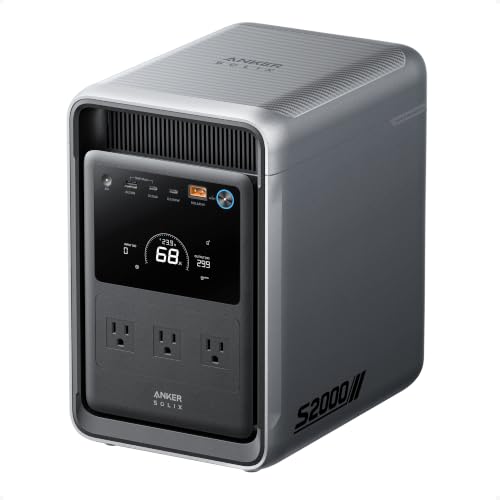
- 2,010Wh LFP battery with up to 35-hour fridge backup
- 1,500W continuous output, 3,000W peak
- Six recharge options, including solar, AC, car, and generator
Best For: Long outages, fridge backup, and larger home essentials
Fast-Charge Value Pick
BLUETTI AC70 768Wh Portable Power Station

- 768Wh LiFePO4 battery with 3,000+ cycles
- 0-80% AC charge in 45 minutes; full in 1.5 hours
- Up to 2,000W power lifting and 500W solar input
Best For: Short outages and fast-recharge backup for essentials
Compact All-Rounder
Anker SOLIX C1000 Gen 2 1,024Wh Power Station

- 1,024Wh LiFePO4 battery with 2,000W output
- 49-minute full recharge with HyperFlash tech
- 10 ms UPS backup for sensitive electronics
Best For: Compact home backup with fast charging and UPS support
Ultra-Light Backup Pick

- 7.5 lb portable design with handle
- 292Wh capacity and 300W output
- LiFePO4 battery rated for 4,000+ cycles
Best For: Short outages, travel, and small-device backup
High-Power Home Backup

- 1056Wh capacity with 1800W output
- 80% charge in 43 minutes with AC
- 11 ports and 2400W peak surge
Best For: Fast-charging home backup during outages
Compact Emergency Choice

- 288Wh capacity with 300W output
- Quiet 25dB operation for indoor use
- 8 ports and multiple recharge options
Best For: Compact backup for small devices and short outages
Whole-Home Backup Pick – Jackery Explorer 2000 v2
If you want portable power stations for power outages that can handle a lot more than phones and lights, the Jackery Explorer 2000 v2 is built for serious backup use. Its 2042Wh capacity, 2200W output, and 20ms UPS switching make it a strong fit for keeping essentials running through storms and outages, while the LiFePO4 battery is designed for long-term use.
Best For: Homeowners who want a high-capacity backup unit for outages, emergencies, and extended power needs.
Pros:
- 2042Wh capacity and 2200W output with 3 AC ports for bigger household loads.
- 20ms seamless switching and UL1778 UPS certification for backup-sensitive devices.
- Fast recharge options, including 0-80% in 66 minutes via AC charging.
- Light for its class at 39.5 lbs, with a compact 2kWh design.
Cons:
- Solar panels are optional, so solar setup adds extra cost.
- Bigger capacity means it is still heavier than smaller everyday backup units.
Overall, this is a strong premium choice if your priority is dependable outage coverage and faster recovery between blackouts. It balances capacity, charging speed, and UPS functionality better than many mid-size portable power stations.
Fast-Charge Utility Pick – BLUETTI AC180
For shoppers comparing portable power stations for power outages, the BLUETTI AC180 stands out as a practical mid-size backup option with fast recharge times. Its 1152Wh LiFePO4 battery, 1800W output, and 20ms UPS support make it well suited for keeping key appliances and devices powered when the grid goes down.
Best For: People who want a compact, fast-recharging backup station for essential outage coverage.
Pros:
- 1152Wh LiFePO4 battery with 1800W output and 8 outlets.
- Charges fully in about 1 hour from AC input, or 0-80% in 45 minutes.
- 20ms UPS support for emergency home backup.
- Solar input support up to 500W for off-grid recharging.
Cons:
- Less capacity than larger 2kWh-class stations.
- Heavier than some compact travel-focused units at 37.4 lbs.
The AC180 is a solid balance of speed, output, and portability if you want backup power that can be ready again quickly after an outage. It is especially appealing when recharge time matters as much as watt-hours.
Expandable Power Pick – OUPES Mega 1
If you need portable power stations for power outages that can grow with your needs, the OUPES Mega 1 is built around flexibility. It offers 2000W continuous output, a 1024Wh LiFePO4 battery, and expandable capacity up to 5kWh, giving it room to start as a backup unit and scale into a much larger home or work setup.
Best For: Buyers who want a UPS-capable power station that can expand over time.
Pros:
- 2000W output with 4500W surge for heavier household or job-site loads.
- Expandable from 1024Wh to 5120Wh with extra batteries.
- Very fast recharge, including 0-80% in 36 minutes via AC.
- <20ms UPS transfer time for outage protection.
Cons:
- Expansion batteries are needed to reach the largest capacity.
- Its more advanced feature set may be more than casual users need.
The Mega 1 is a smart pick if you want a backup station that can start small and scale up later. It combines speed, UPS support, and expansion options in a way that makes it especially future-friendly.
Compact Solar Backup Pick – Jackery Solar Generator 1000 v2
For portable power stations for power outages in a smaller, easier-to-carry package, the Jackery Solar Generator 1000 v2 is a strong everyday backup choice. With 1070Wh of LiFePO4 storage, 1500W AC output, and a 23.8 lb build, it is designed for emergency use, RV trips, and off-grid living without feeling oversized.
Best For: Users who want a lighter solar-ready backup station for outages and travel.
Pros:
- Lightweight at 23.8 lbs with a foldable handle for easier transport.
- 1070Wh capacity and 1500W AC output with 3000W surge peak.
- Includes a 200W solar panel for built-in solar charging capability.
- One-hour emergency charging option via the Jackery App.
Cons:
- Lower capacity than larger home-backup models.
- The 1-hour charge mode requires app-enabled emergency charging.
This model makes the most sense if you want backup power that is easier to move and can recharge with solar. It is a practical middle ground between small portable units and larger home-backup stations.
Home-Backup Marathoner – Anker SOLIX S2000 2,010Wh Portable Power Station
If you want portable power stations for power outages that can keep essential appliances going longer, the Anker SOLIX S2000 is built around endurance and home-use practicality. Its 2,010Wh LiFePO4 battery, 1,500W continuous output, and claimed 35-hour fridge backup make it a strong fit for longer outages where staying powered matters more than going ultra-light.
Best For: Longer home outages, fridge backup, and users who want a high-capacity unit with multiple recharge options.
Pros:
- 2,010Wh LFP battery is rated for up to 10,000 cycles and a 15-year lifespan.
- 1,500W continuous output and 3,000W peak output cover 99% of home essentials.
- Supports six recharge methods, including AC, solar, generator, alternator, and car charging.
- Compact for its class at 35.7 lbs and 30% smaller than the industry average.
Cons:
- No 12V DC port, which may limit some accessory use.
- Solar panel is optional, so off-grid charging requires extra purchases.
This is the most outage-focused option in the group if runtime and appliance coverage matter most. It trades some portability conveniences for a larger battery and stronger whole-home backup credentials.
Fast-Charge Value Pick – BLUETTI AC70 768Wh Portable Power Station
For portable power stations for power outages where quick recharging and a smaller footprint matter, the BLUETTI AC70 is a practical mid-size choice. With 768Wh of capacity, 1,000W output, and power lifting to 2,000W, it is sized for essential devices, short backup runs, and fast turnaround charging between outages.
Best For: Shorter outages, essential electronics, and buyers who value fast AC charging.
Pros:
- Charges from 0-80% in 45 minutes and fully in 1.5 hours via AC input.
- 2000W power lifting helps start higher-demand devices when needed.
- 768Wh LiFePO4 battery is rated for 3,000+ cycles.
- Supports up to 500W solar input for renewable recharging.
Cons:
- Lower capacity than larger home-backup models, so runtime is more limited.
- 1,000W continuous inverter may not suit heavier appliances.
The AC70 stands out when you want a compact backup unit that recovers fast after discharge. It is especially appealing if your outage plan focuses on phones, routers, lights, and other essentials rather than running big appliances for long periods.
Compact All-Rounder – Anker SOLIX C1000 Gen 2 1,024Wh Power Station
If you are comparing portable power stations for power outages and want a balanced mix of speed, portability, and output, the Anker SOLIX C1000 Gen 2 is a standout. It offers 1,024Wh of LiFePO4 capacity, 2,000W output, and a very fast recharge time, making it a strong fit for households that want reliable backup without moving up to a much larger, heavier system.
Best For: Home backup, remote work, and users who want a compact unit with very fast recharge times.
Pros:
- Fully recharges in 49 minutes with 1,600W input using HyperFlash tech.
- 2,000W output and 3,000W peak support up to 10 devices.
- 10 ms UPS switchover helps keep sensitive gear like CPAPs and laptops running.
- Smaller and lighter than similar models, while still offering 1,024Wh capacity.
Cons:
- Solar input tops out at 600W, which is useful but not class-leading for larger off-grid setups.
- Less battery capacity than the larger 2kWh option in this roundup.
This model lands in the sweet spot for buyers who want serious outage support without a bulky footprint. Its fast recharge and UPS behavior make it especially convenient if your backup plan depends on quick recovery and dependable electronics support.
Ultra-Light Backup Pick – Jackery Explorer 300
If you want a compact option among portable power stations for power outages, the Jackery Explorer 300 is built for light backup and easy transport. Its 292Wh capacity, 300W rated output, and multiple USB, AC, and car ports make it a practical choice for keeping essentials running when the lights go out, especially if you also want something useful for camping or travel.
Best For: Keeping phones, laptops, cameras, drones, and other small devices powered during short outages or on the go.
Pros:
- Very light at 7.5 lbs with an integrated handle for easier carrying.
- 2 AC outlets, USB-C PD, USB-A, and a 120W car port support up to 6 devices.
- LiFePO4 battery is rated for over 4,000 charge cycles.
- Can recharge with solar panels for off-grid or emergency use.
Cons:
- 300W output limits use to smaller appliances and electronics.
- 292Wh capacity is best for shorter backup needs, not extended home outages.
- Solar panel is optional and not included.
The Explorer 300 makes sense if portability matters more than raw capacity. It is a straightforward backup battery for essentials, with enough flexibility to serve as a travel companion the rest of the time.
High-Power Home Backup – Anker SOLIX C1000
For buyers comparing portable power stations for power outages, the Anker SOLIX C1000 stands out for its fast recharge speed and strong output. With 1056Wh of capacity, 1800W output, and a 2400W peak, it is designed to support a wide range of home backup needs while still staying compact for camping or RV use.
Best For: Home backup users who want quick recharging and the ability to run many common appliances during outages.
Pros:
- Reaches 80% charge in 43 minutes and full charge in under an hour with AC input.
- 1800W output with 2400W surge supports 99% of appliances, according to the listing.
- 11 ports offer broad device coverage for home or outdoor use.
- LiFePO4 battery is rated for 3,000 cycles and a 10-year lifespan.
Cons:
- At 27.59 lbs, it is less convenient to move around than smaller units.
- Fast charging requires the app to turn on UltraFast recharging.
- Solar panel is optional and not included.
If your priority is a stronger home backup battery rather than the smallest possible unit, the C1000 is the most capable option here. Its speed and output make it especially appealing for outages when you need power back quickly.
Compact Emergency Choice – Anker SOLIX C300
The Anker SOLIX C300 is a compact pick for portable power stations for power outages when you want something easier to carry without giving up useful everyday backup features. Its 288Wh capacity, 300W output, and 8 ports make it suitable for charging smaller essentials, and the quiet 25dB operation is a nice fit for indoor emergency use.
Best For: Light emergency backup for phones, laptops, cameras, and other small devices.
Pros:
- Small, travel-friendly design that is 15% smaller than similar units.
- Fast charging options include wall, car, solar, and USB-C input.
- 8 ports provide flexible charging for multiple small devices.
- Quiet 25dB operation makes it less disruptive during outages.
Cons:
- 300W output is better for electronics than larger appliances.
- 288Wh capacity is limited for longer blackout coverage.
- Strap is sold separately.
The C300 is a good fit if you want a portable emergency battery that does not take up much space. It is best viewed as a compact backup companion for essential electronics rather than a full household power solution.
How We Picked the Best Portable Power Stations for Power Outages
We focused on Portable Power Stations for Power Outages that combine useful battery capacity, strong AC output, fast recharge times, and LiFePO4 chemistry for longer cycle life. We also prioritized models with practical home-backup features such as UPS support, expandable capacity, and multiple charging options.
Because outage needs vary, we favored a mix of sizes rather than one “perfect” unit. That makes it easier to match a power station to your most important loads, whether that’s a modem, CPAP machine, fan, or refrigerator.
Quick Comparison: What the Main Size Tiers Are Best for
Smaller units in the 288Wh to 300Wh range are best for charging phones, tablets, lights, and networking gear. Mid-size models around 768Wh to 1,056Wh can handle longer runtimes for essential electronics and some small appliances. Larger systems around 1,150Wh to 2,042Wh are better suited to heavier loads, especially if you want refrigerator backup or extended outage coverage.
If you want more flexibility, an expandable model can bridge the gap by starting compact and growing into a larger home-backup setup later.
Key Buying Factors for Portable Power Stations for Power Outages
Battery Capacity and Runtime
Look at watt-hours first. Higher Wh means longer runtime, but real-world performance depends on the device you’re powering. A fridge, for example, uses far more energy than a phone charger.
AC Output and Surge Handling
Check both continuous wattage and surge wattage. Appliances with compressors or motors need extra startup power, so a higher surge rating can be the difference between reliable startup and overload.
Recharge Speed
During multi-day outages, faster recharge matters. Units that can refill quickly from wall power or solar are easier to keep in service if utility power returns briefly or if you have panels available.
Battery Chemistry and Longevity
LiFePO4 batteries are a strong choice for backup use because they typically offer longer life and better stability than older lithium-ion designs.
Ports and Backup Features
For home outage use, prioritize enough AC outlets, USB-C power delivery, and features like UPS mode if you plan to keep a router, desktop, or medical device running through brief interruptions.
Who Should Buy Which Portable Power Stations for Power Outages?
If you want compact emergency backup for essentials, choose a smaller model like the Jackery Explorer 300 or Anker SOLIX C300. For everyday household outage coverage with better balance, look at mid-size options such as the BLUETTI AC70 or the Anker SOLIX C1000 lineup.
If your goal is refrigerator backup, longer runtimes, or a more capable home emergency setup, step up to larger units like the Jackery Explorer 2000 v2, BLUETTI AC180, Anker SOLIX S2000, or expandable systems such as the OUPES Mega 1. The best choice depends on what you need to keep on, how long you need it, and whether you plan to add solar later.