
Overlanding puts your power setup in the real world: dust, vibration, temperature swings, and long stretches away from hookups. The best portable power stations for overlanding need to be dependable first, convenient second.
Below, we focus on capacity, recharge speed, output variety, and durability so you can choose a system that fits your fridge, lights, devices, and camp routine without overbuying.
Best 10 Portable Power Stations for Overlanding Picks for 2026
Rugged Overland Power
Dark Energy Recon 2000 rugged 2016Wh station

- 2016Wh LiFePO4 battery with 2400W pure sine wave output
- Aluminum shell, sealed ports, IPX4 resistance, and drop protection
- All-terrain wheels and telescoping handle improve mobility
Best For: Overlanders needing tough, high-capacity off-grid power
Compact 2kWh Backup
Anker SOLIX S2000 compact 2kWh power station
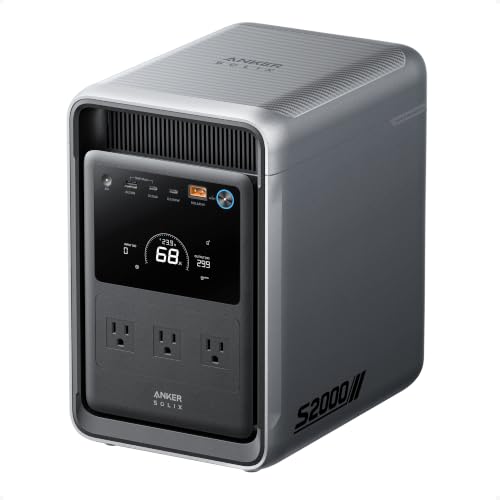
- 2010Wh LFP battery with 10,000-cycle rating
- 35.7 lbs, smaller and lighter than many 2kWh units
- Six recharge methods include solar, car, alternator, and AC
Best For: Overlanders who value lighter weight and flexible charging
Budget Solar Backup
1000W 1024Wh LiFePO4 compact power station

- 1024Wh LiFePO4 battery with 1000W continuous output
- Supports AC, USB-C, and USB-A charging for five devices
- 27.73 lbs with solar input up to 300W
Best For: Lightweight overlanding and basic off-grid essentials
High-Power Mobile Station
ComJoy 3000W 2560Wh fast-charging station

- 3000W output with 5000W surge for heavy loads
- 2560Wh LiFePO4 battery and 1.6-hour wall charging
- Wheels, telescopic handle, and 14 ports improve usability
Best For: Heavy-duty overlanders needing fast-charging high output
Best All-Rounder
Jackery Explorer 1000 v2 for compact campsite power

- 1,070Wh LiFePO4 battery
- 1,500W AC output, 3,000W surge
- 23.8 lb with fast app-enabled charging
Best For: Overlanders wanting a balanced, mid-size power station for mixed gear
Best Backup Option
LIBRIDS C600 for fast, reliable campsite power

- 640Wh LiFePO4 battery
- 10ms UPS with 1.5-hour charging
- 4 AC outlets and 8 total ports
Best For: Overlanders who need dependable power for essentials and backup use
Best Ultralight Pick
Anker SOLIX C300 for grab-and-go travel power

- 288Wh LiFePO4 battery
- 300W output with 140W USB-C
- 15% smaller and only 25dB quiet
Best For: Minimalist overlanders who want a compact charger for light electronics
High-Capacity Overlanding Pick
AFERIY 2048Wh 2400W LiFePO4 Station

- 2048Wh LiFePO4 battery with 3500+ cycles
- 2400W pure sine wave output, 4800W surge
- 16 ports and quiet sub-30 dB operation
Best For: Overlanders needing maximum capacity and lots of device support
Fast-Charging Compact Choice
Anker SOLIX C1000 Gen 2 1024Wh

- 49-minute full recharge with 1600W input
- 2000W output and 10-device support
- Compact 1024Wh LiFePO4 build with UPS
Best For: Overlanders with tight space who value rapid recharging
Lightweight 2kWh Option
Jackery Explorer 2000 v2 2042Wh

- 2042Wh capacity with 2200W output
- 39.5 lb design is lighter than typical 2kWh units
- Charges to 80% in 66 minutes with AC
Best For: Overlanders wanting a lighter high-capacity unit for mixed use
Rugged Overland Power – Dark Energy Recon 2000 rugged 2016Wh station
If you want portable power stations for overlanding that are built for rough terrain, the Dark Energy Recon 2000 stands out with its 2016Wh LiFePO4 battery, 2400W pure sine wave output, and rugged mobility features. It’s aimed at users who need serious off-grid capacity with a shell that can handle dust, rain, and transport across uneven ground.
Best For: Overlanders who need a high-capacity, weather-resistant power station that’s easy to move around camp.
Pros:
- 2016Wh capacity with 2400W pure sine wave AC output for demanding gear and appliances
- Reinforced aluminum shell, sealed ports, IPX4 resistance, and 1-meter drop protection
- All-terrain wheels and telescoping handle make it easier to relocate than most large units
- Solar input support helps keep it running off-grid for longer trips
Cons:
- At 70 pounds, it’s still a heavy unit despite the wheels
- Solar panel is sold separately
- Large size may be more power than casual campers need
This is a strong pick if your overlanding setup needs durability first and mobility second, with enough stored energy to cover more than just phones and lights. It’s built for harsh environments where ordinary power stations are more likely to struggle.
Compact 2kWh Backup – Anker SOLIX S2000 compact 2kWh power station
For buyers comparing portable power stations for overlanding, the Anker SOLIX S2000 is a compact 2kWh option that prioritizes efficiency and manageable weight. Its 2010Wh LFP battery, 1500W continuous output, and multiple recharge methods make it a practical choice when you want dependable camp power without hauling a larger chassis.
Best For: Overlanders who want a lighter 2kWh-class power station for everyday camping and backup power.
Pros:
- 2010Wh LFP battery with 10,000-cycle lifespan
- 35.7-pound weight makes it notably easier to carry than many 2kWh models
- 1500W continuous and 3000W peak output cover many common essentials
- Supports six recharge options, including solar, car outlet, alternator charger, and wall power
Cons:
- No 12V DC port
- Solar panel is optional, so off-grid charging setup costs extra
- Less ruggedly focused than some overland-specific designs
This model makes sense if portability matters as much as capacity. It’s compact for a 2kWh station, but it still brings the kind of output and recharge flexibility that fits road trips, camp setups, and longer stays away from the grid.
Budget Solar Backup – 1000W 1024Wh LiFePO4 compact power station
This portable power station is a smaller, more approachable option for portable power stations for overlanding when you mainly need reliable charging for lights, phones, and small electronics. With 1024Wh of LiFePO4 storage, 1000W continuous output, and solar compatibility, it suits lighter-duty trips where compactness matters more than maximum output.
Best For: Lightweight overlanding setups and budget-conscious campers who need basic off-grid power.
Pros:
- 1024Wh LiFePO4 battery with 1000W continuous output
- Supports multiple devices at once, including AC, USB-C, and USB-A
- Solar input up to 300W for off-grid recharging
- 27.73-pound design is easier for one person to carry
Cons:
- Lower output and capacity than larger overlanding stations
- Runtime claims depend heavily on the devices you power
- Better suited to essentials than high-draw appliances
If your overland trips are centered on phone charging, lights, a router, or a mini fridge rather than heavy AC loads, this is a practical compact pick. It gives you LiFePO4 longevity and solar flexibility without the bulk of a bigger station.
High-Power Mobile Station – ComJoy 3000W 2560Wh fast-charging station
Among portable power stations for overlanding, this 3000W ComJoy unit is built for users who want big output, fast charging, and easy transport in one package. Its 2560Wh LiFePO4 battery, 5000W surge rating, wheels, and telescopic handle make it a strong option for larger camping rigs, RV travel, and van life.
Best For: Heavy-duty overlanders who want high output and fast recharge times with easy mobility.
Pros:
- 3000W output with 5000W peak power for demanding appliances
- 2560Wh LiFePO4 battery with 4000+ cycles and 10-year life claim
- 1.6-hour wall charging is impressively fast for this class
- Wheels, telescopic handle, app monitoring, and 14 output ports add convenience
Cons:
- At 75 pounds, it’s still a substantial unit to move
- Solar panels are not included
- Its larger size may be unnecessary for simple weekend camping
This is the most power-forward option in the group, and it’s especially appealing if you run multiple appliances or want a backup that can also handle home emergencies. For overlanding, it combines serious capacity with the kind of mobility features that make a big station easier to live with.
Best All-Rounder – Jackery Explorer 1000 v2 for compact campsite power
If you want portable power stations for overlanding that can handle a wider mix of gear without becoming a burden to move, the Jackery Explorer 1000 v2 is a strong middle-ground pick. Its 1,070Wh LiFePO4 battery, 1,500W AC output, and 23.8 lb carry weight make it practical for fridge duty, small appliances, phones, and camera charging on the road.
Best For: Overlanders who want a compact but capable power station for longer trips, light appliances, and mixed device charging.
Pros:
- 1,500W AC output with 3,000W surge for more demanding gear
- 1-hour emergency charging option via the Jackery app
- Lightweight 23.8 lb build with foldable handle
- Multiple outputs, including 100W USB-C and three AC ports
Cons:
- Fastest charge requires enabling emergency charging in the app
- Solar charging is limited to Jackery solar panels
- Not the smallest or lightest option in this roundup
For overlanding, this model stands out because it blends real output power with a size you can still move around camp. It looks especially appealing if you want one unit that can cover both everyday electronics and occasional higher-draw equipment.
Best Backup Option – LIBRIDS C600 for fast, reliable campsite power
For portable power stations for overlanding where reliability matters as much as capacity, the LIBRIDS C600 is built around convenience and backup readiness. Its 640Wh LiFePO4 battery, 600W output, and 10ms UPS function make it a practical choice for keeping essentials running when you’re parked, camping, or dealing with an outage.
Best For: Overlanders who want dependable backup power for essential electronics, small appliances, and uninterrupted device use.
Pros:
- 10ms UPS switches quickly during outages for uninterrupted power
- 1.5-hour AC charging gets it back up fast
- 4 AC outlets and 8 total ports support several devices at once
- LiFePO4 battery rated for 4000+ cycles with a 5-year warranty
Cons:
- 600W output is better for essentials than larger appliances
- “Indoor use only” safety labeling requires dry conditions
- Heavier-duty overlanding loads may exceed its comfort zone
This is a good fit if your overlanding setup is centered on practical, dependable power rather than big output numbers. The UPS feature and fast recharge make it especially useful for travelers who also want a solid home-backup option.
Best Ultralight Pick – Anker SOLIX C300 for grab-and-go travel power
If you’re comparing portable power stations for overlanding and want something easy to carry, the Anker SOLIX C300 is the most travel-friendly option here. With 288Wh of LiFePO4 storage, 300W output, and a compact 15% smaller design than similar units, it’s aimed at light loads like phones, cameras, drones, and laptops.
Best For: Solo travelers or minimalist overlanders who want a compact power station for small electronics and quick charging.
Pros:
- Very compact and designed for grab-and-go portability
- 140W two-way USB-C fast charging
- Can recharge to 80% in 50 minutes from a wall outlet
- Quiet 25dB operation is well-suited to camp use
Cons:
- 300W output limits it to smaller devices
- 288Wh capacity is modest for extended off-grid use
- Solar compatibility is specific to select Anker panels
This unit makes sense if weight and size matter more than total runtime. It’s a straightforward choice for keeping everyday electronics topped up without carrying more power station than you need.
High-Capacity Overlanding Pick – AFERIY 2048Wh 2400W LiFePO4 Station
If you’re comparing portable power stations for overlanding, the AFERIY P210 stands out for sheer capacity and a broad port lineup. Its 2048Wh LiFePO4 battery, 2400W inverter, and 16-device output support make it a strong fit for running campsite gear, charging electronics, and handling backup duties without gas.
Best For: Overlanders who want a high-capacity, quiet power station with lots of output options and app control.
Pros:
- 2048Wh LiFePO4 battery with 3500+ cycle life and stated 10-year durability
- 2400W pure sine wave output with 4800W surge for heavier loads
- Supports up to 16 devices, including AC, USB-C, USB, DC, car outlet, and XT60
- Quiet operation under 30 dB at full load, with app-based energy management
Cons:
- At 48.5 lbs, it is still a substantial unit to move around
- Solar panel is optional, so off-grid charging setup may add extra cost
Overall, this is a strong choice if your overlanding setup needs serious capacity and flexible charging in one box. The big battery, low-noise operation, and server-level UPS response make it useful for both camp life and emergency backup.
Fast-Charging Compact Choice – Anker SOLIX C1000 Gen 2 1024Wh
For portable power stations for overlanding, the Anker SOLIX C1000 Gen 2 is the practical pick when fast turnaround matters. It packs 1024Wh of LiFePO4 storage, 2000W output, and a compact frame, so it’s easier to live with in a vehicle while still covering common camp and electronics loads.
Best For: Overlanders who want a compact power station that recharges very quickly and fits smaller rigs.
Pros:
- Fully recharges in 49 minutes with 1600W input using HyperFlash tech
- 2000W output with up to 10 devices powered at once
- 1024Wh LiFePO4 battery with 10 years of InfiniPower design and 4000-cycle rating
- Compact and portable, with a smaller and lighter design than similar models
Cons:
- 1024Wh capacity is smaller than some larger overlanding units
- Best solar performance still depends on adding compatible panels
As an overlanding power option, this model makes sense if space and recharge speed matter more than raw capacity. It combines strong output, fast AC charging, and UPS backup in a size that is easier to stash in a truck, SUV, or RV.
Lightweight 2kWh Option – Jackery Explorer 2000 v2 2042Wh
The Jackery Explorer 2000 v2 is a compelling option if you want portable power stations for overlanding that balance capacity with easier handling. It delivers 2042Wh, 2200W output, and a relatively light 39.5 lb build, which makes it easier to move between a vehicle, campsite, and home backup use.
Best For: Overlanders who want near-2kWh capacity in a lighter, quieter package.
Pros:
- 2042Wh capacity with 2200W total AC output from 3 ports
- Weighs 39.5 lbs and is designed to be smaller and lighter than typical 2kWh units
- Fast charging options include 0 to 80% in 66 minutes and solar charging in as few as 6 hours
- Silent Charging Mode under 30 dB and 20ms UPS switching for backup use
Cons:
- Only 3 AC ports, so outlet count is more limited than some rivals
- Solar panel is optional, so off-grid charging setup is extra
This Jackery makes sense if you want a high-capacity overlanding power station without stepping up to a much bulkier unit. Its lighter weight, quick charging, and quiet operation are the main reasons it stands out.
How We Picked the Best Portable Power Stations for Overlanding
We prioritized Portable Power Stations for Overlanding that balance usable capacity, strong continuous output, LiFePO4 battery chemistry, practical charging options, and features that matter off-grid such as pass-through charging, UPS support, and rugged handling. We also considered whether a unit makes sense for solo weekends, extended basecamp stays, or running higher-draw appliances.
Quick Comparison
Smaller units are best for phones, cameras, lights, and short trips. Mid-size models are the sweet spot for a camp fridge, laptop, and repeated device charging. Large-capacity systems are better if you need to run a fridge longer, support multiple users, or power more demanding appliances. If your build includes solar, look for high recharge input and an MPPT-ready design.
Key Buying Factors for Portable Power Stations for Overlanding
Capacity and Real-World Runtime
Watt-hours matter most, but actual runtime depends on your load. Estimate your daily use before choosing. A 300Wh to 700Wh unit suits light camping, while 1,000Wh to 2,000Wh is a better match for fridges, drone batteries, and regular laptop use. Bigger systems help on multi-day trips or when solar is inconsistent.
Output Power and Surge Handling
Check both continuous watts and surge capacity. Overlanding setups often include compressor fridges, coffee makers, induction cookers, and power tools. Make sure the inverter can handle startup loads without tripping.
Charging Speed and Input Options
Fast AC charging is useful between drive days, while solar input matters for staying off-grid. Vehicle charging support is also important if you rely on alternator top-offs. The best Portable Power Stations for Overlanding usually offer flexible input methods so you are not locked into one charging strategy.
Durability, Weight, and Portability
Rugged cases, handles, and wheels become valuable as size increases. If you move the unit frequently, weight may matter more than headline capacity. Smaller power stations are easier to stow, while larger ones are better as semi-permanent camp power.
Who Should Buy Which Portable Power Stations for Overlanding?
Buy compact models if you want a simple power source for weekend camping, charging electronics, or occasional backup. Choose mid-range units if you run a portable fridge and want a practical all-around overlanding setup. Go with larger, wheel-equipped systems if you are building a long-haul rig, traveling with multiple devices, or want the most flexibility for solar and appliance use.
If you are unsure, start with the smallest unit that comfortably covers your daily load and add solar or vehicle charging later. That approach keeps the setup lighter, cheaper, and easier to manage on the trail.