
On a film set, dependable power keeps cameras, monitors, lights, chargers, and communications equipment running without adding unnecessary noise, cables, or downtime.
These 10 portable power stations span compact battery packs and high-capacity solar generators, helping you match runtime, output, portability, and charging speed to your production needs.
Best 10 Portable Power Station for Film Set Picks for 2026
Fast-Charging Production Power

- 2,000W continuous and 4,500W surge output
- Charges to 80% in as little as 26 minutes with AC and solar
- Expandable up to 5,120Wh
Best For: Film crews needing fast recharging and scalable capacity
High-Capacity Solar Workhorse

- 3,600Wh battery with 15 output ports
- Includes a foldable 400W IP68 solar panel
- App monitoring and a five-year warranty
Best For: Remote shoots requiring extended, solar-supported power
Quiet Mid-Size Set Backup

- 1,536Wh capacity with 1,800W pure sine wave output
- Reaches 80% charge in 50 minutes by AC
- Quiet operation and UPS backup
Best For: Small and mid-size crews needing quiet, balanced power
Best High-Capacity Pick

- 1,024Wh capacity with 1,000W continuous output
- Five-device charging through AC, USB-C, and USB-A
- 3,000+ cycle LiFePO4 battery with solar support
Best For: Longer outdoor shoots and moderate-power production gear
Best Budget Compact Pick
EnginStar 300W Solar Generator

- 296Wh battery in a compact 9 x 5.5 x 7.5-inch body
- Pure sine wave AC power and eight total outputs
- Rechargeable by wall adapter, car, or compatible solar panel
Best For: Lightweight kits and low-wattage accessories
Best Lightweight USB-C Pick

- 288Wh capacity and 300W output in a 2.8kg body
- Dual 140W USB-C ports for fast device charging
- Seven DC-oriented ports plus car and solar recharge options
Best For: Solo operators and USB-C-heavy mobile production kits
Lightweight Crew Pick

- 292Wh capacity with 300W output
- About 7.5 pounds with six charging options
- LiFePO4 battery rated for 4,000+ cycles
Best For: Mobile crews powering cameras, laptops, and drones
Multi-Port Value Option
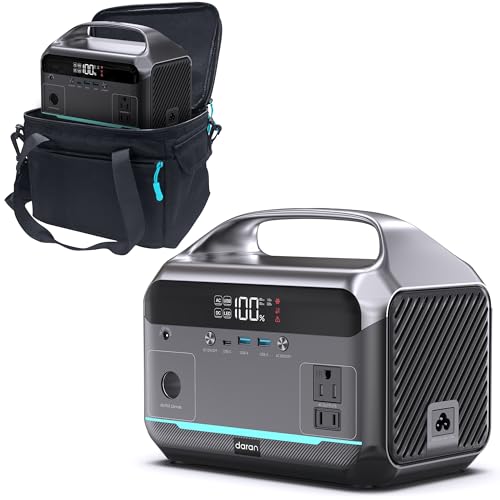
- 288Wh LiFePO4 battery with 350W output
- Seven-port layout for simultaneous device charging
- Rear LED offers steady, strobe, and SOS modes
Best For: Small crews charging several lower-power devices
Fast-Charging Production Power – OUPES Mega 1
The OUPES Mega 1 is a strong portable power station for film set work when crews need substantial output, rapid recharging, and dependable power for sensitive electronics. Its 1,024Wh LiFePO4 battery delivers 2,000W continuously, while AC and solar charging can reach 80% in as little as 26 minutes when used together.
Best For: Film crews powering cameras, laptops, monitors, lighting accessories, and other demanding equipment between locations.
Pros:
- 2,000W pure sine wave output with 4,500W surge capacity.
- Very fast charging: up to 80% in 36 minutes by AC or 26 minutes with AC and solar combined.
- Expandable from 1,024Wh to 5,120Wh with two optional B2 Extra Batteries.
- LiFePO4 battery rated for 3,500+ cycles and a UPS transfer time under 20ms.
Cons:
- Extra batteries are required for the maximum 5,120Wh capacity.
- The supplied runtime detail is listed as one hour, so actual set time depends heavily on the connected load.
For productions that value quick turnarounds and the option to scale capacity, the Mega 1 is one of the more flexible choices here. Its app control, bypass charging, and broad USB, DC, and AC connectivity add practical convenience on a busy set.
High-Capacity Solar Workhorse – EcoFlow DELTA Pro
The EcoFlow DELTA Pro pairs a large 3,600Wh battery with a foldable 400W solar panel, making it a capable portable power station for film set locations where extended off-grid operation matters. Its 15 outlets can support several types of production and personal electronics at once.
Best For: Longer shoots, remote locations, and crews that can use solar input to extend operating time.
Pros:
- Large 3,600Wh capacity for extended power needs.
- Five AC outlets plus USB-A, USB-C, DC, car, and Anderson outputs.
- Included 400W foldable solar panel has a stated 22.4% conversion rate and IP68 protection.
- App control provides remote monitoring of charge level, temperature, and input/output settings.
Cons:
- The complete system weighs 99 pounds, making transport more demanding.
- The power station and solar panel arrive in separate packages.
- One 400W panel can take about 11 hours to fully recharge the unit under the stated conditions.
The DELTA Pro favors capacity and connectivity over lightweight portability. It is a practical choice for production teams that can manage its 99-pound weight and want solar capability built into the package.
Quiet Mid-Size Set Backup – DYNESS PPS1800
The DYNESS PPS1800 offers a balanced combination of capacity, output, and quiet operation for a portable power station for film set use. Its 1,536Wh LiFePO4 battery supplies 1,800W of pure sine wave AC power and can recharge to 80% in 50 minutes through AC input.
Best For: Small to mid-size crews running laptops, cameras, drones, monitors, and moderate-power accessories without adding much noise.
Pros:
- 1,536Wh capacity and 1,800W continuous output with 3,600W surge capability.
- Solar input up to 1,200W can reach 80% charge in about 1.2 hours under optimal conditions.
- Quiet operation is suited to nighttime or sound-sensitive environments.
- UPS backup, app control, 12 output ports, and a 4,000+ cycle LiFePO4 battery.
Cons:
- Its 1,800W output is lower than the OUPES and EcoFlow options listed here.
- Solar charging times depend on optimal sunlight and the available input conditions.
The PPS1800 is a sensible middle ground for crews that want more capacity than a compact unit but do not need the DELTA Pro’s much larger battery. Its low-noise design and UPS feature are particularly useful around active workstations.
Compact Camera-Day Power – Anker SOLIX C300
The Anker SOLIX C300 is a lightweight option for a portable power station for film set needs where portability matters more than high-wattage appliance support. It provides 288Wh of capacity, 300W of continuous output, and multiple USB-C ports for charging cameras, laptops, phones, and drones.
Best For: Mobile camera teams, scouting days, small accessories, and personal electronics that need compact backup power.
Pros:
- Compact 4.13kg design with three AC outlets and eight total outlets or ports.
- 300W output with 600W surge capacity.
- Two-way 140W USB-C charging and 80% wall charging in 50 minutes.
- LiFePO4 battery rated for 3,000 cycles, with 25dB operation and a five-year warranty.
Cons:
- At 288Wh and 300W continuous output, it is not intended for high-draw film lighting or large appliances.
- The shoulder strap is sold separately.
- Solar compatibility is limited to suitable 100W or 60W panels; several Anker panels are specifically incompatible.
The C300 works best as a personal or camera-team power source rather than a central production generator. Its low weight, quiet operation, and strong USB-C support make it easy to carry wherever the crew moves.
Best High-Capacity Pick – 1000W LiFePO4 Power Station
For a film set that needs to run lighting, routers, monitors, or other moderate-draw equipment away from wall power, this portable power station for film set use offers a substantial 1,024Wh battery and 1,000W continuous output. Its LiFePO4 chemistry, multiple ports, and solar compatibility make it a practical choice for longer outdoor shoots or backup power.
Best For: Small crews needing extended runtime for lights, networking equipment, and other devices up to 1,000W.
Pros:
- 1,024Wh capacity and 1,000W continuous output provide more headroom than compact units.
- Two 110V AC outlets plus USB-C and USB-A ports can power up to five devices at once.
- LiFePO4 battery is rated for 3,000+ cycles while the smart BMS provides several protection features.
- Supports up to 300W solar input for off-grid recharging.
Cons:
- At about 27.7 pounds, it is less convenient to move frequently between set locations.
- The 1,000W output may not support high-draw film equipment or large simultaneous loads.
- Solar panels are optional rather than included.
This is the strongest capacity-focused option in the group, especially when shoot duration matters more than minimum weight. Confirm the wattage requirements of lights and other gear before relying on it as a primary set power source.
Best Budget Compact Pick – EnginStar 300W Solar Generator
This compact portable power station for film set use is suited to lightweight production accessories, charging stations, and low-wattage equipment. The 296Wh battery, pure sine wave AC outlets, and broad mix of AC, USB, and DC outputs make it useful when portability and basic device charging matter more than long runtime.
Best For: Small crews powering cameras, chargers, phones, laptops, and other equipment below 300W.
Pros:
- Compact 9 x 5.5 x 7.5-inch design is easy to carry between locations.
- Two pure sine wave 110V AC outlets provide stable power for compatible devices.
- Eight outputs include AC, USB, USB-C, 12V car, and DC ports for flexible charging.
- Can recharge from a wall adapter, car charger, or a compatible 12–25V solar panel.
Cons:
- Its 300W output and 296Wh capacity are limiting for larger lights and demanding production equipment.
- It may not support appliances or devices such as heaters, microwaves, refrigerators, or induction cookers.
- The solar panel is sold separately, and wall charging takes about seven hours.
The EnginStar is a sensible entry-level option for a lean kit where the power demands are modest. Its stated 300W limit should be treated as a firm planning constraint when selecting film gear.
Best Lightweight USB-C Pick – Anker SOLIX C300 DC
The Anker SOLIX C300 DC is a particularly portable choice for a portable power station for film set workflows centered on USB-C equipment. It provides 288Wh of capacity, 300W output, fast USB-C charging, and a compact 2.8kg body, making it convenient for cameras, laptops, phones, and other mobile production electronics.
Best For: Mobile crews and solo operators charging USB-C laptops, cameras, phones, and small accessories.
Pros:
- Compact 4.89 x 7.87 x 4.72-inch design weighs about 2.8kg.
- Two 140W two-way USB-C ports support fast charging for compatible devices.
- Seven ports include USB-C, USB-A, and a 120W car socket.
- Can recharge to 80% in about an hour through dual PD 3.1 USB-C, with car and solar options also available.
Cons:
- At 288Wh and 300W, it is intended for smaller electronics rather than high-draw lighting.
- It is a DC-focused model and does not list AC outlets among its ports.
- The shoulder strap is sold separately, and solar-panel compatibility is limited to specified options.
This is the easiest unit here to carry around a fast-moving set, provided the equipment can run from USB-C, USB-A, or the car socket. It is less suitable when production gear requires conventional AC power.
Lightweight Crew Pick – Jackery Explorer 300
The Jackery Explorer 300 is a practical portable power station for film set work when portability matters. Its 292Wh battery, 300W output, two AC outlets, USB-C PD, USB-A, and car port can support laptops, cameras, drones, and other modest production accessories without adding much weight to a mobile kit.
Best For: Lightweight location shoots, camera crews, and filmmakers who need several charging options in a compact unit.
Pros:
- Lightweight design at about 7.5 pounds with an integrated handle.
- Six-device charging through AC, USB-C, USB-A, and car-port connections.
- LiFePO4 chemistry rated for more than 4,000 charge cycles before reaching 70% capacity.
- Can reach 80% charge in approximately 2.8 hours with a 100W Jackery solar panel.
Cons:
- Its 300W rated output is intended for lower-power production equipment rather than demanding appliances.
- Solar panels are optional and must be purchased separately.
- The listed runtime is approximately five hours, depending on connected equipment.
For filmmakers moving between locations, the Explorer 300 emphasizes easy carrying and long-term battery durability. It is a strong fit for charging and running smaller electronic equipment, but crews should check each device’s wattage before relying on it for continuous production use.
Multi-Port Value Option – DARAN NEO300L 350W
The DARAN NEO300L is a versatile portable power station for film set setups that need simultaneous charging across several devices. Its 288Wh LiFePO4 battery, 350W rated output, two AC outlets, USB-C, USB-A ports, and DC connection make it useful for keeping small crew electronics and accessories powered together.
Best For: Small film crews that want multiple ports, a compact form factor, and basic backup lighting in one station.
Pros:
- Provides 350W of rated power with a 600W surge rating.
- Seven-port design supports AC, USB-C, USB-A, and DC charging at the same time.
- At about 8.2 pounds, it is compact enough for vehicle kits and location bags.
- Built-in rear LED includes steady, strobe, and SOS modes.
Cons:
- Designed for devices at or below 350W, limiting use with higher-draw film equipment.
- Solar panels and car-charging cables are sold separately.
- The included service period is listed as one year.
The NEO300L stands out for flexible device support rather than maximum capacity. Its display, safety protections, and rear light add convenience on location, while the 350W limit means production teams should reserve it for lower-power cameras, laptops, projectors, and accessories.
Higher-Output Compact Pick – DARAN NEOK2 600W
The DARAN NEOK2 offers a higher-output portable power station for film set work where equipment may demand more than a basic 300W unit can provide. Its 288Wh LiFePO4 battery delivers 600W of pure sine wave power with a 1,200W surge rating, while multiple AC, USB, and car-socket outputs support a varied location kit.
Best For: Filmmakers needing extra output headroom for laptops, cameras, mini-fridges, drones, projectors, and other devices within 600W.
Pros:
- 600W rated output and 1,200W surge capacity provide more headroom for demanding equipment.
- Supports up to six devices simultaneously through two AC outlets, USB-C, USB-A, and a car socket.
- Can charge to 80% in about two hours from AC power.
- Compact, shock-resistant casing weighs about 8.7 pounds and includes a reinforced handle.
Cons:
- The 288Wh capacity still limits runtime for high-wattage equipment.
- Solar panel, solar charging cable, and car charging cable are not included.
- It is suitable only for devices within the stated 600W operating limit.
The NEOK2 is the strongest choice of these three for crews that need higher output without moving to a much larger battery. Its compact build and quiet, fume-free operation suit indoor or location use, but production teams should calculate expected runtime for each connected load.
How We Picked the Best Portable Power Station for Film Set
We focused on the specifications that matter during real production work: usable battery capacity, continuous AC output, surge performance, battery chemistry, charging speed, portability, and connection options. We also considered whether each unit can support common film-set equipment such as LED lights, camera chargers, wireless systems, monitors, laptops, and small production accessories.
Capacity and wattage are not the same. Watt-hours indicate how much energy a station stores, while watts indicate how much power it can deliver at once. A unit with plenty of capacity may still be unsuitable for a high-draw light if its inverter output is too low.
Quick Comparison
- Small camera and accessory kits: Compact 288Wh to 296Wh models are easier to carry between setups and work well for batteries, phones, tablets, and low-power electronics.
- Mobile lighting and crew charging: Models around 1,000Wh or more provide a better balance of runtime and portability for several devices.
- Large lighting loads: High-capacity systems such as the DELTA Pro are better suited to demanding equipment and extended shoots, though they are heavier and less convenient to move.
- Remote production: Solar-compatible stations can reduce dependence on wall outlets, but panel performance varies with weather, placement, and available sunlight.
Key Buying Factors for a Portable Power Station for Film Set
Output and Inverter Type
Check continuous wattage first, then compare surge capacity for equipment with startup demands. Pure sine wave AC output is preferable for sensitive chargers, monitors, audio equipment, and other electronics.
Battery Capacity and Runtime
Estimate the combined wattage of the devices you will run and multiply it by the desired operating time. Real-world runtime is lower than the advertised watt-hour figure because of inverter losses and conversion efficiency. Leave extra capacity for unexpected needs.
Port Selection
AC outlets are useful for lights and chargers, while USB-C Power Delivery can directly charge modern laptops, cameras, and mobile devices. DC outputs may be more efficient for compatible gear because they avoid an AC conversion step.
Portability, Noise, and Charging
Weight, handles, wheels, fan noise, and recharge time all affect set usability. A quiet compact unit may be ideal beside a camera or sound position, while a heavier high-output model may be better kept at base camp. Fast wall charging and solar input are valuable when the schedule allows limited recovery time.
Who Should Buy Which Portable Power Station for Film Set?
Choose a compact Anker, Jackery, EnginStar, or DARAN model for camera batteries, phones, monitors, and light accessories. Move up to a 1,024Wh or 1,536Wh unit when you need longer runtimes, multiple chargers, or moderate LED lighting. Choose the OUPES or DELTA Pro class for larger production loads, longer remote shoots, or situations where frequent recharging is impractical.
Before filming, test the station with every critical device, confirm its noise level in a quiet location, and bring suitable cables, adapters, and a backup charging plan.