
A dependable portable power station can keep laptops, monitors, networking gear, and other computer equipment running when outlets are unavailable or the power goes out.
We compared 10 models across capacity, output, battery chemistry, portability, charging options, and backup potential to help you choose the right fit for travel, remote work, and home-office use.
Best 10 Portable Power Station for Computer Equipment Picks for 2026
Best Lightweight Pick

- 292Wh capacity with 300W rated output
- 100W USB-C PD plus AC, USB-A, and car outputs
- About 7.5 pounds with LiFePO4 battery
Best For: Portable laptop power for travel, camping, and field work
Best Mid-Range Capacity
1000W 1024Wh LiFePO4 Power Station

- 1024Wh capacity and 1000W continuous output
- 60W USB-C PD with dual AC outlets
- Starlink compatible and supports up to 300W solar input
Best For: Remote work, home-office backup, and longer off-grid sessions
Best Port Selection

- 519Wh capacity with 500W pure sine wave output
- 60W USB-C PD and up to 10 device connections
- Wall, car, or solar recharging options
Best For: Multi-device charging for laptops, tablets, cameras, and accessories
Best High-Output Backup
EBL Acc2400 Portable Power Station
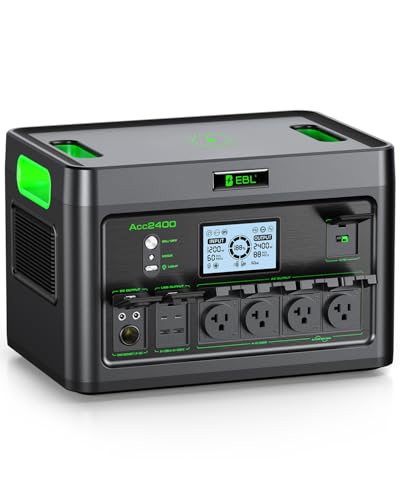
- 1843.2Wh capacity with 2400W output
- Four AC ports and support for up to 12 devices
- LiFePO4 battery rated for 3,500+ cycles
Best For: Extended home backup and multiple-computer or high-load setups
Best All-Around Backup

- 640Wh capacity and 600W pure sine wave output
- 10ms UPS for computers, routers, NAS devices, and servers
- LiFePO4 battery with over 4,000 rated cycles
Best For: Home outages, computer backup, camping, and road trips
Best Ultra-Portable Pick

- Weighs 2.54 pounds and fits in a backpack
- 100W output with USB-C PD and two AC sockets
- Fanless operation and LiFePO4 battery
Best For: USB-C laptops, phones, tablets, and quiet short-term backup
Best Lightweight UPS Features

- 600W output with 1,500W Power Lifting Mode
- 10ms UPS and 140W PD charging
- 9.5-pound design with rapid 380W wall charging
Best For: Laptops, routers, CPAP machines, camping, and emergency backup
Solar-Ready Computer Backup
300W Power Station with 60W Panel

- 300W AC output for laptops and small electronics
- Includes a 60W solar panel with MPPT support
- Multiple AC, USB, and DC charging ports
Best For: Laptop users needing included solar charging for camping or outages
Ultra-Portable Laptop Companion

- Lightweight 2.3-pound design with a hidden handle
- 120W output and 18W USB-C charging
- Supports AC, solar-panel, and car recharging
Best For: Travelers needing a compact station for lower-power devices
High-Capacity Computer Support

- 280Wh battery with 300W AC output
- Multiple AC, USB, QC, and DC charging ports
- Optional solar charging with built-in MPPT support
Best For: Users wanting longer laptop backup within a 300W limit
Best Lightweight Pick – Jackery Explorer 300
The Jackery Explorer 300 is a practical portable power station for computer equipment when portability matters. Its 292Wh capacity, 300W rated output, two AC outlets, and 100W USB-C PD port can support laptops and other smaller electronics without adding much weight to a travel kit.
Best For: Laptop users, photographers, campers, and anyone seeking a lightweight backup power option.
Pros:
- Lightweight design at about 7.5 pounds with an integrated handle.
- 100W USB-C PD, two AC outlets, two USB-A ports, and a 120W car port.
- LiFePO4 battery rated for more than 4,000 charge cycles before reaching 70% capacity.
- Supports solar charging, reaching about 80% in approximately 2.8 hours with a 100W panel.
Cons:
- 300W output is intended for smaller electronics rather than high-wattage appliances.
- Solar panel is optional.
- Orders require a physical delivery address rather than only a PO Box.
Choose this model when easy carrying and computer-focused charging are higher priorities than extended runtime or heavy-load capability. The 100W USB-C port is especially useful for compatible laptops, while the compact battery keeps the unit convenient for travel.
Best Mid-Range Capacity – 1000W 1024Wh LiFePO4 Power Station
This 1024Wh unit is a strong portable power station for computer equipment during outages, remote work, or longer trips. Its 1000W continuous output, 60W USB-C PD port, and compatibility with Starlink make it suited to keeping networking and computing essentials running for more extended periods.
Best For: Home-office backup, remote work, routers, Starlink equipment, and multi-day camping use.
Pros:
- Large 1024Wh LiFePO4 battery with 1000W continuous output and 2000W peak output.
- Two 110V AC outlets and a 60W USB-C PD port for computers and other electronics.
- Can power up to five devices at once and is described as Starlink compatible.
- Supports up to 300W solar input and includes six-layer battery management protection.
Cons:
- At about 27.7 pounds, it is substantially less portable than compact laptop power stations.
- The 60W USB-C port may not be enough for every high-performance laptop under heavy load.
- Solar panel is optional.
Its combination of capacity and output makes it more appropriate for a workstation or communications setup than a short day trip. Consider it when you need several hours of computer-related backup and want solar compatibility for extended off-grid use.
Best Port Selection – 500W 519Wh Solar Generator
The 500W solar generator is a flexible portable power station for computer equipment when you need to charge several types of devices. It combines 519Wh of capacity with pure sine wave AC output, a 60W USB-C PD port, quick-charge USB-A ports, and wireless charging.
Best For: Laptop and tablet users who need broad connectivity for home, travel, or camping.
Pros:
- Pure sine wave AC output provides 500W of rated power for compatible electronics.
- Includes a 60W USB-C PD port, three USB-A QC3.0 ports, two AC outlets, DC ports, and a wireless charger.
- Can power up to 10 devices simultaneously according to the supplied specifications.
- Rechargeable from a wall outlet, car charger, or compatible 100W/200W solar panel.
Cons:
- Devices above 500W should not be connected.
- At about 18 pounds, it is heavier than compact laptop-focused models.
- Users must turn off AC output when it is not needed to avoid unnecessary battery drain.
This model is appealing when connection flexibility is more important than the smallest footprint. The 60W USB-C PD output suits many laptops, while the multiple ports make it convenient for charging a mixed collection of computers, phones, cameras, and accessories.
Best High-Output Backup – EBL Acc2400 Portable Power Station
The EBL Acc2400 is a high-capacity portable power station for computer equipment and larger home-backup needs. With 1843.2Wh capacity, 2400W output, four AC ports, and a claimed 0.1-second emergency backup mode, it can support computers and file devices while also handling higher-wattage equipment.
Best For: Home emergency backup, multiple computers, jobsite equipment, and group camping setups.
Pros:
- Large 1843.2Wh battery and 2400W output for extended, high-demand backup.
- Four AC ports plus USB-A, fast USB-C, DC, car, and wireless charging outputs.
- Supports simultaneous charging for up to 12 devices.
- LiFePO4 battery is rated for more than 3,500 cycles and a 10+ year service life.
Cons:
- About 54–55 pounds, making it considerably less convenient to carry than smaller units.
- Its high capacity and output may be excessive for a single laptop.
- Supplied notes do not list solar charging capability.
This is the option to consider when computer backup is part of a broader emergency-power plan. Its multiple outlets and emergency backup mode are useful for several devices, but the heavy chassis favors stationary or occasional transport rather than everyday portability.
Best All-Around Backup – LIBRIDS C600
The LIBRIDS C600 is a strong choice when you need a portable power station for computer equipment, networking devices, and broader home or outdoor backup. Its 600W pure sine wave output, 640Wh capacity, and 10ms UPS switching provide useful headroom for laptops, routers, NAS devices, and small servers, provided connected loads stay within the rated limit.
Best For: Home outages, computer and network backup, camping, and road trips where higher capacity is useful.
Pros:
- 640Wh capacity with four AC outlets and eight total output ports.
- 10ms UPS and pure sine wave output are suited to computers, routers, NAS devices, and small servers.
- LiFePO4 battery is rated for more than 4,000 cycles while retaining over 80% capacity.
- Supports AC, solar, car, and gas-generator recharging, with combined AC and solar charging.
Cons:
- At 16.3 pounds, it is less backpack-friendly than smaller power banks.
- Connected devices must remain within the 600W rated output.
- A solar panel is not listed among the included accessories.
Choose the C600 if dependable computer backup and longer runtime matter more than minimum size. The rugged metal housing, display, fast charging, and five-year limited warranty add practical value for regular emergency use.
Best Ultra-Portable Pick – Daran 89.6Wh Power Station
The Daran is a compact portable power station for computer equipment when portability and quiet operation are priorities. Its 89.6Wh LiFePO4 battery, 100W output, USB-C PD ports, and two AC sockets can handle compatible laptops and small electronics, but the 100W limit makes it better for light-duty use than high-demand workstation backup.
Best For: USB-C laptops, tablets, phones, and quiet backup during work, travel, or short outages.
Pros:
- Small 2.54-pound design fits easily in a backpack.
- Includes 45W and 15W USB-C ports, USB-A ports, two AC sockets, and a DC output.
- Fanless operation is useful for sleeping, working, and quiet environments.
- LiFePO4 battery, 12 safety protections, and more than 3,500 rated cycles.
Cons:
- 100W maximum output limits compatibility with higher-powered computer equipment.
- Its 89.6Wh capacity provides less runtime than larger stations.
- Solar panel and cable are not included.
The Daran makes sense as a lightweight personal power bank for a USB-C laptop and accessories. Consider a larger station if you need extended runtime, multiple AC-powered devices, or automatic UPS-style outage protection.
Best Lightweight UPS Features – BLUETTI Elite 30 V2
The BLUETTI Elite 30 V2 combines a lightweight design with the features many buyers want in a portable power station for computer equipment. It delivers 600W continuously, includes a 10ms UPS function for laptops and routers, and weighs about 9.5 pounds, making it a practical middle ground between a pocket-sized power bank and a larger home backup unit.
Best For: Laptops, routers, CPAP machines, camping equipment, and emergency backup where low weight and fast charging matter.
Pros:
- 600W continuous output with 1,500W Power Lifting Mode.
- 10ms UPS switching helps maintain power to laptops and routers during interruptions.
- 380W wall charging reaches 80% in 45 minutes and full charge in 70 minutes.
- 288Wh capacity in a 9.5-pound enclosure with 140W PD charging.
Cons:
- Its 288Wh capacity may provide less runtime than larger stations.
- Power Lifting Mode is intended for suitable loads rather than a replacement for higher continuous wattage.
- The listed package includes charging cables but does not list a solar panel.
The Elite 30 V2 is a compelling option for mobile computer and router backup when rapid recharge and manageable weight are more important than maximum capacity. Its UPS function and 600W output broaden its usefulness beyond basic USB charging.
Solar-Ready Computer Backup – 300W Power Station with 60W Panel
For shoppers seeking a portable power station for computer equipment, this ZeroKor model combines a 300W AC output with an included 60W solar panel. It can charge laptops and other small electronics, while its multiple ports and built-in protections make it useful for camping or short power interruptions.
Best For: Laptop users who want an included solar panel and flexible charging options for off-grid use.
Pros:
- Includes a 60W monocrystalline solar panel with built-in MPPT charging support.
- Offers two 300W-max AC outlets, USB ports, a quick-charge port, and a DC port.
- Built-in protections cover over-current, over-voltage, overload, short circuit, and overheating conditions.
Cons:
- Devices drawing more than 300W may damage or disable the unit.
- The included solar panel’s junction box should be kept dry.
This is a practical choice when solar charging is important and your computer equipment stays within the 300W output limit. The included panel adds value, but users should still verify their laptop’s running wattage before connecting it.
Ultra-Portable Laptop Companion – HOWEASY 88Wh Power Station
This compact HOWEASY unit is a lightweight portable power station for computer equipment, with an 88Wh battery, 120W continuous output, and an 18W USB-C port. At 2.3 pounds, it is easy to carry for mobile laptop, tablet, phone, and camera charging, though higher-powered computers may exceed its output.
Best For: Travelers and emergency-kit users who prioritize low weight and compact size for modest computer charging needs.
Pros:
- Compact 6.6-inch design weighs just 2.3 pounds and has a hidden handle.
- Provides two AC sockets, USB-C, QC 3.0 USB ports, a standard USB port, and two DC ports.
- Supports AC, compatible solar-panel, and 12V/24V car recharging.
Cons:
- Its 120W running output limits compatibility with more demanding computer equipment.
- The solar panel is not included.
- The 88Wh capacity is smaller than the capacity of the 280Wh and larger units in this roundup.
Choose this model for portability rather than extended runtime. Its display, simultaneous charging capability, and 24-month warranty are useful conveniences, but check your computer’s power requirements before relying on the AC outlets.
High-Capacity Computer Support – ZeroKor 300W 280Wh Station
For a portable power station for computer equipment with more stored energy, this ZeroKor model pairs a 280Wh battery with 300W AC output. It can power laptops, cameras, drones, tablets, and phones, and its roughly 5-pound handled design remains practical for car travel or indoor backup use.
Best For: Users wanting more battery capacity than a compact travel power bank while keeping a 300W output ceiling.
Pros:
- 280Wh capacity provides more stored energy than the 88Wh model in this roundup.
- Includes two 300W-max AC outlets, USB ports, a QC port, and a DC port.
- Offers AC, 12V car, and optional solar-panel charging with built-in MPPT support.
- Includes BMS protections and an automatic cooling system.
Cons:
- The solar panel is sold separately.
- AC output must be switched on or off manually.
- Equipment over 300W is not suitable, and the manufacturer advises against using it as long-term emergency storage without regular charging and discharging.
This model is the stronger capacity-focused option for laptop and small-computer setups, especially when portability still matters. Its 300W limit remains important, so confirm the equipment’s running wattage and plan to recharge the station periodically.
How We Picked the Best Portable Power Station for Computer Equipment
We focused on the specifications that matter most for computer backup: usable battery capacity, continuous AC output, surge capability, outlet selection, USB-C support, charging speed, portability, and battery longevity. LiFePO4 models generally offer longer cycle life and stronger durability, while smaller units can be more practical for laptops and mobile workstations.
Because advertised watt-hours and runtime are not identical to usable output, we also considered efficiency losses from the inverter and charging hardware. Solar input, included panels, display quality, safety protections, and warranty coverage were additional factors when comparing these 10 options.
Quick Comparison
- Smallest and most portable: Compact models around 90Wh to 300Wh suit laptops, routers, phones, and short outages.
- Balanced everyday backup: Units in the 500Wh to 650Wh range offer more runtime for laptops, monitors, and networking equipment without becoming overly bulky.
- Extended home-office backup: Models near 1,000Wh or larger are better for multiple devices, longer outages, and occasional higher-draw equipment.
- Highest output: Check continuous wattage, not just peak wattage, if you plan to power desktop PCs, monitors, printers, or other demanding devices.
Key Buying Factors for a Portable Power Station for Computer Equipment
Capacity and Runtime
Estimate your load in watts and compare it with the station’s watt-hours. A laptop using 60W may run for several hours from a mid-size battery, but actual runtime will be lower after inverter losses. Add the wattage of monitors, docks, routers, and accessories before choosing.
Output and Ports
Pure sine-wave AC output is preferable for sensitive electronics. Make sure continuous output exceeds your expected load, and look for enough AC outlets plus USB-C Power Delivery ports for direct laptop charging. A 100W USB-C port can eliminate unnecessary AC conversion for compatible notebooks.
Battery Type and Recharging
LiFePO4 batteries are often the better long-term choice because they typically support more charge cycles than traditional lithium-ion cells. Consider wall-charging speed, car charging, and solar input if you need recovery during extended outages.
Portability and Safety
Weight matters if the unit will travel regularly. Look for overload, over-temperature, short-circuit, and low-battery protections, along with a clear display and dependable cooling. Keep ventilation unobstructed during use.
Who Should Buy Which Portable Power Station for Computer Equipment?
Remote workers and travelers should prioritize compact models with USB-C charging and enough capacity for a laptop, phone, and router. Home-office users will generally benefit from a 500Wh-to-1,000Wh unit with multiple AC outlets and stronger continuous output. Desktop PC users should choose a higher-output model after measuring the computer and monitor load, especially if they need graceful shutdown time. Campers and outage-prone households should favor LiFePO4 capacity, solar compatibility, and fast recharging over minimum weight.
Before buying, confirm your equipment’s actual wattage, the station’s continuous AC rating, available USB-C output, and whether a solar panel is included. Those checks will narrow the list more reliably than peak wattage or headline capacity alone.