
The best portable compound microscopes make high-magnification viewing easier to take between classrooms, home workspaces, and field locations. This roundup compares 10 options across student kits, beginner models, and more capable instruments.
Before choosing, focus on usable magnification, illumination, stage control, focusing precision, included accessories, and how easily the microscope can be transported and stored.
Best 10 Portable Compound Microscopes Picks for 2026
Best Value
AmScope M150C-PS25 Portable Microscope
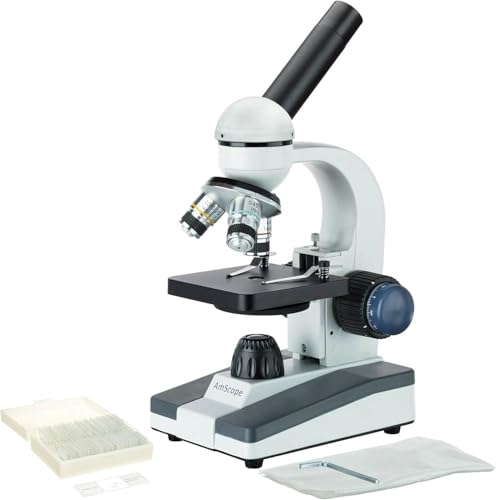
- 40X-1000X magnification
- LED ring-light illumination
- Includes 25 prepared slides
Best For: Students and home learners wanting a prepared-slide starter setup
Most Versatile
Herwicm 40X-2500X Binocular Microscope

- Stated 40X-2500X range
- Binocular wide-angle eyepieces
- Dual LED lighting and mechanical stage
Best For: Hobbyists and learners wanting extensive controls and high stated magnification
Best for Field Use
Celestron Labs CM800 Microscope
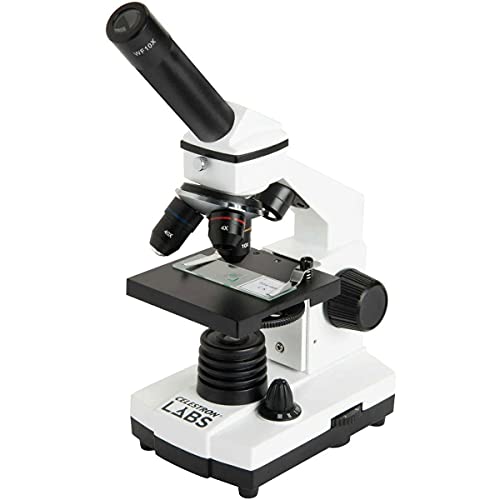
- 800X maximum magnification
- Battery and AC-adapter power
- Upper and lower adjustable LED lighting
Best For: Students and field users needing flexible power options
Best Beginner-Friendly Pick
TOMLOV CM101 Compound Microscope

- Coarse and fine coaxial focus controls
- Dual LED lighting for transparent and opaque specimens
- Includes prepared and blank slides with coverslips
Best For: Beginners, students, and homeschool STEM projects
Best Portable Kit
BEBANG 2000X Compound Microscope
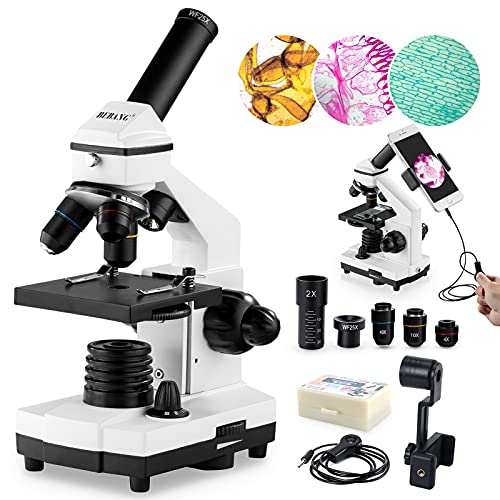
- Six listed magnification settings up to 2000X
- Includes phone adapter, carrying bag, and slide set
- Dual LED illumination with disc diaphragm
Best For: Portable home teaching and beginner biology activities
Best Complete Slide Set
PalliPartners SWXWJ-1 Microscope

- Includes 28 slides for prepared and DIY specimens
- Dual adjustable LED illumination
- Phone adapter and Bluetooth camera shutter included
Best For: Home biology activities and classroom-style STEM lessons
Best All-Around Starter
PALOBIL Portable Compound Microscope

- 100x–2000x magnification range
- Dual LED lighting for varied specimens
- Slides, tools, and phone adapter included
Best For: Homeschool biology and beginner experiments
Best Complete Binocular Kit
PalliPartners Compound Microscope

- 100x–2000x binocular magnification
- 28 slides plus dissecting accessories
- Coaxial focus and dual LED illumination
Best For: Students and home biology projects
Best High-Power Battery Option
OOZSTAR Portable Compound Microscope
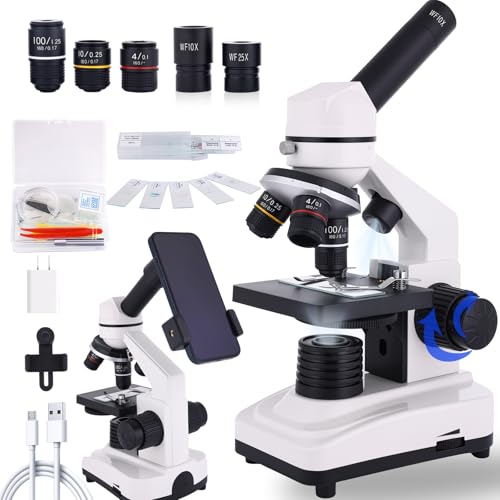
- Up to 2500x magnification
- Battery-powered for flexible use
- Independent dual LED brightness controls
Best For: Mobile lessons and high-magnification student work
Best Value – AmScope M150C-PS25 Portable Microscope
If you want portable compound microscopes with useful magnification and a ready-made slide collection, the AmScope M150C-PS25 is a practical option. It provides 40X-1000X magnification, LED illumination, a metal body, and 25 prepared slides for getting started.
Best For: Students, home learners, and buyers seeking a straightforward corded microscope with prepared samples and a five-year manufacturer’s warranty.
Pros:
- 40X-1000X magnification range
- Bright LED ring-light illumination
- Includes 25 prepared sample slides
- Five-year manufacturer’s warranty
Cons:
- Corded electric operation limits use away from an outlet
- Monocular viewing may be less comfortable for extended sessions than binocular designs
The M150C-PS25 balances a useful feature set with an approachable format. Its prepared slides and 1000X maximum make it a solid educational choice, while the metal enclosure adds a sturdier feel.
Most Versatile – Herwicm 40X-2500X Binocular Microscope
Among portable compound microscopes, this Herwicm model stands out for its broad 40X-2500X range and binocular viewing design. Dual LED lighting, a two-layer mechanical stage, and coaxial coarse and fine focus controls support more adaptable specimen viewing.
Best For: Adults, students, hobbyists, and amateur scientists who want high maximum magnification and a more feature-rich learning microscope.
Pros:
- Wide 40X-2500X magnification range
- Binocular, ultra-wide-angle eyepieces
- Adjustable upper and lower LED lighting
- Mechanical stage with moving scale and dual focus controls
Cons:
- Corded operation requires access to power
- The supplied specifications list a 40X maximum in one field despite the stated 2500X range
This microscope offers the most expansive stated magnification range in the group and adds controls typically useful for more deliberate observation. Buyers should verify the magnification specifications before ordering.
Best Kids’ Kit – AmScope M30-ABS-KT2-W STEM Microscope
For families comparing portable compound microscopes for hands-on science, the AmScope M30-ABS-KT2-W is designed as a complete beginner kit. It combines six magnification settings from 120X to 1200X with LED lighting, a color filter wheel, sample materials, and a hard ABS carrying case.
Best For: Children and beginners who need an approachable microscope package with accessories for immediate STEM exploration.
Pros:
- 52-piece STEM microscope kit
- 120X-1200X magnification
- Battery-powered LED illumination
- Includes a hard carrying box and sample slides
Cons:
- One-year manufacturer’s warranty is shorter than some alternatives
- Accessory kit includes plastic slides rather than only glass slides
The M30-ABS-KT2-W is especially convenient when portability and included accessories matter more than advanced laboratory features. Its battery power and carrying case make it easy to move between learning spaces.
Best for Field Use – Celestron Labs CM800 Microscope
The Celestron Labs CM800 is a practical choice among portable compound microscopes when battery operation is important. It reaches 800X magnification, includes multiple eyepieces and objectives, offers upper and lower LED illumination, and comes with three AA batteries for use away from an outlet.
Best For: Students and field users who want a battery-powered monocular microscope with prepared slides and both battery and AC-adapter options.
Pros:
- 40X, 100X, 250X, 400X, and 800X viewing options
- Adjustable upper and lower LED illumination
- Three AA batteries and an AC adapter included
- Two-year warranty and technical support
Cons:
- 800X maximum is lower than some competing models
- Monocular design may be less comfortable for prolonged viewing
The CM800 prioritizes straightforward operation and flexible power. Its included batteries, AC adapter, prepared slides, and two-year warranty make it a sensible student microscope for classroom or field-oriented use.
Best Beginner-Friendly Pick – TOMLOV CM101 Compound Microscope
The TOMLOV CM101 is a practical choice among portable compound microscopes for students, beginners, and adult hobbyists. Its 4X, 10X, and 40X achromatic objectives, dual LED lighting, and coarse-and-fine focus controls support both prepared-slide work and surface observations.
Best For: Homeschool STEM projects, classroom study, and first-time microscope users who want flexible lighting and straightforward controls.
Pros:
- Coarse and fine coaxial focus controls help locate specimens and refine details.
- Bottom and top LED illumination supports transparent and opaque specimens.
- Includes prepared slides, blank slides, coverslips, two eyepieces, and a 2X magnifier.
- Six-position color filter disc can adjust brightness, contrast, and illumination color.
Cons:
- The monocular design may be less comfortable for users who prefer binocular viewing.
- Its maximum listed magnification is 2000X, but the supplied objectives top out at 40X.
With a 2.7-pound body and a beginner-oriented layout, the CM101 balances portability with useful educational features. It is especially appealing when dual illumination and included starter materials matter more than advanced laboratory controls.
Best Portable Kit – BEBANG 2000X Compound Microscope
The BEBANG 2000X is a well-equipped option among portable compound microscopes for home teaching, school use, and beginner biology work. It combines six listed magnification settings with a metal frame, dual LED illumination, a phone adapter, carrying bag, and slide set.
Best For: Students and families who want a transportable educational kit with smartphone compatibility and plenty of included accessories.
Pros:
- Offers six listed magnification settings from 100X to 2000X.
- Coarse and fine focus knobs support sharper, more precise adjustments.
- Top-and-bottom LED illumination and a disc diaphragm support different specimen types.
- Includes a phone adapter, carrying bag, 15-piece slide set, and 10 operating accessories.
Cons:
- The 120-volt specification may limit plug-in convenience outside compatible regions.
- Its monocular viewing format provides less viewing flexibility than binocular models.
At 2.4 pounds, this BEBANG model is relatively easy to move while retaining a metal frame and a broad accessory package. The included phone adapter and carrying bag make it particularly practical for demonstrations, lessons, and shared home use.
Best Complete Slide Set – PalliPartners SWXWJ-1 Microscope
The PalliPartners SWXWJ-1 is a useful option among portable compound microscopes for students, families, and adult hobbyists who want a ready-to-use educational package. Its 4X, 10X, and 40X objectives work with a WF25X eyepiece and 2X lens for listed settings from 100X to 2000X.
Best For: Home science activities and classroom-style biology lessons where included slides and smartphone documentation are priorities.
Pros:
- Includes 10 prepared slides and 18 blank slides for immediate and DIY observations.
- Top-and-bottom adjustable LED lighting handles opaque and translucent specimens.
- Coaxial coarse and fine focus knobs support more controlled focusing.
- Comes with a phone clip adapter, Bluetooth camera shutter, and power adapter.
Cons:
- At 1.65 kg, it is heavier than some compact beginner microscopes.
- The supplied notes identify it as battery powered, which may not suit every workspace.
- The monocular design may not be ideal for extended shared viewing.
The SWXWJ-1 stands out for its 28-slide assortment and phone-oriented accessories. It is a strong fit for buyers who want to begin observing specimens immediately and capture microscope activities with a compatible smartphone.
Best All-Around Starter – PALOBIL Portable Compound Microscope
This PALOBIL model is a practical choice among portable compound microscopes for beginners, homeschoolers, and families who want broad magnification without a complicated setup. It combines 100x–2000x settings, dual LED lighting, a metal frame, and a phone adapter for guided observations and simple documentation.
Best For: Homeschool biology, beginner experiments, and families needing both transmitted and incident illumination.
Pros:
- Offers six magnification settings from 100x to 2000x using WF25x, 2x, and 4x/10x/40x optics.
- Adjustable top and bottom LED lights support opaque objects and translucent specimens.
- Includes prepared slides, blank slides, tools, instructions, and a smartphone adapter.
- Metal construction and a shockproof, drop-resistant package support storage and transport.
Cons:
- Requires three AA batteries, which are not included, unless using the included AC adapter.
- The kit is relatively heavy at 1.65 kg for a portable model.
Its combination of sturdy construction, flexible lighting, and included starter materials makes it a well-equipped option for structured learning at home or in a classroom. The battery and AC power choices add flexibility, though users should plan around the battery requirement.
Best Complete Binocular Kit – PalliPartners Compound Microscope
For shoppers comparing portable compound microscopes for school and home use, the PalliPartners stands out as a complete binocular-style kit. It pairs 100x–2000x magnification with coaxial coarse and fine focus, dual illumination, and a generous selection of slides and dissection accessories.
Best For: Students, homeschool science projects, and users who want a ready-to-use biology kit with binocular viewing.
Pros:
- Combines 4x, 10x, and 40x objectives with a WF25x eyepiece and 2x Barlow lens.
- Includes 10 prepared slides, 18 blank slides, collection bottles, a hatching box, and dissecting tools.
- Top and bottom LED illumination handles opaque objects and translucent specimens.
- Coaxial coarse and fine focus, phone clip, Bluetooth shutter, and power adapter improve usability.
Cons:
- Uses a plastic enclosure rather than the metal frame found on some alternatives.
- Its corded-electric power source offers less flexibility away from an outlet.
This is a strong value-focused package when accessories matter as much as the microscope itself. The binocular format and focusing controls support more comfortable, precise observation, while the corded design is better suited to a desk, classroom, or home lab than field use.
Best High-Power Battery Option – OOZSTAR Portable Compound Microscope
The OOZSTAR is a useful pick among portable compound microscopes when battery operation and maximum magnification are priorities. Its monocular design reaches 2500x, includes coarse and fine focusing, and uses independently adjustable incident and transmitted LED lighting for school or home experiments.
Best For: Students and instructors who need a battery-powered microscope for flexible demonstrations and high-magnification work.
Pros:
- Provides 100x–2500x settings with WF10x and WF25x eyepieces plus 4x, 10x, and 100x objectives.
- Battery-powered operation supports use away from a fixed laboratory setup.
- Independent incident and transmitted LED controls allow brightness adjustment for different specimens.
- Dual coaxial coarse and fine focusing, a 45-degree eyetube, and a rotating head support practical handling.
Cons:
- The monocular head provides one-eye viewing rather than binocular observation.
- The plastic enclosure may be less rugged than a metal-bodied microscope.
- The supplied notes do not specify the number of included prepared slides or accessories.
Its main advantage is mobility paired with the highest stated magnification in this group. The battery-powered design and dual lighting make it adaptable for lessons and demonstrations, while the monocular plastic build keeps the feature set oriented toward practical student use.
How We Picked the Best Portable Compound Microscopes
We compared these microscopes by examining their stated magnification ranges, optical configuration, illumination systems, focusing controls, stage design, included eyepieces, slide accessories, and intended user. Portability was treated as more than low weight: a useful portable model should also be reasonably easy to set up, protect, and carry without sacrificing basic stability.
Because specifications and included accessories can vary by package, confirm the current listing before buying—especially when a product name includes a broad magnification claim or an abbreviated model description.
Quick Comparison
| Best for | What to prioritize | Trade-off to expect |
|---|---|---|
| Young beginners | Simple controls, durable kit, prepared slides | Less precise focusing and lower expandability |
| Students | Mechanical stage, multiple objectives, LED lighting | More parts and a larger footprint |
| Home labs and hobbyists | Fine focus, strong optics, stable construction | Higher cost and less grab-and-go convenience |
| Field or shared use | Compact design, protective case, dependable power | May have fewer advanced controls |
Key Buying Factors for Portable Compound Microscopes
Magnification and Optical Usefulness
Do not choose by the highest advertised number alone. Magnification above 1000x can be difficult to use without good optics, precise focusing, and suitable specimen preparation. A useful range should include lower powers for locating a sample and higher powers for examining cells or microorganisms.
Focus and Stage Controls
Coarse focus is helpful for quickly finding the specimen, while fine focus is essential at higher magnification. A mechanical stage provides smoother, more controlled movement than sliding a specimen by hand and is particularly valuable for students.
Lighting and Power
Dual LED illumination can improve viewing flexibility, while a lower-mounted LED is often simpler for transmitted-light slides. Check whether the microscope uses wall power, batteries, or both, and consider how that matches your intended location.
Portability and Accessories
Look for a manageable size, secure storage, and accessories that support immediate use. Prepared slides, blank slides, cover slips, tools, and a carrying case can add real value for beginners, but experienced users may prefer better optics over a large accessory bundle.
Who Should Buy Which Portable Compound Microscopes?
Choose a beginner STEM kit for children or first-time users who benefit from guided experiments and included materials. Students taking biology or conducting regular school projects should favor a model with fine focus, a mechanical stage, and interchangeable objectives. Adults and hobbyists who plan extended viewing should prioritize binocular viewing when available, stable construction, and smoother controls. For occasional demonstrations or travel between locations, select the lightest model that still offers LED lighting, adequate stage stability, and the magnification range your specimens require.