
Choosing among portable astrophotography mounts means balancing tracking accuracy, payload capacity, portability, and setup time. The right mount can make long-exposure images sharper while keeping your kit practical for dark-sky trips.
This roundup covers compact star trackers, lightweight GoTo equatorial mounts, and higher-capacity computerized platforms. Use the guide below to match the mount’s design and capabilities to your camera, lens, telescope, and observing style.
Best 10 Portable Astrophotography Mounts Picks for 2026
Best Full-GoTo Kit

- Complete kit includes tripod, pier extension, and counterweight
- Built-in Wi-Fi and GoTo functionality
- Illuminated polar scope with multiple tracking rates
Best For: Portable setups needing a complete GoTo package
Best Lightweight Camera Tracker

- 2.2-pound compact mount for easy transport
- Supports up to 11 pounds when balanced
- Illuminated polar scope and up to 20-hour battery life
Best For: Backpack-friendly camera and lens astrophotography
Best Modular Tracker
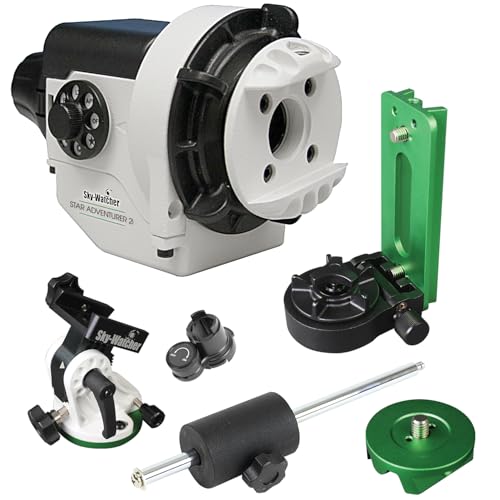
- 7-pound portable tracking platform
- Works with existing photographic tripods
- Wi-Fi smartphone control via SAM Console
Best For: Wide-field imaging and time-lapse with existing tripod gear
Best App-Controlled Equatorial Mount

- Eight-CPU PMC-Eight control system
- ExploreStars app works with major tablet platforms
- Includes tripod, GoTo, Wi-Fi, and Bluetooth control
Best For: App-driven telescope astrophotography setups
Best Portable GoTo Mount
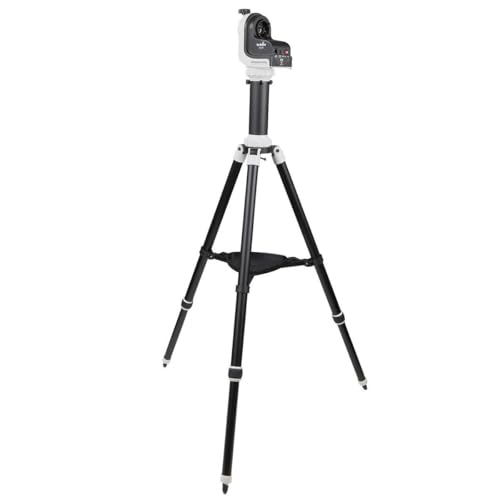
- 8.6-pound travel-sized mount
- 11-pound payload capacity
- WiFi app control and photography modes
Best For: Mobile astronomy and lighter DSLR or telescope setups
Best Compact Star Tracker

- Compact carbon-fiber and PETG shell
- Custom speeds and hemisphere switching
- USB-C power-bank compatibility
Best For: Camera-based astrophotography and time-lapse work
Best Heavy-Duty Portable Mount

- 44-pound payload capacity
- Belt-driven computerized GoTo system
- Built-in polar finder and transport handle
Best For: Larger telescope and camera astrophotography setups
Best for App-Free Flexibility
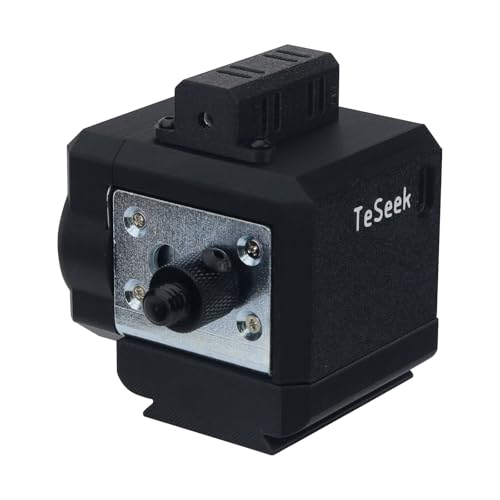
- App-free operation with USB-C power
- Stellar, lunar, and custom speeds
- Supports northern and southern hemispheres
Best For: Portable camera astrophotography and time-lapse use
Best Compact GoTo Choice

- Full GoTo tracking in a compact package
- Built-in Wi-Fi and illuminated polar scope
- Includes counterweight bar and 5 lb weight
Best For: Portable DSLR and mirrorless-camera tracking
Best for Heavy Payloads
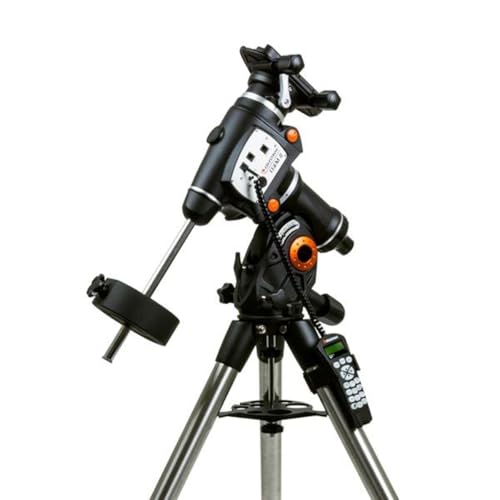
- 40-pound payload capacity
- Stable 2-inch steel tripod
- Computerized control with 40,000+ objects
Best For: Large optical setups and stable dark-sky imaging
Best Full-GoTo Kit – Star Adventurer GTi Mount Kit
The Sky-Watcher Star Adventurer GTi is a complete option for portable astrophotography mounts when you want GoTo control without assembling a separate tripod setup. This kit includes the mount head, tripod, pier extension, counterweight system, illuminated polar scope, and built-in Wi-Fi.
Best For: Astrophotographers who want a portable, full GoTo equatorial mount kit with included support hardware.
Pros:
- Includes tripod, pier extension, counterweight bar, and 5-pound counterweight.
- Built-in Wi-Fi and GoTo functionality support convenient operation.
- Illuminated polar scope helps with polar alignment.
- Offers multiple tracking rates in a portable design.
Cons:
- At 26 pounds, it is heavier than more compact camera-only trackers.
- It is not water resistant.
Choose this model if an all-in-one kit and automated navigation are more important than minimizing carry weight. Its included tripod and pier extension make it a straightforward starting point for a portable setup.
Best Lightweight Camera Tracker – SkyGuider Pro Full Package
The iOptron SkyGuider Pro is a compact choice among portable astrophotography mounts, weighing 2.2 pounds for the mount itself and supporting up to 11 pounds when balanced. Its illuminated polar scope, adjustable base, and internal rechargeable battery are designed for practical camera-tracking sessions away from home.
Best For: Photographers who prioritize a lightweight, backpack-friendly tracker for camera and lens combinations.
Pros:
- Compact 2.2-pound mount design is easy to transport.
- Supports up to 11 pounds when properly balanced.
- Built-in illuminated polar scope assists with alignment.
- Internal rechargeable battery provides up to 20 hours of operation at 20°C.
Cons:
- The package details do not specify an included tripod.
- It is not water resistant.
- Precise performance depends on correct balancing and polar alignment.
This is a strong fit when portability is the deciding factor. Its adjustable base and long internal-battery runtime add flexibility, while the 11-pound balanced capacity accommodates a range of camera setups.
Best Modular Tracker – Star Adventurer 2i Pro Pack
The Sky-Watcher Star Adventurer 2i Pro Pack is a modular tracking platform for portable astrophotography mounts. It works with existing photographic tripods and supports wide-field astrophotography, time-lapse video, and telescopic use, while built-in Wi-Fi enables smartphone control through the SAM Console app.
Best For: Wide-field photographers who already own a compatible tripod and want a flexible tracking platform.
Pros:
- Portable 7-pound design is easier to carry than a full mount-and-tripod kit.
- Modular design integrates with existing photographic tripods.
- Built-in Wi-Fi supports smartphone control through the SAM Console app.
- Supports wide-field imaging, time-lapse video, and telescopic use.
Cons:
- The supplied notes do not list a complete tripod or counterweight package.
- It does not provide the full GoTo functionality listed for the GTi model.
Consider the 2i Pro Pack if you value modularity and already have tripod equipment. Its lighter format and multiple use cases make it a practical choice for wide-field work and travel-oriented imaging.
Best App-Controlled Equatorial Mount – iEXOS-100-2 PMC-Eight
The Explore Scientific iEXOS-100-2 combines a GoTo equatorial mount and tripod with the PMC-Eight control system. For buyers comparing portable astrophotography mounts, its eight independently operating CPUs, belt-driven stepper motors, and ExploreStars app provide a feature-rich approach to telescope alignment and navigation.
Best For: Users who want app-based GoTo control and a dedicated equatorial mount for telescope-oriented astrophotography.
Pros:
- PMC-Eight system uses eight independent CPUs for defined control functions.
- ExploreStars app supports Apple, Android, and Windows tablets.
- Wi-Fi and Bluetooth app control simplify GoTo operation.
- Clutched RA and declination axes allow precise balancing and repositioning.
Cons:
- Polar alignment uses an RA-axis sight hole rather than a polar scope.
- The supplied notes do not provide a weight or folded-size specification.
- Tablet compatibility is emphasized, so it may be less convenient for phone-only users.
This mount is suited to users who want responsive app control and telescope-oriented features in one system. Its included tripod and precision balancing controls make it a more complete platform than a mount head alone.
Best Portable GoTo Mount – Sky-Watcher AZ-GTi
For portable astrophotography mounts that prioritize quick setup and app control, the Sky-Watcher AZ-GTi is a compact option for mobile astronomy. It weighs 8.6 pounds, supports up to 11 pounds, and can work with most DSLR cameras and many telescope tubes.
Best For: Travelers and casual astrophotographers who want a WiFi-enabled, smartphone-controlled alt-az mount for telescopes, DSLR cameras, panoramas, and time-lapse work.
Pros:
- Compact 8.6-pound design with included tripod and pier extension.
- 11-pound payload capacity supports many telescope tubes and DSLR cameras.
- WiFi control through the SynScan Pro app, with time-lapse and panorama capabilities.
- Dual encoders allow manual slewing without losing alignment.
Cons:
- Its alt-az design may be less suitable for some long-exposure astrophotography applications than a German equatorial mount.
- Mobile operation relies on AA batteries or an external 12V power source.
The AZ-GTi is a strong fit when portability and convenience matter most. Its built-in SNAP port and photography modes add useful automation, while the moderate payload makes it better suited to lighter imaging setups than heavy rigs.
Best Compact Star Tracker – TeSeek Equatorial Mount
This TeSeek equatorial mount is one of the more compact portable astrophotography mounts for camera-based tracking. Its open-source design supports stellar, lunar, and custom rotation speeds, and it can run from a power bank through USB-C.
Best For: Camera photographers who need a lightweight equatorial tracker with customizable rotation speeds, hemisphere switching, and time-lapse functionality.
Pros:
- Very compact 3.54-by-3.54-by-3.15-inch form factor.
- Supports stellar speed, moon speed, custom rotation speeds, and both hemispheres.
- Can function as a gimbal head for time-lapse photography.
- USB-C power input works with a power bank, with no app required.
Cons:
- A separate ball head is required to connect a camera.
- A 1/4-to-3/8-inch screw sleeve may be needed for many ball heads.
- It has no built-in battery and requires a USB-A-to-USB-C power cable.
The TeSeek emphasizes compactness and flexible camera movement rather than an all-in-one telescope setup. Check your ball-head hardware and cable requirements before buying, especially since the instructions prohibit using a USB-C-to-USB-C cable.
Best Heavy-Duty Portable Mount – Sky-Watcher EQ6-R Pro
For astrophotographers who need more carrying capacity, the Sky-Watcher EQ6-R Pro offers a belt-driven computerized German equatorial platform with a 44-pound payload rating. Its built-in handle helps with transport, while the illuminated polar finderscope supports alignment in the field.
Best For: Serious visual observers and astrophotographers transporting larger telescope and camera setups who want GoTo control, equatorial tracking, and substantial payload capacity.
Pros:
- 44-pound payload capacity with an all-metal construction.
- Belt-driven stepper motors provide quiet slewing and precise tracking.
- 42,000-plus-object SynScan database supports extensive GoTo observing.
- Includes an illuminated polar finderscope and a transport handle.
Cons:
- At 44 pounds, it is considerably less convenient to carry than smaller portable mounts.
- It requires a 12V power source rated at a minimum of 4 amps.
- The package arrives in two boxes and includes separate counterweights to transport.
The EQ6-R Pro is portable in the practical, field-transport sense rather than the backpacking sense. Its capacity and equatorial design make it the better choice for substantial imaging equipment, provided you are prepared for the weight, counterweights, tripod, and external power requirements.
Best for App-Free Flexibility – PETG-CF Equatorial Mount
This compact equatorial mount is an approachable option for portable astrophotography mounts, especially if you want app-free operation and USB power. Its open-source design supports stellar, lunar, and custom rotation speeds, while hemisphere switching adds flexibility for different locations.
Best For: Camera users who want a lightweight, power-bank-compatible mount for astrophotography or time-lapse photography.
Pros:
- PETG and carbon-fiber housing keeps the design compact.
- Supports stellar, moon, and custom rotation speeds.
- Works in northern and southern hemispheres.
- Can also serve as a time-lapse gimbal head without an app.
Cons:
- A ball head is required to connect a camera.
- A separate 1/4-to-3/8-inch screw sleeve may be needed.
- Requires a USB-A-to-C cable and has no built-in battery.
This mount stands out for simple setup and flexible USB power. Check your camera, ball-head, cable, and quick-release compatibility before buying.
Best Compact GoTo Choice – Star Adventurer GTi Mount
The Star Adventurer GTi is a strong contender among portable astrophotography mounts for users who want computerized GoTo performance in a compact package. Built-in Wi-Fi, a polar scope with illuminator, and a supplied counterweight system make it more feature-rich than a basic tracking head.
Best For: DSLR, mirrorless-camera, and smartphone users seeking portable GoTo tracking with built-in alignment and wireless features.
Pros:
- Provides full GoTo performance in a compact mount head.
- Includes a counterweight bar and 5-pound counterweight.
- Built-in Wi-Fi supports a more connected setup.
- Includes an illuminated polar scope for alignment.
Cons:
- The dovetail for mounting a DSLR or mirrorless camera is not included.
- At 6.9 kg, it is less lightweight than the smallest portable mounts.
- Battery and external-power operation may require planning in the field.
Choose this model when GoTo convenience and alignment features matter more than the lightest possible kit. Confirm the required dovetail hardware before ordering.
Best for Heavy Payloads – Celestron CGEM II Mount
The Celestron CGEM II is the heavy-duty option in this portable astrophotography mounts comparison. Its 40-pound payload capacity, 2-inch steel tripod, computerized hand controller, and multiple tracking rates suit larger observing and imaging configurations, although its components are substantially heavier to transport.
Best For: Astrophotographers who need high payload capacity, stable tripod support, and computerized object location for dark-sky setups.
Pros:
- Supports up to 40 pounds of optical tubes and accessories.
- 2-inch steel tripod is designed for stability and reduced vibration.
- Offers sidereal, solar, and lunar tracking rates.
- NexStar+ controller includes a database of more than 40,000 objects.
Cons:
- The mount and tripod are heavy, with supplied component weights listed at 40 and 20 pounds.
- Its larger footprint is less convenient for quick portable sessions.
- The item note states that the 17-pound weight is missing.
This is the practical choice when stability and payload headroom outweigh easy transport. Review the included components carefully, particularly the missing 17-pound weight noted in the listing.
How We Picked These Portable Astrophotography Mounts
We focused on mounts suited to travel, field imaging, and flexible astrophotography setups. Key considerations included equatorial tracking capability, advertised payload capacity, portability, included accessories, GoTo or app control, power requirements, and the learning curve for polar alignment. The selection spans compact camera trackers through full-size computerized German equatorial mounts, so buyers can compare options across very different use cases.
Payload figures should be treated as practical guidelines rather than automatic guarantees of imaging performance. A long telescope creates more leverage and demands better balance than a small camera lens, even when the total weight appears similar.
Quick Comparison
- Best for lightweight travel: Compact Star Adventurer, SkyGuider Pro, and similar camera-tracking mounts.
- Best for portable GoTo control: Star Adventurer GTi and iEXOS-100-2.
- Best for casual visual astronomy and time-lapse: AZ-GTi, though its alt-az design has limitations for long-exposure deep-sky imaging.
- Best for heavier telescope rigs: EQ6-R and CGEM II, which offer substantially greater capacity but require more transport and setup effort.
Key Buying Factors for Portable Astrophotography Mounts
Tracking and Mount Type
For long-exposure deep-sky photography, an equatorial mount or equatorial camera tracker is generally the better choice because it follows the sky with less field rotation. Alt-az mounts can be convenient for visual observing, panoramas, and shorter exposures, but they are not usually the first choice for extended tracked imaging.
Payload, Balance, and Focal Length
Match the mount to the complete imaging system: camera, lens or telescope, guide scope, guide camera, mounting hardware, and counterweights. Leave headroom rather than operating at the published maximum, especially with longer focal lengths or windy conditions.
Portability and Setup
Check the mount head weight, tripod stability, counterweight size, power source, and whether the system includes a pier extension or useful mounting hardware. A lighter mount that you can align accurately is often more effective than a heavier model left at home.
Control, Alignment, and Guiding
GoTo, Wi-Fi, and smartphone control can simplify target acquisition, while a guide port or computer interface may matter for advanced imaging. Consider whether you need a polar scope, electronic polar alignment, or compatibility with guiding software.
Who Should Buy Which Portable Astrophotography Mounts?
Traveling camera astrophotographers should prioritize a compact tracker with a reliable wedge, counterweight, and tripod. These systems are a strong fit for wide-angle lenses and modest telephoto setups.
Beginners wanting automation may prefer a portable GoTo equatorial mount such as a Star Adventurer GTi-style system. It offers a useful balance of convenience, tracking, and packability.
Hybrid visual and imaging users should consider a versatile computerized mount, but verify whether its tracking mode suits their exposure goals. An alt-az model can be excellent for visual use while remaining less suitable for deep-sky imaging.
Serious telescope imagers should choose a heavier mount such as an EQ6-R- or CGEM II-class platform when their telescope and accessories require more capacity. These are better long-term foundations, but they are less convenient for frequent travel.