
Planetary imaging rewards the right mix of camera, optics, and accessories. If you want sharper moons, cleaner planetary detail, and less frustration at the scope, the best setup starts with components that match your target.
Our roundup of planetary imaging kits focuses on practical value for real-world observing: image quality, ease of use, compatibility, and the extras that actually improve results.
Best 6 Planetary Imaging Kits Picks for 2026
Best for High-Resolution Planetary Detail
SVBONY SC715C Telescope Planetary Camera

- IMX715 sensor with 1.45μm pixels for sharp planetary detail
- 512MB DDR3 cache and USB 3.0 help keep capture smooth
- Works with SharpCap, AstroDMX Capture, and NINA
Best For: Telescope users who want a lightweight, high-detail planetary camera for controlled astrophotography sessions.
Best for Fast Deep-Sky & Planetary Imaging
Sky-Watcher Quattro 150P 6-inch Imaging Newtonian

- Fast f/4 optics for bright, efficient imaging
- 150mm aperture with 600mm focal length
- 11:1 dual-speed focuser for fine camera focus
Best For: Astrophotographers who want a fast 6-inch Newtonian for planetary and deep-sky imaging.
Best for Monochrome Detail
Astromania 1.25-Inch UV/IR/CH4 Filter Set

- Three specialized filters: UV, IR, and methane
- Useful for contrast and atmospheric detail work
- Requires a monochrome astrophotography camera
Best For: Monochrome planetary imagers who want specialized filters for sharper detail and atmospheric features.
Best for Dedicated Planetary Imaging

- 105mm Mak-Cass with 1365mm focal length
- Includes camera, guide scope, guide camera, and Barlow
- Low-noise, high-frame-rate imaging for planets
Best For: Planetary imagers who want a complete, specialized capture bundle.
Best for Atmospheric Control
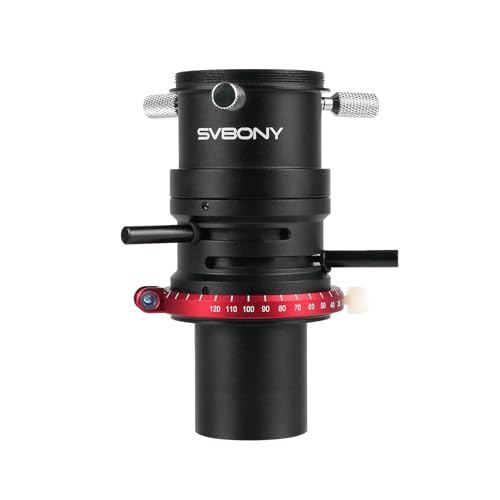
- Reduces atmospheric dispersion for cleaner planetary detail
- 1.25-inch body with T2 thread for flexible hookups
- Bubble level and locking screws support accurate setup
Best For: Planetary and lunar imagers who need an affordable ADC for common 1.25-inch rigs.
Best for High-Resolution Planetary Detail – SVBONY SC715C Telescope Planetary Camera
If you want a compact camera for planetary imaging kits that prioritizes sharp detail over convenience features, the SVBONY SC715C is built around a 1.45μm-pixel IMX715 sensor and USB 3.0 transfer for smooth high-resolution capture. It’s aimed at users who already have a telescope setup and want a dedicated astronomy camera for the Moon, planets, and other bright targets.
Best For: Telescope users who want a lightweight, high-detail planetary camera for controlled astrophotography sessions.
Pros:
- IMX715 sensor with small 1.45μm pixels for crisp planetary detail
- 512MB DDR3 cache helps reduce lag and keep frames smooth
- USB 3.0 support and compatibility with SharpCap, AstroDMX Capture, and NINA
- Light 147g aluminum body with ST4 autoguider support
Cons:
- Requires a telescope focuser; no built-in focus adjustment
- Not compatible with smartphones
- Needs dedicated software setup, which may add complexity for beginners
Overall, the SC715C is a strong fit for planetary imaging kits when your goal is maximum image detail from a dedicated telescope camera rather than all-in-one simplicity. It makes the most sense for users who already understand capture software and want a lightweight, efficient camera for planetary work.
Best for Fast Deep-Sky & Planetary Imaging – Sky-Watcher Quattro 150P 6-inch Imaging Newtonian
The Sky-Watcher Quattro 150P is a fast f/4 reflector built for imagers who want strong light-gathering power in a compact 150mm package. For planetary imaging kits, its 600mm focal length, high-reflectivity RAQ coatings, and oversized secondary mirror make it a capable option when you want a versatile tube that can also handle deep-sky work.
Best For: Astrophotographers who want a fast 6-inch Newtonian that balances imaging performance, aperture, and visual-use flexibility.
Pros:
- Fast f/4 optics help capture brighter images with shorter exposures
- 150mm aperture offers strong detail and light collection for imaging
- 11:1 dual-speed Crayford focuser supports precise camera focusing
- Oversized secondary mirror improves sensor illumination for larger cameras
Cons:
- Requires careful collimation typical of fast Newtonians
- Tube, mount, and accessories can make the setup less portable
Overall, this is a serious imaging tube for users building planetary imaging kits that may also expand into deep-sky photography. It’s a strong pick if you want fast optics, good illumination, and a proven reflector design without moving into a much larger scope.
Best for Easy Telescope Hookup – ASI662MC Color Planetary Camera
If you want one of the more straightforward planetary imaging kits for telescope-based shooting, the ASI662MC Color Planetary Camera is built around simple setup, compact portability, and clear low-light capture. It is a practical pick for observers who want to document planets, lunar details, or remote night scenes without dealing with a bulky camera rig.
Best For: Astronomy hobbyists and outdoor photographers who want a compact, plug-and-play camera for planetary and nighttime imaging.
Pros:
- Advanced sensor design aims for clearer detail in low-light planetary shots.
- Tool-free installation and broad compatibility make setup quick on many telescopes.
- Lightweight ABS housing adds impact resistance for travel and field use.
- Works across telescope and terrestrial photography applications.
Cons:
- Not a full imaging bundle, so some users may still need supporting accessories.
- Best results depend on a compatible telescope and stable observing conditions.
For buyers comparing planetary imaging kits, this model stands out for easy connection and portable use more than maximum feature depth. It’s a solid fit if you value fast deployment and reliable night-observation imaging over a more complex, all-in-one setup.
Best for Monochrome Detail – Astromania 1.25-Inch UV/IR/CH4 Filter Set
If you already have a monochrome camera, this 3-piece filter set is a practical add-on for planetary imaging kits focused on extracting more detail from Jupiter, Saturn, the Moon, and similar targets. The UV, IR, and methane filters each serve a distinct imaging role, giving you more control over contrast, atmospheric features, and seeing conditions.
Best For: Monochrome astrophotographers who want a dedicated UV/IR/CH4 filter trio for planetary and lunar work.
Pros:
- Includes three useful specialized filters: UV, IR, and methane
- IR long-pass can improve contrast and steadiness in poor seeing
- CH4 filter helps reveal high-altitude atmospheric detail
Cons:
- Requires a monochrome camera to use properly
- Not a general-purpose visual observing filter set
- Best suited to imaging users who already understand filter workflows
For buyers building out planetary imaging kits, this Astromania set is a targeted, technical choice rather than an all-in-one starter package. It makes the most sense if you want specialized wavelength control for sharper monochrome planetary results.
Best for Dedicated Planetary Imaging – SVBONY MK105 Imaging Kit
If you want one of the more complete planetary imaging kits, this SVBONY bundle pairs a long focal-length Maksutov-Cassegrain with a planetary camera, guide camera, mini guide scope, and 2X Barlow lens. The MK105’s f/13 native optics are built for small targets like Jupiter and Saturn, while the included cameras and accessories give you a ready-to-test setup for capture and tracking.
Best For: Planetary imagers who want an all-in-one starter kit with optics, camera, guiding, and magnification accessories.
Pros:
- 105mm Mak-Cass design with 1365mm focal length for high-magnification planetary work
- Dispersion-free reflective optics help reduce chromatic aberration in images
- Includes a planetary camera, guide camera, mini guide scope, and 2X Barlow in one package
- Low-noise camera specs and high frame rate support sharper capture on dim targets
Cons:
- More of a specialized imaging bundle than a general-purpose telescope
- Long focal ratio can be less flexible for wide-field viewing
- Guide-camera workflow may feel complex for absolute beginners
This is a strong choice if you want planetary imaging kits that lean heavily toward serious capture rather than casual observing. The bundled accessories make it easier to assemble a workable imaging train without sourcing each piece separately.
Best for Atmospheric Control – SVBONY SV199 1.25-Inch ADC
The SVBONY SV199 is a practical add-on for planetary imaging kits when you need cleaner views at low elevation. Its atmospheric dispersion correction helps reduce color fringing on planets and the Moon, while the 1.25-inch format and T2 thread keep it compatible with common eyepieces and cameras.
Best For: Observers who want a simple 1.25-inch ADC to improve planetary and lunar image clarity with common telescope setups.
Pros:
- Helps reduce atmospheric dispersion for sharper planetary detail
- 1.25-inch tube with T2 thread supports broad accessory compatibility
- Bubble level and side-screw locking make setup more precise and stable
- FMC coatings aim to improve contrast and reduce ghosting
Cons:
- Useful mainly for high-magnification lunar and planetary observing
- Requires careful adjustment to get the best correction
For planetary imaging kits, this is a focused optical accessory rather than a general-purpose upgrade. If you routinely image Mars, Jupiter, Saturn, or the Moon and want better color alignment near the horizon, the SV199 offers a straightforward way to improve results.
How We Picked These Planetary Imaging Kits
We selected gear that helps capture high-frame-rate, high-detail images of the Moon and planets without unnecessary complexity. Priority went to compatible camera sensors, useful optical accessories, solid build quality, and setups that make sense for both beginners and more advanced imagers.
We also looked for products that fit different budgets and workflows, since Planetary Imaging Kits can range from simple camera-and-telescope pairings to more specialized accessory combinations.
Quick Comparison
In general, the best results come from matching the kit to your goals. A dedicated planetary camera is ideal for straightforward capture. A telescope tube designed for imaging gives you the optical foundation for sharper detail. Filters and atmospheric dispersion correction are valuable upgrades when you want cleaner color and contrast. For a more complete setup, a bundled system with camera, guide gear, and a compatible telescope can simplify the buying process.
Key Buying Factors for Planetary Imaging Kits
Camera Sensor and Pixel Size
For planets, small pixels and fast readout matter because they help preserve fine detail in short exposures. A modern sensor with low noise is especially useful when stacking many frames.
Optics and Focal Ratio
Your telescope needs enough effective focal length to resolve planets well. Imaging-friendly optics with good correction will usually outperform a general-purpose visual setup when the seeing is steady.
Accessories That Improve Image Quality
Filters can help isolate useful wavelengths, while an atmospheric dispersion corrector can reduce color fringing when planets sit low in the sky. These are not must-haves for every user, but they can make a noticeable difference.
Mount and Workflow Compatibility
Even the best Planetary Imaging Kits are limited by tracking and stability. Make sure your mount, adapter sizes, and software workflow are practical for your telescope and camera combination.
Who Should Buy Which Planetary Imaging Kits?
Choose a dedicated planetary camera if you want the simplest path to higher-quality lunar and planetary captures. Choose an imaging Newtonian or Maksutov-style telescope if you need the optical foundation first. Add filters if you want more control over contrast and wavelength-specific detail. Pick an atmospheric dispersion corrector if you image planets frequently at lower altitudes. If you want an all-in-one approach, a bundled kit can reduce guesswork and speed up setup.
For most buyers, the best option is the one that matches both your telescope and your current skill level. The most effective Planetary Imaging Kits are the ones you can use consistently, not just the ones with the longest spec sheet.