
The best physics experiment sets make abstract concepts easier to understand by turning electricity, magnetism, motion, light, and energy into practical experiments. With options ranging from beginner-friendly STEM kits to classroom-style lab equipment, you can find a useful set without spending more than $100.
We selected these kits for their educational value, experiment variety, construction potential, and suitability for different ages and learning goals. Use the guide below to match the right set to a child, student, homeschool setup, or classroom.
Best 10 Physics Experiment Sets Under 100 Picks for 2026
Hands-On Chemistry Pick

- 100+ activities with 15 supplied experiments
- Includes test tubes, beakers, and pipettes
- Designed for ages 8–12
Best For: Colorful, guided chemistry exploration
Magnetism & Engineering Pick
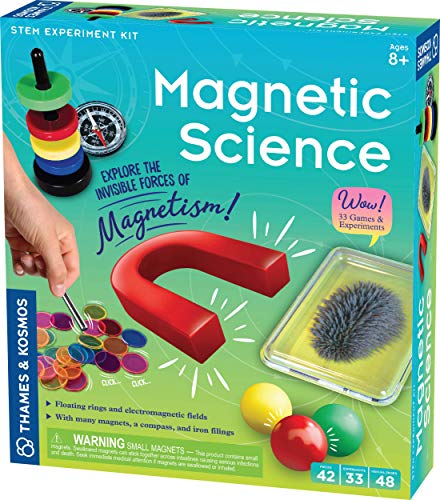
- Includes 33 experiments and games
- Explores magnetic fields and electromagnets
- Comes with a 60-page color manual
Best For: Introductory magnetism activities
Mechanics Measurement Pick
Inclined Plane & Friction Board

- Studies force, friction, and motion
- Adjustable ramp with included sliders and roller
- Recommended for ages 15+ under supervision
Best For: Structured mechanics demonstrations
Introductory Electricity Pick

- Builds series and parallel circuits
- Includes instructions and 17 listed components
- Comes in a plastic storage box
Best For: Grades 7–9 electricity projects
Optics Explorer
Optical Physics Experiment Set

- Includes lenses, prism, mirrors, and light source
- Demonstrates reflection and refraction
- Recommended for ages 14 and up
Best For: Hands-on optics lessons and demonstrations
Energy Makers
Windmill and Generator Physics Kit

- Uses solar, wind, and hand-crank power
- Explores energy conversion and circuits
- Suitable for kids and teens ages 12 and up
Best For: Introductory energy and STEM projects
Magnet Lab Pro
53-Piece Electromagnet Physics Kit

- Includes 53 magnetism and circuit components
- Supports 14-plus guided experiments
- Recommended for ages 15 and up
Best For: Classroom magnetism and electromagnetism demonstrations
Best Magnetic Starter

- 12 hands-on magnetic experiments
- Introduces force, motion, and balance
- Designed for children ages 6 and up
Best For: Young beginners exploring magnetism through play
Best Electromagnet Project Kit
DIY Electricity and Magnetism Set

- Builds electromagnets and simple circuits
- Includes series and parallel circuit projects
- Comes with a full-color manual
Best For: School-style introductory electricity projects
Best Advanced Circuit Variety
Electricity and Magnetism Lab Kit

- Supports circuits, electromagnets, and generators
- Includes 27 components in a storage box
- Designed for grades 7–11
Best For: Older students building varied circuit models
Hands-On Chemistry Pick – Amazing Chemistry Set
If you’re comparing physics experiment sets under 100, this chemistry-focused kit is a versatile option for younger learners who enjoy colorful, hands-on demonstrations. It includes materials for 15 featured experiments plus a guide with 85 additional activities using common household items.
Best For: Ages 8–12, STEM activities, and children who enjoy chemistry demonstrations with real tools such as test tubes, beakers, and pipettes.
Pros:
- Offers more than 100 experiments and activities.
- Includes materials for 15 featured experiments.
- Uses hands-on tools and engaging activities such as crystal growing and color-changing solutions.
Cons:
- Its focus is chemistry rather than core physics topics.
- Many bonus activities require common household items.
This is a strong choice for families seeking a broad, activity-heavy science kit, especially when visual results and guided experimentation matter more than formal physics measurement.
Magnetism & Engineering Pick – Magnetic Science Set
For shoppers browsing physics experiment sets under 100, this magnetic science kit provides a focused way to explore invisible forces and introductory engineering concepts. Its 33 experiments and games are organized in a 60-page full-color manual.
Best For: Learners interested in magnets, magnetic fields, and building a basic electromagnet through guided activities.
Pros:
- Includes 33 experiments and games.
- Explores magnets in different shapes and sizes.
- Introduces invisible magnetic fields and electromagnets.
Cons:
- The supplied notes do not specify a recommended age range.
- Its subject matter is concentrated on magnetism rather than a broad range of physics topics.
This set makes sense when magnetism is the priority and you want a manual-supported kit with enough activities to revisit the concepts through multiple experiments.
Mechanics Measurement Pick – Inclined Plane & Friction Board
This apparatus is a practical choice for shoppers seeking physics experiment sets under 100 that emphasize force, friction, and motion rather than general science activities. The adjustable wooden ramp includes components for investigating sliding resistance and measuring force.
Best For: Physics instruction and demonstrations for learners 15 and up under supervision, particularly lessons on inclined planes, friction, and motion.
Pros:
- Includes an inclined plane, friction sliders, a roller, pulley, and pan.
- Adjustable angle supports controlled motion studies.
- Enables force and friction investigations, including coefficient relationships.
- Sturdy wooden construction is intended for repeated laboratory use.
Cons:
- It is a single-purpose apparatus rather than a collection of many experiments.
- Recommended for older learners and use under supervision.
- Its approximately 4-pound size may be less convenient for casual storage.
Choose this model when accurate, repeatable demonstrations of mechanical principles are more important than colorful activities or a wide assortment of experiment themes.
Introductory Electricity Pick – Basic Circuit Lab Kit
Among physics experiment sets under 100, this basic circuit kit is aimed at students building a foundation in electricity. It provides English instructions for assembling series and parallel circuits and stores the accessories in a plastic box.
Best For: Grades 7–9, science projects, homeschool units, camps, clubs, and introductory lessons on current and circuit rules.
Pros:
- Supports both series and parallel circuit builds.
- Includes English instructions for guided assembly.
- Useful for hands-on STEM activities, science fairs, and classroom teaching aids.
- Components come in a plastic storage box.
Cons:
- Two AA batteries are not included.
- The basic kit focuses on introductory circuits rather than advanced electrical projects.
- The supplied notes do not list a standard age range that matches the intended grade levels.
This is a sensible pick for learners who need to connect textbook electricity concepts with simple physical circuit builds, provided you purchase the required batteries separately.
Optics Explorer – Optical Physics Experiment Set
For shoppers comparing physics experiment sets under 100, this optical kit offers a focused way to demonstrate reflection and refraction. Its lenses, prism, mirrors, and adjustable linear light source support hands-on classroom or home demonstrations for learners ages 14 and up.
Best For: Students and teachers exploring basic optics and the behavior of light.
Pros:
- Includes multiple convex and concave lenses, a triangular prism, and a multifunctional reflector.
- Supports experiments involving refraction, prism effects, plane-mirror reflection, and curved mirrors.
- Three-way linear light source can be adjusted with a screwdriver.
Cons:
- Requires two AAA batteries, which are not included.
- Recommended for ages 14 and up, so it may not suit younger children.
This is a compact, specialized choice for optics lessons rather than a broad physics lab. The included English manual and variety of optical components make it useful for structured demonstrations.
Energy Makers – Windmill and Generator Physics Kit
Among physics experiment sets under 100, this kit emphasizes energy conversion through three generation methods. Students can investigate solar power, hand-cranked electricity, and wind power while building basic STEM and circuit skills.
Best For: Kids and teens working on introductory physics, energy, and circuit projects.
Pros:
- Offers solar, hand-cranked, and windmill power-generation modes.
- Demonstrates conversions involving kinetic energy, light, sound, and electricity.
- Designed for family activities and primary or secondary school projects.
Cons:
- The listing says the paper instructions are not included and must be downloaded from the item page.
- The supplied notes list an AA battery description but do not specify whether batteries are included.
This is a practical project-oriented option for learners who benefit from seeing energy concepts in action. It covers several related ideas, although buyers should plan to access the digital instructions before starting.
Magnet Lab Pro – 53-Piece Electromagnet Physics Kit
For shoppers seeking physics experiment sets under 100 with broad classroom coverage, this 53-piece magnet kit provides materials for more than 14 magnetism and electromagnetism activities. It is aimed at older students, teachers, and guided school demonstrations.
Best For: Physics classrooms and learners studying magnetic fields, circuits, electromagnets, and magnetic levitation.
Pros:
- Includes magnets, magnetic needles, carts, an electromagnet, compass, iron powder, bulbs, and circuit parts.
- Supports experiments with magnetic fields, attraction and repulsion, electromagnets, levitation, and simple circuits.
- Comes with illustrated instructions and 53 listed components for varied demonstrations.
Cons:
- Recommended for ages 15 and up, limiting suitability for younger children.
- The large component count may require organized storage and adult or teacher supervision.
This is the most extensive option of the three for magnetism-focused learning. Its broad assortment makes it flexible for instruction, though it is better suited to a classroom or structured lab setting than casual play.
Best Magnetic Starter – 12-in-1 Magnetism Kit
If you’re looking for physics experiment sets under 100 for younger learners, this magnetic science kit offers an approachable introduction to attraction, repulsion, balance, force, and motion. It includes 12 hands-on experiments and 20 small parts for home learning, classroom activities, or a science-themed gift.
Best For: Children ages 6 and up who are beginning to explore magnetism and basic physics through guided, hands-on play.
Pros:
- Provides 12 magnetic experiments in one kit.
- Explores magnetism, force, motion, balance, and problem-solving.
- Includes beginner-friendly activities and the essential parts for getting started.
- Uses sturdy materials with smooth, rounded edges.
Cons:
- Its focus is primarily magnetism rather than electricity or broader physics topics.
- The many small parts may require organized storage and supervision for younger children.
Choose this set when you want an accessible, play-oriented magnetism kit for elementary-age children. Its compact 20-piece format and broad age range make it practical for repeated activities at home or in a classroom.
Best Electromagnet Project Kit – DIY Electricity and Magnetism Set
Among physics experiment sets under 100, this EUDAX model kit is suited to learners who want to connect classroom concepts with simple builds. The included materials and full-color manual support projects involving electromagnets, circuits, a magnet car, and series and parallel connections.
Best For: Students and teachers working on introductory electromagnetism and basic circuit projects in a school or home-learning setting.
Pros:
- Supports multiple projects, including a finished electromagnet, magnet car, and simple circuit.
- Covers series and parallel circuits as well as homemade electromagnets.
- Includes a full-color manual to explain basic principles and project steps.
- Encourages practical ability, thinking, and exploration.
Cons:
- The instructions require careful attention to battery installation and short-circuit avoidance.
- The supplied notes do not specify a detailed component count.
- The manufacturer’s listed recommended age range may not clearly match every school use case.
This is a useful choice for structured introductory projects rather than free-form experimentation. Read the instructions carefully, especially when connecting the battery, and use the set to reinforce basic electricity and electromagnetism lessons.
Best Advanced Circuit Variety – Electricity and Magnetism Lab Kit
For students comparing physics experiment sets under 100, this upgrade kit stands out for its wide range of electricity and magnetism activities. It includes switches, wires, bulbs, and LEDs, with projects ranging from basic circuits to a hand-crank generator, wind power car, and traffic light.
Best For: Students in grades 7–11, teachers, and older learners who want a reusable kit for building several electrical and magnetic models.
Pros:
- Supports simple, series, parallel, and stair double-switch circuits.
- Includes projects involving electromagnets, LEDs, a hand-crank generator, and wind power.
- Offers a broad selection of components, including switches, wires, bulbs, and LEDs.
- Parts can be stored in a transparent box.
Cons:
- Two AA batteries are required but not included.
- The recommended age range listed in the notes is 14–17, so it may be less suitable for younger children.
- The breadth of projects may require more instructional guidance than a basic starter kit.
This upgrade kit is the strongest fit for older students who need variety across electricity and magnetism topics. It is ready to use out of the box once two AA batteries are supplied, and the storage box helps keep the 27-count set organized.
How We Picked the Best Physics Experiment Sets Under 100
We focused on kits that support active experimentation rather than simple demonstrations. The selection includes circuit-building sets, magnetism and electromagnetism tools, optics equipment, force and friction apparatus, and broader STEM kits that combine several physics concepts.
We also considered the likely learner age, the variety of included activities, whether the parts can be reused for additional projects, and how well each kit fits a home, homeschool, or classroom environment. Because contents can vary between sellers and versions, check the current package list and age guidance before ordering.
Quick Comparison
| Best For | Look For | Recommended Kit Type |
|---|---|---|
| Young beginners | Large, simple components and guided activities | Magnetic or general STEM kits |
| Circuit learners | Wires, switches, power sources, and clear diagrams | Basic electricity experiment sets |
| Advanced students | Modular parts and measurable outcomes | Electromagnetism or lab-style kits |
| Optics practice | Lenses, mirrors, prisms, and a light source | Optical experiment sets |
| Classroom instruction | Durable apparatus and repeatable demonstrations | Force, friction, or multi-student lab equipment |
Key Buying Factors
Age and Difficulty
Choose a kit that matches the learner’s reading level, dexterity, and prior experience. Younger children generally benefit from guided activities and larger parts, while older students can use open-ended circuit, optics, and electromagnetism projects.
Physics Topics Covered
Decide whether the goal is broad exposure or deeper study. General kits may cover motion, energy, electricity, and magnetism, while specialized sets provide more useful tools for one topic, such as lenses and mirrors for optics or an inclined plane for force measurement.
Parts, Measurements, and Reusability
Prioritize kits with clearly labeled components, replaceable consumables, sturdy connectors, and equipment that supports measurements. A set is more valuable when learners can modify a circuit or repeat an experiment instead of completing each activity only once.
Safety and Instructions
Review voltage requirements, small-part warnings, sharp or fragile components, and supervision recommendations. Clear diagrams and experiment instructions matter, especially for first-time learners. Never connect components to household mains electricity unless the equipment is specifically designed for it.
Who Should Buy Which Physics Experiment Sets Under 100?
For a young child beginning STEM exploration, choose a magnetic or general-purpose kit with hands-on activities and simple explanations. For students learning electrical principles, an EUDAX-style circuit set is a practical starting point because it encourages building and troubleshooting.
For learners studying electromagnetism, select a kit with coils, magnets, and components that demonstrate how current and magnetic fields interact. Optics-focused students should choose the set with lenses, mirrors, prisms, and a dedicated light source. Teachers and homeschool instructors may get the most value from durable, repeatable apparatus such as an inclined plane, friction board, or classroom-oriented lab set.
Before buying, compare the included components, stated age range, experiment count, and instruction quality—not just the number of parts. The best physics experiment sets under $100 are the ones that fit the learner’s current level while leaving room for more challenging projects.