
The best physics experiment sets for middle school students turn abstract ideas into hands-on discoveries. With the right kit, learners can explore force, motion, circuits, magnets, light, and energy through practical experiments rather than diagrams alone.
This roundup compares 10 classroom- and home-friendly options, from focused electricity and optics kits to broader lab sets with equipment for mechanics and magnetism. Use the guide below to match the kit’s experiment range, age suitability, and included components to the student’s learning goals.
Best 10 Physics Experiment Sets for Middle School Students Picks for 2026
Build-and-Test Motion Lab
Inertia, Friction & Circular Motion

- Builds six working physics models
- Includes theory, experiments, and a quiz
- Adds an interactive 3D building app
Best For: Hands-on learners ages 9 and up exploring motion concepts
Electricity & Magnetism Workshop
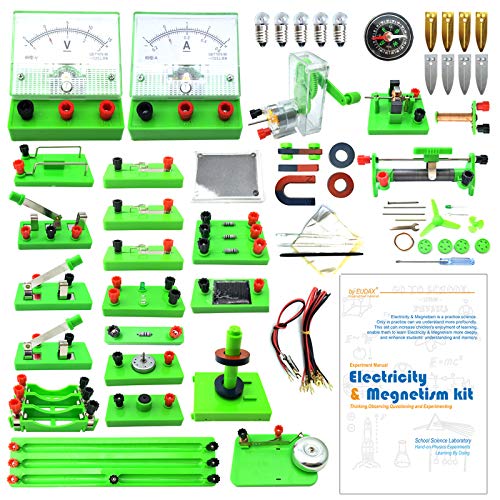
- Supports circuit and magnetism projects
- Includes 79 listed items and a manual
- Batteries are required but not included
Best For: Students exploring introductory electricity and magnetism
Classroom Mechanics Lab

- Includes equipment for 26 mechanics experiments
- Covers force, motion, gravity, and buoyancy
- Comes with a manual and storage box
Best For: Ages 14+ studying classical mechanics in a lab setting
Light & Optics Demonstration Set

- Demonstrates reflection and refraction
- Includes lenses, prism, reflector, and light source
- English manual included; AAA batteries required
Best For: Ages 14+ studying optics through visual demonstrations
Best Advanced Lab
Comprehensive Magnet Physics Kit

- 79 pieces for electricity and magnetism experiments
- Includes meters, generator, solar panel, and magnets
- Full-color manual and storage case included
Best For: Students seeking a broad, progressive physics lab
Best Hands-On Project
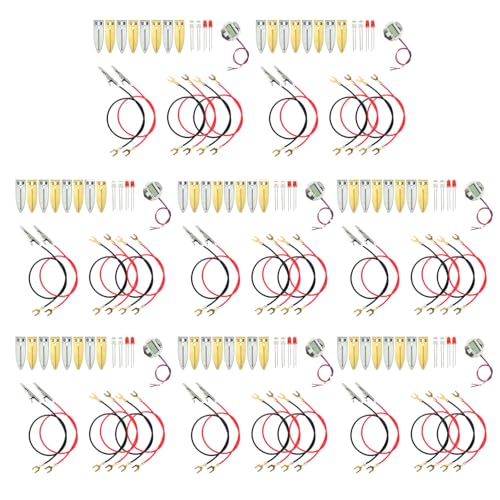
- Builds batteries with fruit, vegetables, or drinks
- Includes copper and zinc sheets, LEDs, and clock
- Good for classroom or supervised home demonstrations
Best For: Students learning basic battery and circuit principles
Best Starter Circuit Lab

- More than 50 electricity and magnetism experiments
- Includes circuit, magnetic, and Joule’s law modules
- Illustrated manual and portable storage case
Best For: Teens reinforcing classroom electricity and magnetism lessons
Magnetism Maker

- 15+ guided magnetism experiments
- Includes magnets, compass, and electromagnet
- Compact STEM kit with illustrated manual
Best For: Students exploring magnetic fields and electromagnetism
Circuit Builder
Basic Electricity Experiment Set

- Builds series and parallel circuits
- Includes English assembly instructions
- Stores components in a plastic box
Best For: Grades 7–9 introductory electricity projects
Light Lab Explorer

- 15+ experiments on light and optics
- Includes lenses, mirrors, prisms, and emitters
- 32-page full-color experiment guide
Best For: Students investigating reflection, refraction, and image formation
Build-and-Test Motion Lab – Inertia, Friction & Circular Motion
For shoppers seeking physics experiment sets for middle school students, this Engino kit offers an approachable way to investigate inertia, friction, and circular motion through construction. Students can build six working models, including a rocket launcher, crash test rig, and sharpening wheel, while using the included theory, experiments, and quiz materials.
Best For: Hands-on learners ages 9 and up who enjoy building models alongside guided physics explanations.
Pros:
- Explores three practical motion concepts through six buildable models.
- Includes a 12-page theory section, experiments, and a four-page quiz.
- Offers an interactive 3D app for virtual building support.
Cons:
- Focuses primarily on inertia, friction, and circular motion rather than a broad range of physics topics.
- The plastic construction format may appeal less to students seeking traditional measuring equipment.
This is a strong choice when you want a guided, build-first introduction to motion that combines physical projects with supporting reading and review activities.
Electricity & Magnetism Workshop – Basic Circuit Discovery Kit
This EUDAX set is a practical option among physics experiment sets for middle school students who are ready to explore electricity and magnetism. Its 79 listed items support projects such as series and parallel circuits, fruit batteries, electromagnets, electric bells, and a hand-crank generator.
Best For: Students ages 8–18 working through introductory electricity and magnetism activities with a manual.
Pros:
- Covers both basic electrical circuits and magnetic experiments.
- Includes components for Ohm’s law, electromagnets, Oersted experiments, and more.
- Comes with a full-color manual and storage bag.
Cons:
- Three AA batteries are required and are not included.
- The broad age range may mean younger students need adult guidance.
Choose this kit if circuit building and electromagnetism are the priority; its project list provides more electrical focus than a general mechanics or optics set.
Classroom Mechanics Lab – 26-Experiment Physics Kit
For middle schoolers ready for more structured lab work, this mechanics set provides equipment for 26 experiments involving force, motion, gravity, pressure, buoyancy, pulleys, and levers. It includes tools such as a balance, spring dynamometer, trolley, ramp, pulleys, lever ruler, and U-tube pressure gauge.
Best For: Learners ages 14 and up, classroom instruction, or independent study focused on classical mechanics.
Pros:
- Covers Newton’s laws, kinematics, gravity, pressure, and buoyancy.
- Includes hands-on equipment for simple machines and force investigations.
- Provides a professional manual and organized storage box.
Cons:
- The recommended age is 14 and up, making it less suitable for younger middle school students.
- Its mechanics focus does not cover electricity or optics.
This kit is best suited to students who benefit from traditional lab hardware and step-by-step mechanics investigations rather than toy-style construction projects.
Light & Optics Demonstration Set – Lenses, Mirrors & Prism
This optical set gives students a focused way to study light behavior, making it a useful choice among physics experiment sets for middle school students interested in optics. The components demonstrate refraction, prism effects, plane-mirror reflection, diffuse reflection, and convex- and concave-mirror behavior.
Best For: Students ages 14 and up learning optics through visible demonstrations with lenses, mirrors, and a prism.
Pros:
- Includes three biconvex lenses, concave and convex lenses, a prism, and a reflector.
- Supports multiple reflection and refraction demonstrations.
- Includes an English color-page manual and adjustable three-way light source.
Cons:
- Two AAA batteries are needed but not included.
- Its eight-piece optics focus is narrower than a general physics laboratory kit.
Consider this set when light and image formation are the main learning goals; the lenses, mirrors, prism, and light source make optical effects easier to observe directly.
Best Advanced Lab – Comprehensive Magnet Physics Kit
For shoppers comparing physics experiment sets for middle school students, this 79-piece kit offers a broad introduction to electricity, magnetism, circuits, and energy conversion. Its included meters, generator, magnets, solar panel, and illustrated manual support both guided activities and more involved exploration.
Best For: Students ages 8–16 who want a substantial home or classroom lab with room to progress from basic circuits to more advanced electromagnetism.
Pros:
- Includes 79 pieces, including an ammeter, voltmeter, galvanometer, generator, solar panel, magnets, resistors, LEDs, and switches.
- Supports experiments involving circuits, electromagnetism, induction, and energy conversion.
- Includes a step-by-step, full-color manual and a durable storage case.
- Offers components intended for repeated use and a wide age range.
Cons:
- The extensive component assortment may feel more involved for beginners.
- Some experiments require careful setup and following the manual closely.
This is the strongest choice for learners who want a versatile, expandable physics lab rather than a single-project activity. The meters and specialized modules make it particularly useful for students ready to investigate concepts in greater depth.
Best Hands-On Project – Fruit Battery Experiment Kit
This fruit battery set is a focused option among physics experiment sets for middle school students, turning everyday produce or drinks into a simple power source. Students connect copper and zinc sheets to test whether items such as lemons, potatoes, apples, or salt solutions can power LEDs or the included electronic clock.
Best For: Middle school demonstrations, supervised home projects, and classrooms teaching basic circuits, conductivity, and battery principles.
Pros:
- Uses easy-to-find materials such as fruit, vegetables, drinks, or salt solutions.
- Includes copper and zinc sheets, wires, clip leads, LEDs, and an electronic clock.
- Creates a direct, visual demonstration of how a homemade battery can produce electricity.
- Comes with an English full-color instruction manual.
Cons:
- Requires additional household produce or other conductive materials.
- Recommended for ages 14 and up, with supervision for younger students.
- Polarity and setup must be handled carefully to avoid issues with the LEDs or clock.
Choose this kit when you want a low-preparation, experiment-centered introduction to electrical potential. It is narrower than a full circuit lab, but the visible results can make battery concepts especially memorable.
Best Starter Circuit Lab – Mysterystone Electricity Kit
For families looking at physics experiment sets for middle school students, this Mysterystone kit provides a structured way to explore electricity and magnetism through more than 50 DIY experiments. The 55-piece collection includes a circuit board, electromagnetism materials, and specialized modules such as a magnetic switch and light-control LED.
Best For: Students ages 13–18 who want a guided starter lab to reinforce classroom lessons in circuits, electromagnets, and basic electronics.
Pros:
- Offers more than 50 experiments covering electricity and magnetism.
- Includes distinctive learning modules such as a magnetic switch, light-control LED, and Joule’s first law experiment module.
- The illustrated manual explains both what to do and why the experiments work.
- Components are organized in a solid portable storage case.
Cons:
- The recommended age range begins at 13, so it may be advanced for younger middle school students.
- The number of projects and components may require organization and careful reading.
This kit balances breadth and structure well: it gives students many prescribed projects while leaving room to design additional experiments. It is a practical pick for learners who want more than a single circuit activity but are not yet ready for a highly specialized lab.
Magnetism Maker – Hands-On Electromagnetism Kit
For shoppers comparing physics experiment sets for middle school students, this compact kit focuses on magnetism and electromagnetism through 15+ guided experiments. It includes bar, ring, and horseshoe magnets, a compass, and an assemblable electromagnet for exploring magnetic fields, levitation, and classic demonstrations such as Oersted’s experiment.
Best For: Middle school learners who want a focused introduction to magnetism, electromagnets, and hands-on STEM problem-solving at home or in the classroom.
Pros:
- Supports 15+ experiments with a step-by-step illustrated manual.
- Includes several magnet types, a compass, and an assemblable electromagnet.
- Compact ABS kit designed for student STEM activities and storage.
- Offers smooth edges and student-friendly magnetic strength, according to the supplied notes.
Cons:
- Batteries are not included.
- Small magnetic pins require adult supervision.
This is a strong choice when you want students to investigate one physics topic in depth. Its component mix makes invisible magnetic fields easier to observe, while the included manual helps keep experiments structured.
Circuit Builder – Basic Electricity Experiment Set
This EUDAX set is a practical option among physics experiment sets for middle school students who need to connect textbook electricity concepts with physical circuits. The English instructions guide learners through series and parallel circuits using the included components and a reusable plastic storage box.
Best For: Grades 7–9 science projects, STEM clubs, homeschool lessons, and introductory classroom work on current and basic circuit rules.
Pros:
- Designed for building basic series and parallel circuits.
- English instructions support guided assembly.
- Encourages hands-on practice, creativity, and awareness of electricity.
- Components come in a plastic storage box for organization.
Cons:
- Two AA batteries are not included.
- The supplied notes describe this as a basic kit, so it may be limited for advanced circuit work.
Choose this set if your priority is learning foundational circuit construction rather than covering multiple branches of physics. Its straightforward focus and storage case make it suitable for repeated school or home activities.
Light Lab Explorer – Physics & Optics Science Kit
For families seeking physics experiment sets for middle school students with a strong visual element, this optics kit offers 15+ activities involving light, reflection, refraction, and image formation. Its prism, lenses, mirrors, transparent blocks, light emitters, and 32-page manual support structured experiments at home or in school.
Best For: Students ages 8–16 who are especially interested in optics, rainbows, lenses, mirrors, and classroom or homeschool demonstrations.
Pros:
- Provides 15+ hands-on experiments focused on light and optics.
- Includes more than 25 components, including lenses, mirrors, prisms, and light emitters.
- Full-color, 32-page guide offers step-by-step explanations.
- Supports experiments involving refraction, color mixing, image formation, and rainbow effects.
Cons:
- Its broad component set may require more setup and organization than a basic kit.
- The supplied notes identify it as a plastic kit and do not describe advanced laboratory-grade equipment.
This is the most visually varied choice of the three, making abstract optics concepts easier to demonstrate. It is a good fit when students benefit from observing immediate effects and following a detailed experiment guide.
How We Picked These Physics Experiment Sets for Middle School Students
We selected kits that support meaningful, repeatable experiments in core middle school physics topics. The lineup includes options for mechanics, electricity, magnetism, optics, and fruit-battery projects, along with broader sets that combine several subjects.
We also considered the likely usefulness of the included equipment, the stated age range, project variety, and whether a kit appears suitable for independent exploration, supervised home learning, or classroom demonstrations. Buyers should confirm the current package contents and age guidance before ordering, since listings can change.
Quick Comparison
| Best for | Look for |
|---|---|
| Mechanics and motion | Pulleys, force gauges, balances, and motion-focused activities |
| Electricity and circuits | Wires, circuit boards, switches, bulbs, motors, or other visible outputs |
| Magnetism | Bar, ring, or horseshoe magnets, compasses, and electromagnet components |
| Optics and light | Prisms, convex and concave lenses, mirrors, and a controllable light source |
| Broad STEM exploration | Multiple experiment categories and enough reusable parts for varied projects |
Key Buying Factors
Topic Coverage
Start with the concepts the student is currently studying. A mechanics kit is a better fit for force and motion lessons, while an optics set provides more relevant practice with reflection, refraction, and lenses. Combination kits offer variety but may provide less depth in each subject.
Age, Supervision, and Instructions
Choose a kit whose instructions match the learner’s reading level and experience. Younger students may need adult help with setup, troubleshooting, magnets, small parts, or battery-powered circuits. Clear diagrams and guided procedures can make a kit much more useful than a larger but poorly explained assortment.
Included Equipment and Durability
Check whether the kit contains the working parts needed to complete its advertised experiments. Reusable components, secure connectors, sturdy stands, and readable measurement markings improve long-term value. Also check whether batteries, fruit, tape, or other consumables must be supplied separately.
Safety and Workspace
Use a clear, stable work surface and follow the manufacturer’s guidance. Supervise experiments involving electricity, sharp optical components, strong magnets, or heated materials. Avoid connecting power sources in ways the instructions do not recommend.
Who Should Buy Which Physics Experiment Sets for Middle School Students?
Choose a mechanics set for students interested in levers, pulleys, balance, force, and motion. An electricity kit is ideal for learning circuit paths, switches, conductivity, and basic components. Select a magnetism-focused kit for experiments with magnetic fields, compasses, and electromagnets.
An optics kit suits learners fascinated by light, lenses, mirrors, and prisms. For a student who wants to sample several areas—or for a parent or teacher building a flexible STEM activity shelf—a broader kit or a collection spanning different topics may offer the best value. Match the purchase to the curriculum, available supervision, and the student’s preferred way of learning.