
OIII filters can make emission and planetary nebulae stand out far more clearly by passing the oxygen-III emission lines while suppressing unwanted skyglow.
If you want sharper contrast on objects like the Veil Nebula, a good filter choice depends on your telescope, eyepiece size, and whether you observe visually or use a camera.
Best 10 Oiii Filters for Deep Sky Viewing Picks for 2026
Best for High-Contrast Nebulae
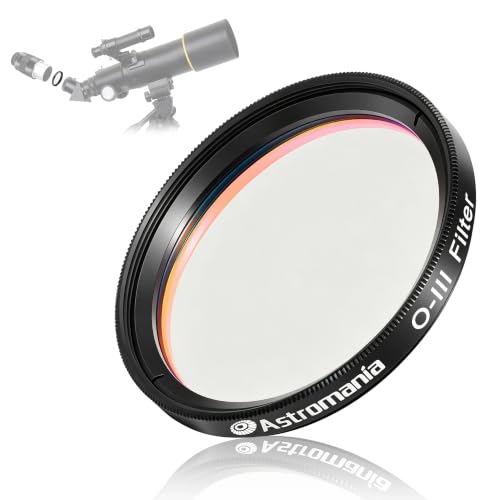
- Passes the key O-III emission lines for nebula contrast
- Works well in light-polluted or dark-sky conditions
- Fits 2-inch eyepieces for visual observing
Best For: Observers who want a dedicated nebula filter for emission targets and stronger contrast.
Best for Dual-Narrowband Imaging
OPTOLONG 2" L-Synergy OIII/SII Filter

- Passes OIII and SII while suppressing unwanted light
- Pairs with a companion Ha & OIII filter for SHO-style color imaging
- Helps boost contrast in heavily light-polluted skies
Best For: Color-camera astrophotographers building a budget-conscious narrowband nebula setup.
Best UHC Contrast Pick
Astromania 2" UHC Nebula Filter

- Boosts contrast on emission nebulae
- Helps reduce light pollution effects
- 2-inch threaded fit for compatible scopes
Best For: Observers who want a versatile nebula filter for brighter emission targets.
Best OIII Contrast
Celestron 93623 OIII 1.25" Filter

- Passes the key 496nm and 501nm oxygen lines
- Reduces star halos with hard vacuum-deposited coatings
- Good for suburban observing of emission nebulae
Best For: Visual astronomers who want stronger contrast on emission and planetary nebulae.
Best for OSC Nebula Imaging
SVBONY SV220 SII/OIII Dual-Band Filter

- 7nm dual-band SII/OIII design for emission nebula contrast
- Strong light-pollution rejection with sharp cut-off
- Optimized for one-shot color astrophotography
Best For: One-shot color astrophotographers shooting emission nebulae in light-polluted or moonlit skies.
Best Narrowband Contrast
SVBONY SV115 1.25" O-III Filter

- Strong O-III contrast for nebula viewing
- Works well in light-polluted and dark skies
- Fits standard 1.25-inch eyepieces
Best For: Visual observers who want an affordable O-III filter for boosting nebula detail.
Best Narrowband Trio
SVBONY SV227 2" SHO Filter Set

- Matched SII, H-Alpha, and OIII narrowband set
- 5nm bandpass for stronger nebula contrast
- 2-inch threaded filters for compatible telescopes
Best For: Monochrome astrophotographers building a narrowband SHO setup for emission nebulae.
Best Multi-Bandpass Pick
SVBONY SV240 2" Multi-Narrowband Filter

- Ha, OIII, and H-Beta passbands for broad nebula coverage
- OD4 suppression helps fight city light pollution
- Works with many astrophotography setups in 2-inch format
Best For: Astrophotographers who want one versatile filter for emission nebulae and urban imaging.
Best Dual-Band Value for OSC
SVBONY SV220 7nm Dual-Band Filter

- 7nm H-alpha + O-III dual-band narrowband design
- Cuts through moonlight and urban light pollution
- Good fit for one-shot color nebula imaging
Best For: One-shot color camera users imaging emission nebulae in light-polluted skies.
Best for Urban Narrowband Imaging
SVBONY SV240 Multi-Narrowband Filter
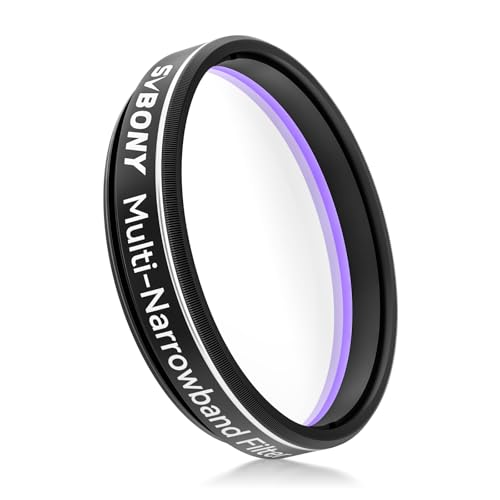
- Passes Ha, OIII, and H-Beta emission lines
- Helps cut light pollution in city skies
- Works with OSC cameras without filter swapping
Best For: City observers and imagers who want one versatile filter for nebula-heavy deep sky targets.
Best for High-Contrast Nebulae – Astromania 2" O-III Filter
If you’re shopping for oiii filters for deep sky viewing, this Astromania 2" O-III filter is built to isolate the oxygen emission lines that make planetary and gaseous nebulae stand out. It can help improve contrast in both dark-sky locations and light-polluted backyards, making faint structures easier to see in scopes that accept 2-inch eyepieces.
Best For: Observers who want a dedicated nebula filter for boosting contrast on targets like the Veil, Ring, Dumbbell, and Orion Nebulae.
Pros:
- Strong contrast boost for emission nebulae by passing the O-III band
- Useful under light pollution and still effective at darker sites
- 2-inch format fits compatible eyepieces and visual setups
- Anti-reflection coatings help reduce glare and ghosting
Cons:
- Not a general-purpose filter for galaxies, clusters, or broadband views
- Best results depend on observing bright nebula targets and suitable aperture
- Requires a 2-inch eyepiece or adapter-compatible setup
This is a straightforward choice if your goal is to maximize nebula contrast rather than keep views “natural.” For observers comparing oiii filters for deep sky viewing, it’s a focused, practical option that targets exactly the objects where O-III filtering shines.
Best for Dual-Narrowband Imaging – OPTOLONG 2" L-Synergy OIII/SII Filter
OPTOLONG 2" L-Synergy Filter Dual 7nm Narrowband Filter OIII(500.7nm)&SII(672.4nm)
Check Price On AmazonIf you want to stretch the capability of a color camera for oiii filters for deep sky viewing, the OPTOLONG L-Synergy is built for narrowband-style nebula work rather than general visual observing. It transmits OIII and SII while rejecting much of the rest of the spectrum, helping darken the background and improve contrast on emission nebulae in light-polluted skies.
Best For: Color camera users who already own a matching Ha & OIII narrowband filter and want to build a low-cost SHO-style imaging setup without moving to a monochrome camera.
Pros:
- Targets OIII and SII for stronger nebula contrast and cleaner backgrounds
- Designed to pair with a second Ha & OIII filter for pseudo-SHO imaging
- Useful in heavy light pollution where standard imaging struggles
- 2" format fits common astrophotography filter drawers and wheels
Cons:
- Not a general-purpose visual filter for viewing the night sky
- Requires a second compatible Ha & OIII filter to realize the full workflow
- More specialized than a single-band OIII filter for beginners
This is a niche but powerful option for imagers who want to push oiii filters for deep sky viewing-style results from a one-shot color camera. It makes the most sense if your goal is narrowband nebula imaging and you already have the matching companion filter in your kit.
Best UHC Contrast Pick – Astromania 2" UHC Nebula Filter
If you’re comparing oiii filters for deep sky viewing, the Astromania 2-inch UHC filter is a practical choice for boosting contrast on emission nebulae. It helps darken the sky background, reduce the impact of light pollution, and bring out details in objects like Orion, Lagoon, and Swan.
Best For: Observers who want a versatile nebula filter for better contrast on bright emission targets from both urban and darker observing sites.
Pros:
- Improves contrast on many emission nebulae and can reveal faint detail more clearly
- Works at light-polluted sites by blocking common mercury and sodium-vapor lighting
- 2-inch threaded design fits compatible telescopes and accessories
- Individually inspected and marked for O-III and H-beta transmission
Cons:
- Best on nebulae, not a general-purpose filter for all deep-sky objects
- Requires a 2-inch setup, so 1.25-inch users will need an adapter or different model
- Effect depends on target brightness and observing conditions
This is a solid middle-ground pick if you want a nebula filter that adds contrast without overcomplicating your setup. For buyers researching oiii filters for deep sky viewing, it offers a useful balance of light-pollution rejection and target-specific enhancement.
Best OIII Contrast – Celestron 93623 OIII 1.25" Filter
If you’re comparing oiii filters for deep sky viewing, this Celestron OIII filter is a strong choice for boosting contrast on emission and planetary nebulae. It passes the key oxygen lines while cutting most of the visible spectrum, which helps faint targets stand out against a darker background.
Best For: Visual observers who want a narrowband OIII filter for sharper views of the Veil, Ring, Dumbbell, Crescent, and similar nebulae.
Pros:
- Targets the 496nm and 501nm OIII lines for high nebula contrast
- Vacuum-deposited coating helps reduce unnatural star halos
- Works well from suburban skies when light pollution is a problem
- Backed by Celestron support and a 2-year U.S. warranty
Cons:
- Only useful on emission and planetary nebulae, not all deep-sky objects
- 1.25-inch size may not fit every eyepiece setup without adapters
For observers focused on nebula detail, this filter offers a practical way to get more from oiii filters for deep sky viewing without moving to a more specialized or expensive setup. It is especially appealing if you want clean contrast, controlled star halos, and a straightforward visual upgrade.
Best for OSC Nebula Imaging – SVBONY SV220 SII/OIII Dual-Band Filter
If you want a practical pick for oiii filters for deep sky viewing in an imaging workflow, the SVBONY SV220 is built around a 7nm SII/OIII dual-band design. It’s aimed at one-shot color cameras and works especially well when you need to suppress sky glow, street lights, and moonlight while keeping emission nebula detail visible.
Best For: Astrophotographers using one-shot color cameras who want stronger contrast on emission nebulae, planetary nebulae, and supernova remnants in light-polluted conditions.
Pros:
- 7nm SII/OIII bandwidth helps isolate emission targets and boost contrast
- High transmission with sharp cut-off improves rejection of unwanted light
- Works well in bright urban skies and under moonlit conditions
- Designed for one-shot color imaging without needing multiple filter passes
Cons:
- Not a general-purpose visual observing filter
- Best results are limited to emission-based deep-sky targets
- 1.25" format may not fit every imaging setup
For imaging-focused users, this is a solid value-oriented way to get more contrast out of narrowband targets, especially if you’re comparing oiii filters for deep sky viewing and want a filter tuned for OSC camera convenience rather than visual use.
Best Narrowband Contrast – SVBONY SV115 1.25" O-III Filter
If you’re comparing oiii filters for deep sky viewing, this SVBONY SV115 is a straightforward 1.25-inch O-III option built to boost contrast on emission and planetary nebulae. It passes only the key oxygen-III wavelengths, which helps dim the background sky and make faint nebula detail easier to see, especially from light-polluted sites.
Best For: Visual observers who want an affordable, narrowband O-III filter for improving nebula contrast in both suburban and darker skies.
Pros:
- Passes the O-III lines around 495.9nm to 500.7nm for strong nebula contrast
- Useful for gaseous and planetary nebulae, especially under light pollution
- High-grade glass with dichroic and anti-reflection coatings
- Compatible with standard 1.25-inch eyepieces
Cons:
- Does not brighten the nebula; it mainly improves contrast
- Very narrow filtering can make some targets look dimmer overall
- Less versatile than broader nebula filters for general use
This is a practical pick if you want a focused O-III filter without paying for premium-brand pricing. For oiii filters for deep sky viewing, it’s best when your goal is to isolate emission detail rather than preserve a natural-looking star field.
Best Narrowband Trio – SVBONY SV227 2" SHO Filter Set
If you want a ready-made SII, H-Alpha, and OIII set for emission nebula work, the SVBONY SV227 is built for narrowband capture rather than general visual use. It is a practical pick for buyers comparing oiii filters for deep sky viewing who also want a matched 3-filter kit with 2-inch mounting and light-pollution rejection.
Best For: Astrophotographers using monochrome cameras who want a matched SHO filter set for emission nebulae and planetary nebulae.
Pros:
- Includes SII, H-Alpha, and OIII filters in one matched SHO set
- 5nm narrowband design helps isolate emission lines and boost contrast
- Individually tested for consistency and performance
- 2-inch threaded mounting fits directly into compatible eyepiece barrels
Cons:
- Primarily aimed at monochrome astrophotography, not casual visual observing
- Very narrow bandpass can make targets dimmer without the right setup
- Requires compatible 2-inch hardware and a suitable imaging workflow
For deep-sky imagers, this set makes more sense as a coordinated SHO package than as a single-purpose accessory. If you are specifically shopping oiii filters for deep sky viewing, the SV227 stands out because it pairs OIII with the full narrowband lineup needed for true color-channel work.
Best Multi-Bandpass Pick – SVBONY SV240 2" Multi-Narrowband Filter
If you want one filter that can handle a wide range of emission targets, the SVBONY SV240 is a practical option for oiii filters for deep sky viewing. It combines Ha, OIII, and H-Beta passbands to cut urban glow while keeping key nebula wavelengths visible, making it easier to shoot from light-polluted locations without building a multi-filter kit.
Best For: Astrophotographers who want a single multi-narrowband filter for emission nebulae, galaxy work, and city shooting from Bortle 1–8 skies.
Pros:
- Ha, OIII, and H-Beta passbands cover many common deep-sky targets.
- OD4 light suppression helps block urban skyglow and background light.
- High transmittance in core wavelengths supports brighter, more detailed captures.
- 2-inch design and broad compatibility suit many imaging setups.
Cons:
- NIR-related halos can appear with some optical setups.
- Multi-band filters are less specialized than dedicated single-line OIII filters.
- Primarily aimed at astrophotography, not visual-only viewing.
This is a strong all-in-one choice if you want flexible narrowband performance instead of swapping between separate filters. For shoppers comparing oiii filters for deep sky viewing, the SV240 stands out more for versatility and light-pollution rejection than for ultra-narrow single-line isolation.
Best Dual-Band Value for OSC – SVBONY SV220 7nm Dual-Band Filter
If you want one filter that simplifies narrowband imaging, the SVBONY SV220 is a practical pick for oiii filters for deep sky viewing and light-polluted backyard sessions. Its 7nm H-alpha and O-III bandpass is designed to improve nebula contrast while keeping post-processing easier for one-shot color cameras.
Best For: Astrophotographers using one-shot color cameras who want a dual-band filter that boosts nebula contrast under moonlight or urban skyglow.
Pros:
- 7nm H-alpha and O-III dual-band design targets emission nebulae effectively
- Helps suppress streetlights, moonlight, and other light pollution
- Simplifies processing compared with stacking separate narrowband filters
- Works well for deep-sky imaging in challenging sky conditions
Cons:
- Not ideal for broadband targets or natural-color views
- Best results are mainly for emission nebulae, not all deep-sky objects
- 1.25-inch format may not suit every imaging setup
As a dual-band option, this filter is less about making objects brighter and more about improving contrast, which is exactly what many buyers want from oiii filters for deep sky viewing. If your priority is cleaner nebula detail from a color camera without a complicated workflow, it is a strong value choice.
Best for Urban Narrowband Imaging – SVBONY SV240 Multi-Narrowband Filter
If you want one of the more flexible oiii filters for deep sky viewing, the SVBONY SV240 is built for mixed targets and difficult skies. Its multi-narrowband design passes key Ha, OIII, and H-Beta lines while cutting light pollution, making it a practical choice for city astrophotography and visual observing when you want better contrast without swapping between multiple filters.
Best For: Astrophotographers and visual observers working under heavy light pollution who want a single filter for nebula-focused deep sky targets.
Pros:
- Passes Ha, OIII, and H-Beta for strong nebula contrast
- Useful in Bortle 1 through Bortle 8 skies, including moonlit conditions
- Supports One-Shot Color cameras without needing multiple filter sets
- Can improve signal-to-noise for urban deep sky imaging
Cons:
- Not a dedicated ultra-narrow OIII-only filter
- Less ideal for broadband targets like most galaxies and reflection nebulae
- 1.25-inch size may limit compatibility with some setups
As a do-it-all narrowband option, the SV240 is most appealing when you want a versatile filter rather than a specialized OIII-only tool. For shoppers comparing oiii filters for deep sky viewing, it stands out for balancing contrast, convenience, and city-sky usability.
How We Picked the Best Oiii Filters for Deep Sky Viewing
We focused on filters that are relevant to Oiii Filters for Deep Sky Viewing, prioritizing transmission at the OIII line, useful bandwidths for nebula contrast, compatible barrel sizes, and practical value for visual observers and imaging users. We also looked for options that fit common telescope setups without forcing unnecessary tradeoffs in brightness or contrast.
Quick Comparison
For visual observing, single-band OIII filters are usually the simplest choice when your goal is to boost contrast on emission and planetary nebulae. Dual-band and multi-narrowband models are better suited to imaging, especially one-shot color cameras, because they preserve more structured nebula signal while rejecting more light pollution. Size matters too: 1.25-inch filters are convenient for smaller eyepieces, while 2-inch models are better if you use wide-field eyepieces or larger focusers.
Key Buying Factors for Oiii Filters for Deep Sky Viewing
Bandwidth and Transmission
Narrower filters can improve contrast, but extremely narrow designs may dim the view too much for some visual users. Look for a balance between rejection of unwanted light and enough transmission to keep the target usable and bright.
Visual Vs. Imaging Use
If you observe visually, a dedicated OIII filter is usually the most straightforward option. If you image, dual-band or tri-band filters may give better results depending on your camera, sensor, and target type.
Filter Size and Compatibility
Make sure the filter matches your eyepieces, diagonal, or imaging train. A 2-inch filter offers more flexibility for larger eyepieces and less vignetting risk, while 1.25-inch filters are more compact and affordable.
Target Selection
OIII filters work best on planetary nebulae, supernova remnants, and many emission nebula structures. They are not ideal for galaxies, open clusters, or broadband targets that need natural starlight.
Who Should Buy Which Oiii Filters for Deep Sky Viewing?
If you want the simplest visual upgrade for nebula observing, choose a standard OIII filter. If you already use a one-shot color camera, a dual-band filter can be the smarter buy. If you need a more flexible setup for both nebula and light-polluted skies, a multi-narrowband option may make more sense. For the best results, match the filter to your telescope’s aperture, your observing conditions, and the kinds of deep-sky objects you actually spend time on.