
Choosing the right lighting control setup can make a model railroad look more realistic and run more smoothly. The best options help you manage LEDs, signals, accessories, and track power without unnecessary wiring headaches.
This roundup highlights model train lighting controllers for different layouts, budgets, and skill levels, so you can match the right controller to your scale, voltage needs, and expansion plans.
Best 10 Model Train Lighting Controllers Picks for 2026
Best for Multi-Channel Dimming

- 10 independently adjustable channels
- AC/DC input from 5V to 24V
- Flicker-free linear current control
Best For: Modelers who want to dim and manage several LED lighting zones from one compact module.
Best Analog Starter Controller
Bachmann Power Pack w/ Speed Controller
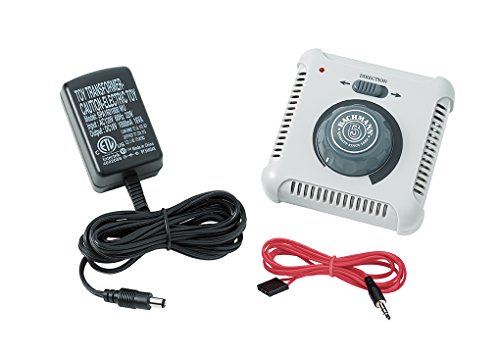
- Works with N, HO, and On30 DC trains
- Includes speed knob and direction switch
- Simple pick for beginner analog layouts
Best For: Beginners and small-layout owners who need a basic analog train controller.
Best Budget
OONO D-1660BP 6-Channel LED Hub
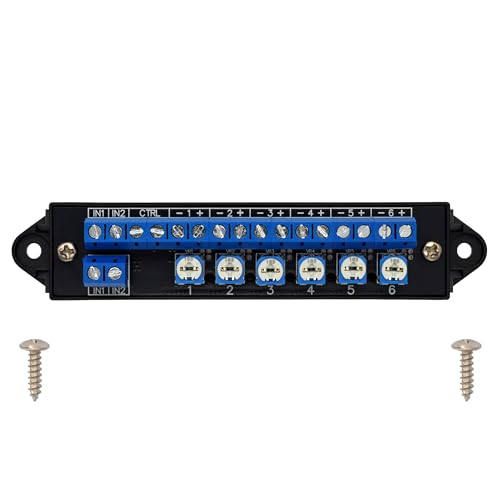
- Six independently adjustable LED channels
- AC 5-18V or DC 5-24V input support
- Smooth linear dimming with no visible flicker
Best For: HO, N, and O scale modelers who need flexible multi-light control.
Best for Easy Expansion
Woodland Scenics Just Plug Lighting Kit

- Complete bundle with hubs, switch, tweezers, and power supply
- Dimmer controls and on/off switching keep lighting flexible
- Expansion Hub supports larger Just Plug layouts
Best For: Model railroaders who want a simple, expandable lighting control kit.
Best for Grade Crossings
Walthers SceneMaster Crossing Signal Controller

- Automates realistic flashing at grade crossings
- Controls up to 4 signals with 4 included sensors
- Easy plug-in wiring with included instructions
Best For: HO scale modelers who want automated, realistic crossing signals with simple setup.
Best for Mixed-Voltage LED Runs
Evemodel PCB012 Power Distribution Board

- Accepts 4V to 24V AC or DC input
- Dimming control for brighter or softer lighting
- Supports up to 28 lights per board
Best For: Layouts with multiple matching LED lights that need a simple, expandable power hub.
Best for Proportional Control
MRC Tech 7 AMPAC 780 Train Controller

- Smooth proportional tracking control
- 300-degree throttle for extended range
- A.C. terminals for lights and accessories
Best For: Analog model railroaders who want precise throttle control and accessory power.
Best for Layout Lighting Distribution
PCB007 12-Position Power Board

- 24 + 2 outputs for tidy multi-light wiring
- Works with DC, AC, and digital power
- Compact board for model railroad layouts
Best For: Model railroad builders who need a compact power distribution board for multiple lighting circuits.
Best for Remote Speed & Light Control
PWM DC Motor Remote Switch for Trains

- Remote speed control with forward/reverse switching
- Three relay outputs for headlights or interior lights
- Wide DC 7V-48V input for flexible layout use
Best For: Hobbyists who want remote DC train control with basic lighting switching in one unit.
Best for Easy Setup
HO Scale Track Control Kit with Power Pack

- Complete HO scale control kit with track section and cables
- Easy plug-and-play setup with no complex wiring
- Rotary speed dial plus forward/reverse and stop controls
Best For: HO scale hobbyists who want a simple, ready-to-install control kit for basic train operation.
Best for Multi-Channel Dimming – 10-Lights LED Hub for HO/N/O
Dimmer Control 10-Lights LED Hub Distribution Module, AC/DC 5 to 24V Input, for HO/N/O Train Model
Check Price On AmazonIf you need one of the more flexible model train lighting controllers for a layout, this 10-channel LED hub is built for separately dimming multiple lights from a single AC or DC supply. It’s a practical fit for HO, N, and O scale scenes where you want independent control over cars, buildings, stations, or yard details without visible flicker.
Best For: Modelers who want independent dimming across several low-voltage LED lighting zones on a small to mid-size layout.
Pros:
- 10 independently adjustable output channels
- Supports AC or DC input from 5V to 24V
- Linear current control helps avoid stroboscopic flicker
- Can power direct LEDs or LEDs with series resistors
Cons:
- Designed for low-current LED loads, not higher-power accessories
- Setup may be more involved than a simple on/off switch
- Best suited to users comfortable wiring and mounting a module
For model train lighting controllers, this module stands out if you want granular brightness control instead of a basic distribution block. It’s especially useful when your layout needs multiple independently tuned lighting effects from one compact hub.
Best Analog Starter Controller – Bachmann Power Pack w/ Speed Controller
If you need a straightforward controller for DC layouts, this Bachmann power pack is a practical fit for model train lighting controllers setups where simple speed and direction control matters more than advanced digital features. It works with N, HO, and On30 scale trains, making it a versatile option for beginners and small home layouts.
Best For: Modelers who want an easy-to-use analog controller for N, HO, or On30 DC trains.
Pros:
- Compatible with N, HO, and On30 scale DC trains
- Built-in speed control knob for simple throttle adjustment
- Direction control switch included for basic operation
- Good fit for straightforward starter layouts
Cons:
- Not DCC compatible, so it won’t work with digital layouts
- Offers basic controls rather than advanced features
For shoppers comparing model train lighting controllers and basic train power supplies, this Bachmann unit stands out as a no-fuss analog choice. It’s best when you want dependable manual control without paying for DCC functionality you may not need.
Best Budget – OONO D-1660BP 6-Channel LED Hub
If you want model train lighting controllers that can handle several LEDs at once, this OONO hub is a practical pick. It gives you six independently adjustable channels, supports AC or DC input, and uses linear current control for smoother, non-flickering dimming.
Best For: HO, N, and O scale builders who want a compact controller for multiple lights with individual dimming control.
Pros:
- Six separate channels let you tune multiple lights independently.
- Works with AC 5-18V or DC 5-24V, so it fits many layout power setups.
- Linear current control avoids the stroboscopic flicker common in switching circuits.
- Dual power terminals make wiring expansion cleaner across multiple modules.
Cons:
- Designed for low-current LED loads, so it is not for high-power lighting.
- Setup is more technical than a simple plug-and-play lighting module.
For model train lighting controllers, this module stands out when you need flexible channel-by-channel dimming instead of a single shared output. It is a strong fit for layout builders who want neat wiring, broad voltage compatibility, and smooth LED control without visible flicker.
Best for Easy Expansion – Woodland Scenics Just Plug Lighting Kit
If you want a straightforward way to add lighting to your layout, this Woodland Scenics kit is built for quick setup and flexible control. It’s a strong fit for model train lighting controllers because it bundles the key pieces you need to power, dim, switch, and expand a Just Plug system without a complicated install.
Best For: Model railroaders who want an easy-to-expand lighting control starter kit with simple brightness and on/off control.
Pros:
- Includes the Light Hub, Expansion Hub, Auxiliary Switch, and Power Supply in one package
- Individual dimmer controls help you tune light brightness for different scenes
- Expansion Hub lets you connect up to four Light Hubs for larger layouts
- Auxiliary Switch makes it easy to turn lighting zones on and off
Cons:
- Best suited to users already leaning into the Just Plug ecosystem
- May be more system than casual hobbyists need for a single small scene
Overall, this is a practical pick for hobbyists who want model train lighting controllers that scale cleanly as a layout grows. The bundle focuses on convenience and modular control rather than advanced automation, which makes it especially appealing for plug-and-play installations.
Best for Grade Crossings – Walthers SceneMaster Crossing Signal Controller
Walthers SceneMaster Grade Crossing Signal Controller 949-4359 HO Scale Model Railroad - Signals Kit
Check Price On AmazonIf you want model train lighting controllers that add realistic movement at a grade crossing, this Walthers SceneMaster controller is a straightforward pick. It is designed to trigger flashing signals with optical sensors, making it a practical upgrade for HO scale layouts that need reliable road crossing action.
Best For: HO scale modelers who want an easy way to automate crossing signal flash patterns with minimal wiring hassle.
Pros:
- Controls up to 4 crossing signals for larger scenes
- Includes 4 optical sensors for automatic activation
- Simple plug-in connections and clear installation instructions
- Adds a more realistic look to SceneMaster crossing setups
Cons:
- Only useful if you are running compatible crossing signals
- Designed for HO scale and SceneMaster-compatible applications
- Not a general-purpose lighting controller for all accessories
This is a focused solution rather than a universal accessory box, but it does one job well. For layout builders comparing model train lighting controllers, it stands out for automatic grade-crossing effects and easy installation.
Best for Mixed-Voltage LED Runs – Evemodel PCB012 Power Distribution Board
If you need a flexible hub for model train lighting controllers, the Evemodel PCB012 is built to distribute power to multiple LEDs from either AC or DC input. It accepts 4V to 24V, includes brightness adjustment, and lets you match output voltage for the lights on your layout.
Best For: Layouts that use multiple LED street lights or similar accessories and need simple brightness control from one distribution board.
Pros:
- Works with 4V to 24V AC or DC input for broad compatibility
- Built-in dimmer lets you fine-tune light brightness
- Can support up to 28 lights on one board
- Expandable for larger layouts with matching power needs
Cons:
- All connected lights should share the same current and voltage requirements
- Not ideal if you want to mix different bulb types on one distributor
- Total output current still has to stay under the input supply limit
This is a practical choice if you want model train lighting controllers that prioritize easy expansion and adjustable output over advanced effects. It is especially useful for steady, layout-wide illumination rather than highly customized lighting scenes.
Best for Proportional Control – MRC Tech 7 AMPAC 780 Train Controller
If you want a more responsive controller for model train lighting controllers and track power, the MRC Tech 7 AMPAC 780 stands out for its proportional tracking control and extra throttle range. It’s a practical pick for hobbyists who want smoother speed changes, dependable protection, and enough power to handle heavier train loads and accessories.
Best For: Model railroaders who want a stronger, more precise controller for running trains and powering accessories.
Pros:
- Proportional tracking control helps deliver smooth, realistic throttle response
- 300-degree throttle offers extended range control for finer adjustments
- Automatic circuit protection adds a useful safety layer against overloads
- Fixed A.C. terminals can power switch machines, lights, and other accessories
Cons:
- Bulkier than basic starter controllers
- Designed for serious analog use, not modern digital command setups
For model train lighting controllers and power management, this unit is a strong choice if you value smooth operation and accessory support over a minimalist design. Its mix of power, protection, and control makes it especially appealing for larger layouts or hands-on operators.
Best for Layout Lighting Distribution – PCB007 12-Position Power Board
PCB007 1X 12 Position Power Distribution Board 2 Inputs 2 x 13 Outputs for DC AC Voltage New
Check Price On AmazonIf you need a simple way to feed multiple accessories from one source, this PCB007 board is a practical pick for model train lighting controllers. It is built to split DC, AC, or digital power across a large number of outputs, making it useful for lighting houses, platforms, streets, and other layout details without a tangled wiring job.
Best For: Layout builders who want a compact power distribution board for organizing multiple lighting circuits on a model railroad or building scene.
Pros:
- 24 + 2 outputs help organize several lighting runs from one board.
- Supports DC, AC, and digital current for flexible layout use.
- Compact size makes it easy to mount in a benchwork or scenic area.
- Individual outputs are rated up to 10 A, with a 24 V max operating voltage.
Cons:
- It is a distribution board, not a programmable lighting controller.
- No built-in switches, dimming, or effects functions.
- Current limits still depend on total system load and wiring.
For hobbyists who want cleaner wiring and more orderly power delivery, this board is a straightforward support piece rather than a full control solution. It fits well in setups where model train lighting controllers need a simple distribution point for multiple lamps or accessories.
Best for Remote Speed & Light Control – PWM DC Motor Remote Switch for Trains
If you need one box to handle motion and lighting, this PWM controller is a practical fit for model train lighting controllers and simple DC railway setups. It adds remote speed control, forward/reverse switching, and relay outputs for headlights or interior lights, all with a wide DC input range.
Best For: Hobbyists who want remote control over a DC model train, plus basic lighting control from one compact unit.
Pros:
- Remote adjusts motor speed from 0-100% with forward/reverse control
- Three independent 3A relays can switch headlights or interior lights
- Wide DC 7V-48V input supports many model railway power setups
- Includes slow-start/stop delay mode for smoother operation
Cons:
- More complex than a basic lighting-only controller
- 7A max load may be limiting for larger or heavily loaded layouts
- Best suited to DC systems rather than advanced digital control
For builders who want a single controller to manage both drive speed and auxiliary lighting, this is a versatile option in the model train lighting controllers category. It is especially appealing if you value remote operation, straightforward wiring, and a compact footprint over more advanced features.
Best for Easy Setup – HO Scale Track Control Kit with Power Pack
If you want a straightforward way to add dependable speed and direction control to an HO layout, this kit is a practical pick for model train lighting controllers and track control setups. It combines the controller, track section, connector, and power cable in one package, so you can get running without piecing together extra parts.
Best For: HO scale hobbyists who want a plug-and-play control kit for quick layout setup and basic train operation.
Pros:
- All-in-one kit includes the controller, track mount, connector, and power connection cable.
- Rotary dial, forward/reverse switch, and stop function give simple, precise control.
- Plug-and-play installation keeps setup fast and avoids complex wiring.
- Built specifically for HO Scale 1:87 layouts and accessories.
Cons:
- Designed for HO scale only, so it is not a universal fit across other gauges.
- More of a basic control solution than a feature-heavy advanced system.
Overall, this is a solid choice if you value simplicity and want a bundled controller that gets an HO layout operational quickly. It is a useful option for buyers comparing model train lighting controllers and control kits that prioritize easy installation over advanced customization.
How We Picked the Best Model Train Lighting Controllers
We focused on Model Train Lighting Controllers and related power/control products that solve real layout problems: distributing power cleanly, supporting common AC/DC input ranges, and handling the needs of N, HO, and O scale setups. We also looked for practical features like easy installation, compatibility with LEDs or accessory circuits, and enough capacity for future expansion.
Quick Comparison
In a small layout, a simple power pack or basic controller may be enough. Mid-size layouts often benefit from hub-style lighting distribution boards that simplify multiple LEDs or streetlights. Larger or more complex railroads may need a more capable controller for track power, switching, or signal operation. If you want the least wiring complexity, look at hub and distribution solutions first; if you need direct train control, focus on power packs and motor controllers.
Key Buying Factors for Model Train Lighting Controllers
Voltage and Power Type
Check whether the unit accepts AC, DC, or both, and verify the input range matches your supply. Many accessories and LED hubs are designed for broad input ranges, but track controllers and motor speed units often have stricter requirements.
Number of Outputs
Count not just your current lights, but the accessories you may add later. A controller with extra outputs can reduce the need to replace hardware as your layout grows.
Compatibility with Your Scale and Accessories
Make sure the product fits your scale and use case. Some Model Train Lighting Controllers are best for LEDs and building lights, while others are intended for track power, crossings, signals, or general train operation.
Control Style
Decide whether you want simple on/off distribution, dimming, speed control, or directional control. The best choice depends on whether you are lighting scenery, powering a locomotive, or managing accessory motion.
Installation Complexity
Plug-and-play hubs are ideal for beginners and clean layouts. More advanced controllers can offer finer control, but they may require more careful wiring and setup.
Who Should Buy Which Model Train Lighting Controllers?
Beginners who want a straightforward setup should prioritize simple hubs, starter power packs, or all-in-one accessory kits. Hobbyists building detailed towns or yards may prefer distribution boards for flexible lighting zones. If your main goal is train operation rather than scenery lighting, choose a controller designed for track power and motor speed. For signal or crossing projects, use a dedicated controller made for those functions instead of a general-purpose lighting hub.
For most layouts, the best choice is the one that matches your wiring comfort, power needs, and long-term expansion plan. A well-matched controller can save time now and make future upgrades much easier.