
Choosing the right control setup can make a model railroad feel smooth, responsive, and easier to expand. The best options depend on your scale, wiring plan, and whether you want simple analog control or more advanced DCC features.
In this roundup, we focus on practical model train control panels and closely related controller gear that help you manage speed, direction, turnouts, lighting, and accessories without overcomplicating your layout.
Best 10 Model Train Control Panels Picks for 2026
Best for Heavy-Duty Operation
Model Rectifier Corp. Tech 7 AMPAC 780

- Proportional tracking control for smoother, more realistic operation
- 300-degree throttle for finer speed adjustment
- Accessory terminals support lights, switch machines, and more
Best For: Modelers who run heavier loads and want a more capable all-in-one controller.
Best for Accessory Expansion
Bachmann Multi-Accessory Power Supply 16V DC

- Powers several accessories from one unit
- About six typical 16V DC accessories total
- Simple utility pick for layout wiring
Best For: Modelers adding lights, switches, and other accessories to a small or mid-size layout.
Best for Mini Crossing Details
OTOTEC HO Scale Traffic Light Panels

- Two-piece HO scale LED traffic light set
- Good fit for crossings, streets, and DIY scenes
- Adds realistic signal detail without taking much space
Best For: HO scale builders adding small traffic-light details to crossings and construction scenes.
Best for Digital DCC Upgrades
Märklin mSD/3 Full Colour Decoder

- 21-pin interface for compatible Märklin locomotives
- Includes interface board for easier installation
- Default sound support boosts realism
Best For: Märklin modelers upgrading a compatible locomotive with sound and digital control.
Best for Basic DC Control
Bachmann Power Pack with Speed Controller
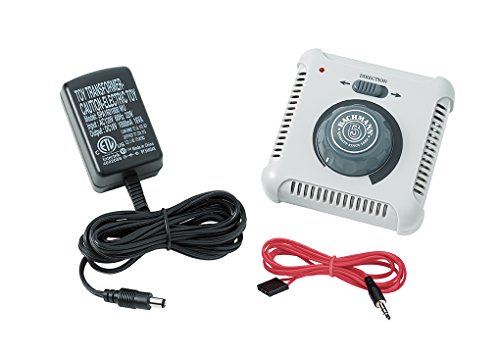
- Compatible with N, HO, and On30 DC trains
- Built-in speed knob and direction switch
- Simple all-in-one analog controller
Best For: Beginners and casual operators who want an easy analog controller for small to mid-sized layouts.
Best for Multi-Zone Lighting
Evemodel PCB012 Power Distribution Board

- 4V-24V AC/DC input adds wiring flexibility
- Dimming helps match layout lighting levels
- Supports up to 28 same-spec lights per board
Best For: Layout builders who need one board to distribute power to multiple same-spec lights and want easy brightness control.
Best for Easy DCC Turnout Upgrades
Bachmann DCC Control Box with Decoder

- Built-in turnout decoder simplifies the upgrade
- Replaces an analog switch box quickly
- Compatible with N, HO, On30, and O scale
Best For: Hobbyists upgrading electrically operated turnouts to DCC with minimal hassle.
Best for Large Scale Trains
Bachmann Large Scale Power Pack w/ Controller

- Designed for large scale train setups
- Integrated speed knob and direction switch
- Simple analog control, not DCC compatible
Best For: Large scale train owners who want a straightforward analog controller for basic operation.
Best Value Train Power Kit
Power Functions Train Motor Kit

- Includes IR remote, receiver, battery box, and motor
- Affordable upgrade for compatible train builds
- Good for custom layouts and starter motor installs
Best For: Hobbyists who want a budget-friendly all-in-one train power upgrade.
Best for Heavy-Duty Operation – Model Rectifier Corp. Tech 7 AMPAC 780
If you want one of the more capable model train control panels for serious layouts, the Model Rectifier Corporation Tech 7 AMPAC 780 is built for responsive handling and dependable power. Its proportional tracking control, long-throw throttle, and accessory outputs make it a practical choice when you need smoother speed control and extra utility from a single controller.
Best For: Modelers who run heavier loads, want realistic throttle response, and need built-in accessory power for a more complete control setup.
Pros:
- Proportional tracking control helps deliver smooth, realistic speed changes
- 300-degree throttle gives you a wide range for fine control
- Accessory terminals can power switch machines, lights, and other add-ons
- Overload protection and a pilot light add useful day-to-day convenience
Cons:
- More controller than a casual beginner may need
- Bulkier feature set may be overkill for very small layouts
Overall, this is a strong fit for model train control panels where control precision and accessory support matter more than simplicity. It stands out for layouts that need a more robust, workhorse-style throttle rather than a basic starter unit.
Best for Accessory Expansion – Bachmann Multi-Accessory Power Supply 16V DC
If your layout uses multiple switches, lights, or other powered add-ons, this Bachmann supply is a simple way to keep model train control panels and accessory wiring organized. It delivers a single 16V DC source with enough capacity for several typical accessories, so you can reduce the clutter of running separate adapters.
Best For: Modelers who need a straightforward power source for several layout accessories from one compact unit.
Pros:
- Runs multiple accessories from one convenient supply
- Supports about six typical 16V DC accessories total
- Simple fit for all scale accessories
Cons:
- Limited to a 1 amp total load
- Not a controller by itself, only a power supply
For hobbyists building out model train control panels, this is a practical utility piece rather than a flashy upgrade. It is a good match when you want dependable accessory power and an easier way to manage wiring across a modest layout.
Best for Mini Crossing Details – OTOTEC HO Scale Traffic Light Panels
If you need simple signal accents for model train control panels, this OTOTEC 2-piece set is a practical add-on for HO scale layouts. It is aimed at DIY scenery work, especially street crossings and construction scenes where compact LED traffic lights can add realism without taking up much space.
Best For: Hobbyists building small HO scale scenes who want low-cost traffic light details for crossings, streets, and sand-table displays.
Pros:
- Two-piece set gives you multiple signal points for a small layout
- Compact HO scale size suits tight dioramas and crossing scenes
- LED design adds visual realism to model train control panels and scenery
Cons:
- Limited to decorative signaling rather than full control functionality
- Best suited to HO scale, so it may not match other scales well
Overall, this is a niche scenery accessory rather than a core controller, but it can improve the look of model train control panels when you want believable traffic intersections and crossing details. It makes the most sense for builders focused on visual realism and easy DIY integration.
Best for Digital DCC Upgrades – Märklin mSD/3 Full Colour Decoder
If you’re upgrading model train control panels for a Märklin digital layout, this mSD/3 decoder is a practical way to add more realistic sound and smoother control. It’s aimed at hobbyists who want a compatible 21-pin interface board and a straightforward decoder swap rather than a full control-system rebuild.
Best For: Märklin modelers adding a sound decoder to a compatible locomotive and looking for an easy DCC-style upgrade path.
Pros:
- 21-pin interface makes it a clean fit for compatible Märklin models
- Includes a full-color interface board for a more complete installation package
- Default sound support adds realism without extra setup complexity
Cons:
- Only useful for compatible locomotives and systems
- Not a standalone controller, so it won’t replace model train control panels
- May be more advanced than a beginner-friendly plug-and-play accessory
For Märklin owners building out model train control panels around digital sound and function control, this decoder is a focused upgrade rather than a universal solution. It makes the most sense when you already have the right locomotive platform and want better audio and control integration.
Best for Basic DC Control – Bachmann Power Pack with Speed Controller
If you need a straightforward entry-level option for model train control panels, this Bachmann power pack gives you simple throttle and direction control without the complexity of DCC. It’s a practical fit for N, HO, and On30 scale DC layouts where ease of use matters more than advanced programming.
Best For: Beginners or casual operators who want a simple analog controller for N, HO, or On30 trains.
Pros:
- Works with N, HO, and On30 scale DC trains
- Includes speed control knob and direction switch
- Simple all-in-one power pack design
Cons:
- Not compatible with DCC systems
- Limited to basic analog control features
For shoppers comparing model train control panels, this is a solid no-frills choice if you want dependable manual control and easy setup. It’s best viewed as a budget-friendly controller for traditional DC layouts rather than a feature-rich command station.
Best for Multi-Zone Lighting – Evemodel PCB012 Power Distribution Board
For model train control panels that need to power lots of lights from one source, the Evemodel PCB012 is a practical distribution board with flexible AC/DC input and simple voltage adjustment. It’s aimed at layouts using HO, N, or O scale lighting, especially when you want a centralized hub for street lights, building lights, or other low-voltage accessories.
Best For: Layout builders who need one board to distribute power to multiple same-spec lights and want easy brightness control.
Pros:
- Accepts 4V to 24V AC or DC input for broad compatibility
- Supports dimming, so you can tune LED brightness to fit the scene
- Can distribute power to up to 28 lights on one board
- Easy to expand by adding another board for larger layouts
Cons:
- All connected lights should share the same voltage and current needs
- Not ideal if you want to mix very different accessory types on one distributor
- Output capacity still depends on your transformer or supply
As a wiring hub for model train control panels, this board makes sense when consistency matters more than advanced automation. It’s a straightforward way to organize lighting feeds, especially for users who want a simple, expandable power distribution setup.
Best for Easy DCC Turnout Upgrades – Bachmann DCC Control Box with Decoder
If you want a simple way to modernize your model train control panels, this Bachmann control box makes it easy to convert electrically operated analog turnouts to DCC. It’s designed as a straightforward replacement for an existing analog switch box, so you can add turnout control without a complicated rewiring project.
Best For: Modelers who want a quick, practical DCC upgrade for turnout control across compatible N, HO, On30, and O scale layouts.
Pros:
- Turnout decoder is installed inside the control box for a cleaner upgrade path
- Simple swap for an analog switch box to save installation time
- Works with DCC systems and supports multiple scales
- Useful for adding turnout control without replacing your whole panel setup
Cons:
- Only useful if your layout already uses electrically operated turnouts
- Requires a DCC system to take advantage of its features
- Not a full-featured control panel if you need advanced custom routing
This is a smart pick if you’re looking to modernize model train control panels without overcomplicating the layout. It focuses on function first, making it a solid upgrade for hobbyists who want DCC-compatible turnout control in a compact package.
Best for Train Power-Up Projects – 4-Piece Train Motor Remote Kit
If you want a simple way to add motion to a block-built layout, this power function set is a practical add-on for model train control panels and similar DIY train builds. It includes a motor, battery box, receiver, and remote, so you can upgrade a static train display without hunting for separate parts.
Best For: Builders who want an affordable, compatible motor-and-remote kit for converting basic train models into remote-controlled setups.
Pros:
- Includes the core parts needed for remote-powered train operation
- Compatible with many block-based building systems
- ABS construction and precision molding help the pieces fit smoothly
- Good for hands-on play, learning, and custom rebuilds
Cons:
- Batteries are not included
- Only one motor is included, so larger layouts may need extra components
- Not a full train set, just a power upgrade kit
This kit makes the most sense if your goal is to add movement and remote control to an existing build. For hobbyists exploring model train control panels on a budget, it offers a straightforward way to test motorized operation without a complex installation.
Best for Large Scale Trains – Bachmann Large Scale Power Pack w/ Controller
If you need straightforward model train control panels for a large scale layout, this Bachmann power pack is built for simple analog operation. It combines power and speed control in one unit, with a direction switch that makes basic train handling easy.
Best For: Large scale train owners who want a simple, no-frills control solution and do not need DCC compatibility.
Pros:
- Made for large scale trains
- Includes speed control knob and direction switch
- Easy all-in-one power pack and controller setup
Cons:
- Not DCC compatible
- Limited to basic analog control
For hobbyists comparing model train control panels, this is a practical pick if your layout runs Bachmann large scale equipment and you want a simple controller instead of a digital system. It focuses on the essentials rather than advanced features, which can be exactly what a starter or casual operator needs.
Best Value Train Power Kit – Power Functions Train Motor Kit
If you want an affordable way to power up a layout, this train motor kit is a practical match for model train control panels and basic remote operation. It bundles the key parts needed to get a compatible train moving, making it a straightforward upgrade for builders who want motion without piecing together every component separately.
Best For: Hobbyists who want a low-cost, all-in-one motor and remote kit for compatible train builds.
Pros:
- Includes IR receiver, remote control, battery box, motor, and extension cable
- Good value if you need a complete power upgrade in one package
- Works well for creative custom builds and train conversions
- Compatible with well-known building brick-style train setups
Cons:
- Not a full train set, so you still need compatible track and build parts
- Control range and performance may be more basic than higher-end systems
- Best suited to builders comfortable matching parts to their layout
This is a solid pick when you need a functional motor kit that keeps costs down while still supporting hands-on train control. For buyers comparing model train control panels and remote-powered upgrades, it offers a simple path to adding movement without overcomplicating the setup.
How We Picked These Model Train Control Panels
We selected products that serve real layout needs across beginner and hobbyist setups, including basic speed control, DCC control, accessory power, and distribution for lights or signals. Priority went to compatibility, ease of installation, and usefulness for common HO, N, On30, and large-scale layouts.
We also favored options that solve specific control problems rather than duplicating the same function. That means this list includes power packs, decoder-related hardware, accessory supplies, and distribution boards that can all play a role in a complete control system.
Quick Comparison
If you want simple train movement control, a traditional power pack or speed controller is usually the fastest path. If you need turnout or decoder support, a DCC-oriented box is more appropriate. For layouts with lighting, crossings, or multiple accessories, a power supply or distribution board can be just as important as the main throttle.
Key Buying Factors for Model Train Control Panels
System Type: Analog or DCC
Start by matching the controller to your layout standard. Analog systems are straightforward and often easier for small or starter layouts. DCC offers better command control, especially when you want independent locomotive operation, accessory addressing, or more advanced features.
Scale Compatibility
Not every controller is built for every scale. Check whether the unit is intended for N, HO, On30, or large scale, and make sure its output and wiring match your rolling stock and track plan. A mismatch can limit performance or cause avoidable headaches.
Power Output and Expansion
Look at amperage, voltage, and whether the unit can support future growth. Small starter layouts may only need a modest controller, but larger layouts and accessory-heavy setups benefit from stronger power delivery and separate accessory feeds.
Accessory and Lighting Support
Many Model Train Control Panels need to do more than run locomotives. If you plan to add signals, crossing lights, turnout motors, or street lighting, choose gear that handles accessory loads cleanly and makes wiring easier to manage.
Who Should Buy Which Model Train Control Panels?
Beginners with a simple oval or tabletop layout should usually choose a basic speed controller or power pack first. Modelers building a more flexible system should lean toward DCC-related control hardware and accessory-friendly power distribution.
If your layout includes lots of lighting or scenery electronics, a distribution board or multi-accessory power supply can be the smartest purchase. For large-scale trains, use equipment specifically rated for that format rather than assuming an HO controller will be sufficient. The best choice is the one that matches your layout today while leaving room to grow tomorrow.