
When you need clean holes in PCBs, small enclosures, jewelry-sized parts, or delicate craft components, the right drill setup matters more than raw power. Micro drill presses for electronics are built to improve control, reduce bit wander, and help you work more safely on tiny parts.
In this roundup, we focused on compact machines and related kits that make fine drilling easier for bench-top tasks, from hobby electronics to precision DIY work.
Best 10 Micro Drill Presses for Electronics Picks for 2026
Precision Pick
PROXXON TBM 115 micro precision drill press

- Drills micro holes down to 0.5 mm
- Depth gauge and fence support repeatability
- Three speeds and stable metal construction
Best For: Tiny, repeatable drilling for electronics and detailed hobby projects
Compact Bench Choice
Mini benchtop drill press for light precision work

- Compact size fits small workspaces
- Up to 7000 RPM from a 795 DC motor
- Supports 0.6-6 mm bits and add-on fixtures
Best For: Compact bench setups for light precision drilling and hobby projects
Manual Detail Kit
Pin vise micro drill bit set for ultra-fine work

- Manual design gives precise control
- Includes 21 bits for micro and PCB use
- Tiny bit sizes reach down to 0.1 mm
Best For: Careful hand drilling on PCBs, jewelry, and other delicate projects
Accessory Bundle Pick
Upgraded mini drill press with vise and bit set

- Metal frame aims to reduce vibration
- 24V adjustable supply supports speed control
- Includes mini vise and HSS starter bits
Best For: Small benchtop drilling with included accessories for hobby and repair work
Portable Cordless Pick
Uolor 3-Speed Mini Drill Pen for Crafting

- USB rechargeable and cordless design
- 3 speeds up to 18,000 RPM
- 10 bits for 0.6 mm to 2.2 mm holes
Best For: Beginners doing small, detailed craft projects
Stability First Pick
Bonvoisin Mini Drill Press with Vise

- Benchtop design with solid column and rubber feet
- Chuck fits 0.6 mm to 6.35 mm bits
- Corded power with optional battery use
Best For: Small projects that need a steadier benchtop setup
Feature-Rich Precision Pick
AM ARROWMAX Mini Drill Pen and Press
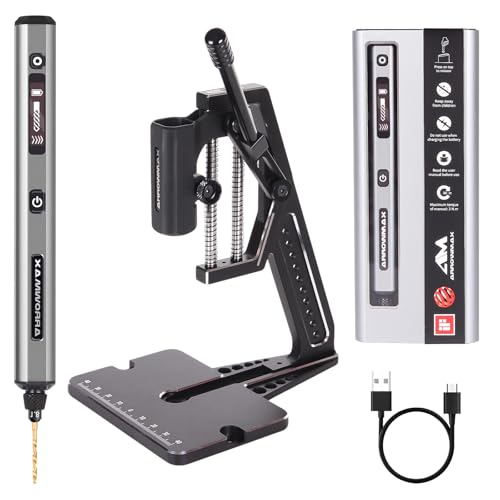
- 5 speeds with up to 900 RPM
- Four LED lights and OLED display
- Includes 20 bits plus storage box
Best For: Precision hobby work with extra visibility and organization
Workbench Flex
6-Speed Mini Benchtop Drill Press
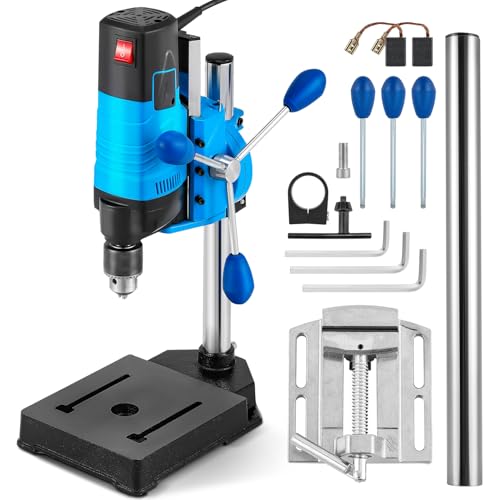
- 6 variable speeds up to 2800 RPM
- 1–15 mm chuck for small bits
- 90-degree head rotation for drilling or grinding
Best For: Small workshop drilling with extra flexibility
Best Heavy-Duty Pick
Variable Speed Mini Drill Press

- 400–4500 RPM continuously variable speed
- Compact body with thickened, stable base
- Best for 0.3–4 mm light-material drilling
Best For: Very small precision drilling and hobby work
Heavy-Duty Compact
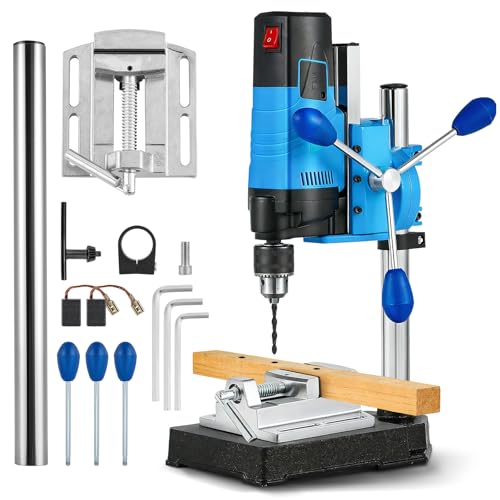
- 1200W motor with 2800 RPM max speed
- 1.5–13 mm chuck for versatile bit use
- Three handles help improve control and reduce wobble
Best For: Users wanting one compact press for light and heavy jobs
Precision Pick – PROXXON TBM 115 micro precision drill press
If you need micro drill presses for electronics, the PROXXON TBM 115 is built for small, accurate drilling where control matters more than raw size. It handles micro holes down to 1/64″ (0.5 mm) and adds a depth gauge plus adjustable parallel fence to help you keep PCB-style, hobby, and precision part work consistent.
Best For: Detailed electronics and hobby drilling where repeatable depth and tiny hole size matter.
Pros:
- Drills down to 1/64″ (0.5 mm) for very fine work
- Adjustable fence and depth gauge improve repeatability
- Three spindle speeds help match torque to the material
- Die-cast aluminum table and steel column add stability
Cons:
- More bench-focused than portable
- Not aimed at heavy-duty production drilling
Overall, this is the most precision-oriented option here if your priority is accurate micro drilling rather than versatility or portability. Its stability and fine-hole capability make it a strong fit for careful electronics and small-project work.
Compact Bench Choice – Mini benchtop drill press for light precision work
Among micro drill presses for electronics and other small builds, this compact benchtop unit stands out for its small footprint and high-speed 795 DC motor. It supports 0.6-6 mm HSS bits and is designed for soft materials like wood, plastic, resin, and aluminum, making it a practical choice for jewelry, DIY crafts, and light precision work.
Best For: Small-shop users who want a compact drill press for light precision drilling and craft work.
Pros:
- Compact 5.9 x 4.7 x 8.7 inch design saves bench space
- 795 DC motor reaches up to 7000 RPM
- B10 chuck fits 0.6-6 mm HSS drill bits
- Base slots support a mini vise or CNC sliding table
Cons:
- Designed for soft materials rather than tougher metals
- Single-speed setup relies on the adjustable power supply for control
For users who need a small, adaptable drill press for light-duty precision tasks, this model offers a useful mix of speed and compactness. It is especially appealing if you want a machine that can double for drilling, polishing, and grinding.
Manual Detail Kit – Pin vise micro drill bit set for ultra-fine work
If you want a simple alternative to powered micro drill presses for electronics, this pin vise kit focuses on hand control and very small drill sizes. It includes both HSS micro bits and PCB mini bits, giving you a manual option for delicate work on resin, wood, plastic, rubber, PVC, and similar materials.
Best For: Ultra-fine hand drilling for PCB, jewelry, and craft detail work.
Pros:
- Manual pin vise offers full hands-on control
- Includes 21 pieces with micro and PCB drill bits
- Bit range goes down to 0.1 mm for delicate tasks
- Compact, lightweight, and easy to carry
Cons:
- Manual operation is slower than a benchtop drill press
- Best for small holes and light materials only
This is a practical pick when portability, control, and bit variety matter more than speed. It works best for careful, low-force drilling where an electric press would be overkill.
Accessory Bundle Pick – Upgraded mini drill press with vise and bit set
For micro drill presses for electronics, this upgraded mini drill press offers a compact metal build, adjustable 24V power, and support for small drill bits from 0.6-6 mm. It is set up for light precision drilling on wood, plastic, resin, aluminum, and other soft materials, and it also includes a mini flat vise plus HSS twist bits for getting started right away.
Best For: Users who want a small benchtop drill press with included vise and starter bits.
Pros:
- Upgraded metal structure aims to reduce vibration
- 24V adjustable power supply helps control speed
- Includes a mini vise and HSS drill bits
- Supports drilling, polishing, and grinding tasks
Cons:
- Still limited to small-bit, soft-material use
- More of a hobby machine than a heavy-duty press
This model is a solid value-oriented choice if you want a compact drill press package with useful accessories included. The vise and bits add convenience, while the adjustable power and metal frame make it more capable for careful small-part work.
Portable Cordless Pick – Uolor 3-Speed Mini Drill Pen for Crafting
If you need micro drill presses for electronics-style precision work but want a handheld option, this Uolor mini drill pen is a practical pick for light-duty drilling and crafting. It offers three speed settings, a compact body, and small bits that suit detailed work on resin, plastic, wood, leather, stone, and similar materials.
Best For: Beginners and hobbyists who want a rechargeable, portable drill pen for small, detailed projects.
Pros:
- Three adjustable speeds from 5,000 to 18,000 RPM for different materials.
- USB rechargeable and cordless, with up to 30 minutes of runtime per charge.
- Includes 10 drill bits in sizes from 0.6 mm to 2.2 mm.
- Built-in overload protection adds a layer of safety during use.
Cons:
- Runtime is limited to about 30 minutes, so it is better for short sessions.
- Handheld design is less stable than a true benchtop drill press.
This is a good choice if portability matters more than bench-mounted precision. It works best for small creative projects where the compact size and variable speed matter more than heavy drilling power.
Stability First Pick – Bonvoisin Mini Drill Press with Vise
For buyers comparing micro drill presses for electronics and other small projects, this Bonvoisin benchtop unit is focused on stability rather than portability. It uses a solid column, rubber feet, and a vise-style setup to help hold work steady while drilling small parts in craft or home settings.
Best For: Users who want a compact benchtop drill press with better stability for small drilling tasks.
Pros:
- Benchtop design with a solid column and rubber feet for steadier operation.
- Chuck capacity covers 0.6 mm to 6.35 mm bits.
- Can run from either a power cord or a lithium battery.
- Compact 6″ x 6″ x 6″ footprint suits tight work areas.
Cons:
- Battery is not included, so cordless use requires a separate purchase.
- Rated speed is modest at 3,415 rpm no-load, so it is not the fastest option.
If you care more about keeping tiny workpieces steady than about speed, this drill press makes sense. It is a compact, practical option for light bench drilling where accuracy benefits from a fixed setup.
Feature-Rich Precision Pick – AM ARROWMAX Mini Drill Pen and Press
This AM ARROWMAX option is one of the more feature-packed micro drill presses for electronics-style hobby work, combining a handheld drill pen with a benchtop press. It adds five speeds, LED lighting, an OLED display, and a larger bit set, making it appealing for detailed drilling where visibility and control matter.
Best For: Makers who want a compact drill pen with benchtop support, lighting, and organized bit storage.
Pros:
- Five-speed control with a top speed of 900 RPM for careful drilling.
- Four shadow-free LED lights improve visibility on detailed work.
- OLED display shows charging status, and USB-C charging adds convenience.
- Includes 20 double-sided drill bits and an aluminum storage box for organization.
Cons:
- Top speed is much lower than high-RPM handheld craft drills.
- Battery capacity is 500 mAh, so it is better suited to focused sessions than all-day use.
Overall, this is the most complete package in the group if you want both handheld flexibility and bench-style stability. The lighting, display, and storage box make it especially convenient for precision hobby drilling.
Workbench Flex – 6-Speed Mini Benchtop Drill Press
If you want micro drill presses for electronics-style precision work with a bit more power headroom, this bench unit gives you 6 variable speeds up to 2800 RPM and a 1–15 mm chuck range. It is better suited to general bench drilling than ultra-fine PCB work, but the adjustable speed and height make it useful for small parts, plastics, soft metal, and light workshop tasks.
Best For: Makers who need a compact benchtop drill press for small projects, light metal, wood, and plastic.
Pros:
- 6 variable speeds help match drilling speed to the material.
- 1–15 mm chuck range supports a broad set of common bits.
- 90-degree rotating head adds drilling and grinding flexibility.
- Three handles and adjustable drill-head height improve control.
Cons:
- Larger 1200W, 18.8 lb design is not the most compact choice.
- More of a general-purpose benchtop tool than a dedicated electronics press.
This is a practical choice if you want a flexible mini drill press that can handle more than delicate electronics jobs. The power, speed range, and rotating head make it versatile, but buyers focused only on tiny precision work may want something smaller.
Best Heavy-Duty Pick – Variable Speed Mini Drill Press
For micro drill presses for electronics, this compact benchtop model is the most focused option here. It offers continuously variable speed from 400 to 4500 RPM, a JT0 chuck, and a very small footprint, making it a better fit for fine drilling in wood, plastic, resin, and soft metal than bulkier workshop machines.
Best For: Precision hobby work, jewelry making, and very small drilling tasks in non-hard materials.
Pros:
- Continuously variable speed from 400 to 4500 RPM for fine control.
- Compact 3.94 x 3.15 x 7.09 inch body saves bench space.
- Thickened solid base is designed to reduce noise, vibration, and slipping.
- CNC-processed aluminum alloy construction adds stability and rigidity.
Cons:
- Best drilling range is very small: 0.3–4 mm in wood and plastics.
- Soft metal use is limited to 1–3 mm holes.
- Not intended for hard materials or heavier drilling jobs.
Among these options, this is the clearest fit when precision and size matter more than power. It is well matched to delicate DIY tasks, but its tiny drilling capacity means it is mainly for light-duty work.
Heavy-Duty Compact – 6-Speed Benchtop Drill Press
If you need micro drill presses for electronics alongside a more capable shop tool, this benchtop press offers 6 speeds up to 2800 RPM, a 1.5–13 mm chuck, and a 1200W motor. It is built for a wider range of projects, from delicate controlled work to heavier drilling in metal, wood, and plastic.
Best For: Hobbyists and workshop users who want a compact drill press with stronger all-around capability.
Pros:
- 1200W motor and 2800 RPM max speed provide strong drilling capability.
- 6-speed setup helps tailor output to the task.
- Three handles are designed to reduce wobble and hand fatigue.
- 90-degree rotating head adds optional grinding flexibility.
Cons:
- Larger and heavier than a true micro drill press.
- May be more machine than needed for very tiny electronics-only work.
- Grinding wheel is sold separately.
This model makes sense if you want one compact press that can do both light precision work and tougher DIY tasks. It is versatile and stable, but its size and power make it less specialized for ultra-fine electronics drilling.
How We Picked These Micro Drill Presses for Electronics
We prioritized models and kits that support precise, repeatable drilling on small workpieces. The main factors were speed control, chuck compatibility, stability, usable depth control, and whether the tool suits delicate materials like PCB boards, plastics, resin, wood, and thin metal.
We also looked for practical features that matter on a crowded bench: compact footprints, included bits or accessories, visibility around the work area, and options that fit both beginners and experienced makers.
Quick Comparison: What Matters Most
If you want maximum consistency, a benchtop drill press usually beats a handheld mini drill for straight holes and depth repeatability. If portability matters more, a drill pen or pin vise may be the better choice for light-duty jobs and tight spaces.
For electronics work, the best choice often comes down to the balance between control and convenience: a stable press for repetitive drilling, or a smaller tool for occasional precision tasks.
Key Buying Factors for Micro Drill Presses for Electronics
Speed Control
Fine drilling often needs the right RPM range. Too much speed can overheat bits, melt plastic, or damage fragile materials, while too little speed can cause grabbing and poor cut quality.
Chuck and Bit Compatibility
Check whether the chuck accepts the small shank sizes you actually use. Many electronics projects rely on tiny bits, so secure clamping and low runout are important.
Stability and Alignment
A rigid base, solid column, and accurate vertical travel help prevent wobble. This is especially important when drilling small holes in PCB material, resin, or thin sheet stock.
Depth and Workspace
Adjustable depth stops are useful when you need repeatable results. Also consider the table size, clearance under the head, and whether the work surface can hold vises or fixtures.
Lighting and Visibility
Built-in LEDs, clear sightlines, and compact design make it easier to position tiny parts accurately. Good visibility can reduce mistakes as much as precision hardware can.
Who Should Buy Which Micro Drill Presses for Electronics?
If you drill tiny holes regularly and want the most consistent results, choose a benchtop press with variable speed and a stable work surface. If you only need occasional precision work, a mini drill pen or pin vise can be more practical and affordable.
For makers who handle mixed projects, the best fit is often a flexible setup that combines speed control, small-bit support, and enough stability for electronics without taking over the bench.