
Choosing a mesh Wi-Fi system with 10GbE ports can help eliminate wireless bottlenecks in homes with multi-gig internet, high-performance NAS storage, 8K media, and demanding smart-home setups.
We compared 10 Wi-Fi 7 and Wi-Fi 6E systems by coverage, port configuration, wireless capacity, expansion options, and overall value so you can choose the right setup for your home.
Best 10 Mesh Wi Fi System with 10gbe Ports Picks for 2026
Best Premium Pick
ASUS ZenWiFi BT10 10G WiFi 7 Mesh

- Dual 10Gbps WAN/LAN ports
- WiFi 7 speeds up to 18Gbps
- Up to 6,000 sq. ft. coverage
Best For: Power users and multi-gig home networks
Best for Large Homes

- Up to 8,000 sq. ft. coverage
- Three-node system for large layouts
- WiFi 7 speeds up to 11Gbps
Best For: Large homes with many connected devices
Best 10GbE Value
TP-Link Deco 7 Pro WiFi 7 Mesh

- 10Gbps WAN/LAN on every unit
- Up to 8,100 sq. ft. coverage
- Three wired speed options per node
Best For: Multi-gig homes needing wired backhaul
Best Three-Pack ASUS System
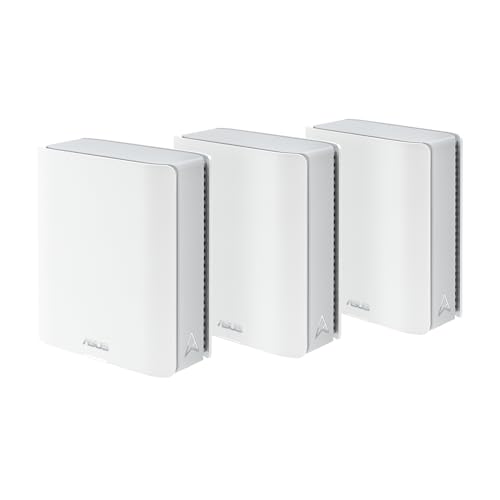
- Three-pack covers up to 7,600 sq. ft.
- WiFi 7 speeds up to 9.4Gbps
- AiProtection Pro and parental controls
Best For: Families needing broad ASUS mesh coverage
Best Wi-Fi 7 Performance

- Wi-Fi 7 tri-band speeds up to 17,000 Mbps
- 10 Gbps port on every unit
- Coverage up to 6,300 sq. ft.
Best For: Large homes and multi-gig networks
Best Wi-Fi 6E Alternative

- Quad-band Wi-Fi 6E with a 6 GHz band
- Dedicated backhaul for mesh traffic
- 10 Gig internet port and 6,000-sq.-ft. coverage
Best For: Large homes with Wi-Fi 6E devices
Best Compact Wi-Fi 7 Setup
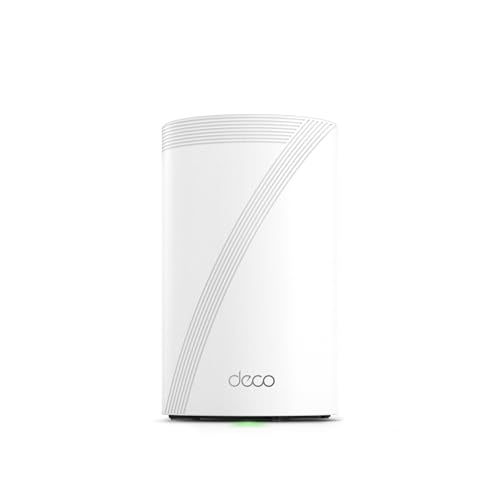
- Wi-Fi 7 speeds up to 14,000 Mbps
- 10 Gbps, 2.5 Gbps, and 1 Gbps ports per unit
- Coverage up to 3,100 sq. ft.
Best For: Medium-size homes with multi-gig networking
Best for Maximum Wi-Fi 6E Coverage
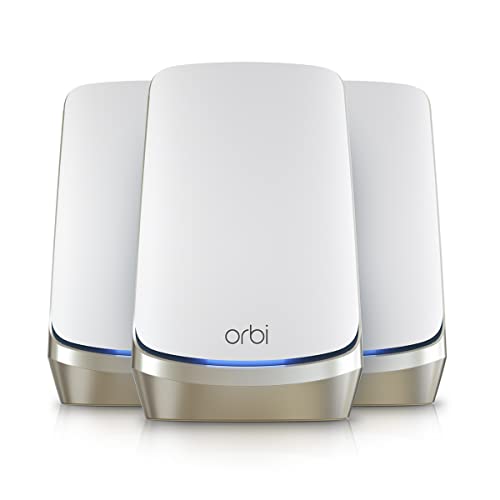
- Wi-Fi 6E quad-band mesh with dedicated backhaul
- 10GbE internet port for service up to 10Gbps
- Covers up to 9,000 sq. ft. and 200 devices
Best For: Large homes with fast internet and many connected devices
Best for Wi-Fi 7 Value and Expansion

- Tri-band Wi-Fi 7 mesh with up to 5,800 sq. ft. coverage
- 10G WAN/LAN plus four 2.5G WAN/LAN ports
- Supports over 200 devices with app-based management
Best For: Homes upgrading to Wi-Fi 7 and multi-gigabit networking
Best for Cutting-Edge Whole-Home Performance

- Wi-Fi 7 quad-band mesh rated up to 27Gbps
- 10GbE port and up to 10Gbps internet support
- Covers up to 10,000 sq. ft. and 200 devices
Best For: Large homes with demanding Wi-Fi 7 workloads and multi-gigabit service
Best Premium Pick – ASUS ZenWiFi BT10 10G WiFi 7 Mesh
The ASUS ZenWiFi BT10 is a high-end mesh wi-fi system with 10gbe ports for households that want maximum wired and wireless performance. This two-pack combines tri-band WiFi 7, coverage up to 6,000 square feet, and dual 10 Gigabit WAN/LAN ports on each unit.
Best For: Power users, multi-gig internet plans, gaming setups, and homes that need flexible wired backhaul.
Pros:
- Dual 10Gbps WAN/LAN ports support fast internet and wired connections.
- WiFi 7 speeds up to 18Gbps and coverage up to 6,000 square feet.
- Includes AiMesh expansion, network segmentation, parental controls, and subscription-free security features.
Cons:
- The two-pack may provide less coverage than a three-node system in larger or multi-story homes.
- Its premium features may be more than typical broadband users need.
The BT10 stands out when both wireless capacity and 10GbE connectivity matter. Its dual 10G ports and advanced ASUS management features make it a particularly capable choice for demanding home networks.
Best for Large Homes – NETGEAR Orbi 770 WiFi 7 Mesh
The NETGEAR Orbi 770 is a three-piece mesh wi-fi system with 10gbe ports designed to cover expansive homes. It provides up to 8,000 square feet of coverage, tri-band WiFi 7, and support for internet plans up to 2.5Gbps.
Best For: Large homes, multi-level layouts, and households with many connected devices that prioritize broad coverage.
Pros:
- Three-node design covers up to 8,000 square feet and supports up to 100 devices.
- WiFi 7 speeds up to 11Gbps with enhanced backhaul.
- Guided app setup, automatic firmware updates, and built-in router protection are included.
Cons:
- The supplied specifications list 2.5Gbps LAN bandwidth rather than 10Gbps LAN ports.
- NETGEAR Armor security requires a separate subscription after the trial.
- It is made for use in the United States only.
The Orbi 770 is best viewed as a coverage-first WiFi 7 system rather than a true 10GbE wired powerhouse. Its three-unit layout is a strong fit for large homes, but buyers specifically seeking 10Gbps Ethernet should verify the port configuration carefully.
Best 10GbE Value – TP-Link Deco 7 Pro WiFi 7 Mesh
The TP-Link Deco 7 Pro is a three-pack mesh wi-fi system with 10gbe ports for users who want multi-gig wired networking throughout a larger home. Each unit includes 10Gbps, 2.5Gbps, and 1Gbps WAN/LAN ports, along with tri-band WiFi 7 and coverage up to 8,100 square feet.
Best For: Multi-gig households that want 10Gbps wired backhaul, broad coverage, and multiple Ethernet options at each node.
Pros:
- Every unit includes a 10Gbps WAN/LAN port plus 2.5Gbps and 1Gbps ports.
- Supports up to 8,100 square feet and more than 200 connected devices.
- Includes 10Gbps wired backhaul, USB 3.0, AI roaming, and WiFi 7 features such as MLO and 4K-QAM.
Cons:
- The supplied notes do not specify the system’s total aggregate data rate.
- Premium TP-Link security features may involve additional service considerations.
The Deco 7 Pro is one of the most directly aligned options for a mesh wi-fi system with 10gbe ports because each node offers 10Gbps wired connectivity. Its three-pack coverage and varied port selection also make it practical for homes with wired devices in multiple rooms.
Best Three-Pack ASUS System – ASUS ZenWiFi BT6 WiFi 7 Mesh
The ASUS ZenWiFi BT6 is a three-pack mesh wi-fi system with 10gbe ports aimed at whole-home coverage and simplified network management. It combines tri-band WiFi 7, advertised coverage up to 7,600 square feet, AiMesh expandability, and ASUS security and parental-control features.
Best For: Families wanting a three-node ASUS system with broad coverage, WiFi 7, and built-in network protection.
Pros:
- Three units provide coverage up to 7,600 square feet.
- Tri-band WiFi 7 supports speeds up to 9.4Gbps with MLO and 4K-QAM.
- AiProtection Pro, advanced VPNs, IoT networking, and parental controls are included.
Cons:
- The supplied details list 2.5Gbps LAN bandwidth, so buyers should confirm the advertised 10G port configuration.
- It offers less stated wireless throughput than the ZenWiFi BT10.
- The three-pack may be excessive for smaller homes.
The BT6 offers a useful balance of coverage and ASUS software features, especially for households that need three nodes. However, because the supplied specifications also mention 2.5Gbps LAN bandwidth, confirm the exact Ethernet capabilities if 10GbE is a deciding requirement.
Best Wi-Fi 7 Performance – Deco 7 Pro BE17000
For shoppers seeking a mesh wi fi system with 10gbe ports, the TP-Link Deco 7 Pro BE17000 combines Wi-Fi 7, tri-band connectivity, and a 10 Gbps WAN/LAN port on every unit. Its broad coverage and multiple wired connections make it a strong fit for demanding whole-home networks.
Best For: Large homes, multi-gig internet plans, and households with many Wi-Fi 7 devices.
Pros:
- Up to 6,300 square feet of coverage for more than 200 devices.
- Wi-Fi 7 speeds up to 17,000 Mbps across the three bands.
- Each unit includes 10 Gbps, 2.5 Gbps, and 1 Gbps ports, plus USB 3.0.
- Deco app supports setup, management, parental controls, and network security features.
Cons:
- Requires a separate modem.
- Wired backhaul requires at least two Deco units.
- Actual wireless performance varies with distance, walls, and other conditions.
The Deco 7 Pro is the most expansive and highest-rated option here, especially if you already have—or plan to add—a multi-gig connection and compatible Wi-Fi 7 devices.
Best Wi-Fi 6E Alternative – NETGEAR Orbi 960 RBKE962
The NETGEAR Orbi RBKE962 is a practical mesh wi fi system with 10gbe ports for homes that want a dedicated 6 GHz band without moving to Wi-Fi 7. Its quad-band design and dedicated backhaul are geared toward maintaining performance across a busy household.
Best For: Large homes with Wi-Fi 6E devices, up to 200 connected devices, and internet service up to 10 Gbps.
Pros:
- Up to 6,000 square feet of coverage.
- Quad-band Wi-Fi 6E provides access to the 6 GHz band.
- Dedicated backhaul helps preserve mesh performance.
- Includes a 10 Gig internet port and automatic firmware updates.
Cons:
- Uses Wi-Fi 6E rather than the newer Wi-Fi 7 standard.
- The supplied kit includes one router and one satellite, with coverage depending on placement.
- Its 10 Gig port is specified for internet connectivity rather than described as a 10 Gbps port on every unit.
Choose the Orbi 960 if stable 6 GHz connectivity and quad-band mesh design matter more to you than having the latest Wi-Fi generation.
Best Compact Wi-Fi 7 Setup – Deco 7 Pro BE14000
The Deco 7 Pro BE14000 is a balanced mesh wi fi system with 10gbe ports for shoppers who want current Wi-Fi 7 features and flexible wired connectivity in a smaller coverage range. It supports multi-gig internet, wired backhaul, and unified roaming through the Deco app.
Best For: Medium-size homes needing Wi-Fi 7 performance and several multi-gig wired connections.
Pros:
- Tri-band Wi-Fi 7 with speeds up to 14,000 Mbps.
- Each unit has 10 Gbps, 2.5 Gbps, and 1 Gbps WAN/LAN ports.
- Supports up to 3,100 square feet and more than 200 devices.
- Includes AI-assisted roaming, app management, and VPN client/server support.
Cons:
- Coverage is substantially lower than the BE17000 model.
- Some advanced security and protection features may require TP-Link service options.
- A modem is required for most internet service providers.
The BE14000 makes sense when you want the BE17000’s core Wi-Fi 7 and 10 Gbps wired capabilities but do not need its larger stated coverage area.
Best for Maximum Wi-Fi 6E Coverage – Orbi RBKE963
The NETGEAR Orbi RBKE963 is a powerful mesh Wi-Fi system with 10GbE ports for large homes and fast internet plans. Its quad-band Wi-Fi 6E design, dedicated backhaul, and three-unit setup are built to maintain performance across up to 9,000 square feet and as many as 200 connected devices.
Best For: Large households with Wi-Fi 6E devices, many simultaneous connections, and internet service up to 10Gbps.
Pros:
- 10 Gig internet port supports cable or fiber service up to 10Gbps.
- Quad-band Wi-Fi 6E and dedicated backhaul help preserve mesh performance.
- Coverage extends up to 9,000 square feet, including outdoor areas such as front and back yards.
- Automatic firmware updates and built-in security features help protect the network.
Cons:
- Its Wi-Fi 6E capabilities are most useful with compatible newer devices.
- The three-unit system may be more coverage than smaller homes require.
Choose the RBKE963 when broad coverage and a 10GbE internet connection matter more than minimizing system size. It is a strong fit for users who want high capacity without giving up automated security features.
Best for Wi-Fi 7 Value and Expansion – TP-Link Deco BE63
The TP-Link Deco BE63 is a mesh Wi-Fi system with 10GbE connectivity that pairs Wi-Fi 7 with flexible wired networking. Its two-unit system covers up to 5,800 square feet, while four 2.5G WAN/LAN ports per unit provide several options for connecting wired devices and network equipment.
Best For: Homeowners who want Wi-Fi 7, multi-gigabit wired ports, and a manageable two-unit mesh system.
Pros:
- Wi-Fi 7 tri-band performance supports demanding streaming, gaming, and connected-home use.
- Includes a future-ready 10G WAN/LAN port and four 2.5G WAN/LAN ports.
- Two-unit coverage reaches up to 5,800 square feet and supports over 200 devices.
- Deco App management includes roaming, parental controls, IoT security, and VPN client support.
Cons:
- A separate modem is required.
- Actual wireless speeds vary with distance, walls, device capability, and other conditions.
- The 10GbE benefit requires compatible multi-gigabit networking equipment or internet service.
The Deco BE63 is a practical choice for building a modern multi-gigabit network without jumping straight to a larger three-unit kit. Its combination of Wi-Fi 7 and multiple high-speed Ethernet ports gives it room to grow.
Best for Cutting-Edge Whole-Home Performance – Orbi 970 RBE973S
The NETGEAR Orbi 970 RBE973S is a premium mesh Wi-Fi system with 10GbE connectivity and Wi-Fi 7 performance rated up to 27Gbps. Its quad-band design and enhanced dedicated backhaul are intended for demanding households that need coverage across up to 10,000 square feet and support for 200 devices.
Best For: Large, high-demand homes with Wi-Fi 7 devices, multi-gigabit service, and simultaneous streaming, gaming, conferencing, or VR use.
Pros:
- Wi-Fi 7 delivers speeds up to 27Gbps and remains backward compatible with older Wi-Fi devices.
- 10GbE LAN bandwidth and a 10 Gig internet port support current and future multi-gigabit networking.
- Quad-band Wi-Fi and enhanced dedicated backhaul help keep mesh traffic moving efficiently.
- Three-unit coverage reaches up to 10,000 square feet for broad whole-home connectivity.
Cons:
- Its performance advantages are most apparent with compatible Wi-Fi 7 and multi-gigabit equipment.
- The large coverage area may be unnecessary for smaller homes.
- The listing specifies use in the U.S. only.
The Orbi 970 is aimed at buyers who want the highest stated throughput and broadest coverage in this group. It makes the most sense when the home network includes demanding workloads and has the internet and wired infrastructure to take advantage of its capabilities.
How We Picked the Best Mesh Wi Fi System with 10gbe Ports
We evaluated these systems for the features that matter most in a high-speed mesh network: 10GbE or faster connectivity, multi-gig WAN support, wired and wireless backhaul options, coverage claims, Wi-Fi generation, and the flexibility to add satellite units. We also considered setup experience, management features, security tools, hardware configuration, and whether the system is better suited to a compact home, a large property, or a demanding power-user network.
Coverage figures are manufacturer estimates and can vary significantly with wall materials, floor plans, interference, and client devices. Actual wireless speeds also depend on compatible Wi-Fi standards, channel conditions, and the number of connected devices.
Quick Comparison
| What to Compare | Why It Matters |
|---|---|
| 10GbE ports | Enable multi-gig internet, fast wired backhaul, and high-speed local transfers. |
| Wi-Fi 7 or Wi-Fi 6E | Wi-Fi 7 offers newer features and higher potential capacity; Wi-Fi 6E can still provide excellent performance with compatible clients. |
| Pack size | Two-unit systems suit many homes, while three-unit kits help cover larger or multi-story layouts. |
| Backhaul support | Dedicated or wired backhaul can improve consistency when satellites are far from the main router. |
| Management and security | Apps, parental controls, automatic updates, and security subscriptions vary by brand and model. |
Key Buying Factors for a Mesh Wi-Fi System with 10GbE Ports
Port Layout and Internet Speed
Check whether the 10GbE connection is intended for WAN, LAN, or both. A system with only one multi-gig port may require careful planning if you want both a 10Gbps internet connection and fast wired devices. Also check for additional 2.5GbE or 5GbE ports for desktops, switches, NAS devices, and gaming systems.
Wireless Capacity and Client Compatibility
Wi-Fi 7 systems can use features such as wider channels and Multi-Link Operation, but compatible phones, laptops, and adapters are needed to benefit fully. Wi-Fi 6E remains a practical choice when most devices support 6GHz but do not need the newest Wi-Fi 7 features.
Coverage, Placement, and Backhaul
More satellites do not always mean better performance. Place nodes where they maintain a strong connection to the main unit, rather than at the edge of the existing signal. Ethernet backhaul is preferable when available because it reduces the wireless workload and improves stability.
Software, Security, and Expansion
Review whether advanced security, parental controls, VPN tools, and traffic management are included or require a subscription. If you expect to expand later, confirm that additional nodes are compatible with the same mesh platform.
Who Should Buy Which Mesh Wi Fi System with 10gbe Ports?
Choose a high-end Wi-Fi 7 kit if you have multi-gig internet, newer client devices, demanding local transfers, or a large number of simultaneous users. A premium quad-band system is most appropriate for large homes and performance-focused networks where maximum capacity and backhaul flexibility justify the cost.
A tri-band Wi-Fi 7 system is a strong middle ground for most households seeking faster wireless performance and 10GbE connectivity without moving to the most expensive class of hardware. Consider a two-pack for a typical home and a three-pack for multiple floors or challenging layouts.
Wi-Fi 6E models can be a smart value choice when you already own 6GHz-capable devices, need broad coverage, and do not require every Wi-Fi 7 feature. Before buying, map your home, measure your internet plan, and list the wired devices that need multi-gig speeds. Those details will determine whether you need more nodes, more 10GbE ports, or simply a better-placed two-unit system.