
A good guide scope can improve tracking accuracy without adding unnecessary weight or complexity to your astrophotography rig. The best lightweight telescope guide scopes balance aperture, focal length, focusing control, and mounting compatibility.
This roundup compares 10 compact options, from dedicated guide scopes with helical focusers to finder-style models that can serve double duty for alignment and guiding.
Best 10 Lightweight Telescope Guide Scopes Picks for 2026
Best APO Guide Scope

- 50mm APO doublet with ED glass
- Includes finder stalk and Vixen-style plate
- Supports optional astrograph conversion
Best For: Astrophotographers wanting premium optics and flexible mounting
Best Illuminated Finder

- Bright 50mm objective lens
- Wide 7.3-degree field of view
- Illuminated glass crosshair
Best For: Visual observers seeking easy target alignment
Best Compact Guide Scope

- Compact 32mm doublet design
- Integrated helical focuser
- All-metal body with finder base
Best For: Space-conscious guiding setups
Best Budget Visual Finder

- Lightweight 295-gram design
- Comfortable 90-degree viewing angle
- Correct-image optics with crosshair
Best For: Visual observers prioritizing low weight and comfort
Flexible 50mm Guide Scope

- 200mm focal length for guiding and finding
- Includes rings and Synta-style dovetail bar
- Helical focuser supports precise, non-rotating adjustment
Best For: Astrophotographers wanting a versatile guide and finder scope
Ultra-Light Mini Guide Scope
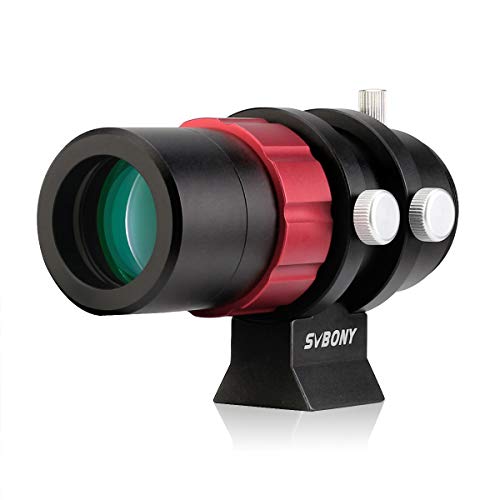
- 342-gram compact guide scope
- F4 optics provide a wide locating field
- Supports 1.25-inch and M42 camera interfaces
Best For: Portable setups using compatible autoguiding cameras
High-Aperture Finder Guide Scope
Alstar 70mm Double Helical Focuser
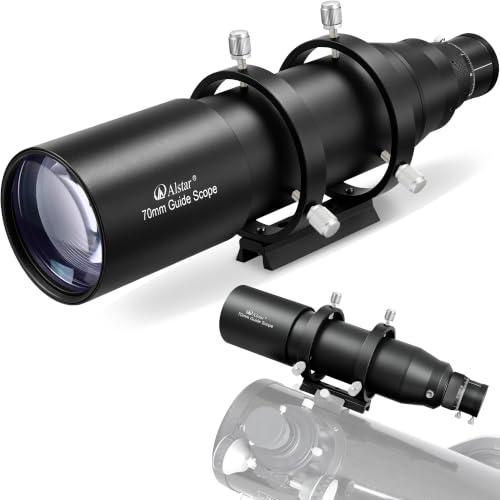
- 70mm aperture and 400mm focal length
- 88mm combined focusing range
- Works with 1.25-inch eyepieces and guide cameras
Best For: Users wanting a bright, substantial finder and guide scope
Compact Dual-Purpose Pick
Astromania Mini Guide Scope 30mm

- 30mm F4 fully multi-coated achromatic optics
- Functions as finder and guide scope
- T2 adapter and Synta-style dovetail base
Best For: Compact finder and autoguiding setups
Precision Focusing Choice
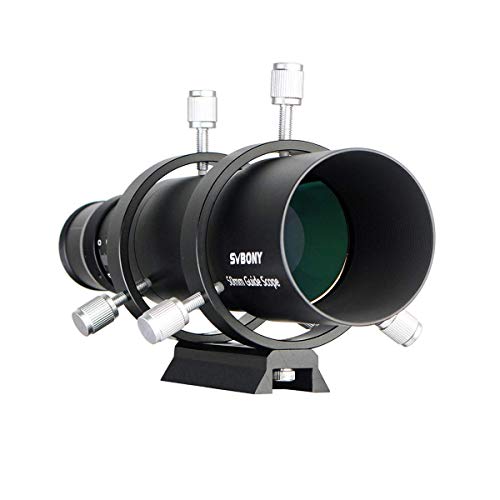
- 50mm fully multi-coated objective
- 8mm helical focus travel with lock
- Rings, dovetail bar, and T-thread camera connection included
Best For: Astrophotographers needing precise focus control
Alignment Mount Option
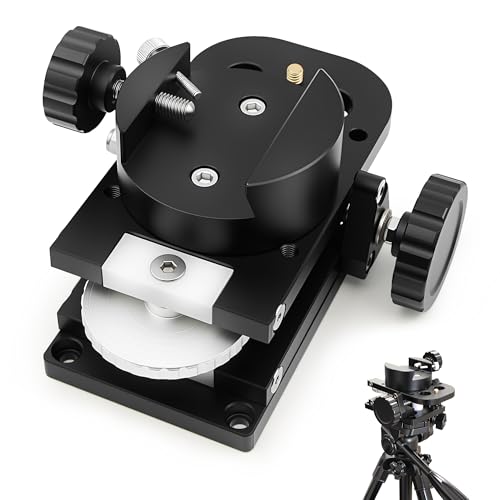
- GP receiver for a guide scope or second telescope
- Fine height and width alignment adjustments
- 0.25-inch thread and prism accommodation
Best For: Adjustable guide-scope mounting and alignment
Best APO Guide Scope – EvoGuide 50DX
For astrophotographers seeking lightweight telescope guide scopes, the Sky-Watcher EvoGuide 50DX combines a 50mm APO doublet, 242mm focal length, and multiple mounting options. Its 1.25-inch helical focuser and optional astrograph adaptability make it a flexible choice for guiding and visual observing.
Best For: Astrophotographers who want a versatile 50mm guide scope with APO optics and flexible mounting.
Pros:
- ED-glass APO doublet is designed for contrast-rich views.
- Includes a finder stalk and Vixen-style mounting plate.
- Built-in T-threads support astrograph use with an optional adapter.
- Lightweight, compact design with a 1.25-inch helical focuser.
Cons:
- The optional adapter for astrograph use is not included.
- At 2.7 pounds, it is heavier than smaller guide-scope options.
The EvoGuide 50DX is a strong all-around option when optical quality and mounting flexibility matter more than minimizing weight alone. Its included hardware also makes it easier to integrate with compatible setups.
Best Illuminated Finder – SV208 8×50 Finder Scope
The SVBONY SV208 is a practical alternative among lightweight telescope guide scopes when your main priority is locating targets rather than camera guiding. Its 8×50 optics, 7.3-degree field of view, and illuminated crosshair help with alignment in both ordinary and very dark observing conditions.
Best For: Visual observers who need a bright, wide-field finder with an illuminated reticle.
Pros:
- 50mm objective gathers more light for a bright finder image.
- Wide 7.3-degree field of view makes targets easier to locate.
- Correct-image prism provides upright, left-to-right-correct views.
- Dark-field illumination helps show the reticle under dark skies.
Cons:
- Its 632-gram weight is relatively substantial for a finder.
- Battery-powered illumination adds another component to manage.
- It is primarily a finder scope rather than a dedicated astrophotography guide scope.
The SV208 suits observers who value easy target acquisition and comfortable, correctly oriented views. Choose it for illuminated visual finding rather than for the dedicated guiding features of an astrograph-oriented model.
Best Compact Guide Scope – Askar 32mm F4
Askar 32mm F4 Guide Scope,Integrated helical focuser,Doublet Lens Design (Black)
Check Price On AmazonThe Askar 32mm F4 is a compact option for shoppers comparing lightweight telescope guide scopes. It uses a 32mm doublet lens, an integrated helical focuser, and an all-metal body with a finder base bracket for a straightforward, space-conscious setup.
Best For: Astrophotographers who want a small, metal-bodied guide scope with integrated focusing.
Pros:
- Compact 32mm aperture keeps the design space-conscious.
- Integrated helical focuser simplifies the optical tube design.
- Doublet lens design is suited to guide-scope use.
- All-metal construction and included finder base bracket add practicality.
Cons:
- The smaller 32mm aperture gathers less light than 50mm alternatives.
- Supplied notes do not specify focal length or field of view.
- At 0.5kg, it is compact but not the lightest listed option.
The Askar 32mm F4 is appealing when compact dimensions and integrated focusing are more important than maximum aperture. Confirm that its mounting arrangement and optical specifications match your guide camera before buying.
Best Budget Visual Finder – SV182 6×30 Right-Angle Finder
The SVBONY SV182 is one of the lighter options in this lightweight telescope guide scopes roundup, but it is designed for visual finding rather than camera guiding. Its 30mm aperture, 6x magnification, right-angle viewing, and correct-image prism make target alignment comfortable.
Best For: Visual observers who want a lightweight, comfortable right-angle finder with a crosshair.
Pros:
- 295-gram weight helps limit added load on a telescope.
- 90-degree right-angle design reduces neck and viewing strain.
- Correct-image prism provides an upright view.
- Fully multi-coated optics and a crosshair support quick target alignment.
Cons:
- 30mm aperture gathers less light than 50mm finder options.
- It is intended for pure visual use and is not recommended with external high-magnification eyepieces.
- Its fixed mount may offer less installation flexibility than rail-mounted designs.
The SV182 is a sensible pick for lightweight visual setups where comfort and basic target locating matter most. It should not be treated as a substitute for a dedicated guide scope in an astrophotography system.
Flexible 50mm Guide Scope – Astromania Helical Focuser
For astrophotographers comparing lightweight telescope guide scopes, the Astromania 50mm model offers a versatile balance of guiding and visual-finder use. Its 200mm focal length, fully multi-coated optics, adjustable rings, and helical focuser suit telescopes up to about 1500mm focal length.
Best For: Astrophotographers who want one guide scope for autoguiding and visual target finding.
Pros:
- Helical worm focuser provides precise adjustments while helping prevent camera or eyepiece rotation.
- Includes guide rings, Teflon inlays, and a Synta-style dovetail mounting bar.
- Male T-threads support a direct, secure connection to compatible guide cameras.
- Adjustable mounting and a wide field help locate guide stars quickly.
Cons:
- At 1.3 pounds, it is heavier than compact mini guide scopes.
- Its 50mm size may be more equipment than needed for users seeking the lightest setup.
The Astromania is a practical middle-ground option: more substantial and adjustable than a basic mini finder, while still compact enough to store with other accessories. Its included mounting hardware also simplifies installation on compatible telescope systems.
Ultra-Light Mini Guide Scope – SVBONY SV165 30mm
The SVBONY SV165 is a compact choice for shoppers seeking lightweight telescope guide scopes for deep-sky imaging. Its 30mm aperture, 120mm focal length, F4 optics, and 342-gram weight are designed to add guiding capability without much equipment bulk.
Best For: Portable astrophotography setups using compatible 1.25-inch or M42 autoguiding cameras.
Pros:
- Lightweight 342-gram design helps limit the added load on a telescope setup.
- Fully multilayer-coated 30mm achromatic optics provide a wide field for locating targets.
- 45mm back focus distance allows straightforward focus adjustment.
- Includes nylon-tipped thumbscrews to help avoid scratches on the tube.
Cons:
- Some camera models may require additional accessories to reach focus.
- It cannot be used with a dielectric mirror star diagonal.
- Its compact 30mm aperture is less substantial than larger guide scopes.
With its low weight and broad F4 field, the SV165 is well suited to users prioritizing a portable guiding system. Before buying, confirm camera compatibility and back-focus requirements, especially if your setup uses accessories beyond the listed interfaces.
High-Aperture Finder Guide Scope – Alstar 70mm Double Helical Focuser
The Alstar 70mm is a larger option within the lightweight telescope guide scopes category, combining a 70mm aperture with a 400mm focal length. It is built for bright, wide-field views, visual finding, and autoguiding, though its 2.5-pound weight makes it less suitable for ultralight rigs.
Best For: Astrophotographers and visual observers who value a bright finder with substantial focusing range.
Pros:
- 70mm fully multi-coated optics provide bright views and a 3.5-degree field of view.
- Double focusing system offers 88mm total range, including fine helical adjustment.
- Brass compression ring and dual thumb screws help hold eyepieces or cameras securely.
- Includes Synta-style mounting plates and pipe clamps for broad installation compatibility.
Cons:
- At 2.5 pounds, it adds considerably more weight than a mini guide scope.
- The larger 70mm format may be excessive for setups focused only on basic autoguiding.
- Manual alignment and focusing require hands-on adjustment.
The Alstar is best viewed as a combined finder and guide scope rather than a minimal guiding accessory. Its larger aperture and long focusing range offer flexibility for visual and imaging work, but buyers should verify that their mount can comfortably support its additional weight.
Compact Dual-Purpose Pick – Astromania Mini Guide Scope 30mm
For a lightweight telescope guide scopes setup, the Astromania Mini Guide Scope offers a compact 30mm optical design that can work as both a finder and an autoguiding scope. Its wide field, right-angle diagonal, and T2 adapter make it practical for quick target acquisition and compatible imaging setups.
Best For: Beginners and astrophotographers who want a compact finder/guide scope with broad compatibility.
Pros:
- 30mm fully multi-coated achromatic optics with an F4 aperture for bright, wide-field views.
- Works as both a finder scope and guide scope, with a 1.25-inch 90-degree diagonal.
- Includes a T2 extension adapter for compatible guide cameras and DSLRs.
- Lightweight CNC-machined aluminum construction with brass rings and knurled threads.
Cons:
- Its 30mm objective may provide less light-gathering capability than larger guide scopes.
- Manual focusing requires three-step adjustment using the focus ring.
The Astromania Mini Guide Scope is a sensible choice when low weight and versatility matter more than maximum aperture. Its Synta-style dovetail base also supports installation with several common finder bases.
Precision Focusing Choice – SVBONY SV106 50mm Guide Scope
Among lightweight telescope guide scopes, the SVBONY SV106 stands out for its larger 50mm objective and adjustable helical focuser. It is designed for astrophotography users who want precise focus control, secure camera attachment, and flexible mounting.
Best For: Astrophotographers who prioritize fine focusing and a larger guide-scope aperture.
Pros:
- 50mm fully multi-coated objective helps provide a clear view of potential guide stars.
- 8mm helical focus travel plus up to 30mm of drawtube back-travel.
- Focuser includes a knurled adjustment ring and thumbscrew lock for repeatable focusing.
- Includes two guide-scope rings, a dovetail mounting bar, and male T-threads for compatible guide cameras.
Cons:
- At 1.7 pounds, it is substantially heavier than compact 30mm guide-scope options.
- Its larger size may require more careful balancing on a portable mount.
The SV106 is a strong fit when focusing precision and guide-star visibility are more important than minimizing payload. Its all-metal construction and included mounting hardware make it a more complete, higher-capacity option.
Alignment Mount Option – Astromania Guidescope Mount
The Astromania Guidescope Mount is not an optical guide scope, but it can be a useful part of a lightweight telescope guide scopes system. Its GP receiver, fine height and width adjustments, and 0.25-inch mounting thread provide a practical way to attach and align a compact guide scope or secondary telescope.
Best For: Users who need adjustable mounting and precise guide-scope alignment on a telescope or camera tripod.
Pros:
- Provides quick mounting for a guide scope or second telescope.
- Fine height and width adjustments help with guide-star alignment.
- Compatible with a 0.25-inch connection thread and prism-style mounting.
- Aluminum construction is suited to compact travel setups.
Cons:
- It is a mounting accessory rather than a complete optical guide scope.
- Its 2.4-pound weight may add considerable payload to smaller setups.
This mount makes the most sense for users who already own a guide scope and need easier positioning than fixed rings provide. The fine adjustment controls are particularly useful when locating a suitable guide star in the dark.
How We Picked These Lightweight Telescope Guide Scopes
We focused on compact models suited to portable imaging rigs, guide-camera setups, and small-to-medium tracking mounts. Our comparison considered optical aperture, focal length, lens design, focusing mechanism, mounting hardware, and likely compatibility with standard guide cameras and finder shoes.
Because product specifications and included accessories can vary, confirm thread sizes, bracket requirements, and camera compatibility before ordering. A guide scope is only useful when it can be mounted rigidly and focused accurately.
Quick Comparison
| Type | Best For | What to Check |
|---|---|---|
| 30mm mini guide scope | Very lightweight portable rigs | Guide-camera sensitivity and mounting rigidity |
| 32mm to 50mm guide scope | General-purpose guiding | Focuser travel, focal length, and bracket fit |
| 50mm finder-style scope | Guiding plus visual alignment | Crosshair, diagonal, and camera-thread compatibility |
| 70mm guide or finder scope | More light-gathering capability | Added weight, balance, and mount capacity |
Key Buying Factors for Lightweight Telescope Guide Scopes
Weight and Mounting Stability
Low weight helps preserve payload capacity, but rigidity matters just as much. A lightweight scope mounted in a flexible bracket can introduce differential flexure and reduce guiding accuracy. Prefer a secure dovetail, finder shoe, or dedicated ring system that matches your telescope.
Aperture and Focal Length
Larger apertures generally provide more light and a wider choice of guide stars, while shorter focal lengths are easier to use with compact cameras and forgiving for portable systems. Match the guide scope to your guide camera and imaging focal length rather than choosing by aperture alone.
Focusing Control
A helical focuser or other fine-adjustment mechanism makes it easier to achieve a sharp star profile. Look for a focuser that locks securely after adjustment, especially if the scope will be transported or repositioned frequently.
Optical and Accessory Compatibility
Check whether the scope uses a standard camera thread, accepts a 1.25-inch camera, or requires an adapter. Correct-image diagonals and crosshair eyepieces are useful for visual finding, but they may not be necessary for a dedicated guiding setup.
Who Should Buy Which Lightweight Telescope Guide Scopes?
Choose a 30mm mini model if keeping payload and size to a minimum is your priority. A 32mm or 50mm guide scope is a better all-around choice for users who want easier guide-star acquisition and broader compatibility. Finder-style 50mm models suit buyers who want one optical tube for alignment and guiding, provided the focuser and camera connections meet their needs.
Consider a 70mm option only when your mount and bracket can handle the extra mass and you need additional light-gathering capability. If you already own a suitable optical tube, a dedicated mounting accessory may be the most practical upgrade. For any setup, prioritize rigid attachment, accurate focus, and a guide camera that works well with the scope’s focal length.