
A lighter focuser can make a compact telescope easier to balance without sacrificing the fine adjustment needed for sharp planetary, lunar, and deep-sky views.
We compare 10 lightweight telescope focusers across rack-and-pinion, helical, bearing-supported, and electronic designs to help you match travel, mounting, and control features to your setup.
Best 10 Lightweight Telescope Focusers Picks for 2026
Best Rack-and-Pinion Upgrade
SVBONY SV181 1.25-inch Focuser

- 65mm rack-and-pinion travel
- Brass ring protects eyepiece barrels
- Threaded interior reduces reflections
Best For: 114mm and 150mm Newtonian reflectors
Best Full-Metal Option
Skyoptikst 1.25-inch Newtonian Focuser
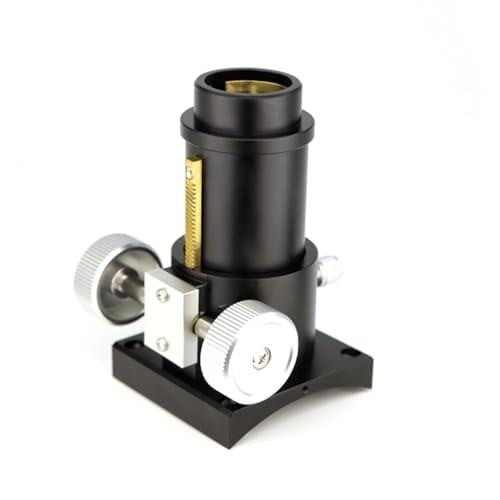
- 363g full-metal construction
- Rack-and-pinion manual focusing
- Curved base plate and dust cover
Best For: 150mm to 203mm Newtonian reflectors
Best for Guide Scopes
Astromania Double Helical Focuser

- Weighs 3.2 ounces
- 0.05mm precision with 10mm travel
- Fixed orientation prevents rotation
Best For: Guide scopes and autoguider cameras
Best DIY Refractor Choice

- 200g ABS construction
- 120mm focusing length
- Fine-tuning gear and locking screw
Best For: DIY 80mm refractor telescope projects
Precision Rotation Pick

- Almost no light leakage for deep-space photography
- Large coarse and fine adjustment wheels
- 360-degree rotation with quick-release two-speed components
Best For: Manual astrophotography setups needing rotational control
Ultralight Guide-Scope Pick
Double Helical 1.25-Inch Focuser
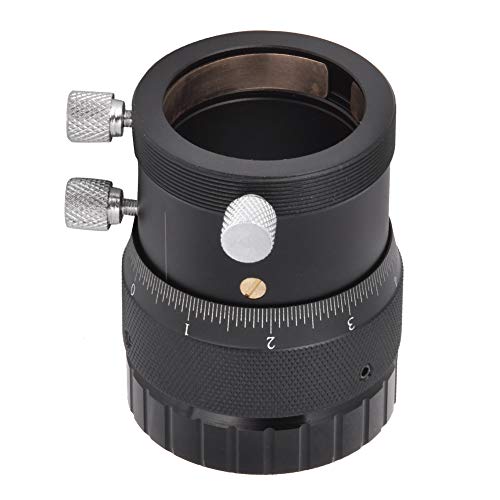
- Lightweight 4.2-ounce aluminum-alloy design
- 10 mm high-precision focusing stroke
- Designed for guider and finder scopes
Best For: Portable guider- or finder-scope setups
Vibration-Control Pick
AccuFocus Electronic Telescope Focuser

- Motorized pushbutton focusing without vibration
- Adjustable coarse-to-fine speed control
- Includes brackets, cable, and installation hardware
Best For: Electronic focusing on compatible Crayford or rack-and-pinion scopes
Best Precision Upgrade
GOWENIC 1.25-Inch Double Helical Focuser
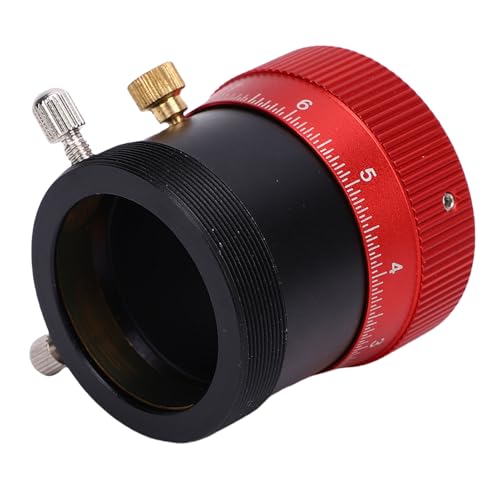
- 10mm focusing stroke for eyepieces and adapters
- Anti-rotation mechanism helps preserve alignment
- Lightweight aluminum-alloy construction
Best For: Compact 1.25-inch observing and astrophotography setups
Best Long-Travel Micro Focuser

- 39mm travel with approximately 0.1mm precision
- M48x0.75 camera thread
- Smooth, continuous rotation without play
Best For: 2-inch astrophotography setups needing extended fine focus
Best Automated Option
Akozon Electric Telescope Focuser

- Temperature sensor supports environmental adaptation
- Automatic and hand-controller focusing
- Works with drivers and third-party software
Best For: Software-assisted astrophotography and temperature-aware focusing
Best Rack-and-Pinion Upgrade – SVBONY SV181 1.25-inch Focuser
For reflector owners comparing lightweight telescope focusers, the SVBONY SV181 offers a manual rack-and-pinion design with 65mm of travel. Its dual-knob adjustment, brass retaining ring, and threaded interior make it a practical replacement or upgrade for compatible Newtonian reflectors.
Best For: 114mm and 150mm Newtonian reflector telescopes using 1.25-inch eyepieces.
Pros:
- 65mm focusing travel with gear-based adjustment
- Internal brass ring helps hold eyepieces without marking the barrel
- Fully threaded interior helps minimize reflections
- Includes a 1.25-inch dust cover
Cons:
- Designed for 1.25-inch accessories rather than larger eyepieces
- Compatibility is specifically listed for certain Newtonian reflector sizes
At 410g, this focuser is reasonably compact while providing useful travel and controlled manual adjustment. Confirm your telescope’s mounting pattern and tube compatibility before buying.
Best Full-Metal Option – Skyoptikst 1.25-inch Newtonian Focuser
This full-metal focuser is a straightforward choice for users seeking lightweight telescope focusers with a rack-and-pinion mechanism. It accepts 1.25-inch accessories and includes a curved base plate intended for installation on compatible Newtonian reflector tubes.
Best For: 150mm to 203mm Newtonian reflector telescopes, including 6- to 8-inch models.
Pros:
- Full-metal construction
- Rack-and-pinion focusing design
- Fully threaded interior helps minimize reflections
- Includes a 1.25-inch dust cover
Cons:
- Compatibility is specified for 6- to 8-inch Newtonian reflectors
- Manual focusing only
- Mounting fit should be checked before installation
Weighing 363g, this is one of the lighter options in the group while retaining an all-metal build. Its curved base plate may simplify fitting, but telescope dimensions and mounting holes still need verification.
Best for Guide Scopes – Astromania Double Helical Focuser
The Astromania double helical focuser stands out among lightweight telescope focusers for guide scopes and finder scopes. Its fixed-orientation design helps keep a camera or eyepiece from rotating while focusing, and its 10mm stroke provides fine manual adjustment for visual or imaging setups.
Best For: Guide scopes, finder scopes, autoguider cameras, and compact astrophotography configurations.
Pros:
- 0.05mm focusing precision with a 10mm stroke
- Fixed orientation prevents mounted equipment from rotating
- All-metal construction helps limit flexure and thermal expansion
- Compact 46mm to 56mm length
Cons:
- Only 10mm of focusing travel
- M42x0.75 female-to-female adapter for some upgrades is not included
- Requires compatible threading for certain telescope configurations
At 3.2 ounces, this is the lightest listed option and is especially suited to systems where added weight matters. Check for the required M42x0.75 male thread and accessory compatibility before ordering.
Best DIY Refractor Choice – Tomotato 80mm Focusing Seat
For DIY builders seeking lightweight telescope focusers, the Tomotato 80mm focusing seat combines a toothed focusing tube with a 120mm focusing length. It accepts 1.25-inch eyepieces and uses a fine-tuning gear for more controlled adjustment, including at higher magnification.
Best For: DIY refractor telescope projects requiring an 80mm focusing seat and 1.25-inch eyepiece interface.
Pros:
- 120mm focusing length with fine-tuning gear
- Secure locking screw holds the eyepiece in place
- Threaded interior helps reduce reflections
- Lightweight 0.2kg ABS construction
Cons:
- Made from ABS plastic rather than metal
- Intended for DIY refractor telescope projects
- Compatibility with an existing telescope is not broadly specified
This 200g focusing seat is the lightest by listed weight among the conventional focuser options. Its suitability depends heavily on the dimensions and mounting requirements of your DIY refractor build.
Precision Rotation Pick – 16-Bearing Travel Focuser
Telescope Focuser 16-Bearing Travel with Round Adapter Ring for Astrophotography
Check Price On AmazonFor photographers comparing lightweight telescope focusers, this manual model combines a travel-focused 16-bearing design with a round adapter ring and photographic features. Its large adjustment wheels, quick-release two-speed components, and 360-degree rotation support controlled focusing and composition.
Best For: Astrophotographers who want manual focus control, low light leakage, and rotational adjustment.
Pros:
- Designed for almost no light leakage, supporting deep-space photography.
- Large 38 mm coarse and 28 mm fine adjustment wheels help reduce slipping.
- Quick-release two-speed components can be removed without taking apart the entire focuser.
- 360-degree rotation supports composition and visual inspection.
Cons:
- Manual operation does not provide motorized focusing.
- The supplied dimensions are approximately 2.2 by 2.2 by 2.44 inches, so buyers should verify available space.
This is a feature-rich manual option for imaging setups that benefit from precise interfaces and rotational flexibility. Confirm compatibility with your telescope and adapter requirements before buying.
Ultralight Guide-Scope Pick – Double Helical 1.25-Inch Focuser
This compact aluminum-alloy unit is one of the more portable lightweight telescope focusers for guider or finder scopes. It uses a 1.25-inch inner T interface and a double-helical mechanism with a stated 10 mm focusing stroke for fine adjustments.
Best For: Guider scopes, finder scopes, and portable telescope setups where low weight matters.
Pros:
- Weighs 4.2 ounces according to the supplied details.
- Aluminum-alloy construction is described as robust and high strength.
- High-precision double-helical design supports clearer, sharper focusing.
- Compact form is easy to carry and use.
Cons:
- The 10 mm focusing stroke may be limiting for applications needing more travel.
- Its 1.25-inch inner T interface requires compatibility checking before purchase.
Choose this focuser when portability and a small footprint are more important than extensive travel or motorized control. Its stated guider- and finder-scope orientation makes application matching especially important.
Vibration-Control Pick – AccuFocus Electronic Telescope Focuser
The AccuFocus offers motorized focusing for telescope users who prefer pushbutton control over manual adjustment. Among lightweight telescope focusers, its 12.3-ounce motor assembly is still relatively portable, while adjustable speeds and a hand controller are intended to make precise focusing easier without vibration.
Best For: Observers who want electronic, pushbutton focusing and compatibility with several common focuser arrangements.
Pros:
- Motorized focusing helps make achieving sharp focus easier.
- Adjustable speed control ranges from coarse to very fine.
- Pushbutton hand controller supports smooth adjustments without vibration.
- Includes brackets for Crayford and rack-and-pinion focusers, plus installation hardware.
Cons:
- At 12.3 ounces, it is heavier than the supplied helical focuser.
- Requires one 9-volt battery, which is not included.
- Electronic hardware needs installation and telescope compatibility checking.
This is a practical choice for users prioritizing vibration-free electronic control over the smallest possible weight. The included brackets and two-year warranty add useful support, but verify the fitting arrangement and keep a battery available.
Best Precision Upgrade – GOWENIC 1.25-Inch Double Helical Focuser
For observers comparing lightweight telescope focusers, the GOWENIC combines an aluminum-alloy build with a double-helical mechanism and a 10mm focusing stroke. Its anti-rotation design is aimed at controlled adjustments for eyepieces, Barlow lenses, and camera adapters.
Best For: Planetary observation and astrophotography users who want a compact 1.25-inch focuser with anti-rotation adjustment.
Pros:
- Double-helical mechanism is designed to reduce image shift and play.
- 10mm of focusing travel supports a range of eyepieces and adapters.
- Anti-rotation design helps maintain alignment while focusing.
- Lightweight aluminum-alloy construction is suited to outdoor use.
Cons:
- Its 1.25-inch format may not suit setups built around 2-inch accessories.
- The listed warranty is limited to 90 days.
The GOWENIC is a practical choice when minimizing image shift matters more than having a long focusing range. Confirm that your telescope and accessories match its 1.25-inch format before buying.
Best Long-Travel Micro Focuser – Alstar 2-Inch Helical Focuser
The Alstar is a 2-inch helical micro focuser for buyers seeking lightweight telescope focusers with extended travel. Its rotating mechanism is designed for smooth, continuous adjustment, while the M48 thread provides a camera-connection option for astrophotography.
Best For: Astrophotographers using compatible 2-inch telescope focusers who need 39mm of travel and fine adjustment.
Pros:
- Offers approximately 0.1mm focusing precision.
- Provides 39mm of focusing travel.
- M48x0.75 thread supports connecting a camera.
- Compatible with refractor and Newtonian telescopes, and noted as useful with Schmidt-Cassegrain telescopes.
Cons:
- Its 2-inch design is not intended for 1.25-inch-only setups.
- Camera connectivity depends on an M48-compatible configuration.
Choose the Alstar if your setup accepts a 2-inch focuser and you value long travel for precise astrophotography adjustments. Its 0.34kg weight is worth considering when managing total equipment load.
Best Automated Option – Akozon Electric Telescope Focuser
For buyers considering lightweight telescope focusers with motorized control, the Akozon electric focuser adds software-assisted adjustment, a hand controller, and an onboard temperature sensor. It is designed to support astrophotography workflows that need repeatable focusing as conditions change.
Best For: Astrophotographers who want automatic focusing, manual hand-controller access, and environmental adaptation.
Pros:
- Temperature sensor works with software to adapt focus to environmental changes.
- Supports one-click automatic focusing through compatible software.
- Manual focusing is available through the hand controller.
- Compatible with drivers and third-party software.
Cons:
- At 568g, it is heavier than the listed manual helical options.
- Its software-based features may require compatible drivers or third-party software.
- The supplied details do not specify a particular telescope mounting format.
The Akozon is the most workflow-focused option here, especially for imaging sessions where temperature-related focus changes are a concern. Verify software, driver, and telescope compatibility before committing to the automated setup.
How We Picked the Best Lightweight Telescope Focusers
We evaluated these Lightweight Telescope Focusers by looking at the features that matter most in real telescope upgrades: construction materials, focusing travel, adjustment precision, eyepiece compatibility, mounting format, and likely use case. We also considered whether each design suits visual observing, guide scopes, DIY Newtonian builds, or astrophotography.
Weight is important, but it is not the only measure of quality. A focuser must hold an eyepiece or camera securely, move without excessive play, and provide enough travel to reach focus with your optical tube and accessories. Because telescope dimensions vary, always confirm the required cutout, bolt pattern, drawtube size, and backfocus before ordering.
Quick Comparison
| Focuser Type | Best For | Main Advantage | Watch For |
|---|---|---|---|
| Rack-and-pinion | Reflectors and general viewing | Positive, familiar adjustment | Mounting compatibility |
| Helical | Guide scopes and fine focusing | Compact, precise movement | Limited travel on some models |
| Bearing-supported | Camera-heavy setups | Smoother load handling | Added size or cost |
| Electronic | Remote astrophotography | Motorized repeatability | Power and controller requirements |
Key Buying Factors for Lightweight Telescope Focusers
Compatibility and Size
Check whether you need a 1.25-inch or 2-inch focuser, and verify that the model fits your telescope tube. A focuser designed for a 4.5- to 10-inch Newtonian reflector may not fit a smaller refractor or an existing mounting plate.
Focusing Travel and Precision
Longer travel is useful when your eyepieces and cameras sit at different distances from the optical tube. Helical micro-focusers can offer very controlled adjustments, while rack focusers may be faster for large focus changes. For imaging, look for smooth movement with minimal backlash.
Load Capacity and Stability
Visual eyepieces are relatively light, but cameras, filter wheels, and adapters can create leverage. Favor a rigid metal body and a secure compression or threaded connection if your setup will carry imaging equipment. A low-profile design can also help preserve balance.
Manual or Electronic Control
Manual focusers are simple, inexpensive, and easy to use in the field. Electronic focusers are better suited to repeatable focusing, remote operation, and automated imaging sessions, but require compatible mounting hardware, power, and control software.
Who Should Buy Which Lightweight Telescope Focusers?
Choose a rack-and-pinion model if you want a straightforward upgrade for a Newtonian reflector or general visual observing. A compact helical focuser is a strong choice for a guide scope, DIY project, or setup where low weight and fine manual control matter most.
Astrophotographers carrying a camera should prioritize rigidity, smooth bearing support, adequate travel, and repeatable adjustment over the absolute lowest weight. For unattended or computer-assisted imaging, an electronic focuser can justify its extra complexity by reducing focus drift and making automated refocusing easier.
Before buying, compare the focuser’s dimensions with your tube and accessories, then allow for adapters, diagonal length, camera spacing, and balance. The best lightweight option is the one that reaches focus securely while keeping your telescope stable.