
City lights can wash out faint stars, nebulae, and landscape details, but the right filter can improve contrast without requiring an expensive setup. This roundup compares 10 light pollution filters under $200 for visual astronomy and night-sky photography.
Options range from broadband and natural-night filters to UHC and narrowband designs. The best choice depends on your telescope or camera thread, the type of light pollution nearby, and whether you want better visual contrast or stronger emission-nebula performance.
Best 10 Light Pollution Filters Under 200 Picks for 2026
Urban Sky Contrast Pick
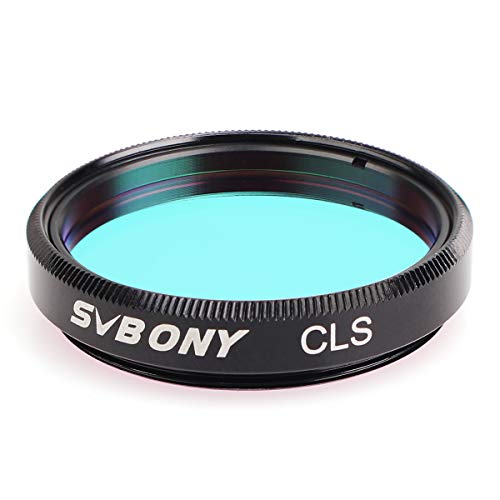
- 90% transmission of listed nebula emission lines
- Suppresses major sodium and mercury light wavelengths
- Works with color CCD cameras and unmodified DSLRs
Best For: Urban visual astronomy and deep-sky imaging
Beginner-Friendly UHC Choice
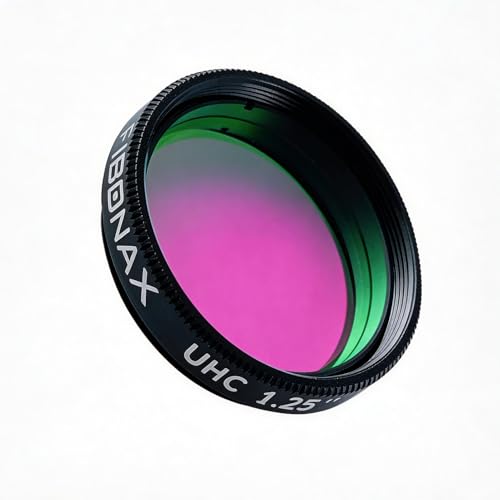
- Targets sodium and mercury streetlight glare
- Isolates H-beta and O-III nebula wavelengths
- Dual threads allow compatible filter stacking
Best For: Urban telescope observing and entry-level astrophotography
Camera Lens Night-Sky Pick
K&F CONCEPT 49mm Natural Night Filter

- Reduces light pollution for night-sky photography
- Slim frame helps avoid wide-angle vignetting
- 28-layer coatings resist water, oil, and scratches
Best For: 49mm camera lenses used for city and star shots
Deep-Sky Narrowband Pick
SVBONY SV220 7nm Dual-Band Filter

- Targets 7nm H-alpha and O-III bands
- Reduces moonlight and artificial-light interference
- Built for high-contrast nebula imaging
Best For: One-shot color deep-sky astrophotography in bright skies
Urban Sky Color Control
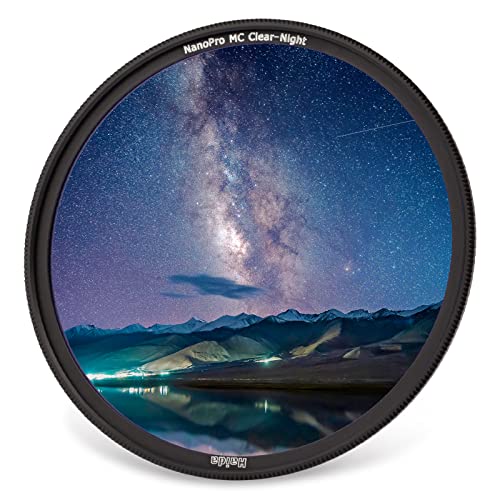
- Reduces yellow artificial-light wavelengths
- Optical glass with Nano coating
- Slim aluminum frame and case
Best For: 77mm camera lenses used for urban night-sky photography
Nebula Contrast for City Skies
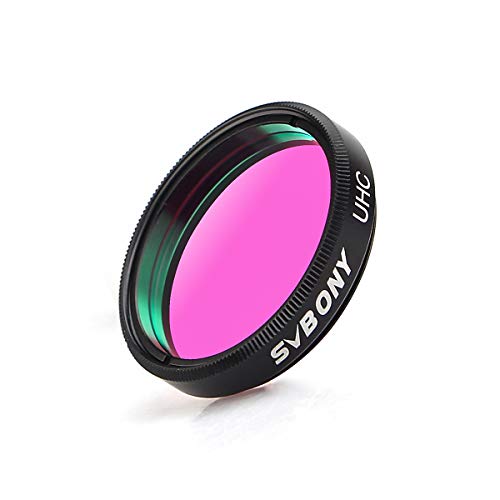
- Darkens sky background for nebula viewing
- Works for observation and astrophotography
- Multi-coated optical glass in a 1.25-inch format
Best For: Telescope users viewing nebulae from city or suburban skies
Compact Urban Night Shooting
Walking Way Natural Night 52mm

- Reduces unwanted urban light and haze
- Neodymium optical glass for clear color
- 28-layer coating with protective case
Best For: 52mm lenses used for cityscapes and astrophotography
Compact Contrast Upgrade
Celestron UHC/LPR 1.25-inch Filter
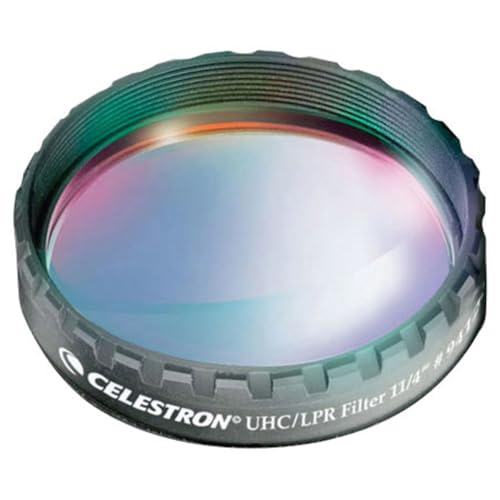
- Reduces selected artificial-light wavelengths
- Supports nebula contrast and darker skies
- Multi-coated glass with 2-year limited warranty
Best For: Visual observers with 1.25-inch telescope accessories
Large-Format Broadband Choice
ICE LiPo Didymium 105mm Filter

- Reduces skyglow for night-sky viewing
- Broadband design preserves overall color
- Double-threaded frame with storage case
Best For: 105mm night-sky and star photography setups
Two-Inch Telescope Pick
ICE LiPo Didymium 2-inch Filter

- Broadband reduction helps block skyglow
- Designed for compatible 2-inch eyepieces
- Includes storage case and 1-year warranty
Best For: Celestron, Orion, and Meade 2-inch telescope setups
Urban Sky Contrast Pick – SVBONY CLS 1.25-inch Filter
For shoppers comparing light pollution filters under 200, this 1.25-inch SVBONY CLS filter is a practical broadband option for reducing urban glow while preserving key nebula emission lines. It is designed for visual astronomy and deep-sky photography with color CCD cameras or unmodified DSLRs.
Best For: Urban stargazers and deep-sky photographers using compatible 1.25-inch equipment.
Pros:
- Transmits 90% of the listed main nebula emission lines, including H-alpha, O-III, S-II, and H-beta.
- Designed to suppress major artificial-light wavelengths from sodium and mercury sources.
- Ion-assisted, multi-coated construction is intended to improve durability and scratch resistance.
- Coating stability is designed to resist central-wavelength shifts caused by temperature changes.
Cons:
- Only fits 1.25-inch equipment with the listed 28.5 mm filter thread.
- It is not water resistant.
- As a broadband CLS filter, it may offer less selective isolation than a narrowband design.
This SVBONY filter is a sensible choice when you want a general-purpose urban-astronomy filter with stated transmission for several nebula lines and compatibility with common color imaging setups.
Beginner-Friendly UHC Choice – FIBONAX 1.25-inch UHC Filter
If you are comparing light pollution filters under 200 for an urban telescope setup, this FIBONAX UHC filter focuses on blocking sodium and mercury glare while increasing contrast on emission nebulae and lunar details. Its 1.25-inch format and dual M28.5×0.6 threads add flexibility for compatible accessories.
Best For: Beginners and experienced observers using 1.25-inch telescopes or compatible astrophotography cameras.
Pros:
- Designed to isolate H-beta and O-III wavelengths for improved nebula contrast.
- Multi-coated optical glass is specified to provide more than 90% light transmission and reduce reflections.
- Dual M28.5×0.6 threads support stacking with compatible filters.
- Aircraft-grade aluminum construction and a protective storage case support portable use.
Cons:
- Compatibility depends on a 1.25-inch mount or the listed M28.5×0.6 camera threads.
- Its UHC design is primarily aimed at contrast enhancement rather than broad, general-purpose imaging.
- The supplied notes do not specify a detailed transmission curve beyond the stated greater-than-90% performance.
With stacking threads, a case, and broad compatibility claims, this FIBONAX model is a convenient entry point for observers who want a dedicated UHC filter for nebulae and lunar viewing.
Camera Lens Night-Sky Pick – K&F CONCEPT 49mm Natural Night Filter
For camera users searching for light pollution filters under 200, the K&F CONCEPT Natural Night filter is built for lenses with a 49mm filter thread. It targets night-sky and city-sky photography while using a slim profile intended to help avoid vignetting.
Best For: Photographers using 49mm-threaded wide-angle or telephoto lenses for night scenes and star shots.
Pros:
- Designed to reduce light pollution and produce clearer night skies.
- Ultra-slim 0.15-inch frame helps limit vignetting on wide-angle and telephoto lenses.
- Imported AGC optical glass is specified to provide high definition without color cast.
- Twenty-eight multi-layer coatings add waterproof, oil-resistant, and scratch-resistant protection.
Cons:
- Fits cameras and lenses with a 49mm filter thread only.
- This is a photographic lens filter, not a 1.25-inch telescope filter.
- The supplied notes do not state a specific light-transmission percentage or wavelength range.
This K&F CONCEPT filter makes the most sense for camera-based night photography, especially when a slim, protective filter with no stated color cast is more important than telescope-format compatibility.
Deep-Sky Narrowband Pick – SVBONY SV220 7nm Dual-Band Filter
For astrophotographers evaluating light pollution filters under 200, the SVBONY SV220 takes a more selective approach with a 7nm dual-band H-alpha/O-III design. It is intended to reduce moonlight and artificial light interference while increasing nebula-to-sky contrast for deep-sky imaging.
Best For: Deep-sky astrophotography with compatible one-shot color or electronic astronomical cameras in bright conditions.
Pros:
- 7nm dual-band design targets H-alpha and O-III emission for selective nebula imaging.
- Designed to reduce interference from moonlight and artificial street lighting.
- Can support high-contrast imaging in light-polluted areas or under a full moon.
- May simplify and reduce the difficulty of post-processing compared with less selective workflows.
Cons:
- Its narrowband design is specialized for gaseous and planetary nebulae rather than all targets.
- Compatibility is listed for SVBONY electronic and astronomical cameras, so equipment fit should be checked.
- It improves contrast rather than making the nebula intrinsically brighter.
The SV220 is the most specialized option here: choose it when selective H-alpha/O-III capture and strong light-pollution suppression matter more than broadband versatility.
Urban Sky Color Control – Haida Clear-Night 77mm
If you need light pollution filters under 200 for a camera lens, the Haida Clear-Night is a purpose-built option for 77mm threads. It is designed to reduce the appearance of artificial light in night-sky images by absorbing yellow wavelengths associated with sodium-vapor lamps.
Best For: Camera users with 77mm lenses photographing stars or night scenes near urban lighting.
Pros:
- Designed to reduce the visual impact of artificial light sources.
- Optical glass supports clarity and color fidelity.
- Nano multi-coating helps repel water and oil for easier cleaning.
- Ultra-slim aluminum-alloy ring keeps the filter lightweight and durable.
Cons:
- Compatible only with lenses using a 77mm thread.
- It is not water resistant.
The Haida is a focused choice for nighttime camera work, especially when sodium-vapor lighting affects the scene. Confirm your lens thread size before ordering.
Nebula Contrast for City Skies – SVBONY 1.25-inch UHC
For telescope users comparing light pollution filters under 200, the SVBONY UHC filter is made to selectively reduce wavelengths from artificial lighting. Its intended benefit is a darker sky background and improved contrast when viewing emission nebulae from city, suburban, or even dark-sky locations.
Best For: Telescope observers and astrophotographers using standard 1.25-inch eyepieces or accessories.
Pros:
- Designed to improve emission-nebula contrast under light-polluted skies.
- Useful for both visual observation and astrophotography.
- Optical glass lens with multi-coating.
- Standard 1.25-inch filter thread and included transparent case.
Cons:
- Fits 1.25-inch telescope accessories, not camera lens threads.
- It is not water resistant.
This is the most astronomy-specific option in the group, with a format suited to eyepieces and telescope accessories. Choose it when nebula contrast is your main priority.
Compact Urban Night Shooting – Walking Way Natural Night 52mm
Among light pollution filters under 200, the Walking Way Natural Night filter targets photographers who want cleaner-looking urban night skies and city scenes. Its 52mm screw-in design is intended to reduce unwanted city-light effects while preserving clear, vivid detail for night photography and astrophotography.
Best For: Camera lenses with 52mm threads used for cityscapes, star trails, auroras, or night-sky photography.
Pros:
- Designed to reduce light from streetlamps, neon signs, billboards, and haze.
- HD neodymium glass is intended to maintain light transmission and color clarity.
- 28 anti-reflective and anti-fingerprint coating layers provide water, scratch, and oil resistance.
- Includes a protective case and screws onto compatible lenses.
Cons:
- Compatible with 52mm camera lens threads only.
- Its listed applications focus on camera photography rather than telescope eyepieces.
The Walking Way combines a compact camera-lens format with extensive protective coatings. Verify the lens marking before buying, particularly because the product details specify a 52mm thread.
Compact Contrast Upgrade – Celestron UHC/LPR 1.25-inch Filter
For shoppers comparing light pollution filters under 200, the Celestron UHC/LPR filter is a compact option for telescopes and cameras using a standard 1.25-inch or 31.75mm thread. It is designed to selectively reduce wavelengths associated with artificial light while supporting enhanced nebula contrast and a darker sky background.
Best For: Visual observers using compatible 1.25-inch telescope accessories who want a compact LPR filter.
Pros:
- Designed to reduce selected artificial-light wavelengths.
- Supports enhanced nebula contrast and darker sky backgrounds.
- Multi-coated optical glass with high transmission coating.
- Includes a 2-year limited warranty.
Cons:
- Limited to compatible 1.25-inch or 31.75mm threads.
- Specified primarily for visual use.
- Not water resistant.
This is a straightforward choice for visual astronomy setups already built around 1.25-inch accessories. Confirm the thread size before ordering, particularly if your telescope uses a 2-inch eyepiece system.
Large-Format Broadband Choice – ICE LiPo Didymium 105mm Filter
Among light pollution filters under 200, this ICE LiPo didymium model targets photographers and optical setups requiring a 105mm filter. Its broadband design reduces skyglow without changing the entire color spectrum, and the double-threaded frame supports stacking compatible filters, hoods, and caps.
Best For: Large-format night-sky or star photography setups that use a 105mm filter.
Pros:
- Designed to reduce skyglow for clearer night-sky views.
- Broadband filtration intended to preserve the overall color spectrum.
- Double-threaded frame allows filter stacking and accessory compatibility.
- Includes a storage case and has a 1-year warranty.
Cons:
- Its 105mm size is unsuitable for smaller telescope filter threads.
- The supplied notes specify no coating.
- Requires a setup designed for a 10.5-centimeter filter.
The large diameter makes this a specialized option rather than a universal telescope filter. Verify that your holder or lens system accepts 105mm filters before buying.
Two-Inch Telescope Pick – ICE LiPo Didymium 2-inch Filter
This ICE LiPo didymium filter is a practical entry for shoppers seeking light pollution filters under 200 for a 2-inch telescope eyepiece. It uses broadband light pollution reduction to block skyglow without changing the entire color spectrum and is listed as compatible with Celestron, Orion, and Meade telescopes with suitable 2-inch eyepieces.
Best For: Telescope users with a compatible 2-inch eyepiece who want broadband skyglow reduction.
Pros:
- Designed to reduce light pollution and skyglow.
- Broadband effect aims to avoid changing the entire color spectrum.
- Fits compatible 2-inch telescope eyepieces.
- Includes a storage case and a 1-year warranty.
Cons:
- Not suitable for 1.25-inch eyepiece systems without the appropriate setup.
- The supplied notes specify no coating.
- Compatibility depends on a telescope accepting a 2-inch eyepiece filter.
Choose this model when your telescope is already configured for 2-inch accessories and you want a dedicated broadband filter. Check your eyepiece and filter-thread specifications before ordering.
How We Picked the Best Light Pollution Filters Under 200
We focused on filters priced below $200 that target common nighttime viewing and imaging needs. The selection includes broadband, natural-night, UHC, narrowband, and didymium designs, with attention to optical format, stated light-pollution reduction, coating details, and compatibility with telescopes or camera lenses.
Because filter performance varies with sky brightness, target type, optics, and camera sensitivity, specifications should be treated as a starting point rather than a guarantee. A filter that helps under suburban skies may offer little benefit under a truly dark sky, while narrowband models can be highly selective and less versatile.
Quick Comparison
| Filter type | Best for | Main strength | Potential limitation |
|---|---|---|---|
| Broadband or CLS | General viewing and imaging | Balances contrast and versatility | Limited effect under severe light pollution |
| Natural-night or didymium | Nightscapes and camera lenses | Reduces selected artificial-light wavelengths | May shift color or require correction |
| UHC | Emission nebulae | Improves nebula contrast | Dims stars and is less useful for galaxies |
| Dual-band narrowband | Emission-nebula astrophotography | Strong selectivity for H-alpha and OIII | Requires compatible imaging equipment |
Key Buying Factors for Light Pollution Filters Under $200
Choose the Correct Size and Mount
For telescopes, 1.25-inch filters fit many smaller eyepieces, while 2-inch models suit larger eyepieces and wider-field systems. Camera filters use thread sizes such as 49mm, 52mm, or 77mm. Verify the lens or adapter thread before ordering; similar-looking sizes are not interchangeable.
Match the Filter to Your Target
Broadband and CLS filters are the most flexible starting points for general stargazing. UHC filters are better suited to emission nebulae, where isolating useful wavelengths can make faint structures stand out. Dual-band H-alpha/OIII filters are primarily imaging tools and may not be appropriate for ordinary visual observing.
Consider Your Sky and Camera
Filter results depend on whether local lighting is warm, cool, LED-based, or mixed. Modern LED sources can be difficult for broad filters to suppress. For photography, check whether the filter preserves acceptable color and whether your camera is modified or stock. Optical quality, coatings, and secure cell construction also matter because reflections and flare can reduce the benefit.
Who Should Buy Which Light Pollution Filters Under 200?
- Beginners using a 1.25-inch telescope: Start with a broadband CLS or UHC filter, depending on whether you want general-purpose use or nebula contrast.
- Visual observers focused on nebulae: Choose a UHC model and use it with suitable emission targets rather than galaxies or star clusters.
- Nightscape photographers: Consider a natural-night, clear-night, or didymium filter matched to your lens thread, while planning for possible color correction.
- Dedicated astrophotographers: A dual-band H-alpha/OIII filter can be worthwhile for emission nebulae when the camera, lens, and processing workflow support it.
- Users with larger telescope accessories: Select a 2-inch filter only if your eyepiece, reducer, or adapter accepts that format.
Before buying, confirm the thread or barrel size, intended targets, and return policy. A well-matched affordable filter usually delivers more practical value than a technically specialized model used with incompatible equipment.