
Dust, fingerprints, and dried residue can make a microscope image harder to see—but the wrong cleaning method can damage delicate optical surfaces. A useful kit helps you remove loose particles before touching the glass and gives you suitable materials for the marks that remain.
These seven options range from microscope-focused supplies to broader camera cleaning kits. The best choice depends on your objective lenses, your microscope manufacturer’s care instructions, and whether you also maintain cameras or other optics.
Best 7 Lens Cleaning Kits for Microscopes Picks for 2026
Best All-in-One Camera Kit
Altura Photo Lens Cleaning Kit
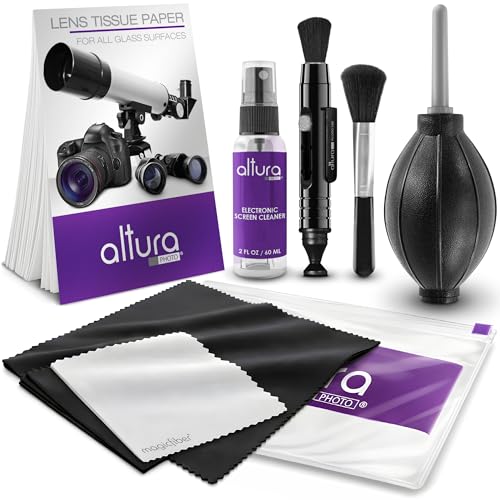
- Spray, blower, brush, pen, cloths, and 50 tissues
- Alcohol- and ammonia-free cleaner
- Microscope compatibility not specified
Best For: Buyers who also maintain camera lenses
Best Microscope-Specific Kit
AmScope CLS-CKI-KIM Cleaning Kit

- Explicitly intended for microscopes
- Cleaner intended for after immersion-oil use
- Includes 280 anti-static task wipers
Best For: Routine microscope lens maintenance
Best Portable Lens Kit

- Comes in a belt bag
- Listed liquid volume is 30 ml
- Microscope-specific use not stated
Best For: Portable general lens care
Best Toolkit With Microscope Tissues
Camkix Camera Lens Cleaning Kit

- 50 tissues described as microscope-suitable
- Includes blower, pen, brush, and five cloths
- Cleaning solution listed at 10 ml
Best For: Microscope tissues plus camera-cleaning tools
Most Cleaning Supplies
Aispour 10-in-1 Camera Cleaning Kit

- 50 ml cleaner plus air blower
- Brush, pen, cloths, tissues, and wipes
- Microscope compatibility not specified
Best For: Buyers seeking a broad optical-cleaning assortment
Optics-Focused Pick
ZMYPPYA Complete Camera Cleaning Kit

- Listed for telescope and binocular lenses
- Includes blower, pen, cloths, and swabs
- Compact carrying case
Best For: Owners of camera and other listed optical gear
Simple Carry Kit
kioguc 14-Piece Camera Lens Cleaning Kit

- Blower, brush, pen, and lint-free cloth
- Accessories stored in a black box
- Microscope compatibility not listed
Best For: Basic camera-lens cleaning with organized storage
Best All-in-One Camera Kit – Altura Photo Lens Cleaning Kit
Among lens cleaning kits for microscopes, the Altura Photo kit offers a broad selection of tools, though its supplied compatibility information focuses on camera lenses rather than microscope optics. It includes an alcohol- and ammonia-free spray, blower, brush, lens pen, three microfiber cloths, and 50 lens tissues.
Best For: Buyers who also clean camera lenses and want several cleaning tools in one kit.
Pros:
- Includes a spray, blower, brush, pen, cloths, and disposable tissues.
- Spray is described as safe for anti-reflective coatings and multi-coated glass.
- Blower helps remove loose dust before wiping.
Cons:
- Microscope compatibility is not specifically stated in the supplied product details.
- No claim that the cleaner removes immersion oil.
This is a versatile option for shared camera-and-optics cleaning supplies, but microscope users should check their instrument maker’s cleaning guidance before using the spray.
Best Microscope-Specific Kit – AmScope CLS-CKI-KIM Cleaning Kit
AmScope CLS-CKI-KIM Microscope and Camera Lens Cleaning Kit for Lenses | USB 2.0 Connectivity
Check Price On AmazonFor shoppers comparing lens cleaning kits for microscopes, the AmScope CLS-CKI-KIM is the most directly microscope-focused choice here. Its supplied description identifies use with microscopes and includes optical cleaner intended for cleaning after immersion-oil use.
Best For: Microscope users who want cleaner, a brush, a cloth, and a substantial supply of disposable wipers.
Pros:
- Explicitly presented as a cleaning kit for microscopes.
- Includes optical cleaner for use after immersion oil.
- Comes with 280 soft, anti-static, lint-preventing task wipers.
Cons:
- No air blower or lens pen is listed among the included tools.
- The supplied notes do not specify which lens coatings the liquid is suitable for.
The immersion-oil cleaning focus and plentiful wipers make this a practical fit for routine microscope maintenance; check instrument-specific instructions before applying liquid to an objective.
Best Portable Lens Kit – ZEISS Lens Cleaning Kit
The ZEISS kit is a compact-looking option among lens cleaning kits for microscopes, with a practical belt bag and a listed 30 ml liquid volume. Its supplied notes describe general lens-equipment care, not microscope-specific cleaning or immersion-oil removal.
Best For: Buyers who prioritize a carryable kit for general lens care.
Pros:
- Includes a belt bag for keeping the kit together.
- Lists a 30 ml liquid volume.
- Designed for lens-equipment care.
Cons:
- The supplied notes do not itemize every tool inside the bag.
- Microscope compatibility and immersion-oil cleaning are not specified.
The belt bag is its clearest differentiator. If your main task is cleaning microscope objectives, confirm the contents and the cleaner’s suitability before choosing it over a microscope-specific kit.
Best Toolkit With Microscope Tissues – Camkix Camera Lens Cleaning Kit
The Camkix kit stands out among lens cleaning kits for microscopes because its 50 lens-tissue sheets are explicitly described as suitable for microscopes and coated lenses. The broader kit is camera-oriented and also supplies an air blower, a two-in-one lens pen, a brush, cleaning solution, and five microfiber cloths.
Best For: Buyers who want microscope-suitable tissues alongside tools for cleaning camera lenses.
Pros:
- Includes 50 tissues described as suitable for microscopes and coated lenses.
- Manual blower removes loose debris without batteries or refills.
- Includes five microfiber cloths and a two-in-one lens pen.
Cons:
- The supplied notes establish microscope suitability for the tissues, not for every included tool or the cleaning solution.
- The listed cleaning-liquid volume is 10 ml.
This is a useful mixed-optics kit when the microscope-suitable tissues are the priority. Check your microscope maker’s instructions before using the solution or lens pen on objectives.
Most Cleaning Supplies – Aispour 10-in-1 Camera Cleaning Kit
Among lens cleaning kits for microscopes, this Aispour set is a broad assortment of optical-cleaning tools rather than a microscope-specific kit. It includes a 50 ml cleaner, air blower, lens pen, retractable wool brush, tissues, microfiber cloths, wipes, and a storage box.
Best For: Buyers who want multiple tools for cleaning camera lenses and other optical surfaces.
Pros:
- Air blower and soft retractable brush offer dry dust-removal options.
- Includes both reusable cloths and disposable tissues and wipes.
- Storage box keeps the components together.
Cons:
- Listed compatibility covers cameras and drones, not microscopes.
- Sensor swabs are intended for camera sensors; microscope use is unspecified.
This is the more supply-heavy choice if you want several cleaning methods in one box. Check your microscope manufacturer’s guidance before using the liquid or swabs on its optics.
Optics-Focused Pick – ZMYPPYA Complete Camera Cleaning Kit
If you are comparing lens cleaning kits for microscopes, this ZMYPPYA kit stands out for its stated use with telescope and binocular lenses as well as camera equipment. Its listed tools include a lens pen, microfiber cloths, swabs, brush, blower, and cleaning solution.
Best For: Buyers who also maintain camera, telescope, or binocular optics and want a portable kit.
Pros:
- Listed compatibility extends beyond cameras to telescope and binocular lenses.
- Includes tools for both dry dust removal and more involved cleaning.
- Compact case makes the kit easier to store or carry.
Cons:
- Microscopes are not listed among compatible devices.
- The supplied details do not specify swab dimensions or cleaning-solution formulation.
Its wider stated optical use makes it worth considering, but that does not establish suitability for every microscope surface. Confirm your instrument’s cleaning requirements before applying solution or using swabs.
Simple Carry Kit – kioguc 14-Piece Camera Lens Cleaning Kit
Camera Lens Cleaning kit,Camera Accessories,Camera Sensor and Lens Cleaning kit,Lens Pen
Check Price On AmazonFor shoppers browsing lens cleaning kits for microscopes, this kioguc set offers a compact collection of camera-cleaning tools, including an air blower, lens pen, brush, and lint-free cloth. The supplied details describe a 14-piece kit stored in a black box.
Best For: Buyers who prefer a contained set of basic tools for routine camera-lens dust and smudge removal.
Pros:
- Air blower, brush, lens pen, and cloth provide several cleaning options.
- Storage box keeps the accessories organized.
- Listed uses include camera lenses, screens, and bodies.
Cons:
- Listed compatibility is for SLR and mirrorless cameras, not microscopes.
- The supplied notes do not clearly itemize all 14 pieces.
Choose this one for its straightforward tool selection and storage, rather than confirmed microscope compatibility. Check your microscope’s care instructions before touching optical surfaces with the pen or cloth.
How We Picked These Lens Cleaning Kits for Microscopes
We prioritized kits with practical tools for a cautious cleaning sequence: remove loose dust, then address fingerprints or residue only when necessary. We also considered whether a kit is intended for microscope optics, offers supplies useful across multiple devices, or includes camera-specific tools a microscope owner may not need. Kit contents and cleaning-fluid formulations can change, so check the current package and your microscope manufacturer’s instructions before use.
Quick Comparison: Which Type of Kit Fits?
The AmScope CLS-CKI-KIM is the most directly microscope-oriented choice in this group. The Zeiss kit is a compact option to consider if you want a familiar optics-care brand. Altura Photo and Camkix package general lens-cleaning tools that may suit people who also maintain camera lenses. The three broadly named camera kits emphasize larger assortments; compare their actual contents rather than assuming that more pieces make them better for microscope objectives.
A camera sensor-cleaning component is not a substitute for a microscope-cleaning tool. If you will never clean a camera sensor, do not let sensor swabs or similar extras drive your purchase.
Key Buying Factors for Lens Cleaning Kits for Microscopes
Match the Supplies to the Optical Surface
Check your microscope manual before applying any liquid. Objectives, eyepieces, filters, and coated surfaces may have different cleaning requirements. Use only a cleaning fluid the manufacturer permits, and keep liquid away from seams where it could enter the lens assembly. Never spray directly onto an objective or eyepiece.
Remove Grit Before Wiping
A hand blower is useful for loose dust because it reduces the need to touch the glass. If debris remains, use an approved, clean brush with a light touch. Wiping grit across a lens can scratch its coating or surface, regardless of how soft the tissue feels.
Choose Appropriate Wiping Materials
Look for clean, lens-safe tissue, swabs, or microfiber suitable for the part you are cleaning. A small objective front lens may be easier to clean precisely with the material recommended by its maker than with a large cloth. Replace disposable materials after each pass; reused wipes can carry abrasive particles.
Consider Ongoing Cost and Storage
Consumables matter more than accessory count. Check whether replacement tissue and approved fluid are easy to obtain, and store tools sealed and clean. A contaminated brush or cloth can undo the benefit of buying a kit.
Who Should Buy Which Lens Cleaning Kits for Microscopes?
Choose a microscope-focused kit if you mainly maintain eyepieces and objectives and want fewer irrelevant accessories. Pick a general optics kit if you also clean camera lenses or binoculars, but verify fluid compatibility first. A larger camera kit makes sense when you will use its camera-specific components; otherwise, a blower and appropriate lens-cleaning consumables are a more focused starting point. When an objective is heavily soiled or you are unsure whether residue is on an internal surface, consult the microscope manufacturer or a qualified service technician rather than scrubbing harder.