
Choosing among the best laptops for music production means balancing processor performance, memory, storage, portability, and operating-system compatibility. A good fit should handle your DAW, software instruments, plugins, and audio interface without frustrating slowdowns.
These 10 selections cover practical options for beginners, home studios, touring setups, and demanding production workflows. Use the guide below to narrow your choice based on project size, budget, and preferred software.
Best 10 Laptops for Music Production Picks for 2026
Best Overall
Dell 16 Ryzen 7 Creator Laptop

- Ryzen 7 eight-core processor
- 16GB DDR5 RAM and 1TB SSD
- 16-inch WUXGA touchscreen
Best For: Home producers and creators wanting balanced Windows performance
Best Mac Option

- Six-core Intel Core i7 processor
- Retina display with P3 color gamut
- Four Thunderbolt/USB-C ports
Best For: Mac-based producers who value display quality and connectivity
Best Budget Pick

- Quad-core Ryzen 3 processor
- Portable 15.6-inch Full HD design
- Wi-Fi 6 and backlit keyboard
Best For: Beginners handling lighter music projects
Best Large-Screen Choice
BIRDPLAY 18.5-inch Core i9 Laptop

- Eight-core Core i9 processor
- 18.5-inch Full HD display
- Extensive ports and Wi-Fi 6
Best For: Producers wanting a spacious desktop-style workstation
Best Portable Mac

- A18 Pro chip in a compact aluminum design
- Up to 16 hours of battery life
- 8GB memory and 256GB SSD
Best For: Mobile musicians and lighter production projects
Best for Demanding Workflows
Microsoft Surface Laptop Studio 2

- Core i7, 16GB RAM, and 512GB SSD
- RTX 4050 graphics with 6GB GDDR6
- Thunderbolt 4 and convertible touchscreen design
Best For: Windows producers with demanding multitasking needs
Best Large-Screen Value

- 17.3-inch Full HD anti-glare display
- Ryzen 5 processor with 8GB DDR5 RAM
- 512GB SSD and HDMI connectivity
Best For: Home studios and beginner producers
Powerhouse Pick

- Six-core i7 processor with up to 4.5GHz
- 16GB RAM and 512GB SSD
- Large display with extensive ports
Best For: Home studios needing screen space and connectivity
Workstation Pick
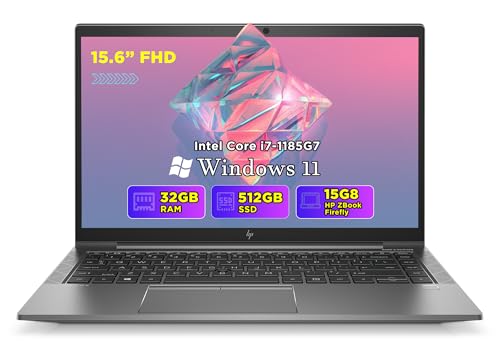
- 32GB RAM for demanding multitasking
- 11th-gen i7 processor up to 4.8GHz
- Thunderbolt 4 and dual-4K display support
Best For: Larger projects and expandable studio setups
Value Pick

- Six-core Ryzen 5 processor up to 4.0GHz
- 16GB RAM with a 512GB NVMe SSD
- Useful ports including USB-C, HDMI, and Ethernet
Best For: Beginners and home producers on a budget
Best Overall – Dell 16 Ryzen 7 Creator Laptop
For music production, the Dell 16 offers a strong everyday foundation with an eight-core Ryzen 7 processor, 16GB of DDR5 memory, and a spacious 1TB SSD. Its large touchscreen and practical port selection also suit creators who work with external displays and peripherals.
Best For: Home producers and creators who want balanced performance, storage, and Windows compatibility.
Pros:
- Eight-core AMD Ryzen 7 processor with speeds up to 5.1 GHz
- 16GB DDR5 RAM and 1TB SSD provide useful headroom for projects and media
- 16-inch WUXGA touchscreen with integrated Radeon 780M graphics
- Includes USB-A, USB-C, HDMI, Wi-Fi 6, and a backlit keyboard
Cons:
- Integrated graphics are less suited to demanding visual workloads than a dedicated GPU
- RAM is listed as non-expandable beyond 16GB
The Dell is a well-rounded choice among laptops for music production, especially if you value generous storage and a modern AMD platform without moving to a dedicated graphics machine.
Best Mac Option – 2019 MacBook Pro 16-inch
This renewed 16-inch MacBook Pro remains a capable option for music production, combining a six-core Intel Core i7, 16GB of memory, and a 512GB SSD. Its high-resolution Retina display, P3 color gamut, and Thunderbolt connectivity add appeal for Mac-based creative setups.
Best For: Producers who prefer macOS and need a larger, color-focused display with Thunderbolt ports.
Pros:
- Six-core 2.6 GHz Intel Core i7 processor
- 16GB RAM and 512GB SSD
- 16-inch 3072 x 1920 Retina display with P3 color gamut
- AMD Radeon Pro 5300M graphics and four Thunderbolt/USB-C ports
Cons:
- Renewed model with a stated 90-day warranty
- Older 2019 Intel-based hardware
- Provides less storage than the 1TB Dell option
For Mac users, this renewed MacBook Pro offers a polished creative experience and strong connectivity, though its age and shorter listed warranty are important considerations.
Best Budget Pick – Acer Aspire 3 Ryzen 3 Laptop
The Acer Aspire 3 is an affordable, portable entry point for music production and general school or home use. Its Ryzen 3 processor, 8GB of LPDDR5 memory, and 128GB NVMe SSD are suitable for lighter projects, though the storage capacity may require external expansion.
Best For: Beginners working on modest sessions, learning a DAW, or building a simple mobile setup.
Pros:
- Quad-core AMD Ryzen 3 7320U processor with Radeon graphics
- Lightweight 3.9-pound design with a 15.6-inch Full HD display
- Wi-Fi 6, HDMI, USB connectivity, and a backlit keyboard
- Listed battery life of up to 11 hours
Cons:
- 8GB RAM is the listed maximum
- 128GB SSD leaves limited room for sample libraries and recordings
- Lower-power processor is better suited to lighter workloads
This Acer makes sense as a starter laptop for music production, but serious users should plan on external storage and should avoid expecting extensive, plug-in-heavy sessions.
Best Large-Screen Choice – BIRDPLAY 18.5-inch Core i9 Laptop
With an 18.5-inch Full HD display and an eight-core Core i9-9880H processor, this BIRDPLAY laptop emphasizes workspace and multitasking for music production. It also includes 16GB of RAM, a 512GB SSD, and a broad selection of ports for studio accessories.
Best For: Producers who want a large built-in screen, numeric keypad, and flexible peripheral connectivity.
Pros:
- Eight-core, 16-thread Core i9 processor with turbo speeds up to 4.8 GHz
- 16GB RAM and 512GB SSD
- Large 18.5-inch 1080p display with 180-degree opening
- Multiple USB ports, two Type-C ports, HDMI, microSD, Wi-Fi 6, and fingerprint login
Cons:
- Large 2.6 kg chassis is less portable than smaller laptops
- Integrated graphics are not aimed at demanding graphics work
- Older Core i9-9880H platform despite the listed 2026 model year
The BIRDPLAY stands out for screen size and connectivity rather than compact travel. It can be a practical desktop-style workstation for producers who prefer arranging tracks on a larger display.
Best Portable Mac – Apple MacBook Neo 13-inch
If portability and battery life matter most, this MacBook Neo is a streamlined option among laptops for music production. Its A18 Pro chip, 8GB unified memory, 256GB SSD, macOS, and compact aluminum design suit lightweight recording, editing, and everyday creative work, though larger projects may require external storage or more memory.
Best For: Mobile musicians, students, and producers working on lighter projects who value a compact Mac and long battery life.
Pros:
- Portable 13-inch design weighs 2.71 pounds.
- A18 Pro chip supports everyday apps and creative workflows.
- Up to 16 hours of battery life supports extended mobile sessions.
- Liquid Retina display, 1080p camera, microphones, and speakers support varied work.
Cons:
- 8GB unified memory may limit demanding music-production workloads.
- 256GB SSD provides less project space than many larger production setups.
- The supplied notes do not list dedicated graphics or music-specific ports.
The MacBook Neo is an appealing lightweight choice for portable production and general creative work. Its modest memory and storage make it better suited to smaller sessions than large, sample-heavy projects.
Best for Demanding Workflows – Microsoft Surface Laptop Studio 2
For producers who need substantial multitasking power, the Surface Laptop Studio 2 is one of the more capable Windows laptops for music production in this group. Its Intel Core i7 processor, 16GB RAM, 512GB SSD, and NVIDIA GeForce RTX 4050 provide a strong foundation for larger sessions and other creative workloads.
Best For: Windows-based producers and creators who need more memory, storage, graphics power, and flexible working modes.
Pros:
- 16GB RAM and a 512GB SSD support larger multitasking workloads.
- NVIDIA GeForce RTX 4050 graphics with 6GB GDDR6 memory add substantial creative flexibility.
- Two Thunderbolt 4 USB-C ports, USB-A, and a microSD card reader support accessories and storage.
- The 14.4-inch touchscreen and convertible hinge offer laptop, presentation, and creative-canvas modes.
Cons:
- Listed weight is 8 pounds, making it less convenient for frequent travel.
- The supplied configuration is limited to 16GB RAM.
- Its graphics-focused hardware may be more than needed for basic audio sessions.
The Surface Laptop Studio 2 is the strongest fit here for demanding, expandable Windows workflows. Its heavier chassis is the tradeoff for robust specifications, flexible positioning, and broad connectivity.
Best Large-Screen Value – HP 17 Laptop with Ryzen 5
This HP 17 offers a spacious display and practical Windows setup for home studios and entry-level music production. The AMD Ryzen 5 7520U processor, 8GB DDR5 memory, 512GB SSD, and HDMI output make it useful for everyday recording and editing, while the larger chassis may be less convenient for mobile work.
Best For: Home-studio users, students, and beginners who prioritize a large screen, straightforward connectivity, and SSD storage.
Pros:
- 17.3-inch Full HD anti-glare display provides ample workspace.
- 512GB SSD offers useful room for applications and project files.
- Ryzen 5 processor and 8GB DDR5 memory support everyday multitasking.
- USB Type-C, HDMI, Wi-Fi 6, and Bluetooth 5.3 support common peripherals.
Cons:
- 8GB RAM may be restrictive for larger sessions or many virtual instruments.
- Integrated AMD Radeon graphics are not intended for graphics-intensive workloads.
- The 17.3-inch form factor is less portable than the smaller options.
The HP 17 is a sensible, space-conscious starting point for music production at home. Its large screen and 512GB SSD are practical strengths, but serious producers may eventually want more memory.
Powerhouse Pick – 17.3-Inch Core i7 Laptop
For shoppers comparing laptops for music production, this BIRDPLAY model offers a six-core Intel Core i7-9750H processor, 16GB of RAM, and a 512GB SSD. Its large 17.3-inch Full HD display and multiple ports make it practical for arranging projects, managing plug-ins, and connecting audio peripherals.
Best For: Home studios that value a large screen, generous connectivity, and capable multitasking.
Pros:
- Six-core, 12-thread Core i7 processor with speeds up to 4.5GHz
- 16GB RAM and 512GB SSD for responsive everyday project work
- Three USB 3.0 ports, two USB-C ports, HDMI, audio, and microSD connectivity
- 17.3-inch 1920×1080 display with an adjustable backlit keyboard
Cons:
- Integrated graphics are not intended for demanding visual workloads
- At 2.3kg, it is less travel-friendly than smaller laptops
- The listed 512GB storage may fill quickly with large sample libraries
This laptop is a sensible choice when screen space and port selection matter more than portability. Musicians using extensive sample collections may eventually want external storage, but the processor and memory provide a solid foundation for typical recording and production tasks.
Workstation Pick – HP ZBook Firefly 15 G8
The renewed HP ZBook Firefly 15 G8 is a strong option among laptops for music production if you need substantial multitasking headroom. Its 11th-generation Core i7-1185G7 processor, 32GB of RAM, 512GB SSD, and Thunderbolt 4 connectivity suit larger projects and a desktop-style studio setup.
Best For: Producers who run multiple applications or plan to use external displays and high-speed peripherals.
Pros:
- 32GB DDR4 RAM supports demanding multitasking
- Core i7-1185G7 processor reaches up to 4.8GHz
- Thunderbolt 4 supports up to dual 4K displays, fast transfers, and charging
- 15.6-inch Full HD display and Windows 11 Pro
Cons:
- It is a renewed laptop rather than a new model
- Integrated graphics may limit graphics-intensive creative work
- 512GB of storage can be restrictive for extensive sound libraries
The ZBook stands out for its 32GB memory and workstation-oriented connectivity. It is especially appealing for a fixed or expandable studio environment, though buyers should account for the renewed condition and consider external storage for large production libraries.
Value Pick – Lenovo V15 Ryzen 5 Laptop
For budget-conscious shoppers seeking laptops for music production, the Lenovo V15 combines a six-core Ryzen 5 5500U processor with 16GB of RAM and a 512GB PCIe NVMe SSD. It provides a practical starting point for recording, editing, and general project work while retaining useful HDMI, USB, Ethernet, and audio connections.
Best For: Beginners and home producers who want capable everyday performance at a value-oriented price.
Pros:
- Six-core, 12-thread Ryzen 5 processor with speeds up to 4.0GHz
- 16GB RAM and fast 512GB PCIe NVMe SSD
- 15.6-inch Full HD display with a stated 500-nit maximum brightness
- Includes USB-C, USB-A, HDMI, RJ45 Ethernet, and a headphone/microphone jack
Cons:
- Integrated AMD Radeon graphics are suited to general use rather than intensive graphics work
- 512GB storage may be limited for extensive sample libraries
- It has fewer high-end expansion features than a workstation-class laptop
The Lenovo V15 is a straightforward entry point for music production, with enough memory and processor capacity for many home-studio workflows. Its conventional design and practical port selection are useful, but producers with very large libraries or complex sessions may need external storage or a more powerful workstation.
How We Picked These Laptops for Music Production
We focused on the hardware that most directly affects music production: processor performance for real-time effects and virtual instruments, enough memory for large sessions, fast solid-state storage, useful screen space, and dependable connectivity. We also considered operating-system compatibility, portability, upgrade potential, and value across several budgets.
Because product configurations and seller listings can vary, verify the exact RAM, storage, processor generation, warranty, and operating system before ordering. Refurbished models can offer strong value, but condition and battery health deserve extra attention.
Quick Comparison
| Best For | What to Look For | Recommended Direction |
|---|---|---|
| Beginners and light recording | Modern quad-core processor, 8GB RAM, SSD | Affordable Acer or HP models |
| Home-studio production | 16GB RAM, six or more CPU cores, 512GB SSD | Lenovo, Dell, or mainstream 16GB laptops |
| Large plugin-heavy sessions | Fast modern CPU, 16GB or more RAM | MacBook Pro, Surface Laptop Studio 2, or ZBook |
| Portable Mac workflows | Apple silicon, compatible plugins, long battery life | MacBook Neo or MacBook Pro |
| Mobile workstation use | 32GB RAM, business-class construction, strong connectivity | HP ZBook Firefly |
Key Buying Factors for Laptops for Music Production
Processor and Real-Time Performance
Music software depends heavily on responsive CPU performance, particularly when running multiple effects, software instruments, and low-latency monitoring. Favor newer processors with multiple cores and strong single-core performance. A faster chip also leaves more headroom before you need to freeze or bounce tracks.
Memory and Storage
Choose 16GB of RAM for most serious home production. Eight gigabytes can work for basic recording, but it may feel restrictive with orchestral libraries or many plugins. A 512GB SSD is a practical starting point; large sample collections may require a 1TB internal drive or a fast external SSD.
Ports, Display, and Audio Compatibility
Check for USB-A, USB-C, HDMI, and headphone connectivity based on your interface, MIDI controllers, monitors, and external drives. A larger, sharp display helps with arranging and mixing. Also confirm that your DAW, plugins, drivers, and preferred audio interface support Windows or macOS before switching platforms.
Portability, Noise, and Battery Life
A lighter laptop is useful for lessons, live work, and travel, while a larger chassis may provide better cooling and a more comfortable workspace. Fan noise matters when recording microphones, so check independent testing when possible.
Who Should Buy Which Laptops for Music Production?
Choose an Affordable Windows Laptop
Entry-level Acer and HP options suit beginners recording vocals, guitar, podcasts, or modest MIDI arrangements. They are best when your sessions use a limited number of tracks and plugins.
Choose a 16GB Mainstream Laptop
Dell, Lenovo, and similar 16GB models are sensible choices for home producers who want balanced performance, familiar Windows software, and enough capacity for typical multitrack projects.
Choose a MacBook
MacBook models make sense for producers who prefer macOS, Logic Pro, quiet operation, and strong battery life. Confirm plugin support, especially when using older Intel-era software with newer Apple silicon.
Choose a Workstation-Class Laptop
The HP ZBook or Surface Laptop Studio 2 is a better match for demanding sessions, creative multitasking, specialized software, and users who value stronger construction or graphics performance. These choices may cost more and can be heavier, but they provide useful headroom for complex projects.