
A home lab autoclave can help sterilize suitable glassware, tools, and media, but capacity alone does not tell you whether a unit fits your work. Cycle controls, drying, power requirements, and documented performance matter just as much.
These eight options range from compact portable units to larger tabletop models. Use the guide below to narrow the field—and confirm the seller’s specifications before buying.
Best 8 Lab Autoclaves for Home Use Picks for 2026
Best for Solid Instruments
18L Class N Tabletop Autoclave

- 18L chamber with three trays
- 121°C and 134°C presets
- No drying or active cooling
Best For: Solid, unwrapped home lab glassware and instruments
Best Portable Lab Option

- 12L stainless steel construction
- 15–20 psi stated working range
- Safety valve for overpressure
Best For: Smaller home lab loads and glassware
Best with Listed Drying Function

- 23L stated capacity
- Drying function listed
- Gauge and overheat cutoff
Best For: Larger home lab loads where a listed drying function matters
Best Large-Capacity Lab Pick
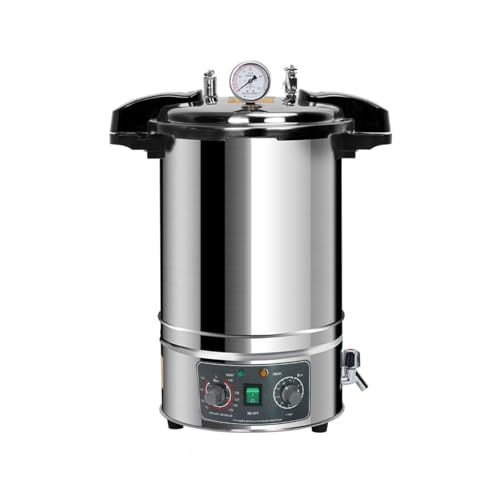
- 24L stated capacity
- 304 stainless steel construction
- Low-water heating shutoff
Best For: Larger home lab loads with suitable electrical capacity
Best Large-Capacity Digital Pick
23L Steam Autoclave with Drying
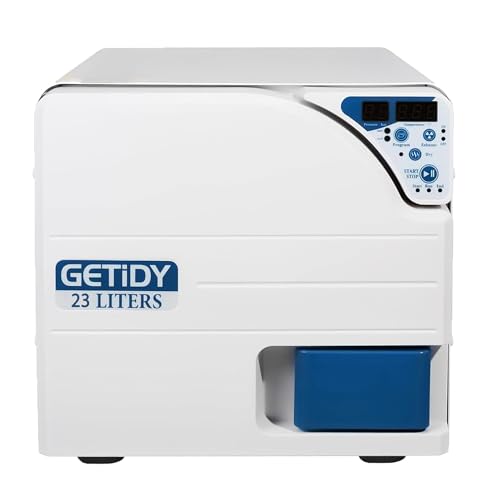
- 23L stainless steel chamber
- Two preset temperature cycles
- LED panel and drying function
Best For: Buyers wanting larger capacity and preset cycles
Best Hands-On Pressure Canner
18L Electric Steam Pressure Tank
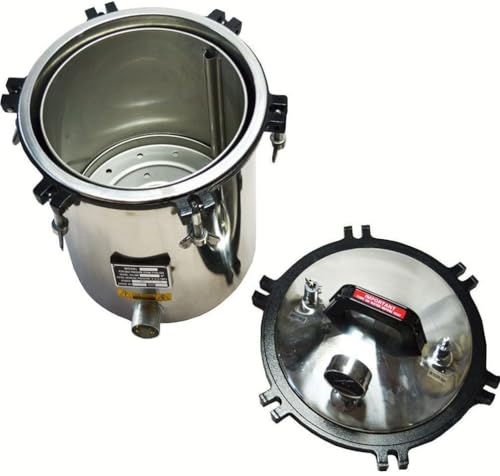
- 18L capacity on 110V power
- Gauge and overpressure release
- Requires continuous monitoring
Best For: Hands-on users seeking electric canner-style processing
Best Automated 18L Option

- 18L chamber with two presets
- Built-in drying and automatic drainage
- LED display and pressure gauge
Best For: Buyers prioritizing automated post-cycle handling
Best Compact Portable Pick
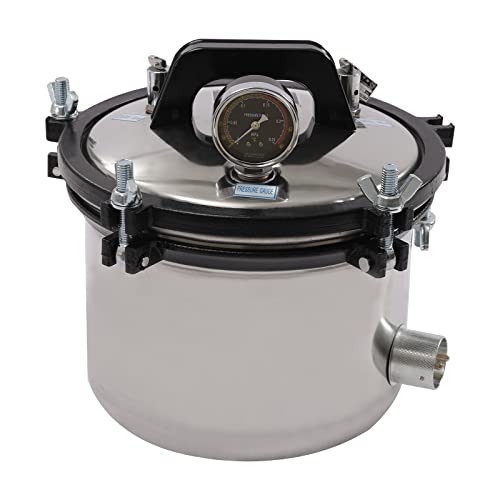
- Compact 8L capacity
- 304 stainless steel build
- Dual valves and dry-burn prevention
Best For: Portable, small-batch use
Best for Solid Instruments – 18L Class N Tabletop Autoclave
For shoppers comparing lab autoclaves for home use, this 18L tabletop unit offers digital controls and preset 121°C and 134°C steam cycles. Its Class N design is specifically for solid, unwrapped items, including lab glassware.
Best For: Home lab users sterilizing solid, unwrapped glassware or instruments who want preset controls.
Pros:
- Two preset programs: 121°C for 30 minutes or 134°C for 10 minutes at target temperature.
- LED status display, pressure gauge, safety door lock, and overheat protection.
- 18L stainless steel chamber includes three removable trays and loading accessories.
Cons:
- Not suitable for hollow or porous loads.
- No drying or active cooling cycle; allow for pressure release and natural cooling.
The presets simplify operation, but cycle timing excludes heating and exhaust. Choose it only if your loads match its Class N limitations.
Best Portable Lab Option – 12L Stainless Steel Autoclave
Among lab autoclaves for home use, this 12L model is a smaller-capacity option listed for lab equipment, culture medium, and glassware. Its stated working range is 121–126°C at 15–20 psi.
Best For: Home lab users who want a 12L stainless steel unit with a readable pressure and temperature gauge.
Pros:
- 12L capacity in a package listed at 16 x 14 x 14 inches.
- Gauge shows pressure in psi and temperature in °F.
- Two-valve design includes a safety valve for overpressure.
Cons:
- Heating elements are typically excluded from the stated one-year warranty.
- No drying function is specified in the supplied details.
This is worth considering when 12L is enough and you prefer to monitor a stated operating range. Confirm that its capacity fits your usual loads before buying.
Best with Listed Drying Function – 23L LED Autoclave
If you are comparing larger lab autoclaves for home use, this 23L model lists a drying function alongside an LED display and 121°C and 134°C temperature options. An external gauge lets you observe chamber pressure during operation.
Best For: Home lab users seeking 23L capacity and a model that lists a drying function.
Pros:
- 23L capacity provides more chamber volume than the 12L and 18L options here.
- Offers 121°C and 134°C temperature options.
- External pressure gauge and automatic overheat power cutoff.
Cons:
- Supplied details do not specify drying-cycle settings or load restrictions.
- Stated warranty is 180 days.
The listed drying function may appeal to buyers who want more than a steam-only cycle, but check the operating instructions for load compatibility and drying details.
Best Large-Capacity Lab Pick – 24L 110V Steam Autoclave
For buyers prioritizing chamber size among lab autoclaves for home use, this 24L steam sterilizer has the largest stated capacity in this group. It uses 304 stainless steel and is rated at 110V and 2kW.
Best For: Home lab users who need 24L capacity and can accommodate a 2kW appliance.
Pros:
- 24L stated capacity.
- Dual-scale gauge displays temperature and pressure.
- Backup safety valve and automatic heating shutoff for low water.
Cons:
- 2kW power rating warrants checking your electrical setup.
- Supplied details do not specify preset cycles or a drying function.
Its capacity and low-water protection are the main draws. Before choosing it, verify that its operating controls and electrical requirements suit your workspace.
Best Large-Capacity Digital Pick – 23L Steam Autoclave with Drying
Among lab autoclaves for home use, this 23L model suits buyers who need room for multiple instruments and prefer preset cycles over manual temperature adjustments. Its LED panel shows cycle progress and pressure status.
Best For: Buyers with space for a larger unit who want preset steam cycles and a drying function.
Pros:
- 23L, 304 stainless steel chamber provides generous capacity.
- Offers 121°C for 30 minutes and 134°C for 10 minutes.
- Includes drying, pressure regulation, overheat power cutoff, and a dual-control door lock.
Cons:
- Its 23L capacity may be more than occasional small-item users need.
- The listing does not specify the drying cycle duration.
The preset controls and included trays make this a practical choice when capacity and workflow convenience matter more than a compact setup.
Best Hands-On Pressure Canner – 18L Electric Steam Pressure Tank
For shoppers comparing lab autoclaves for home use with electric pressure canners, this 18L unit offers 110V heating without a stovetop burner. Its gauge supports hands-on pressure monitoring, but it is not a set-and-forget machine.
Best For: Users comfortable monitoring an electric pressure canner throughout operation.
Pros:
- 18L tank operates on 110V power.
- Steam-tight closure, pressure gauge, and automatic overpressure release support pressure management.
- Stainless steel shell and top handle help with moving and storage.
Cons:
- Heating continues during operation, with no timed shutdown.
- The supplied details do not list preset sterilization temperatures or cycles.
Choose this for a monitored, canner-style workflow rather than the automated cycles offered by digital autoclaves.
Best Automated 18L Option – Steam Autoclave with Drying
Of the lab autoclaves for home use here, this 18L model stands out for its preset steam cycles, built-in drying, and automatic drainage and exhaust. An LED display and external pressure gauge help users follow operation.
Best For: Buyers who want an 18L chamber with drying and less manual post-cycle handling.
Pros:
- Provides 121°C for 30 minutes or 134°C for 10 minutes.
- Built-in drying plus automatic drainage and steam exhaust streamline cleanup.
- Includes an overheat cutoff, safety door lock, pressure regulation, and manual relief valve.
- Comes with an instrument rack, holder, two trays, and drainage pipe.
Cons:
- Its stated footprint of 22.05 × 14.37 × 12.99 inches requires dedicated space.
- Opening the chamber still calls for care because hot steam may escape.
This is a strong fit when post-cycle convenience matters, provided your workspace can accommodate the unit and its drainage setup.
Best Compact Portable Pick – 8L Stainless Steel Autoclave
For smaller batches, this 8L unit is a more compact entry among lab autoclaves for home use. Its 304 stainless steel construction and stated 12.9-inch dimensions make it easier to consider where workspace is limited.
Best For: Small-batch users who prefer a portable pressure-vessel design.
Pros:
- 8L capacity and 17.7-pound listed weight support portability.
- 304 stainless steel construction resists corrosion.
- Safety and bleeder valves plus automatic dry-burn prevention address key operating risks.
- Includes a wing wrench for lid handling.
Cons:
- 8L capacity limits batch size compared with the larger units here.
- The supplied details do not describe a digital display or drying function.
Its compact capacity is the main appeal; check that your intended items fit before choosing it over a larger chamber.
How We Picked These Lab Autoclaves for Home Use
We compared the eight selected units using their stated capacity, power requirements, controls, drying features, construction, and listed safety provisions. These are comparison criteria, not proof of sterilization performance. Product names and listings do not establish that a machine meets a particular medical, laboratory, or regulatory standard; verify the manual and documentation for the exact model before ordering.
Quick Comparison: Match Capacity to the Load
The 8L and 12L portable models are the first places to look for small batches and limited bench space. The three 18L options offer a middle ground; among them, compare the listed automatic controls, built-in drying, and pressure-canner-style design rather than treating them as interchangeable. The two 23L models advertise drying functions, while the 24L unit offers the largest stated capacity in this group. These figures describe nominal chamber volume—not how much you can safely load in a cycle. Check usable chamber dimensions and clearance for your tallest vessel.
Key Buying Factors for Home Labs
Cycle Suitability and Verification
Start with the items you need to process: instruments, glassware, culture media, and wrapped or porous loads can require different cycles. Confirm the unit’s supported load types, temperature and pressure settings, cycle times, and whether it provides records or indicators you can use to monitor a run. A listing that says “Class N” should not be assumed suitable for wrapped or hollow instruments. Where sterility is critical, follow an appropriate validation procedure rather than relying on the display alone.
Drying, Power, and Placement
A drying function can reduce residual moisture, but check which cycles include it and whether loads must cool or air-dry afterward. Confirm the voltage, wattage, plug type, and circuit needs—not just a “110V” label. Allow the clearance and ventilation specified by the manufacturer, and plan for hot surfaces, steam release, condensate, and the weight of a filled chamber.
Safety and Ownership
Look for a clear operating manual, pressure-rated construction, door interlocks or secure locking, overheat protection, and accessible replacement parts. Check warranty coverage and service options before purchasing. Do not substitute an electric pressure canner for a validated lab autoclave without documentation supporting your intended process; likewise, do not use a lab unit for food preservation unless its manufacturer explicitly approves that use.
Who Should Buy Which Lab Autoclaves for Home Use?
Choose an 8L or 12L unit if space and occasional small loads are your main constraints. Consider an 18L model when you need more room but still want a manageable tabletop footprint; prioritize drying if wet loads disrupt your workflow. Look at the 23L or 24L models for larger vessels or more items per batch, provided you have the electrical capacity and room to operate them safely. If your work requires documented, repeatable sterility, buy based on verified cycle capabilities and support—not price or chamber size alone.