
If you’re building a Raspberry Pi project, robotics rig, or DIY inspection tool, the right camera module can make all the difference. Infrared options let hobbyists capture in low light, see heat signatures, or add night vision without complicated setups.
This roundup focuses on the most useful infrared camera modules for hobbyists, with picks for beginners, makers, and tinkerers who want reliable performance and straightforward compatibility.
Best 10 Infrared Camera Modules for Hobbyists Picks for 2026
Best for Low-Light Raspberry Pi Projects
Raspberry Pi NoIR Camera Module V2

- 8MP stills with solid detail for Pi builds
- IR-sensitive design for night vision and infrared use
- Fast 1080p30 and 720p60 video support
Best For: Raspberry Pi hobbyists needing an IR-capable camera for low-light or monitoring projects.
Best for Day/Night Hobby Builds

- Automatic IR-cut switching with 850 IR LEDs
- 2MP sensor; up to 1080p resolution
- Plug-and-play USB support across major platforms
Best For: DIY surveillance, Raspberry Pi projects, and compact day/night camera builds.
Best for Autofocus and HDR

- 12MP Sony IMX708 sensor
- PDAF autofocus for quick focusing
- HDR and improved low-light support
Best For: Raspberry Pi makers who want a compact, easy-to-integrate camera for general imaging projects.
Best for Basic Thermal Imaging
PerfectPrime IR0002 Thermal Imager

- 60 x 60 thermal resolution with visible-light camera
- MicroSD storage for saving images and comparisons
- Simple handheld option for beginner troubleshooting
Best For: Hobbyists who want a starter thermal camera for basic inspections and DIY experiments.
Best for Raspberry Pi Tinkerers
Arducam 5MP OV5647 Camera for Pi

- Wide Raspberry Pi compatibility
- 5MP photos and 1080p video
- Simple fixed-focus, plug-in design
Best For: Raspberry Pi hobbyists who want an easy, dependable camera module for DIY projects.
Best for Portable Thermal Readouts

- Measures -40°C to 300°C with ±2℃ accuracy
- 24×32 thermal resolution with 2.8" TFT display
- Saves images and connects to PC via Type-C
Best For: Hobbyists who need a portable thermal camera for quick checks and casual troubleshooting.
Best for Day/Night Switching
Raspberry Pi 5MP IR Camera Module

- IR-cut filter for automatic day/night switching
- Adjustable focus for easier DIY setup
- 5MP stills and up to 1080p video support
Best For: Hobbyists who need a straightforward Raspberry Pi camera for mixed daylight and night-vision projects.
Best for Low-Power Thermal Mapping

- 32x24 thermal array keeps the price and complexity down
- I2C up to 1MHz is a good fit for SBCs and MCUs
- 3.3V/5V compatibility simplifies prototyping and wiring
Best For: Makers and students building low-power thermal sensing projects on Raspberry Pi or microcontrollers.
Best for Night Vision
Raspberry Pi 5MP OV5647 Infrared Camera
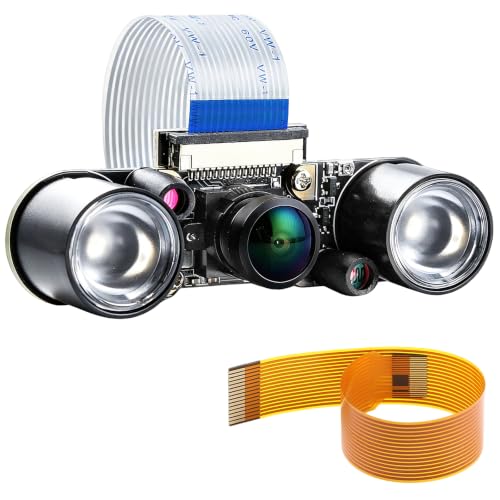
- Dual IR lights improve low-light visibility
- 160° wide-angle lens covers a broad scene
- Includes cables for Pi 5, 4, 3, 2, and Zero
Best For: Raspberry Pi hobbyists building nighttime monitoring or wide-angle DIY camera projects.
Best for Automatic Night-Vision Triggering
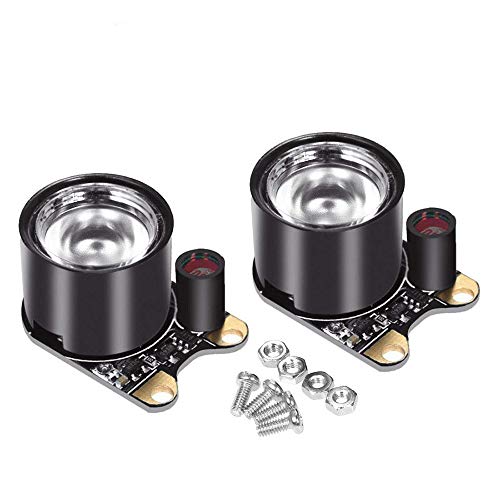
- 3W 850nm IR LEDs for Raspberry Pi night vision
- Photoresistor and adjustable threshold for auto switching
- 2-pack add-on board for Pi Camera (E) and (F)
Best For: Raspberry Pi hobbyists who want an add-on IR light board with automatic low-light triggering.
Best for Low-Light Raspberry Pi Projects – Raspberry Pi NoIR Camera Module V2
If you want one of the most practical infrared camera modules for hobbyists, this Raspberry Pi NoIR Camera Module V2 is a simple way to add night vision, plant monitoring, or low-light capture to a Pi build. Its 8MP Sony sensor keeps the image quality respectable, while the no-IR-cut design makes it useful for infrared photography and other specialized projects.
Best For: Raspberry Pi users building IR-sensitive projects like security cams, wildlife monitoring, or DIY plant-growth setups.
Pros:
- 8MP sensor with up to 3280 x 2464 still images
- Supports 1080p30, 720p60, and fast 640×480 capture
- Native Raspberry Pi support with the CSI interface and Raspbian
- Tiny, lightweight module that fits compact builds
Cons:
- Fixed-focus lens limits flexibility for close-up tuning
- Requires a Raspberry Pi, so it is not a standalone camera
For hobbyists who need an affordable IR-capable camera rather than a general-purpose webcam, this module hits the sweet spot. It is especially appealing among infrared camera modules for hobbyists because it balances image quality, software support, and easy Pi integration.
Best for Day/Night Hobby Builds – Arducam 1080P USB Camera
If you want one of the more versatile infrared camera modules for hobbyists, this Arducam board stands out for automatic IR-cut switching and built-in 850 IR LEDs, so it can handle both daylight color and night vision without extra setup.
Best For: DIY surveillance, Raspberry Pi projects, wildlife monitoring, and compact USB camera builds that need reliable day/night switching.
Pros:
- Automatic IR-cut filter switching for true day and night operation
- 2MP OV2710 sensor with up to 1080p resolution
- USB 2.0 UVC plug-and-play support for Windows, Linux, Android, Mac OS, and Raspberry Pi
- Compact 38mm x 38mm board fits tight installations
Cons:
- 1080p frame rate drops at higher resolutions
- Board-style design needs a case or careful mounting for exposed projects
For hobbyists who need a practical, all-day imaging module rather than a bare sensor board, this is a strong pick. It fits many infrared camera modules for hobbyists use cases where simple USB connectivity and automatic low-light switching matter more than advanced customization.
Best for Autofocus and HDR – Raspberry Pi Camera Module 3
If you want a compact, official Raspberry Pi camera that’s easy to build around, the Camera Module 3 is a strong choice for hobby projects that need clear imaging and reliable focus. It’s not an infrared camera by itself, but it’s a practical option to pair with IR lighting or adapt into DIY infrared camera modules for hobbyists working on experimental setups.
Best For: Raspberry Pi users who want a small, modern camera module with autofocus, better low-light performance, and HDR support.
Pros:
- 12MP Sony IMX708 sensor delivers sharp stills and solid project image quality
- Phase detection autofocus helps keep subjects in focus without manual tuning
- HDR support can improve detail in mixed lighting and outdoor scenes
- Official Raspberry Pi module makes integration straightforward
Cons:
- Not a true IR-sensitive camera out of the box
- Less suited to purely thermal or night-vision use cases
- Wide-angle version may introduce distortion for some projects
For makers who care more about dependable autofocus and image quality than specialized IR performance, this is a versatile Raspberry Pi camera to start with. If your project sits alongside infrared camera modules for hobbyists, it works best as a general-purpose imaging base that can be combined with external IR lighting or filters.
Best for Basic Thermal Imaging – PerfectPrime IR0002 Thermal Imager
If you’re comparing infrared camera modules for hobbyists, the PerfectPrime IR0002 is a simple entry point that combines a 60 x 60 thermal sensor with a visible-light camera and an easy-to-read 2.4-inch display. It’s aimed at quick spot checks rather than lab-grade measurements, but it gives makers a practical way to see heat patterns, inspect electronics, and experiment with thermal imaging.
Best For: Hobbyists who want an affordable handheld thermal camera for basic troubleshooting, experiments, and home projects.
Pros:
- 60 x 60 IR resolution with 3600 total pixels for basic thermal maps
- Includes visible-light capture and microSD storage for easy comparison
- Wide temperature range covers common electronics and home-use checks
- Lightweight handheld format is straightforward for beginners
Cons:
- Low 6 Hz refresh rate is not ideal for fast-moving subjects
- Requires 4 AA alkaline batteries only, which limits convenience
- Thermal resolution is modest compared with higher-end imagers
For infrared camera modules for hobbyists, this model makes sense when you want a usable thermal view without paying for advanced features. It’s better as a starter troubleshooting tool than a precision measurement device, but that balance is often enough for DIY electronics and general experimentation.
Best for Raspberry Pi Tinkerers – Arducam 5MP OV5647 Camera for Pi
If you want one of the simplest infrared camera modules for hobbyists to drop into a Raspberry Pi project, this Arducam OV5647 board is a practical pick. It supports a wide range of Pi models, delivers 5MP stills and 1080p video, and includes an integral IR filter for general-purpose imaging.
Best For: Raspberry Pi users who want a straightforward, compatible camera module for learning, prototyping, and everyday DIY vision projects.
Pros:
- Works with Raspberry Pi A/B, B+, Pi 2, Pi 3, Pi 4, and Pi 5
- 5MP OV5647 sensor with up to 2592 x 1944 still resolution
- 1080p max video resolution for basic streaming and capture
- Compact, fixed-focus design keeps setup simple
Cons:
- Not compatible with Raspberry Pi Zero
- Fixed-focus lens is less flexible than autofocus options
- Integral IR filter may limit true infrared use cases without modification
For hobbyists building a Pi camera rig, this module is a dependable entry-level option rather than a specialized low-light solution. If your priority is broad compatibility and easy setup over advanced infrared camera modules for hobbyists, it fits the brief well.
Best for Portable Thermal Readouts – Mini Handheld Thermal Camera
If you want a compact thermal imager for quick diagnostics, this handheld unit covers the basics well for infrared camera modules for hobbyists. It measures from -40°C to 300°C, offers a 24×32 thermal resolution, and gives you a small 2.8″ TFT display for on-device viewing.
Best For: Hobbyists who want a simple, portable thermal camera for electrical checks, heat spotting, and casual experimentation.
Pros:
- Non-contact temperature measurement is useful around live circuits and moving parts
- Portable design with an 800mAh rechargeable battery for field use
- Saves up to 100 thermal images for later review and comparison
- Type-C PC connection makes data storage and transfer easier
Cons:
- 24×32 resolution is fairly low for detailed thermal analysis
- Not ideal if you need laboratory-grade accuracy or advanced imaging features
For simple inspections and learning projects, this is a practical entry-level option among infrared camera modules for hobbyists. It’s more about portability and convenience than precision, but that makes it a solid fit for casual troubleshooting and hands-on use.
Best for Day/Night Switching – Raspberry Pi 5MP IR Camera Module
If you want one of the more beginner-friendly infrared camera modules for hobbyists, this Raspberry Pi camera adds an IR-cut filter and adjustable focus so it can handle both daylight and low-light scenes without much fuss. It’s a practical pick for DIY monitoring, OctoPrint, and simple night-vision projects on supported Pi models.
Best For: Hobbyists who want a plug-in Raspberry Pi camera for both daytime color images and basic infrared/night vision use.
Pros:
- Built-in IR-cut switching helps reduce color cast between day and night use.
- Adjustable focus makes setup easier for close-up or fixed-distance projects.
- Supports 5MP stills and up to 1080p video for general hobby and maker use.
- Works with Raspberry Pi 2B/3B/3B+/4B via the CSI interface.
Cons:
- Some users may need to tighten mounting bolts if the LEDs or camera act up.
- LED behavior can require extra GPIO wiring for more predictable control.
Overall, this is a sensible option if you want infrared camera modules for hobbyists that balance ease of use, adjustable focus, and day/night flexibility rather than advanced imaging features.
Best for Low-Power Thermal Mapping – MLX90642-D45 Thermal Module
If you want one of the more practical infrared camera modules for hobbyists, this MLX90642-D45 board is a solid fit for heat-mapping, basic automation, and embedded sensing projects. Its 32×24 thermal array keeps costs down while still giving you usable temperature patterns for prototyping and data logging.
Best For: Makers and students who need a simple, low-power thermal imaging module for Raspberry Pi or microcontroller projects.
Pros:
- 32×24 thermal sensor array is affordable and easy to use for heat-map experiments
- I2C interface up to 1MHz supports responsive readings and straightforward integration
- 3.3V/5V logic compatibility makes wiring easier across common dev boards
- Low NETD and included tutorials help with cleaner readings and faster setup
Cons:
- 32×24 resolution is limited for detailed thermal imaging
- Better suited to functional sensing than polished image-quality demos
- Requires some coding and calibration work to get the most from it
Overall, this module is a smart pick if you value affordability, compatibility, and simple thermal sensing over high-resolution visuals. For hobbyists comparing infrared camera modules for hobbyists, it stands out as a practical entry point for real projects rather than a flashy imaging toy.
Best for Night Vision – Raspberry Pi 5MP OV5647 Infrared Camera
If you want one of the more versatile infrared camera modules for hobbyists, this Raspberry Pi camera adds a 5MP OV5647 sensor, wide compatibility, and dual IR illumination for low-light projects. It is a practical pick for Pi-based monitoring, classroom demos, and DIY video setups where night visibility matters.
Best For: Raspberry Pi users who need an affordable IR-capable camera for nighttime monitoring, experiments, or wide-angle hobby projects.
Pros:
- Works with Raspberry Pi 5, 4, 3, 2, Zero, and more
- Dual infrared lights help reduce dark corners in low-light scenes
- 160° wide-angle lens delivers a broad, near-fisheye view
- Includes both 15-pin to 22-pin and 15-pin to 15-pin ribbon cables
Cons:
- Wide-angle optics can introduce noticeable edge distortion
- Not a true plug-and-play choice for users unfamiliar with Pi camera setup
- Infrared performance depends on the scene and mounting distance
For hobbyists who want a flexible IR camera that handles night shots, wide scenes, and basic surveillance, this is a strong all-around option. It stands out among infrared camera modules for hobbyists because it combines broad Pi support, included adapters, and built-in illumination in one budget-friendly package.
Best for Automatic Night-Vision Triggering – DORHEA 2-Pack IR LED Board
If you want a simple way to add night vision to a Raspberry Pi setup, this DORHEA module is a practical pick for infrared camera modules for hobbyists. Its 850nm IR LEDs are aimed at Pi camera use, and the onboard photoresistor plus adjustable threshold make it easier to automate when the lights turn on.
Best For: Hobbyists building a Raspberry Pi night-vision camera who want automatic IR activation without a lot of wiring or tuning.
Pros:
- 3W 850nm IR output is strong enough for basic night-vision projects
- Photoresistor-based auto switching helps the LEDs respond to ambient light
- Adjustable resistor lets you tune the activation threshold
- Designed to add night vision to Raspberry Pi Camera (E) and (F)
Cons:
- Built for Raspberry Pi camera setups, so it is not a universal IR solution
- Performance depends on correct placement and project enclosure design
- Not ideal if you need a fully finished camera module rather than an add-on board
For infrared camera modules for hobbyists, this is a useful add-on if your priority is straightforward night-vision illumination rather than a full camera kit. It is especially appealing for DIY builds that need automatic IR lighting in low-light conditions.
How We Picked the Best Infrared Camera Modules for Hobbyists
We prioritized modules and accessories that are practical for DIY use: solid sensor quality, clear compatibility notes, ease of integration, and value for common maker projects. We also favored options that serve distinct needs, such as visible-light night vision, thermal sensing, and add-on infrared illumination.
Quick Comparison: Night Vision Vs Thermal Vs Illuminators
Not every infrared module does the same job. Night-vision cameras use IR-sensitive sensors and often rely on external IR LEDs for illumination. Thermal modules measure heat instead of reflected light, which makes them better for diagnostics, electronics, and temperature spotting. IR illuminator boards are not cameras themselves, but they can dramatically improve low-light camera performance.
Key Buying Factors for Infrared Camera Modules for Hobbyists
Sensor Type and Use Case
Choose a visible-light/NoIR camera if you want normal images in the dark with IR lighting. Choose a thermal sensor if you need heat maps, hot-spot detection, or non-contact temperature awareness.
Resolution and Frame Rate
Higher resolution helps with detail, but frame rate matters for motion and real-time viewing. For hobby projects, a balanced spec is usually more useful than the highest number on the box.
Compatibility and Interface
Check whether the module is built for Raspberry Pi CSI, USB, or I2C. Compatibility with your board and software stack is often more important than small spec differences.
Lens, Focus, and Lighting
Fixed-focus modules are simple, while adjustable or wide-angle lenses offer more flexibility. If you are shooting in the dark, an IR LED board or built-in night LEDs can be just as important as the camera itself.
Power and Installation
Hobbyists should pay attention to voltage requirements, cable length, mounting options, and heat output. Simple wiring and stable power make prototyping much easier.
Who Should Buy Which Infrared Camera Modules for Hobbyists?
If you want a straightforward Raspberry Pi night-vision setup, pick a NoIR-style camera with an IR illuminator. If you need thermal data for electronics, home inspections, or experiments, a thermal module is the better fit. If you are building a general-purpose vision project, a standard camera module with IR support may offer the best balance of ease, image quality, and flexibility.
For most makers, the best choice is the one that matches the environment first and the specs second. That approach keeps your project simpler, cheaper, and far more useful in the real world.