
The best heavy-duty light stands give photographers, videographers, and event crews a more secure way to support strobes, LED panels, modifiers, and stage lights. Compared with lightweight travel stands, they prioritize stronger materials, wider footprints, better load handling, and dependable adjustment hardware.
This roundup compares 10 heavy-duty light stands across stainless steel, aluminum, wheeled, C-stand, spring-cushioned, and DJ-oriented designs. Use the buying guide below to match stand height, portability, capacity, and mounting style to your work.
Best 10 Heavy Duty Light Stands Picks for 2026
Best Rolling Heavy-Duty Pick
Stainless Steel Wheeled Tripod
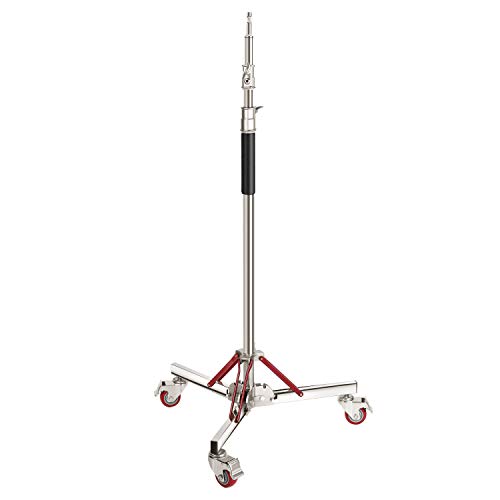
- Supports up to 66 pounds
- 360-degree locking casters
- Adjusts to 10 feet
Best For: Mobile studio lighting with heavy equipment
Best Two-Pack Value
EMART 8.5-Foot Spring-Cushioned Stand

- Includes two stands
- 22-pound load capacity each
- Height reaches 8.53 feet
Best For: Budget-conscious two-light setups
Best Tall Two-Pack
9.8-Foot Stainless Steel Tripods

- Two stands reach 10.5 feet
- 22-pound load capacity
- 1/4-inch and 3/8-inch mounts
Best For: Tall two-light studio and video setups
Best Compact Stainless Option

- 22-pound load capacity
- Lightweight 4.16-pound design
- Reversible 1/4-inch to 3/8-inch adapter
Best For: Portable lighting kits and compact setups
Best Heavy-Duty DJ Stand

- 108-pound load capacity
- 39–100-inch height range
- Removable crossbar for speaker use
Best For: Multi-light DJ and stage setups
Best Heavy-Duty C Stand
Stainless Steel 10.8-Foot Stand

- 45-pound support capacity
- Extends to 10.8 feet
- Folding turtle base with spring cushioning
Best For: Studio, film, and outdoor production gear
Best Heavy-Duty Stand Set
2-Pack Aluminum Lighting Stands

- Two stands with carry bags
- 22-pound capacity per stand
- 94–280 cm adjustable height
Best For: Portable two-light photography kits
Best Mobile Heavy-Duty Stand
Wheeled 10.5-Foot Stainless Steel Stand

- 66-pound maximum load capacity
- Locking 360-degree swivel casters
- 4.46- to 10.5-foot height adjustment
Best For: High-capacity studio lighting that needs frequent repositioning
Best Rolling Grip Stand
Flashpoint Wheeled Pistol-Grip Stand

- 22-pound maximum load
- Sliding pistol-grip adjustment arm
- Locking three-caster rolling base
Best For: Studio setups needing quick arm and position adjustments
Best Reinforced Tripod
9.2-Foot Dual-Spring Steel Light Stand

- 3.6- to 9.2-foot height range
- Dual spring buffers for impact reduction
- 17-pound load limit with reinforced base
Best For: Tall tripod lighting setups using moderate-weight equipment
Best Rolling Heavy-Duty Pick – Stainless Steel Wheeled Tripod
For photographers who need heavy duty light stands that can move substantial gear around a studio, this NEEWER rolling tripod combines a 66-pound capacity with a wheeled base. Its stainless steel build, adjustable height, and spring-loaded protection make it suited to demanding setups.
Best For: Moving heavy lights, softboxes, and reflectors across studio floors or suitable outdoor locations.
Pros:
- Supports up to 66 pounds.
- 360-degree casters include step-on brakes and rubber wheels.
- Adjusts from 4.3 to 10 feet and folds for storage.
- Spring-loaded mechanism helps cushion sudden drops.
Cons:
- At 17 pounds, it is heavier to carry than simpler light stands.
- Its caster-based design is less suited to setups that require frequent lifting or compact travel.
This is the strongest choice in the group for high-load studio work and repositioning equipment without dragging it. Choose it when mobility and maximum capacity matter more than minimizing stand weight.
Best Two-Pack Value – EMART 8.5-Foot Spring-Cushioned Stand
This EMART set is a practical way to outfit a basic studio or location kit with two heavy duty light stands. The aluminum construction supports up to 22 pounds per stand, while spring cushioning and adjustable height add useful protection and flexibility.
Best For: Buyers who need two general-purpose stands for strobes, softboxes, umbrellas, flashes, or reflectors.
Pros:
- Two-stand package offers a convenient starting setup.
- Supports loads up to 22 pounds per stand.
- Height adjusts from 3.15 to 8.53 feet.
- Spring buffer helps reduce equipment impact during adjustment.
Cons:
- Aluminum construction is not as robust as the stainless steel options here.
- The stands are listed as not water resistant.
- They do not include built-in casters for rolling repositioning.
For a straightforward two-light arrangement, this EMART bundle balances capacity, adjustability, and convenience. It is a sensible option for users who value having matching stands more than maximum load capacity or outdoor weather resistance.
Best Tall Two-Pack – 9.8-Foot Stainless Steel Tripods
These SH tripods are heavy duty light stands designed for taller lighting positions and flexible mounting. The two-pack reaches 10.5 feet, supports up to 22 pounds, and adds air cushioning, thick tubing, and multiple mounting options for studio or location work.
Best For: Portrait, product, video, and broadcast setups that need two tall, portable stands.
Pros:
- Two stands extend from 47.2 inches to 126 inches.
- Supports up to 22 pounds vertically.
- Includes 1/4-inch and 3/8-inch mounting options with three-way positioning.
- Folds to about 39 inches and uses spring cushioning.
Cons:
- The listed 22-pound capacity is lower than the rolling NEEWER tripod.
- They are not water resistant.
- The 9.9-pound listed item weight may be less convenient for lightweight travel than a smaller stand.
This set stands out when height and quantity are priorities. Its tall extension and adaptable mounts make it more versatile than a basic single-thread stand, while the collapsible design keeps a two-stand kit manageable to transport.
Best Compact Stainless Option – NEEWER 7.2-Foot Stand
This NEEWER model is a compact choice among heavy duty light stands, offering stainless steel construction and a 22-pound capacity in a 4.16-pound package. Its spring cushion, reversible adapter, and 7.2-foot maximum height cover common lighting needs without adding excessive bulk.
Best For: Portable photography and video setups using LED lights, strobes, ring lights, or softboxes.
Pros:
- Supports up to 22 pounds.
- 100% stainless steel construction resists corrosion and moisture.
- Adjusts from 3.2 to 7.2 feet.
- Reversible 1/4-inch to 3/8-inch adapter supports vertical or horizontal mounting.
Cons:
- Its 7.2-foot maximum is shorter than the other full-height options.
- Sandbags are sold separately for additional stability.
- It is a single stand rather than a two-pack.
Choose this stand when portability and durable materials are more important than maximum height. It offers useful professional features in a smaller format, making it a good fit for mobile kits and lower-to-mid-height lighting positions.
Best Heavy-Duty DJ Stand – Adjustable T-Bar Tripod
For stage lighting setups that need substantial capacity, this heavy duty light stand combines a tubular-steel tripod with a T-bar rated to hold up to 108 pounds. Its 39-to-100-inch height range and removable crossbar make it adaptable for events, presentations, and mobile setups.
Best For: DJs, event crews, and stage setups using multiple par cans or other compatible lighting fixtures.
Pros:
- Supports up to 108 pounds.
- Adjusts from 39 to 100 inches with a bolt-tightening height lock.
- Eight hanging-point bolts help mount multiple fixtures.
- Removable crossbar converts the stand into a speaker stand.
Cons:
- At 4.45 kg, it is less lightweight than many portable photography stands.
- The T-bar setup is more specialized than a standard single-light stand.
This is a strong choice when load capacity and multi-light mounting matter most. The collapsible design and two-year warranty add practical value for recurring event use.
Best Heavy-Duty C Stand – Stainless Steel 10.8-Foot Stand
This heavy duty light stand is built for demanding photography, video, and film work. Its stainless-steel construction supports up to 45 pounds, while the 5-to-10.8-foot range and folding turtle-shaped base provide flexibility for studio or outdoor shooting.
Best For: Photographers, videographers, and filmmakers handling heavier lights, modifiers, reflectors, or camera accessories.
Pros:
- Supports equipment weighing up to 45 pounds.
- Extends from 5 feet to 10.8 feet.
- Stainless-steel construction is suited to moisture, heat, and impacts.
- Folding base and built-in spring cushioning improve transport and equipment protection.
Cons:
- At 12.57 pounds, it is relatively heavy for mobile shoots.
- The C-stand footprint and design may be more than needed for simple single-light setups.
Choose this model when durability, height, and load support take priority over minimum carry weight. Its universal interface also accommodates a broad range of photography and video accessories.
Best Heavy-Duty Stand Set – 2-Pack Aluminum Lighting Stands
For photographers who need two matching supports, this two-pack of heavy duty light stands offers aluminum construction, spring cushioning, and a 22-pound maximum load per stand. Each stand adjusts from 94 cm to 280 cm and includes a carry bag for transport.
Best For: Portable studio, softbox, umbrella, flash, and on-location photography setups requiring two stands.
Pros:
- Includes two stands and two carry bags.
- Adjusts from 94 cm to 280 cm, or about 9.2 feet.
- Spring cushioning helps protect mounted equipment.
- Each stand supports up to 10 kg, or 22 pounds.
Cons:
- The aluminum design is lighter than steel but may not feel as substantial as a stainless-steel C stand.
- The listed maximum load applies to each stand, not the pair as a combined capacity.
This set is a practical value for photographers building a two-light kit. Its compact 94-cm folded size and included bags make it especially convenient for location work.
Best Mobile Heavy-Duty Stand – Wheeled 10.5-Foot Stainless Steel Stand
For photographers who need heavy duty light stands that can support substantial equipment and still move around a studio, this wheeled Trrose model is a capable option. Its stainless steel construction, spring cushioning, locking casters, and 66-pound maximum load make it suited to demanding lighting setups.
Best For: Studio photographers who need high load capacity, adjustable height, and easy repositioning.
Pros:
- Supports up to 66 pounds with a durable stainless steel build.
- Spring cushioning helps buffer sudden equipment drops.
- 360-degree swivel casters make the stand easier to move, while tread brakes help secure it in place.
- Adjusts from 4.46 to 10.5 feet and includes three casters.
Cons:
- At over 14 pounds for the stand itself, it is heavier than more portable options.
- Its wheeled design is more oriented toward mobile studio use than compact travel.
This is the strongest choice here for large, heavier fixtures and frequent studio repositioning. The trade-off is weight and bulk, but the high load rating and locking mobility provide useful stability for substantial equipment.
Best Rolling Grip Stand – Flashpoint Wheeled Pistol-Grip Stand
This Flashpoint model is one of the more specialized heavy duty light stands in the group, combining a rolling tripod base with a sliding pistol-grip arm. It is designed for photographers who want quick height and arm adjustments while supporting lights, softboxes, reflectors, or similar accessories.
Best For: Studio users who value a rolling base and fast, secure positioning of mounted equipment.
Pros:
- Three caster wheels roll into position and lock with foot controls.
- Pistol-grip arm adjusts by squeezing the trigger and moving the grip.
- Supports up to 22 pounds at a maximum height of 6.5 feet.
- Reversible adapter offers 5/8-inch and 1/4-inch-20 studs.
Cons:
- Its 6.5-foot maximum height is lower than the other listed stands.
- The 35.4-pound product weight makes it less convenient for transport.
The Flashpoint is a practical choice when fast, controlled positioning matters more than maximum height. Its pistol-grip arm adds flexibility, while the rolling base helps with studio workflow, though the substantial weight limits portability.
Best Reinforced Tripod – 9.2-Foot Dual-Spring Steel Light Stand
For photographers looking for heavy duty light stands with a more conventional tripod format, this Anautin stand offers a useful balance of height, reinforcement, and equipment protection. Dual spring buffers, a reinforced base, anti-slip feet, and metal locking hardware support lights and cameras up to about 17 pounds.
Best For: Indoor or outdoor photographers who want a tall, stable tripod for moderate-weight lighting gear.
Pros:
- Adjusts from approximately 3.6 to 9.2 feet.
- Dual spring buffers help reduce impact when sections descend.
- Triple reinforced base and anti-slip rubber feet improve stability.
- Includes 1/4-inch and 3/8-inch adapter options for varied equipment.
Cons:
- Its 17-pound load limit is substantially lower than the highest-capacity stand here.
- It has no casters, so repositioning requires lifting the stand.
- No warranty is specified in the supplied product details.
This stand is a sensible middle-ground option for users who want substantial height and stability without the wheeled, studio-focused design of the larger models. Its moderate load rating makes careful equipment matching important.
How We Picked the Best Heavy Duty Light Stands
We selected stands that emphasize stability and practical load support rather than minimal packed size alone. The lineup includes stainless steel tripods, aluminum spring-cushioned models, wheeled stands, C-stands with sliding arms, and T-bar systems for stage lighting. We considered maximum height, construction, adjustment range, caster availability, cushioning, mounting compatibility, and the type of lighting each design is intended to support.
Because manufacturer specifications and included hardware can vary, verify the listed load rating, thread adapters, footprint, and packed dimensions before purchase. A stand’s real-world stability also depends on how high the light is extended, the weight and shape of the modifier, and whether the floor is level.
Quick Comparison
- Best for mobile studio work: Wheeled stainless steel stands with locking casters make repositioning large lights easier.
- Best for general photography: Spring-cushioned tripod stands help protect equipment during height adjustments.
- Best for maximum versatility: C-stands provide a strong base and useful arm positioning for lights, flags, and modifiers.
- Best for event and stage lighting: T-bar stands are designed to hold multiple fixtures in a more specialized configuration.
- Best for multi-light setups: Two-packs can reduce cost and keep matching stands available for key and fill lights.
Key Buying Factors for Heavy-Duty Light Stands
Material and Construction
Stainless steel generally offers excellent strength and durability, while aluminum is lighter and easier to transport. Steel stands are often preferable for permanent or demanding setups; aluminum can be the better choice for location work when every pound matters.
Height, Footprint, and Load Rating
Choose enough height for your shooting angle, but remember that stability decreases as a stand is raised higher. Check the manufacturer’s maximum load rating and leave practical headroom for modifiers, booms, cables, and movement. A broad footprint is valuable when using large softboxes outdoors or in busy spaces.
Cushioning and Adjustment Hardware
Spring-cushioned sections slow the descent of mounted equipment and reduce the chance of sudden drops. Look for secure locking knobs, robust risers, and smooth adjustments. For frequent repositioning, locking casters can save time, but they should be firmly engaged during shooting.
Mounting Compatibility and Portability
Confirm whether the stand includes a standard spigot, 1/4-inch or 3/8-inch adapter, T-bar, or arm. Compare folded length and weight with your cases, vehicle, and location needs. A heavier stand is not automatically better if it is too cumbersome for your workflow.
Who Should Buy Which Heavy Duty Light Stands?
Studio photographers and video crews should favor sturdy stainless steel or C-stand designs with generous height and reliable locking hardware. Portrait and product photographers may prefer spring-cushioned tripods for straightforward light placement and safer adjustments. Event photographers and rental teams can benefit from wheeled models when lights must be moved across a studio or venue. DJs and stage crews should choose a purpose-built T-bar stand when supporting multiple PAR cans or stage fixtures. Finally, mobile shooters should balance capacity with folded size and weight, choosing the strongest stand they can transport and set up consistently.