
Small businesses often need to clone drives, prepare identical systems, migrate storage, or securely erase retired media without tying up an entire workstation. The right standalone duplicator can make those jobs faster, more repeatable, and less dependent on specialized software.
We selected 10 models spanning single-drive tools, dual-bay docks, multi-target duplicators, and systems that support SATA, M.2, USB, or mixed media. Use the comparison and buying advice below to match the hardware to your workload, drive formats, and data-handling requirements.
Best 10 Hard Drive Duplicators for Small Businesses Picks for 2026
Best Multi-Drive Workstation
4-Bay HDD/SSD Duplicator and Eraser

- Standalone 1:3 cloning and four-bay operation
- Quick and NIST-aligned Secure Erase modes
- USB/eSATA docking with SATA and IDE adapter support
Best For: Small-business IT teams managing cloning and drive sanitization
Best for Image-Based Deployments
1:1 SATA Duplicator with Image Manager

- Stores multiple system images on one library drive
- Four duplication modes for varied deployment tasks
- Standalone SATA III copying at up to 6 GB/min
Best For: IT teams performing repeatable system setup and restoration
Best Budget Docking Option
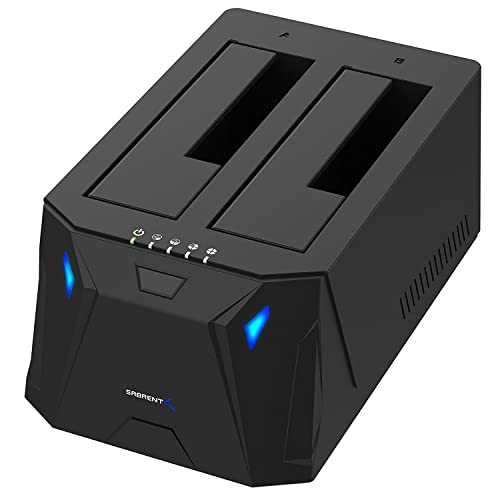
- Offline cloning with no drivers required
- Supports 2.5/3.5-inch SATA drives up to 10TB
- USB 3.0 docking with up to 5Gbps transfer speed
Best For: Small offices needing occasional cloning and drive access
Best for Fast Single Copies
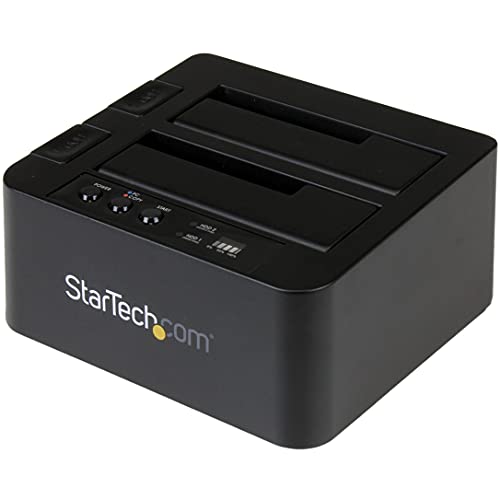
- Standalone sector-by-sector copying up to 28 GB/min
- Supports SATA HDDs/SSDs and 4Kn drives
- USB 3.2 Gen 2 docking with trayless bays
Best For: IT staff performing fast full-drive copies and migrations
Best USB Bulk Duplicator

- 1-to-15 USB duplication
- Four copy and four erase modes
- Standalone operation with support beyond 2TB
Best For: Bulk USB media duplication and erasure
Best Versatile Drive Duplicator

- Supports M.2 NVMe, M.2 SATA, and SATA drives
- Five erase modes with Secure Erase
- Standalone dual-bay operation
Best For: Mixed-format IT and refurbishment workflows
Best Simple SATA Duplicator

- Handles 2.5- and 3.5-inch SATA drives
- Up to 90MB per second
- Standalone copying and DoD erasure
Best For: Routine SATA HDD and SSD duplication
Best Portable Docking Station
Rosewill Triple-Bay M.2 and HDD Cloner

- Offline cloning without a host computer
- Supports M.2, SATA SSD, and 2.5-/3.5-inch HDDs
- USB 3.2 Gen 2x1 up to 10Gbps
Best For: Small offices needing a versatile, portable drive dock
Best High-Volume Duplicator

- Copies up to seven drives simultaneously
- Up to 300MB/s without a computer or software
- Includes DoD 5220.22-M drive sanitization
Best For: Businesses performing frequent multi-drive duplication
Best Drive Sanitizer
DupliM 1:5 SATA HDD/SSD Duplicator

- Duplicates up to five SATA drives standalone
- Supports drives over 8TB
- Includes multiple erase modes up to DoD seven-pass
Best For: Businesses combining drive duplication with secure sanitization
Best Multi-Drive Workstation – 4-Bay HDD/SSD Duplicator and Eraser
For small businesses handling multiple drives, the StarTech.com SATDOCK4U3RE combines standalone duplication, erasing, and drive docking in one four-bay unit. It supports 2.5- and 3.5-inch SATA drives, includes IDE adapters, and can clone at up to 4.2 GB/min without relying on an operating system.
Best For: Small-business IT teams that need drive cloning, secure erasure, and USB or eSATA drive access from one workstation.
Pros:
- Four-bay design supports standalone 1:3 duplication.
- Offers Quick Erase and Secure Erase aligned with NIST SP 800-88 Rev. 1 Purge.
- Works with SATA and supported IDE HDDs and SSDs of any capacity.
- Includes USB 3.0, eSATA, IDE adapters, and a universal power adapter.
Cons:
- Target disks must be equal to or larger than the source disk.
- Its larger feature set may be more than needed for occasional one-drive cloning.
This is the most versatile option in the group for businesses that need both deployment and drive-sanitization workflows. The LCD menu, drive doors, eject buttons, and status LEDs also make repeated bench work easier to manage.
Best for Image-Based Deployments – 1:1 SATA Duplicator with Image Manager
The StarTech SATDUP11IMG is a strong choice for small businesses that repeatedly configure or restore systems. This standalone 1:1 SATA duplicator supports four copy modes and includes an image library manager for storing multiple system images on a single drive.
Best For: System integrators and IT specialists deploying consistent PC or server configurations across multiple machines.
Pros:
- Creates, stores, and restores multiple disk images from an image library.
- Offers System and File, All Partitions, Percentage Copy, and sector-by-sector modes.
- Rated for copy speeds up to 6 GB/min over SATA III.
- Operates without connecting the source and target drives to a computer.
Cons:
- Supports one source-to-target duplication setup at a time.
- Optional adapters for eSATA, mSATA, IDE, and M.2 SATA are sold separately.
Unlike a basic drive cloner, this model is designed around repeatable backup and restore work. Its LCD controls and image library can reduce the need to carry separate system-image drives during deployments.
Best Budget Docking Option – Dual-Bay USB 3.0 HDD Cloner
The SABRENT EC-HD2B offers a straightforward way for small businesses to clone and access SATA drives without installing them in a computer. Its dual bays accept standard 2.5- and 3.5-inch HDDs or SSDs, while USB 3.0 provides up to 5 Gbps transfer speeds for connected storage.
Best For: Small offices that need occasional offline cloning and a simple two-drive SATA docking station.
Pros:
- Supports offline cloning without drivers.
- Accepts both 2.5- and 3.5-inch SATA HDDs and SSDs.
- Supports hard drives up to 10TB and USB 3.0 transfer speeds up to 5Gbps.
- Includes the docking station, power supply, USB 3.0 cable, and manual.
Cons:
- Its two-bay design is less suited to high-volume duplication than four-bay units.
- The listed offline cloning speed is up to 60Mbps, below its USB transfer rating.
- Warranty coverage starts at one year unless the product is registered for extension.
This dock keeps the workflow simple: insert the source and target drives, or connect the unit over USB for drive access. It is a practical fit when a business wants basic cloning and docking without advanced erasure or image-library functions.
Best for Fast Single Copies – Dual-Bay SATA Duplicator Dock
For small businesses prioritizing fast one-to-one copies, the StarTech SDOCK2U313R provides standalone sector-by-sector cloning at speeds up to 28 GB/min. Its dual-bay, trayless design also works as a USB-to-SATA dock for accessing 2.5- and 3.5-inch drives.
Best For: IT staff who need quick, repeatable full-drive copies and convenient access to SATA disks.
Pros:
- Copies entire drives, including empty sectors, without a computer.
- Supports 2.5- and 3.5-inch SATA HDDs and SSDs, including 4Kn drives.
- Advertised standalone cloning speed reaches 28 GB/min.
- Includes USB-C-to-B and USB-A-to-B cables for docking use.
Cons:
- Target disk must be equal to or larger than the source disk.
- Standalone copying is sector-by-sector rather than a file-selective process.
- The separate IDE adapter is not included.
This model balances speed and simplicity for drive replacement, recovery, and migration tasks. TRIM support, eject buttons, and tool-less top-loading bays add useful convenience for a small-business repair bench.
Best USB Bulk Duplicator – EZ DUPE USB Cyclone
For small businesses that need to process USB media or external drives in volume, the EZ DUPE USB Cyclone is a practical option among hard drive duplicators for small businesses. Its 1-to-15 design supports USB 1.0 through USB 3.1 devices, works without a computer, and offers copy, comparison, erase, and format functions from the standalone unit.
Best For: Offices, IT teams, and service providers handling multiple USB flash drives or USB-connected external HDDs and SSDs.
Pros:
- Copies to as many as 15 USB devices simultaneously.
- Supports drives and media above 2TB with no stated capacity limit.
- Offers four copy modes and four erase modes, including DoD 3-pass and DoD 7-pass.
- Independent bandwidth design helps prevent one channel from reducing another channel’s speed.
Cons:
- USB transfer speed is listed at up to 45MB per second, which is slower than the dedicated SATA/NVMe model in this roundup.
- Designed for USB devices rather than direct internal SATA or M.2 drive connections.
The Cyclone stands out when throughput means handling many USB devices at once. Its standalone operation and flexible erase modes can simplify routine duplication and media sanitization, although businesses working primarily with internal SATA or NVMe drives may need a different form factor.
Best Versatile Drive Duplicator – StarTech Dual-Bay M.2/SATA
The StarTech dual-bay unit is a strong fit for small businesses managing mixed drive formats. As hard drive duplicators for small businesses go, it offers broad compatibility across M.2 NVMe, M.2 SATA, and 2.5- or 3.5-inch SATA drives, with standalone operation and configurable duplication and erasure modes.
Best For: IT departments and repair or refurbishment businesses that work with both modern M.2 SSDs and standard SATA drives.
Pros:
- Duplicates between M.2 NVMe, M.2 SATA, and 2.5/3.5-inch SATA drives.
- Supports M.2 sizes from 2230 through 22110 and offers several duplication modes.
- Includes five erase modes, including Secure Erase and a mode designed to meet NIST SP 800-88 Rev. 1.
- Tool-less bays, on-screen controls, error reporting, and adjustable HPA settings improve manageability.
Cons:
- Only supports two source or target drives at a time.
- Some IDE and mSATA devices require optional adapters.
This is the most flexible choice for businesses with varied drive inventories. Its dual-bay layout limits batch size, but support for current M.2 formats, SATA drives, and configurable sanitization makes it well suited to mixed-device workflows.
Best Simple SATA Duplicator – Systor 1:1 HDD/SSD
The Systor 1:1 HDD/SSD duplicator keeps the process straightforward for businesses working with standard SATA drives. It operates without a computer or software, accepts both 2.5- and 3.5-inch HDDs and SSDs without an adapter, and can copy systems, files, or entire drives.
Best For: Small offices, technicians, and service desks duplicating or sanitizing conventional SATA HDDs and SSDs.
Pros:
- Standalone design requires no computer or software.
- Handles 2.5- and 3.5-inch SATA drives without an adapter.
- Copies data or entire drives at up to 90MB per second.
- Includes DoD 5220.22-M-compliant drive erasure and hot-swappable operation.
Cons:
- Supports SATA drives but does not list M.2 or NVMe compatibility.
- Its 1:1 configuration is less suited to high-volume duplication than multi-target units.
The Systor is a sensible choice when compatibility with standard SATA hard drives matters more than maximum batch capacity. Its adapter-free 2.5/3.5-inch support and simple standalone workflow make it approachable for routine business duplication and erasure tasks.
Best Portable Docking Station – Rosewill Triple-Bay M.2 and HDD Cloner
For small businesses seeking hard drive duplicators for small businesses, the Rosewill RS-N2S-CL combines offline cloning with everyday drive access. Its triple-bay design supports M.2 NVMe, SATA SSD, and 2.5- or 3.5-inch HDD use, while USB 3.2 Gen 2×1 provides transfer speeds up to 10Gbps when connected to a host device.
Best For: Small offices and technicians that need a compact dock for occasional cloning, drive reading, and data transfers.
Pros:
- Performs offline HDD and SSD cloning without a computer.
- Supports M.2 NVMe, SATA SSD, and 2.5- or 3.5-inch HDD formats.
- Works as both a duplicator and docking station with up to 10Gbps USB transfer speeds.
- Tool-free drive installation and compact, portable construction simplify use.
Cons:
- Its plastic enclosure may be less rugged than a metal duplicator chassis.
- It is designed for three supported devices, rather than larger batch duplication.
The Rosewill is a flexible choice when a business values portability and mixed-drive compatibility more than high-volume production copying. Its one-year warranty and broad Windows, Mac, Linux, Android, and iOS platform support add practical versatility.
Best High-Volume Duplicator – Systor 1:7 HDD/SSD Duplicator
Businesses comparing hard drive duplicators for small businesses may prefer the Systor SYS307DP when simultaneous production matters. This standalone unit copies to as many as seven HDDs or SSDs at speeds up to 300MB per second, with no computer or software required.
Best For: IT departments, repair shops, and small businesses that regularly prepare multiple SATA drives at once.
Pros:
- Duplicates to up to seven drives simultaneously as a standalone system.
- Maintains up to 300MB-per-second copying speed even as the number of loaded drives increases.
- Supports both 2.5- and 3.5-inch drives without adapters.
- Offers whole-drive or data-only copying plus DoD 5220.22-M erasure.
Cons:
- Its SATA-focused design is less suitable for M.2 or non-SATA media.
- The larger multi-drive format is less portable than a compact docking station.
The Systor is the strongest fit here for repeatable batch work, especially when drive preparation and sanitization are both part of the workflow. A three-year labor warranty, one-year parts warranty, and lifetime technical support further suit ongoing business use.
Best Drive Sanitizer – DupliM 1:5 SATA HDD/SSD Duplicator
DupliM 1:5 SSD HDD SATA Duplicator and Hard Drive Sanitizer Stand-Alone Cloner Copier Burner
Check Price On AmazonFor small businesses evaluating hard drive duplicators for small businesses with an emphasis on reuse and data removal, the DupliM 1:5 unit provides standalone copying and sanitization. It supports 3.5-inch SATA HDDs and SSDs directly, while 2.5-inch drives require optional adapters.
Best For: Organizations that need to duplicate several SATA drives and securely erase retired or reassigned storage media.
Pros:
- Copies from one source to up to five target drives without a computer.
- Supports drives over 8TB and multiple FAT, Linux ext, and NTFS formats.
- Provides Secure Erase, quick, one-pass, three-pass, verified, and DoD seven-pass sanitization options.
- Offers switchable 115/230V power for different electrical environments.
Cons:
- Its transfer rate is up to 120MB per second, slower than the Systor model listed here.
- 2.5-inch drives need optional adapters that are not included.
- At 19 pounds, it is less convenient to move between work areas.
The DupliM stands out when sanitization is as important as duplication, offering more erase modes than a basic cloning dock. Its five-target capacity is appropriate for moderate batch work, though the weight and adapter requirement make setup less streamlined for mobile teams.
How We Picked the Best Hard Drive Duplicators for Small Businesses
We focused on the capabilities that matter in real business workflows: source-to-target copy performance, simultaneous duplication, supported drive types, standalone operation, erasure functions, status visibility, and connection options. We also considered whether each design suits occasional migrations, recurring deployment work, repair benches, or asset retirement.
Because business storage environments vary, this list includes compact dual-bay docks as well as higher-capacity 1-to-3, 1-to-7, and 1-to-15 duplicators. Advertised speeds are useful for comparison, but actual throughput depends on the drive, interface, data pattern, and whether the unit is cloning or erasing.
Quick Comparison
| Best For | Look For | Typical Choice |
|---|---|---|
| Occasional drive upgrades | Simple offline cloning and broad SATA support | Dual-bay dock |
| IT deployment | Multiple target bays and clear progress controls | 1:3, 1:5, or 1:7 duplicator |
| Mixed modern storage | M.2 SATA and NVMe compatibility | Multi-format duplicator dock |
| Retiring sensitive drives | Verified erasure modes and reporting controls | Dedicated duplicator/eraser |
| USB media production | Many Type-A target ports and standalone operation | High-port media duplicator |
Key Buying Factors for Hard Drive Duplicators for Small Businesses
Drive Compatibility
Confirm the exact formats before buying. SATA duplicators generally support 2.5-inch and 3.5-inch hard drives or SATA SSDs, while newer units may add M.2 SATA and NVMe. M.2 keying, drive length, and heatsink clearance can still affect compatibility.
Target Count and Throughput
A 1:1 unit is economical for occasional work, but a multi-target model can reduce labor when preparing several identical systems. Compare stated per-minute speeds carefully and prioritize the number of drives you can process in one pass.
Standalone Controls and Verification
Offline operation keeps cloning independent of an operating system and reduces setup time. Look for LCD or OSD feedback, clear source and target indicators, percentage progress, and verification options that help prevent selecting the wrong drive.
Erasure and Security
If equipment is being resold, recycled, or reassigned, choose a model with documented erase modes appropriate to your policy. A duplicator is not automatically a compliance solution, so retain the required logs or certificates separately when regulations demand them.
Connectivity and Everyday Usability
USB 3.x or eSATA connections can make a dock useful for reading drives as well as cloning them. Tool-free bays, stable power supplies, cooling, and clear labeling matter when staff will use the device repeatedly.
Who Should Buy Which Hard Drive Duplicators for Small Businesses?
Choose a compact dual-bay cloner if your business handles occasional upgrades, backups, or drive recovery. Choose a 1:3 or larger duplicator when you regularly deploy standardized computers and want to complete multiple targets in one cycle. A 1:7 or 1:15 system makes more sense for repair shops, refurbishers, and IT departments with steady batch volume.
For organizations replacing both older SATA storage and newer M.2 devices, a mixed-format model offers greater flexibility and can postpone another hardware purchase. If secure retirement is the priority, favor a dedicated eraser with appropriate verification and recordkeeping features rather than judging solely by cloning speed.