
If you want dependable navigation without relying on cell service, handheld GPS devices remain a smart choice for hiking, boating, hunting, and remote travel. The best models balance accuracy, battery life, ruggedness, and ease of use.
In this roundup, we focus on the most useful options for different outdoor needs, from simple trail navigation to advanced multi-band performance and marine-ready mapping.
Best 10 Handheld Gps Devices Picks for 2026
Precision Trail Navigator
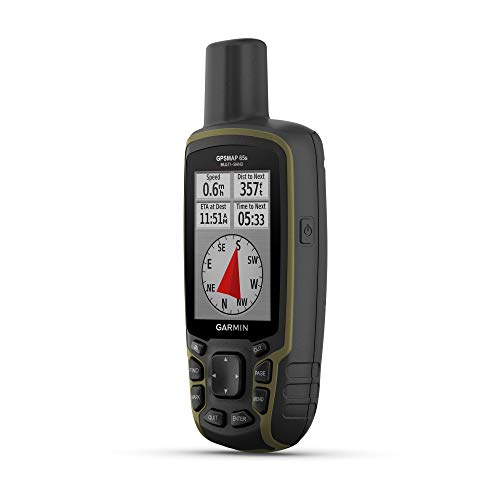
- Multi-band GNSS for better accuracy
- 2.6-inch sunlight-readable color display
- TopoActive maps plus compass and altimeter
Best For: Hikers needing better position accuracy in challenging terrain
Marine Basics Pick

- Sailing and marine navigation features
- 18+ hour battery life on 2 AA batteries
- Stores 1,000 waypoints and 100 tracks
Best For: Sailors and boaters wanting a simple marine handheld
Budget Hiking Navigator

- 3.2-inch sunlight-readable screen
- Up to 36 hours of battery life
- Preloaded USA Topo maps and multi-GNSS
Best For: Hikers and campers wanting a rugged, long-lasting GPS
Ultra-Simple Trek Tool

- Rugged IPX7 waterproof build
- Worldwide basemap with GLONASS support
- Up to 20 hours of battery life
Best For: Basic navigation, waypoint tracking, and geocaching
Reliable Backcountry Navigator
Garmin GPSMAP 65 with Multi-Band Accuracy

- Expanded GNSS and multi-band support
- 2.6-inch sunlight-readable color display
- TopoActive and U.S. public land maps included
Best For: Outdoor users needing better accuracy in challenging terrain
Compact Trail Companion
Garmin eTrex 32x Rugged Handheld GPS

- 2.2-inch sunlight-readable color display
- GPS and GLONASS support for tougher areas
- Up to 25 hours of battery life on 2 AA batteries
Best For: Trail users who want a compact, rugged GPS with long battery life
Feature-Rich Adventure Navigator
Garmin Montana 710 with 5-inch Touchscreen

- 5-inch glove-friendly touchscreen display
- Rugged MIL-STD 810 and IPX7 construction
- 32 GB memory with Wi-Fi map downloads
Best For: Adventurers wanting a larger touchscreen GPS with advanced mapping
Marine-Ready Floating GPS
Garmin GPSMAP 79sc Coastal Handheld
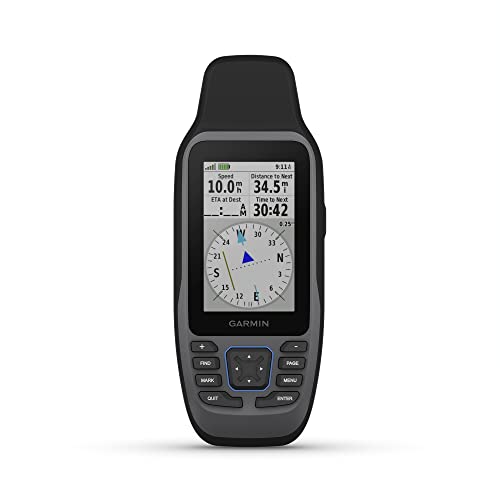
- Floats and is IPX6 water-resistant
- Preloaded BlueChart g3 coastal charts
- Supports GPS, GLONASS, Beidou, Galileo, QZSS and SBAS
Best For: Boaters and coastal users who need a floating handheld GPS
Ultra-Long Battery Navigator

- Up to 168 hours standard battery life
- 2.2-inch sunlight-readable display
- Multi-GNSS support plus IPX7 water resistance
Best For: Hikers and outdoor users who want maximum battery life
Topo Map Trail Navigator
Garmin eTrex 22x Rugged Handheld

- Preloaded TopoActive maps with roads and trails
- 2.2-inch sunlight-readable color display
- GPS and GLONASS support plus 8 GB memory
Best For: Hikers and cyclists who want preloaded topographic maps
Precision Trail Navigator – Garmin GPSMAP 65s
If you want handheld gps devices built for tougher navigation, the Garmin GPSMAP 65s stands out with expanded GNSS support, multi-band technology, and a bright 2.6-inch color display. It is designed to improve position accuracy in steep country, urban canyons, and dense forests, while still keeping the interface simple with button operation.
Best For: Hikers and backcountry users who need stronger accuracy in challenging terrain.
Pros:
- Expanded GNSS and multi-band technology for improved accuracy in difficult locations
- Sunlight-readable 2.6-inch color display for easier outdoor viewing
- Includes TopoActive mapping and U.S. federal public land maps
- 3-axis compass and barometric altimeter for practical field navigation
Cons:
- Requires a compatible smartphone for Garmin Explore app features
- Smaller screen than some larger handheld gps devices
Overall, this is a strong pick if accuracy and navigation tools matter more than a big display. It is a more capable field device than basic models, especially for users who want mapping, waypoint management, and better reception in demanding environments.
Marine Basics Pick – Garmin GPS 73
For handheld gps devices focused on marine use, the Garmin GPS 73 keeps things straightforward with dedicated buttons, a 2.6-inch display, and sailing and navigation features. It is aimed at boaters who want a simple handheld with useful marine tools rather than a full mapping unit.
Best For: Boaters and sailors who want a simple GPS with marine features.
Pros:
- Includes sail assist tools like virtual starting line and countdown timers
- Long battery life with 18+ hours on 2 AA batteries
- Stores up to 1,000 waypoints and 100 tracks
- Dedicated backlit buttons make it easy to operate
Cons:
- Monochrome-style 128 x 160 display is basic
- Geared more toward marine navigation than land mapping
This model makes sense if you value simplicity, battery life, and sailing-specific tools. It is not the most advanced handheld, but it covers the essentials well for marine navigation and quick waypoint storage.
Budget Hiking Navigator – Rugged 3.2" Topo GPS
If you are comparing handheld gps devices for hiking, this rugged model offers a useful mix of screen size, battery life, and outdoor-focused features. It has a 3.2-inch sunlight-readable display, multi-GNSS support, and preloaded USA Topo maps, making it a practical option for trail navigation and waypoint tracking.
Best For: Hikers and campers who want a rugged GPS with long battery life and topo maps.
Pros:
- 3.2-inch sunlight-readable screen with physical buttons
- Multi-GNSS support for improved positional accuracy
- Up to 36 hours of battery life on a full charge
- Includes 3-axis compass, barometric altimeter, and USA Topo maps
Cons:
- Water resistance is IP66, not a fully submersible rating
- Internal memory is 32 GB, which may still require map management
This is a strong fit for outdoor users who want a modern handheld without giving up physical controls. The combination of topo maps, long battery life, and rugged build makes it well suited to day hikes and longer trips.
Ultra-Simple Trek Tool – Garmin eTrex 10
Among handheld gps devices, the Garmin eTrex 10 is a straightforward choice for users who want durability and basic navigation without extra complexity. It comes with a worldwide basemap, a 2.2-inch monochrome display, and support for WAAS, HotFix, and GLONASS for faster positioning.
Best For: Users who want a rugged, no-frills GPS for basic navigation and waypoint tracking.
Pros:
- Rugged and waterproof to IPX7 standards
- Worldwide basemap with WAAS, HotFix, and GLONASS support
- Up to 20 hours of battery life on two AA batteries
- Supports paperless geocaching and waypoint/track storage
Cons:
- Small 2.2-inch monochrome display
- More basic than color-map handhelds
This is a practical pick if you want a dependable GPS that keeps the learning curve low. It is best suited to straightforward use cases where ruggedness, battery life, and simple waypoint handling matter most.
Reliable Backcountry Navigator – Garmin GPSMAP 65 with Multi-Band Accuracy
If you want handheld gps devices that stay dependable in difficult terrain, the Garmin GPSMAP 65 is built for exactly that kind of use. Its 2.6-inch sunlight-readable color display, expanded GNSS support, and multi-band technology are designed to improve accuracy in steep country, forests, and urban canyons.
Best For: Hikers, hunters, and outdoor users who need stronger satellite performance in challenging locations.
Pros:
- Expanded GNSS support with multi-band technology for more accurate positioning in tough environments.
- 2.6-inch sunlight-readable color display for easier outdoor viewing.
- Includes routable TopoActive mapping and U.S. federal public land maps.
- Works with the Garmin Explore website and app for route and waypoint management.
Cons:
- Requires a compatible smartphone for some Garmin Explore features.
- Button-operated design may feel less modern than touchscreen models.
Overall, the GPSMAP 65 is a practical choice if accuracy and mapping support matter more than touchscreen convenience. It balances rugged field use with useful planning tools for serious outdoor navigation.
Compact Trail Companion – Garmin eTrex 32x Rugged Handheld GPS
Among handheld gps devices, the Garmin eTrex 32x stands out as a compact, straightforward option for hiking and cycling. It pairs a sunlight-readable 2.2-inch color display with preloaded TopoActive maps, plus GPS and GLONASS support for better tracking in tougher environments.
Best For: Buyers who want a rugged, battery-friendly handheld GPS for trail use and basic navigation.
Pros:
- Preloaded TopoActive maps with routable roads and trails.
- GPS and GLONASS support for improved tracking beyond GPS alone.
- Includes a 3-axis compass and barometric altimeter.
- Up to 25 hours of battery life with 2 AA batteries.
Cons:
- Smaller 2.2-inch display offers less screen space than larger models.
- Internal memory is limited to 8 GB before using the microSD slot.
The eTrex 32x is a solid pick if you value portability, long battery life, and essential trail features over a larger interface. It is especially appealing for users who want a rugged handheld without extra complexity.
Feature-Rich Adventure Navigator – Garmin Montana 710 with 5-inch Touchscreen
If you want handheld gps devices with a larger screen and more mapping flexibility, the Garmin Montana 710 is the most feature-rich option here. Its 5-inch glove-friendly touchscreen, rugged MIL-STD 810 build, and expandable map support make it a strong fit for multi-sport and overland use.
Best For: Adventurers who want a large touchscreen handheld GPS with advanced mapping and rugged construction.
Pros:
- Large 5-inch glove-friendly touchscreen for easier viewing and control.
- Rugged design rated to MIL-STD 810 and IPX7 water-resistance.
- Includes TopoActive maps and supports additional maps like City Navigator and BlueChart g3 charts.
- Offers 32 GB memory, Wi-Fi map downloads, and compatibility with the Garmin Explore app.
Cons:
- Sold separately accessories and add-on maps increase total setup cost.
- Larger size and 14.5-ounce weight may be less convenient for ultra-light carry.
The Montana 710 is best when you want a premium handheld that can handle detailed navigation, weather tools, and broader map options. It is the most versatile choice in this group for users who do more than simple trail navigation.
Marine-Ready Floating GPS – Garmin GPSMAP 79sc Coastal Handheld
If you want handheld gps devices for boating and coastal navigation, the Garmin GPSMAP 79sc is built for rugged use and comes preloaded with BlueChart g3 coastal charts. It combines a floating, water-resistant design with a bright color display, making it a practical pick for keeping navigation tools close at hand on the water.
Best For: Boaters and coastal users who need a floating, chart-ready handheld GPS.
Pros:
- Designed to float and has an IPX6 water-resistant unit-level design.
- Includes preloaded BlueChart g3 coastal charts for marine use.
- Supports multiple satellite constellations for broader tracking support.
- Built-in 3-axis compass and barometric altimeter add useful navigation data.
Cons:
- Battery life is up to 20 hours in GPS mode, which is shorter than some land-focused units.
- Marine charting focus may be more than casual hikers need.
Overall, this model is a strong fit if your priority is a durable handheld GPS that can handle wet conditions and marine chart coverage. The floating design and built-in navigation tools make it especially practical for coastal trips.
Ultra-Long Battery Navigator – Garmin eTrex SE Handheld
For buyers comparing handheld gps devices for hiking and travel, the Garmin eTrex SE stands out for its extremely long battery life and simple, practical feature set. It uses a readable 2.2-inch display, multi-GNSS support, and a water-resistant build to cover everyday outdoor navigation without adding complexity.
Best For: Hikers and outdoor users who want maximum battery life in a compact handheld GPS.
Pros:
- Up to 168 hours in standard mode and up to 1,800 hours in expedition mode.
- 2.2-inch high-resolution display is easy to read in bright sunlight.
- Multi-GNSS support helps in more challenging environments than GPS alone.
- Water-resistant to IPX7 and includes a digital compass for accurate heading when stationary.
Cons:
- Uses 2 field-replaceable AA batteries, which are not included.
- Mapping features depend on pairing with the Garmin Explore app on a compatible smartphone.
In practice, this is a smart choice if battery endurance matters more than advanced onboard mapping. Its support for app-based updates and planning adds flexibility while keeping the device straightforward.
Topo Map Trail Navigator – Garmin eTrex 22x Rugged Handheld
Among handheld gps devices for trail use, the Garmin eTrex 22x is geared toward hikers and cyclists who want built-in map support in a compact, rugged package. Its sunlight-readable color screen, preloaded TopoActive maps, and support for GPS and GLONASS make it a straightforward option for route-finding on the move.
Best For: Hikers and cyclists who want preloaded topographic maps in a rugged handheld GPS.
Pros:
- Preloaded TopoActive maps include routable roads and trails for cycling and hiking.
- 2.2-inch sunlight-readable color display improves outdoor visibility.
- Supports GPS and GLONASS for more challenging environments.
- 8 GB of internal memory plus micro SD card slot for additional map downloads.
Cons:
- Battery life is up to 25 hours in GPS mode, which is modest versus long-endurance models.
- Uses a simpler AA battery setup rather than a rechargeable system.
This is a practical pick if you want a rugged handheld GPS with maps already onboard rather than relying on phone pairing. It balances trail-ready navigation features with a familiar, easy-to-manage design.
How We Picked the Best Handheld Gps Devices
We prioritized Handheld Gps Devices that offer a practical mix of satellite support, durability, battery efficiency, screen readability, and navigation features. We also looked at whether a model is better suited to basic waypoint tracking, serious backcountry navigation, or marine use.
Because users have different needs, we included both straightforward budget-friendly units and more advanced devices with multi-band reception, mapping, and added sensors.
Quick Comparison
At a high level, simpler Handheld Gps Devices are best for basic coordinates, route tracking, and emergency navigation. Midrange models usually add better displays, expandable maps, and stronger satellite reception. Premium units tend to deliver larger screens, more detailed mapping, and features that help in tougher terrain or specialized environments.
Key Buying Factors for Handheld Gps Devices
Satellite Support and Accuracy
Look for expanded GNSS support if you plan to use the device in dense forests, canyons, or areas where signal can bounce or weaken. Multi-band technology can improve consistency and positioning in challenging environments.
Display Size and Readability
Smaller screens are fine for short trips or simple navigation, but sunlight-readable displays are easier to use in bright outdoor conditions. If you often navigate while moving, a larger screen can reduce mistakes.
Battery Life and Power Type
Some Handheld Gps Devices use replaceable AA batteries, which are convenient for long trips and remote travel. Others use rechargeable power or USB charging, which may be better for shorter outings and everyday use.
Durability and Weather Resistance
Choose a rugged, waterproof model if you expect rain, mud, rough handling, or marine exposure. If your trips are mostly casual, a lighter design may be enough.
Maps, Sensors, and Special Use
Not every buyer needs advanced mapping. Hikers may value altimeters, compasses, and route guidance, while boaters may need coastal charts and floating designs. Match the feature set to your actual environment instead of paying for extras you will not use.
Who Should Buy Which Handheld Gps Devices?
Buy a basic model if you want simple location tracking, emergency backup navigation, or an affordable entry point. Choose a midrange option if you hike regularly and want stronger reception plus better map support. Step up to a premium unit if you need more advanced navigation tools, a larger display, or more demanding outdoor performance.
If you are shopping for Handheld Gps Devices for marine use, prioritize waterproof construction and chart support. If your main goal is backpacking or trail navigation, focus on battery life, satellite performance, and weight before anything else.