
The best hammocks for backpacking can turn a long day on the trail into a more comfortable night outdoors. The right setup should balance low weight with dependable suspension, sufficient space, and protection from insects or changing weather.
We selected 10 versatile camping hammocks, from simple nylon models for fair-weather trips to complete systems with bug nets and rain flies. Use the guide below to match your shelter needs, pack weight, and camping style.
Best 10 Hammocks for Backpacking Picks for 2026
Versatile Bug-Protection Pick

- Integrated mosquito net flips away for open-hammock use
- 210T parachute nylon with reinforced stitching
- Includes straps, carabiners, ropes, and sand pegs
Best For: Backpackers wanting flexible bug protection and a 500-pound-capacity hammock
High-Capacity Lightweight Pick

- 1.93-pound hammock with a spacious double-bed design
- Built-in mosquito net stores when not in use
- Includes straps, aluminum stakes, and stuff sack
Best For: Campers wanting a roomy, lightweight hammock with a very high stated capacity
Ultralight Solo Pick

- Weighs only 16 ounces and packs to 5 by 5 inches
- 9-by-4.5-foot single-person bed supports up to 400 pounds
- Includes straps, aluminum carabiners, and carry bag
Best For: Solo backpackers prioritizing minimal weight and compact packing
Overnight Shelter Pick
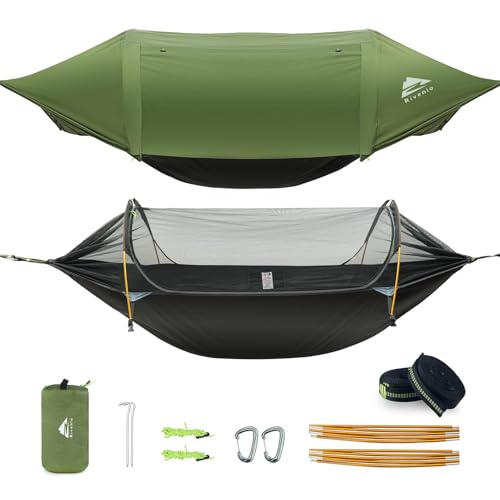
- Converts between hammock, bug shelter, and rainfly-covered tent
- Includes poles, net, rainfly, straps, and storage bag
- 440-pound capacity with sleeping-pad compatibility
Best For: Backpackers wanting an integrated hammock shelter for overnight trips
Best Lightweight Hammock
Durable 400 lb Camping Hammock

- 400-pound single-person capacity
- 1.5-pound nylon design folds compactly
- Includes straps, carabiners, and carry pouch
Best For: Solo campers prioritizing a compact, simple setup
Best All-Weather Hammock
Sunyear Hammock with Rain Fly and Net
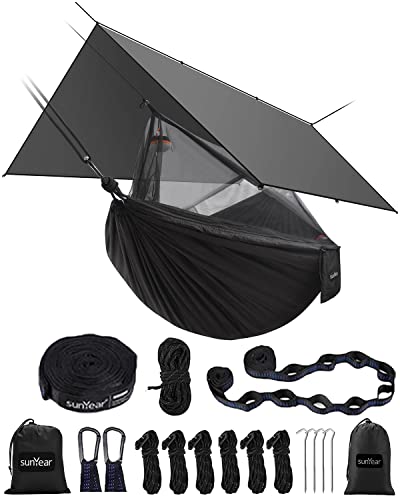
- Includes waterproof rain fly and attached netting
- 500-pound capacity with 210T parachute nylon
- Complete kit weighs 2.3 pounds
Best For: Backpackers seeking rain and insect protection
Best Double Hammock
Wise Owl Outfitters Camping Hammock

- Roomy 10-by-6.5-foot double design
- 500-pound capacity with triple-stitched seams
- 1.5 pounds with straps and carabiners included
Best For: Two campers or solo users wanting extra space
Weather-Ready Shelter
Hammock with Rain Fly and Mosquito Net

- Integrated mosquito net and rain fly
- Supports up to 440 pounds
- Includes straps and compact stuff sack
Best For: Backpackers wanting built-in bug and weather protection
Roomy Lightweight Pick
Wise Owl Double Camping Hammock

- 10-foot double hammock with ample room
- 500-pound capacity and triple-stitched seams
- 24-ounce packable kit with tree straps
Best For: Space-conscious solo campers or two-person setups
Fast Setup Value
AnorTrek Lightweight Parachute Hammock

- 210T nylon hammock with 500-pound capacity
- Includes 8.2-foot looped tree straps
- Designed for setup in about 90 seconds
Best For: Backpackers wanting a simple hammock-only setup
Versatile Bug-Protection Pick – Reversible Double Hammock
For backpackers who want flexibility at camp, this hammock combines a connected mosquito net with a reversible design. Its 210T parachute nylon, included straps, and 500-pound capacity make it a practical option for relaxing solo or sharing space.
Best For: Backpackers wanting an integrated bug net that can also be flipped into an open hammock.
Pros:
- Integrated high-density net helps protect against mosquitoes and other insects.
- Reversible 180-degree design allows use with or without the net.
- Includes tree straps, carabiners, elastic ropes, and sand pegs.
- Reinforced triple stitching and 500-pound maximum capacity add durability.
Cons:
- At 2.5 pounds, it is heavier than ultralight single hammocks.
- The listed folded-size information is inconsistent, so packability may require verification.
This is a well-equipped choice when insect protection and versatility matter more than minimizing every ounce. The included suspension hardware also makes it convenient for first-time hammock campers.
High-Capacity Lightweight Pick – Covacure Double Hammock
This Covacure model stands out among hammocks for backpacking with a low listed weight and an unusually high stated capacity. The spacious 210T nylon bed includes a built-in net, tree straps, and ground stakes for a straightforward camp setup.
Best For: Backpackers prioritizing generous capacity, two-person lounging, and a relatively light packed hammock.
Pros:
- Weighs 1.93 pounds while offering a spacious 114.2-by-55-inch bed.
- 210T parachute nylon is described as tear-resistant, breathable, and quick-drying.
- Built-in net uses a single setup rope and can be stored when not needed.
- Includes heavy-duty straps, two aluminum ground stakes, and an integrated stuff sack.
Cons:
- The supplied notes list the maximum weight as 772 kg, an unusually high figure that should be confirmed before purchase.
- The six-loop straps provide less adjustment range than some competing kits.
Its combination of space, integrated insect protection, and low listed weight is appealing for shared relaxation at camp. Confirm the capacity specification and suspension details before relying on it for overnight use.
Ultralight Solo Pick – Wise Owl Single Hammock
For solo hikers counting pack weight, the Wise Owl single hammock is a particularly compact option. It weighs 16 ounces, packs to 5 by 5 inches, and includes straps and carabiners, making it easy to add to a backpacking kit.
Best For: Solo backpackers seeking a lightweight, compact hammock for relaxing between two suitable anchor points.
Pros:
- Very light 16-ounce design packs smaller than an eggplant.
- 9-by-4.5-foot bed provides room for one person.
- Triple-stitched nylon is rated to support up to 400 pounds.
- Includes two 9-foot straps, D-shaped aluminum carabiners, and a carry bag.
Cons:
- This single model does not include an integrated mosquito net or rainfly.
- Its five-loop straps offer fewer adjustment points than some alternatives.
This is the clearest choice of the group for weight-conscious solo use. It works well as a simple rest hammock, but backpackers needing overnight shelter or dedicated bug protection will need additional gear.
Overnight Shelter Pick – 3-in-1 Hammock Tent
This hammock tent is designed for backpackers who want more than a simple lounging setup. It converts between an open hammock and a bug-protected sleeping space, while the included rainfly adds a waterproof tent mode for changing outdoor conditions.
Best For: Backpackers seeking an all-in-one hammock shelter with mosquito protection and rain coverage.
Pros:
- Three-in-one design functions as an enclosed hammock, open hammock, or rainfly-covered shelter.
- Includes mosquito net, rainfly, support poles, carabiners, straps, and storage bag.
- 440-pound maximum capacity and 106-by-55-inch dimensions provide room for one sleeper.
- Supports use of a sleeping pad, which may improve comfort for overnight stays.
Cons:
- At 3.3 pounds, it is the heaviest option in this selection.
- The sleeping pad is not included.
- The multi-part setup is less minimal than a basic hammock.
This model makes the most sense when overnight protection is the priority. Its added poles, net, and rainfly increase weight and packed size, but they provide considerably more shelter functionality than a standard hammock.
Best Lightweight Hammock – Durable 400 lb Camping Hammock
If you want straightforward hammocks for backpacking, this nylon model keeps the kit compact while offering a 400-pound single-person capacity. It includes tree straps, steel carabiners, and an attached pouch that can also hold a phone or drink bottle when the hammock is deployed.
Best For: Solo campers who want a lightweight hammock for lounging, overnight use, or travel.
Pros:
- Supports up to 400 pounds in the single size.
- Folds to a compact 6 x 3 inches and weighs 1.5 pounds.
- Includes two 9-foot straps, carabiners, and an attached carry pouch.
- Five adjustable strap loops allow seat-height adjustment.
Cons:
- The listed seating capacity is one person.
- The product notes recommend testing the hammock before use.
This is a practical pick when low weight and simple setup matter most. Choose the double version if you need room for two, since its listed capacity and dimensions differ from the single model.
Best All-Weather Hammock – Sunyear Hammock with Rain Fly and Net
For hammocks for backpacking that offer more weather coverage, this Sunyear bundle combines a 500-pound hammock with attached netting and a waterproof rain fly. It includes adjustable straps, ropes, ridgeline hardware, and stakes, making it a comprehensive shelter-oriented kit.
Best For: Backpackers who want integrated insect protection and rain coverage in one setup.
Pros:
- Includes a waterproof rain fly, ridgeline, ropes, and four stakes.
- Attached netting provides built-in protection from insects.
- 500-pound capacity and tear-resistant 210T parachute nylon.
- Two 10-foot adjustable straps fit a range of tree sizes.
Cons:
- At 2.3 pounds, it is heavier than the simpler hammock options here.
- The larger bundle may take more time to organize and set up.
This is the most complete choice for variable conditions, especially when rain and bugs are concerns. Its extra components add protection but also increase pack weight compared with a basic hammock.
Best Double Hammock – Wise Owl Outfitters Camping Hammock
This double hammock is a strong option among hammocks for backpacking when you want extra width without giving up portability. Its 10-by-6.5-foot nylon body supports up to 500 pounds, while the included straps and carabiners make tree setup uncomplicated.
Best For: Two people or solo campers who prefer a roomier hammock for outdoor trips.
Pros:
- 10-by-6.5-foot double design accommodates two people or extra solo space.
- Supports up to 500 pounds with triple-stitched seams.
- Weighs 1.5 pounds and folds to 8 x 5 inches.
- Includes two 9-foot straps, aluminum carabiners, and a stuff sack.
Cons:
- It does not include a rain fly or integrated netting.
- The listed capacity is shared across the two-person setup.
Choose this model for a spacious, packable hammock with a relatively simple gear list. Add separate weather or insect protection if your route requires more than the hammock body and straps provide.
Weather-Ready Shelter – Hammock with Rain Fly and Mosquito Net
For backpackers who want more than a basic sleep sling, this hammock for backpacking combines a built-in mosquito net with a rain fly. Its 210T nylon fabric, included straps, and compact stuff sack make it a versatile option for changing outdoor conditions.
Best For: Backpackers who want integrated bug protection and overhead rain coverage.
Pros:
- Built-in mosquito net helps block insects and can be turned underneath when not needed.
- Rain fly is sized to cover the hammock in sunny or rainy conditions.
- Includes tree straps, carabiners, a stuff sack, and quick-open setup.
- Supports up to 440 pounds and can also be used separately as a tent or picnic mat.
Cons:
- The mosquito net is permanently integrated rather than removable.
- At 633 grams, it is heavier than the simpler hammock-only options here.
- Sharp objects such as key rings can damage the fabric.
This is the most shelter-focused choice in the group. Choose it if insect protection and rain coverage are priorities, but consider a lighter hammock-only model for minimalist trips.
Roomy Lightweight Pick – Wise Owl Double Camping Hammock
This roomy hammock for backpacking suits hikers who want extra space without carrying a bulky setup. The 10-by-6.5-foot double design weighs 24 ounces, supports up to 500 pounds, and includes adjustable tree straps for quick installation.
Best For: Backpackers who prioritize generous space, high capacity, and a lightweight packed size.
Pros:
- Large double hammock accommodates two people or one person who prefers extra room.
- Supports up to 500 pounds with triple-stitched seams and durable nylon fabric.
- Includes 9-foot tree straps, aluminum carabiners, and a built-in stuff sack.
- Weighs 24 ounces and packs to approximately 8 by 5 inches.
Cons:
- No rain fly or mosquito net is included.
- The double width may be more hammock than a solo minimalist needs.
- Carabiners should be removed before machine washing.
With its combination of capacity, room, and packability, this is a strong all-around option for pairs or solo campers who like a spacious lay. Add separate weather protection if conditions demand it.
Fast Setup Value – AnorTrek Lightweight Parachute Hammock
For straightforward hammock camping, the AnorTrek is a practical hammock for backpacking with a lightweight parachute-nylon body and included suspension hardware. Its looped straps and carabiners are designed for setup in about 90 seconds, making it convenient for quick camps and rest stops.
Best For: Backpackers seeking a simple, lightweight hammock with a high weight rating.
Pros:
- 210T parachute nylon is designed to be soft, durable, and comfortable.
- Supports up to 500 pounds despite weighing about 1.6 pounds in the double version.
- Includes two 8.2-foot tree straps and steel carabiners.
- Five-plus-one strap loops help make adjustments and setup quick.
Cons:
- No mosquito net, rain fly, or other shelter components are included.
- The supplied details list both single and double sizes, so shoppers should confirm the selected version.
- Steel carabiners may weigh more than aluminum alternatives.
This is a focused, no-frills choice for travelers who already have weather and insect protection or plan to use the hammock mainly for lounging. Its fast setup and strong capacity add useful versatility on the trail.
How We Picked the Best Hammocks for Backpacking
We focused on the features that matter most away from the car: packed size, overall weight, suspension hardware, material strength, usable sleeping space, and setup versatility. We also considered whether each hammock is sold as a basic hanging bed or as a more complete shelter with a mosquito net and rain fly.
Capacity claims are useful for comparison, but they should not replace careful setup. Always follow the manufacturer’s instructions, inspect straps and attachment points, and use appropriately rated tree-friendly suspension.
Quick Comparison
| Type | Best For | What to Expect |
|---|---|---|
| Single hammock | Solo backpackers prioritizing low weight | Smaller sleeping area and usually the lightest pack |
| Double hammock | Extra room or occasional two-person use | More space, but typically more fabric and weight |
| Hammock with bug net | Warm-weather and insect-heavy trips | Better nighttime protection without a separate net |
| Complete hammock shelter | Three-season versatility | Rain fly and net add protection but increase packed weight |
Key Buying Factors for Hammocks for Backpacking
Weight and Packed Size
For extended hikes, every ounce matters. A basic nylon hammock may be sufficient for dry forecasts and established campsites. If you need a net, tarp, suspension, and stakes, compare the complete packed weight rather than the hammock’s advertised weight alone.
Capacity and Sleeping Space
Single models generally reduce bulk, while double hammocks provide a wider bed and more room to change position. A higher weight rating does not automatically mean a more comfortable sleeping surface, so check both capacity and dimensions.
Weather and Insect Protection
A built-in mosquito net is valuable in humid or wooded areas. For rain protection, look for a properly sized tarp with coverage beyond the hammock ends. A hammock without a tarp may be a poor choice when storms are likely.
Suspension and Setup
Tree straps are faster and more adjustable than improvised cord. Favor wide, durable straps and hardware that is easy to operate in low light. Choose healthy trees, avoid damaging thin bark, and hang the hammock low enough for a safe, comfortable entry.
Who Should Buy Which Hammocks for Backpacking?
Choose a lightweight single hammock if you mainly camp alone, carry a compact pack, and expect mild weather. Choose a double hammock if you value extra shoulder room or want flexibility for lounging, accepting the added bulk.
Choose a bug-net model for summer forests, lakeside camps, and destinations where insects are a routine problem. Choose a rain-fly-and-net system if you want one shelter solution for variable conditions and do not mind carrying a few extra ounces.
Finally, verify the included accessories before buying. Some listings include straps and carabiners, while others require separate suspension or weather protection. The best hammock is the one whose complete system fits your route, climate, and comfort priorities.