
If you want dependable satellite communication without committing to one ecosystem, there are plenty of strong Garmin inReach alternatives worth considering. The best choice depends on whether you need two-way messaging, emergency SOS, lightweight portability, or a true personal locator beacon.
Below, we focus on practical differences that matter in the field so you can match the right device to your trips, budget, and safety needs.
Best 10 Garmin Inreach Alternatives Picks for 2026
Value-Focused Satellite Messenger
ZOLEO Two-Way SMS, Email & SOS
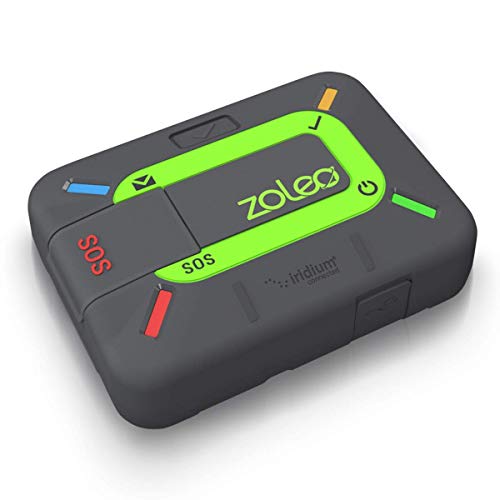
- Iridium satellite messaging plus cellular/Wi‑Fi fallback
- Unlimited check-ins, SOS, and GPS location sharing
- IP68-rated with 200+ hour battery life
Best For: Budget-minded users who want reliable messaging and SOS
Simple SOS Tracker
SPOT Gen4 Satellite GPS Messenger

- Globalstar-based SOS and GPS location alerts
- Tracking sends updates while moving and stopped
- Portable kit includes strap, carabiner, and batteries
Best For: Users who want basic tracking and emergency signaling
Premium Messaging Upgrade
Garmin inReach Mini 3 Plus Touchscreen

- Text, photo, and voice messaging support
- Interactive SOS with Garmin Response coordination
- Up to 350 hours of battery life
Best For: Users who want premium satellite messaging and a touchscreen
No-Subscription Rescue Beacon

- Subscription-free emergency beacon
- 406 MHz distress plus GPS/Galileo location data
- LED and infrared strobes for visibility
Best For: Rescue-only users who want no ongoing fees
Premium All-Around Pick
Garmin inReach Messenger Handheld Satellite Communicator

- Global two-way messaging with Garmin Messenger app
- Group messaging, presets, GPS sharing, and SOS
- Up to 28 days battery life in 10-minute tracking mode
Best For: People who want a rugged, lightweight communicator with broad messaging and emergency features
Budget-Friendly Bluetooth Option
SPOT X 2-Way Satellite Messenger

- Bluetooth phone sync or standalone use
- Dedicated U.S. mobile number for receiving messages
- SOS with 24/7 search and rescue support
Best For: Buyers who want a standalone satellite messenger with phone pairing and message reception
Refurbished Value Pick

- Satellite, cellular, and Wi-Fi messaging in one device
- SOS plus Medical Assist and unlimited check-ins
- IP68-rated with over 200 hours of battery life
Best For: Budget-conscious users wanting dependable phone-connected off-grid messaging
Lightweight Premium Pick

- Two-way Iridium messaging and SOS
- 3.5 oz compact satellite communicator
- Up to 14 days battery in tracking mode
Best For: Backpackers and hikers who want the smallest Garmin-style satellite communicator.
App-Centric Value Option

- Global Iridium coverage with two-way SMS
- Dedicated phone number and email after activation
- GroupTrack supports up to 12 people
Best For: Phone-first users who want flexible plans and group location sharing.
Rugged Budget-Friendly Pick

- Two-way satellite messaging and SOS assist
- IP68 rugged build for outdoor use
- Requires a $19.99/month service plan
Best For: Casual adventurers who want a simple rugged satellite messenger.
Value-Focused Satellite Messenger – ZOLEO Two-Way SMS, Email & SOS
If you’re comparing Garmin inReach alternatives, the ZOLEO stands out as a practical satellite messenger for staying reachable beyond cell coverage. It uses the Iridium network with cellular and Wi‑Fi fallbacks, so you can send texts and emails with the lowest-cost network available when a plan is active.
Best For: Buyers who want global messaging, SOS, and check-ins with lower monthly service costs.
Pros:
- Two-way messaging over satellite, cellular, or Wi‑Fi with an assigned SMS number and email.
- Unlimited check-ins and SOS alerts with GPS location sharing.
- Rugged IP68 build and over 200 hours of battery life.
- Monthly plans start from $20 with unlimited SOS, check-ins, and Wi‑Fi messages included.
Cons:
- Requires an active service plan to use satellite features.
- Messaging depends on a paired smartphone for full access.
The ZOLEO is a strong fit if you want a straightforward communicator rather than a feature-heavy expedition device. Its mix of affordability, long battery life, and core safety tools makes it one of the more practical Garmin inReach alternatives for everyday outdoor use.
Simple SOS Tracker – SPOT Gen4 Satellite GPS Messenger
The SPOT Gen4 is a no-frills option among Garmin inReach alternatives if you mainly want basic off-grid safety and tracking. It uses the Globalstar satellite network to let you send location updates, check in with family, or trigger SOS when you’re beyond cell towers.
Best For: Hikers, campers, and families who want simple tracking and emergency signaling.
Pros:
- Lets you send SOS alerts with GPS coordinates to emergency responders.
- Tracking can transmit location updates while moving and when stopped.
- Portable design includes a strap, carabiner, USB cable, and batteries.
- Works as a straightforward communication tool for outdoor activities.
Cons:
- Subscription is required.
- More limited than messenger-style devices for two-way communication.
If you want the essentials without extra complexity, the Gen4 keeps the focus on tracking and rescue alerts. It is a sensible pick for buyers who value simplicity over advanced messaging features.
Premium Messaging Upgrade – Garmin inReach Mini 3 Plus Touchscreen
Although it’s still in the Garmin family, the inReach Mini 3 Plus is useful to compare against other Garmin inReach alternatives if you want more advanced messaging and a newer interface. It adds a color touchscreen, photo and voice messaging, and up to 350 hours of battery life with 10-minute tracking.
Best For: Buyers who want a rugged communicator with richer messaging and a modern touchscreen.
Pros:
- Supports text, photo, and voice messaging when paired with the Garmin Messenger app.
- Interactive SOS sends location coordinates to Garmin Response, a 24/7 coordination center.
- Up to 350 hours of battery life with 10-minute tracking.
- Rugged IP67 design with a scratch-resistant color touchscreen.
Cons:
- Requires an active satellite subscription.
- Photo sending needs a compatible smartphone and the Garmin Messenger app.
This model is less about simplifying the category and more about expanding what a satellite communicator can do. If your buying guide is looking for premium features, it’s a strong benchmark for higher-end satellite messaging devices.
No-Subscription Rescue Beacon – ACR ResQLink 400 PLB
For buyers exploring Garmin inReach alternatives, the ACR ResQLink 400 is a very different kind of safety device: a personal locator beacon built for emergency rescue only. It uses 406 MHz distress and homing signals, GPS and Galileo GNSS, and global Cospas-Sarsat/MEOSAR coverage to alert search and rescue without any subscription fee.
Best For: Outdoor users who want a subscription-free emergency beacon for rescue-only situations.
Pros:
- No subscription required.
- 406 MHz distress and homing signals are designed to alert rescuers quickly.
- GPS and Galileo GNSS help provide precise location data.
- LED and infrared strobes improve visibility in low-light conditions.
Cons:
- It is a rescue beacon, not a two-way messenger.
- Best suited to emergency use rather than routine communication.
The ResQLink 400 makes sense when the main goal is fast emergency alerting with no recurring cost. It sacrifices messaging features, but in return you get a focused, subscription-free safety tool.
Premium All-Around Pick – Garmin inReach Messenger Handheld Satellite Communicator
Garmin inReach® Messenger Handheld Satellite Communicator, Global Two-Way Messaging
Check Price On AmazonIf you’re comparing Garmin inReach alternatives, this Messenger is the most polished choice for riders, hikers, and travelers who want dependable two-way communication plus flexible routing through cellular and satellite. It’s built to keep messaging simple, share GPS location, and support safety features without adding much bulk.
Best For: Users who want a rugged, lightweight communicator with global two-way messaging, group chat support, and built-in SOS capability.
Pros:
- Two-way global messaging through the Garmin Messenger app
- Group messaging and preset check-in messages
- Shares GPS location and supports interactive SOS alerts
- Long battery life rated up to 28 days in 10-minute tracking mode
Cons:
- Active satellite subscription required for core features
- Some jurisdictions regulate or prohibit satellite communication devices
- Monochrome MIP display is functional, not flashy
Overall, this is a strong benchmark option if you want an inReach-style device that balances messaging, location sharing, and emergency support in a compact package. The smartphone integration and flexible message routing make it especially practical for everyday trip use.
Budget-Friendly Bluetooth Option – SPOT X 2-Way Satellite Messenger
For shoppers looking at Garmin inReach alternatives, the SPOT X stands out for its built-in keyboard, Bluetooth phone sync, and dedicated U.S. mobile number for receiving messages. It’s designed for back-and-forth communication, SOS use, and GPS-based location sharing on the Globalstar network.
Best For: Buyers who want a standalone 2-way satellite messenger with Bluetooth phone pairing and a dedicated message number.
Pros:
- Works with Bluetooth or as a standalone communication device
- Dedicated U.S. mobile number for receiving messages
- SOS support with 24/7 search and rescue coordination
- Can send messages to cell numbers or email addresses
Cons:
- Subscription required
- Uses the Globalstar satellite network, so coverage depends on that network
- Heavier and bulkier than the lightest handheld options
This is a practical alternative if you want a more self-contained satellite messenger and value message reception as much as outbound texting. It’s a straightforward fit for trips where Bluetooth syncing and emergency contact matter more than extra app ecosystem features.
Refurbished Value Pick – ZOLEO Satellite Communicator
Among Garmin inReach alternatives, ZOLEO is a smart pick if you want a smartphone-driven communicator with global messaging, SOS support, and a lower monthly entry point. This renewed model still focuses on the essentials: satellite, cellular, and Wi-Fi messaging plus rugged off-grid reliability.
Best For: Budget-conscious users who want dependable global messaging, check-ins, and SOS features through a phone-connected device.
Pros:
- Uses satellite, cellular, or Wi-Fi and picks the lowest-cost available network
- Includes global messaging, check-ins, and GPS location sharing
- SOS alerting with 24/7 emergency monitoring plus Medical Assist
- IP68-rated with over 200 hours of battery life
Cons:
- Renewed unit, not brand new
- Requires a smartphone for full use
- Service plan still required
ZOLEO is a strong practical alternative if your priority is affordable connectivity rather than a standalone feature-heavy handheld. The assigned SMS number, unlimited check-ins, and long battery life make it especially appealing for extended trips.
Lightweight Premium Pick – Garmin inReach Mini 2
If you want a compact Garmin inReach alternative that still delivers true satellite messaging, the inReach Mini 2 is built for minimalist packing and dependable backcountry use. It combines two-way Iridium messaging, interactive SOS, TracBack routing, and location sharing in a 3.5-ounce body, making it a practical choice when size and battery life matter.
Best For: Backpackers, hikers, and travelers who want a very small satellite communicator with Garmin ecosystem support.
Pros:
- Two-way Iridium messaging and interactive SOS with active subscription
- Very compact and lightweight at 3.5 oz
- Up to 14 days battery life in 10-minute tracking mode
- TracBack routing, MapShare location sharing, and Garmin Explore syncing
Cons:
- Active satellite subscription required for core messaging and SOS features
- Small 1.27-inch monochrome display limits on-device viewing
- Best suited to paired smartphone use for full planning and mapping
For buyers comparing Garmin inReach alternatives, this model stands out for portability and Garmin-native features rather than lower upfront complexity. It is a strong pick if you want a tiny device that can still handle emergency communication, navigation, and trip tracking in the field.
App-Centric Value Option – ACR Bivy Stick
The ACR Bivy Stick is a strong Garmin inReach alternatives pick if you want satellite messaging centered around your phone. It offers global Iridium coverage, two-way SMS, email, GPS tracking, offline maps, SOS monitoring, location sharing, and GroupTrack through the Bivy app on iOS or Android.
Best For: iPhone and Android users who want app-based satellite communication with flexible service plans.
Pros:
- 100% global Iridium coverage for SMS, tracking, SOS, and location sharing
- Dedicated SMS phone number and email address upon activation
- Unlimited GPS check-ins and live tracking options
- GroupTrack supports messaging and location sharing with up to 12 people
Cons:
- Requires a one-time 3-month commitment, then month-to-month billing
- Battery life is listed at 120 hours, less than some longer-endurance options
- Most features depend on the Bivy app and a compatible smartphone
This is a practical pick if you prefer a more phone-driven workflow and want multiple service plan tiers to choose from. It’s especially appealing for group trips, because the location-sharing and GroupTrack features are built around keeping several people connected off-grid.
Rugged Budget-Friendly Pick – Motorola Defy Satellite Link
The Motorola Defy Satellite Link is one of the more streamlined Garmin inReach alternatives if you want basic satellite safety and messaging without a full handheld communicator. It provides advanced two-way satellite messaging, check-ins, and SOS assist through a smartphone app, with rugged IP68 protection and service plans starting at $19.99 per month.
Best For: Smartphone users who want a rugged satellite messenger for check-ins and SOS on shorter trips.
Pros:
- Two-way satellite-enabled messaging with check-in and SOS features
- Rugged IP68 dustproof and waterproof design
- Compact 2.5-ounce body with up to 4 days of standby battery
- Works with iOS 14 and Android 10 or later
Cons:
- Service plan required at $19.99/month
- Battery life is only up to 4 days of standby
- Depends on a compatible smartphone for use
This model makes sense if you want emergency messaging and location sharing in a very simple package. It gives up the deeper navigation and standalone communicator features found on more advanced devices, but that tradeoff may fit casual adventurers or budget-conscious buyers.
How We Picked These Garmin Inreach Alternatives
We focused on real-world features that matter most for off-grid use: satellite network reliability, SOS capability, two-way messaging, battery life, size, app experience, and overall ease of use. We also prioritized devices that fit different use cases, from casual hikers and overlanders to solo travelers and serious backcountry users.
Quick Comparison of Garmin Inreach Alternatives
Some options are built for full two-way communication, while others are best viewed as emergency-only safety devices. If you want texting and check-ins, look at satellite communicators. If your top priority is emergency rescue signaling, a PLB may be the better fit. For the lightest carry, compact units are often the most practical, even if they trade off screen size or advanced messaging.
Key Buying Factors for Garmin Inreach Alternatives
Messaging Type
Not every device handles communication the same way. Many Garmin Inreach Alternatives support two-way SMS-style texting, email, and check-ins, while others are limited to SOS alerts or preset messages. Choose based on whether you need live conversation or just emergency backup.
Satellite Network and Coverage
Coverage quality depends on the network behind the device. Global coverage is important for remote travel, but the satellite system also affects speed, latency, and subscription options. Make sure the device supports the regions where you actually travel.
SOS and Emergency Features
Look closely at how SOS works, whether it includes GPS location sharing, and whether the service connects to a monitored response center. A strong emergency feature set matters more than extra convenience features if you travel alone or in remote terrain.
Battery, Size, and Ruggedness
Smaller devices are easier to pack, but larger units may offer better screens, easier messaging, or longer endurance. If you hike often, weight and battery life matter. If you’re using the device in a vehicle or basecamp, size may be less important than usability.
Who Should Buy Which Garmin Inreach Alternatives?
Choose a full-featured satellite messenger if you want the most flexibility for texting, tracking, and check-ins. Choose a PLB if your primary need is a simple, highly focused SOS device with minimal setup. If you want the easiest balance of portability and communication, mid-size handhelds are often the sweet spot among Garmin Inreach Alternatives.
For most buyers, the best decision comes down to how often you’ll use the device and whether communication, rescue signaling, or compact portability matters most. Matching those priorities to the right product will give you better value than chasing the longest feature list.