
Garmin handheld GPS devices remain a top choice for reliable navigation when you need accuracy, durability, and offline mapping in the field.
Whether you hike, boat, or explore remote terrain, the right model can make route-finding simpler and safer.
Best 10 Garmin Handheld Gps Devices Picks for 2026
Premium Expedition Pick
Garmin GPSMAP 67 Rugged GPS Handheld

- Multi-band GNSS for tougher environments
- Up to 182h standard battery, 840h expedition
- 3" sunlight-readable display with mapping support
Best For: Serious hikers and explorers needing long battery life and strong accuracy
Marine Budget Pick
Garmin GPS 73 Handheld Navigator

- Marine alarms, MOB, and route planning tools
- Sailing features like countdown timer and tack assist
- 18+ hour battery life on 2 AA batteries
Best For: Sailors and boaters who want straightforward marine navigation
Accuracy-Focused Trail Pick
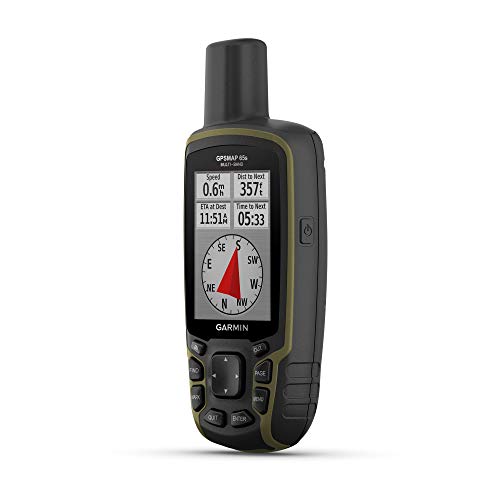
- Multi-band GNSS for improved accuracy
- TopoActive maps plus U.S. public land map
- 3-axis compass and barometric altimeter
Best For: Hikers and hunters needing accurate navigation in tough terrain
Simple Everyday Pick
Garmin eTrex 22x Rugged Handheld GPS

- Compact 2.2" sunlight-readable color display
- Preloaded TopoActive maps with roads and trails
- Up to 25 hours on 2 AA batteries
Best For: Hikers and casual users wanting a compact, easy handheld GPS
Backcountry Accuracy Pick

- Expanded GNSS and multi-band support
- 2.6-inch sunlight-readable color display
- TopoActive maps plus public land data
Best For: Navigation in tough terrain where accuracy matters
Classic Trail Workhorse

- Up to 25 hours on 2 AA batteries
- Preloaded Topo Active trail maps
- 3-axis compass and barometric altimeter
Best For: Compact trail navigation with strong battery life
Marine Floating Choice
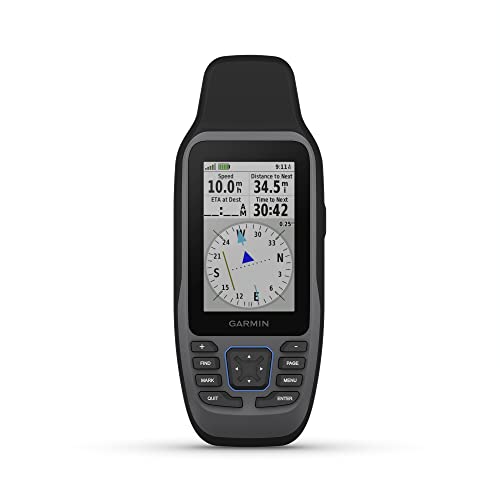
- Floating, rugged, water-resistant design
- Preloaded BlueChart g3 coastal charts
- Multi-constellation tracking for marine use
Best For: Boating and fishing with coastal charting
Trail-Ready Essential
Garmin eTrex SE GPS Handheld Navigator

- Up to 168 hours of battery life; up to 1,800 hours in expedition mode
- 2.2-inch sunlight-readable display
- Multi-GNSS support plus digital compass and IPX7 water resistance
Best For: Hikers and campers who want a simple, long-lasting handheld GPS
Large-Screen Explorer
Garmin Montana 710 Rugged GPS Handheld Navigator

- 5-inch glove-friendly touchscreen with easy-to-view color display
- TopoActive maps included, plus support for additional map downloads
- Rugged MIL-STD 810 build with IPX7 water resistance and 32 GB memory
Best For: Adventurers who want a large touchscreen handheld GPS with rugged construction
Marine-Ready Tracker
Garmin GPSMAP 79s Marine GPS Handheld
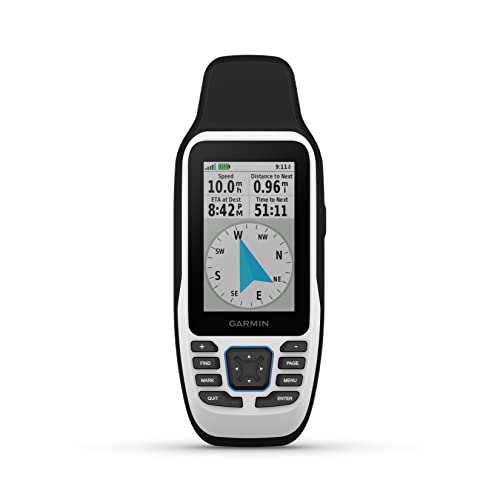
- Floats in water with IPX6 water resistance and rugged construction
- Supports multiple satellite constellations for worldwide tracking
- Includes worldwide basemap, 10,000 waypoints, and marine-focused sensors
Best For: Boaters and anglers who want a floating, water-resistant handheld GPS
Premium Expedition Pick – Garmin GPSMAP 67 Rugged GPS Handheld
If you want one of the most capable garmin handheld gps devices for demanding trips, the GPSMAP 67 stands out for its large 3-inch sunlight-readable color display, multi-band GNSS support, and long battery life. It is built for users who need dependable navigation in forests, steep terrain, and urban canyons, with added mapping and weather tools for planning on the go.
Best For: Hikers, explorers, and outdoor users who need accurate navigation plus exceptional battery life.
Pros:
- Multi-band GNSS helps improve accuracy in challenging locations.
- Up to 182 hours in standard mode and up to 840 hours in expedition mode.
- 3-inch sunlight-readable color display makes maps easier to view outdoors.
- Includes 3-axis compass, barometric altimeter, and wireless connectivity for weather and Geocaching Live.
Cons:
- No touchscreen, so all control is button-based.
- Premium mapping content may require an Outdoor Maps+ subscription.
For buyers who value accuracy, endurance, and advanced navigation tools, this is one of the strongest all-around handheld options in Garmin’s lineup. It leans heavily toward serious field use rather than basic waypoint tracking.
Marine Budget Pick – Garmin GPS 73 Handheld Navigator
For boaters looking at garmin handheld gps devices, the GPS 73 is a simple marine-focused option with dedicated sailing and navigation features. It is designed for fast operation with backlit buttons, basic route planning, and enough waypoint storage for returning to familiar locations on the water.
Best For: Sailors and boaters who want an easy-to-use handheld for basic marine navigation.
Pros:
- Marine features include MOB, marine alarms, and route planning.
- Dedicated sailing tools such as virtual starting line, countdown timers, and tack assist.
- Simple button interface with backlit controls for quick use.
- Runs on 2 AA batteries with 18+ hours of battery life.
Cons:
- Small 2.6-inch display is less flexible than larger handhelds.
- Built for marine use, so it is not the most feature-rich choice for land navigation.
This model keeps the focus on straightforward boating essentials rather than advanced outdoor mapping. It makes sense if you want a dependable, no-frills marine handheld.
Accuracy-Focused Trail Pick – Garmin GPSMAP 65s Handheld
If you want garmin handheld gps devices with strong trail-ready accuracy, the GPSMAP 65s is built around expanded GNSS support and multi-band technology. Its 2.6-inch sunlight-readable color display, topo mapping, and field navigation tools make it a practical pick for hiking, hunting, and other outdoor trips where reliable positioning matters.
Best For: Hikers and hunters who want multi-band accuracy in difficult terrain.
Pros:
- Expanded GNSS and multi-band technology improve accuracy in challenging environments.
- Includes routable TopoActive mapping and U.S. federal public land map.
- 3-axis compass and barometric altimeter support go-anywhere navigation.
- Works with Garmin Explore for managing tracks, routes, and waypoints.
Cons:
- Battery life is rated at 16 hours, which is shorter than some rivals.
- Smaller 2.6-inch display may feel limited for users who prefer larger screens.
This is a strong choice when you care more about navigation performance than battery endurance or screen size. It balances advanced positioning features with a compact handheld format.
Simple Everyday Pick – Garmin eTrex 22x Rugged Handheld GPS
Among garmin handheld gps devices, the eTrex 22x is a compact, rugged option for users who want the basics done well. It offers a sunlight-readable color display, preloaded TopoActive maps, and support for GPS plus GLONASS so it can stay useful when trails or terrain get more demanding.
Best For: Hikers and casual outdoor users who want a compact GPS with straightforward controls.
Pros:
- Compact rugged design with a 2.2-inch sunlight-readable color display.
- Preloaded TopoActive maps include routable roads and trails.
- GPS and GLONASS support helps in more challenging environments.
- Uses 2 AA batteries and can run up to 25 hours in GPS mode.
Cons:
- No touchscreen, so interaction is fully button-based.
- Smaller screen and simpler feature set than higher-end Garmin handhelds.
This model is best if you want a reliable, lower-complexity handheld for hiking and general outdoor use. It is less advanced, but that also makes it easier to carry and use in the field.
Backcountry Accuracy Pick – Garmin GPSMAP 65
If you’re comparing Garmin handheld gps devices for demanding terrain, the GPSMAP 65 stands out for its expanded GNSS support and multi-band technology. The 2.6-inch sunlight-readable color display, routable TopoActive mapping, and U.S. federal public land maps make it a practical choice for hikers, hunters, and anyone who needs dependable navigation in tough conditions.
Best For: Users who want stronger positioning accuracy in steep country, forests, and urban canyons.
Pros:
- Expanded GNSS and multi-band technology for improved accuracy in challenging locations
- 2.6-inch sunlight-readable color display for easier field viewing
- Includes routable TopoActive mapping and U.S. federal public land maps
- Works with the Garmin Explore app and website for track and route management
Cons:
- Requires a compatible smartphone for Garmin Explore features
- Battery life is rated at 16 hours, which is solid but not class-leading
This is a strong all-around handheld if accuracy matters more than extra frills. Its map support and satellite technology make it especially useful when tree cover or terrain would challenge a simpler unit.
Classic Trail Workhorse – Garmin eTrex 32x
For buyers looking at Garmin handheld gps devices with a simple, proven design, the eTrex 32x is a practical trail companion. It offers a 2.2-inch sunlight-readable color display, preloaded Topo Active maps, GPS and GLONASS support, and extra tools like a 3-axis compass and barometric altimeter for hiking and cycling routes.
Best For: Hikers and cyclists who want a compact, rugged GPS with long battery life.
Pros:
- Up to 25 hours of battery life in GPS mode with 2 AA batteries
- Preloaded Topo Active maps with routable roads and trails
- GPS and GLONASS support for more reliable tracking than GPS alone
- Includes a 3-axis compass and barometric altimeter
Cons:
- Smaller 2.2-inch display than some other handheld GPS units
- Uses button-based navigation rather than a modern touchscreen
The eTrex 32x is a straightforward option if you value endurance and portability over larger-screen convenience. It covers the essentials well and adds useful navigation sensors for outdoor use.
Marine Floating Choice – Garmin GPSMAP 79sc
If you need Garmin handheld gps devices for boating or fishing, the GPSMAP 79sc is built around marine use. It is rugged, water-resistant, and designed to float, while the high-resolution color display, preloaded BlueChart g3 coastal charts, and support for multiple satellite constellations help it handle life on the water.
Best For: Boaters and anglers who want a floating handheld GPS with coastal charting.
Pros:
- Designed to float and has a rugged, water-resistant build
- Preloaded BlueChart g3 coastal charts for marine navigation
- Supports multiple satellite constellations for reliable tracking
- Includes a built-in 3-axis tilt-compensated compass and barometric altimeter
Cons:
- Marine-focused features are less relevant for general hiking use
- Battery life is rated at 20 hours, which may still require planning for longer outings
This model makes the most sense if your GPS use is centered on water. The floating design and coastal chart support set it apart from land-first handhelds.
Trail-Ready Essential – Garmin eTrex SE GPS Handheld Navigator
If you want a compact option in garmin handheld gps devices, the Garmin eTrex SE keeps things focused on the essentials: dependable navigation, long battery life, and easy outdoor readability. It’s a practical pick for hikers and explorers who want a lightweight unit that works well in bright sun and tougher signal areas.
Best For: Hikers, campers, and outdoor users who want a simple, long-lasting handheld GPS with Bluetooth app support.
Pros:
- Up to 168 hours of battery life in standard mode, or up to 1,800 hours in expedition mode with two AA batteries
- 2.2-inch high-resolution display is easy to read in sunlight
- Multi-GNSS support helps with tracking in challenging environments
- Includes a digital compass and IPX7 water-resistant design
Cons:
- AA batteries are not included
- Smaller display than larger touchscreen handhelds
- Basic screen size may not suit users who want detailed map viewing on the device
The eTrex SE is a strong value-oriented choice if your priority is endurance and dependable core navigation rather than a feature-heavy interface. It fits well as a no-nonsense field companion for day trips, hikes, and extended outings.
Large-Screen Explorer – Garmin Montana 710 Rugged GPS Handheld Navigator
Among garmin handheld gps devices, the Garmin Montana 710 stands out for users who want a bigger, glove-friendly touchscreen and more map flexibility. It’s built for road-and-trail navigation, with rugged construction and expanded storage for people who like to load maps, imagery, and trip data before heading out.
Best For: Adventurers who want a large touchscreen handheld GPS with rugged construction and flexible mapping.
Pros:
- 5-inch glove-friendly touchscreen offers an easy-to-view color display
- Includes TopoActive maps and supports additional map downloads like City Navigator and BlueChart g3 charts
- Rugged design is rated to MIL-STD 810 and IPX7 water resistance
- 32 GB memory, Wi-Fi support, and compatibility with Garmin Explore add useful planning and mapping flexibility
Cons:
- AA batteries are not included for backup power use
- Large size is less compact than smaller handheld GPS units
- Some map content and accessories are sold separately
The Montana 710 is the most versatile option here if screen size and map depth matter more than pocketability. Its combination of rugged build, touchscreen control, and downloadable mapping makes it a strong fit for serious route planning.
Marine-Ready Tracker – Garmin GPSMAP 79s Marine GPS Handheld
Garmin GPSMAP 79s, Marine GPS Handheld with Worldwide Basemap, Rugged Design and Floats in Water
Check Price On AmazonIf you need garmin handheld gps devices for the water, the Garmin GPSMAP 79s is built around marine use with a floating, rugged design and worldwide basemap. It also adds tools like a tilt-compensated compass and barometric altimeter, which can be useful when you want straightforward handheld navigation on boats or around shorelines.
Best For: Boaters and anglers who want a floating, water-resistant handheld GPS with worldwide coverage.
Pros:
- Floats in water and carries an IPX6 water-resistant rugged design
- Supports multiple satellite constellations for reliable tracking worldwide
- Includes worldwide basemap and stores up to 10,000 waypoints
- Built-in 3-axis compass and barometric altimeter add navigation tools
Cons:
- Battery life is up to 20 hours in GPS mode, which is shorter than some land-focused models
- AA batteries are not included
- 8 GB memory is more limited than larger map-heavy handhelds
The GPSMAP 79s makes sense if your priorities are flotation, ruggedness, and marine-friendly navigation features. It’s less about big maps and more about dependable handheld guidance when you’re on the water.
How We Picked the Best Garmin Handheld Gps Devices
We focused on the features that matter most in Garmin Handheld Gps Devices: GNSS performance, mapping support, battery life, durability, display readability, and usability in real-world conditions. We also considered whether a model is better suited to hiking, marine use, or general outdoor navigation.
Quick Comparison
For fast decision-making, think in terms of use case first. Button-operated models are often best for harsh weather and gloved hands, while touchscreen units are better for route planning and map viewing. If you want the strongest navigation toolkit, look for multi-band support, expanded satellite systems, and detailed map compatibility. If your priority is simplicity, battery life, or marine-ready features, there are more focused options that may fit better.
Key Buying Factors for Garmin Handheld Gps Devices
Navigation and Satellite Support
Multi-GNSS and multi-band support can improve tracking in dense trees, deep canyons, and other challenging environments. For many buyers, this is one of the biggest differentiators.
Maps and Routing
Some Garmin Handheld Gps Devices include topo mapping, satellite imagery, or marine charts, while others rely on basemaps and optional downloads. Choose the map style that matches where you travel most.
Screen Type and Size
Smaller screens are more compact and efficient, while larger displays make map reading easier. Touchscreens are convenient, but physical buttons can be more dependable in wet or cold conditions.
Battery Life and Power Options
Long battery life matters for multi-day trips and remote travel. Check whether the unit uses rechargeable power, standard batteries, or both, especially if you want backup flexibility.
Ruggedness and Special Features
Water resistance, floatable designs, and glove-friendly controls can be deciding factors for boating and outdoor use. Altimeter and compass sensors are also useful if you want more precise navigation data.
Who Should Buy Which Garmin Handheld Gps Devices?
Choose a premium mapping model if you want the most capable all-around navigation experience. Pick a compact button-based unit if portability and simplicity matter most. Go with a marine-focused model if you spend time on the water. And if you want a larger display for easier viewing, a big-screen touchscreen handheld is the most comfortable option for planning and following routes.
In short, the best Garmin Handheld Gps Devices are the ones that match your terrain, trip length, and preferred control style. Narrow by use case first, then by maps, battery life, and screen type.