
Choosing the right flight controller can make an FPV build feel locked-in, reliable, and easy to tune. The best board depends on your frame size, ESC needs, sensor quality, and the firmware you plan to run.
In this roundup, we focus on FPV drone flight controllers that balance performance, compatibility, and practical features for real-world builds.
Best 10 Fpv Drone Flight Controllers Picks for 2026
Best for App-Based Tuning

- Bluetooth app control simplifies setup and tuning
- Compact 20x20mm stack fits small FPV builds
- 35A 4-in-1 ESC supports lightweight 2-5 inch drones
Best For: Compact FPV builds and pilots who want wireless tuning plus DJI Air Unit compatibility.
Best for High-Voltage Racing Builds
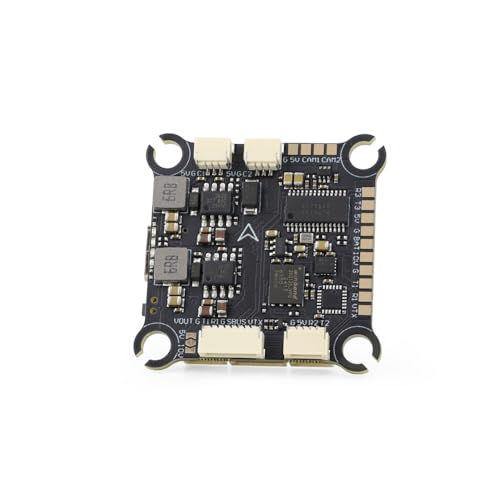
HGLRC F405 8S V1 FC Flight Controller
- ICM42688P gyro for stable, responsive flight
- 8S support for high-voltage builds
- Modular direct-connect design simplifies assembly
Best For: High-voltage racing and freestyle pilots who want fast response and easier wiring.
Best Open-Source Autopilot
Pixhawk PX4 2.4.8 Flight Controller

- Open-source PX4 ecosystem for custom development
- Includes power module, GPS, safety switch, and more
- Supports drones, planes, boats, and other DIY builds
Best For: DIY pilots and tinkerers who want a versatile autopilot controller for FPV and other RC projects.
Best for Powerful Freestyle Builds
SoloGood F722 FPV Flight Controller Stack

- F722 FC with ICM42688P gyro and onboard black box
- 60A 4-in-1 ESC suits higher-power freestyle drones
- Dual BECs and large solder pads simplify the build
Best For: Freestyle pilots who want a feature-rich FC/ESC stack for 5-inch or similar builds.
Best for Integrated Receiver Builds
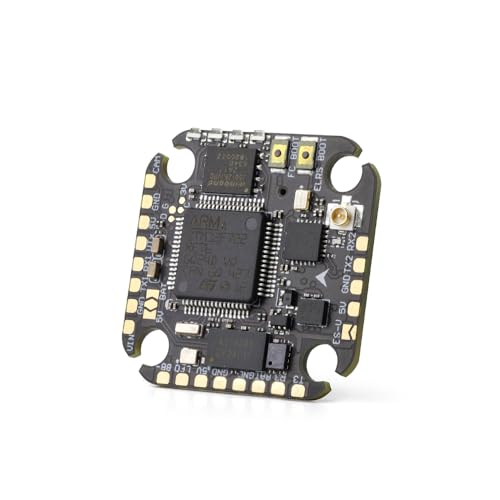
- Integrated ELRS 2.4G receiver
- F722 processor for responsive control
- ICM42688 gyro in a compact Lite board
Best For: FPV pilots who want a clean, integrated receiver setup for a modern quad build.
Best for Easy Soldering

- Large pads are beginner-friendly
- 55A 4-in-1 ESC for freestyle builds
- Supports up to 8 motor outputs
Best For: Builders who want an easy-to-solder FPV stack with strong current capacity.
Best for Power-Hungry Builds
AERO SELFIE F405NC 60A 30x30 Stack

- 60A 4-in-1 ESC with 80A+ burst
- Dual BMI42688 IMUs and STM32F405 chip
- Betaflight, INAV, and Ardupilot support
Best For: Pilots building 2S-6S FPV or racing drones who want a compact 30x30 stack with strong power handling.
Best for Reliable Mid-Range Builds
F405 NC 50A 30x30 Flight Controller Stack

- BMI088 IMU helps improve stability and vibration resistance
- 45A 4-in-1 ESC supports 2S-6S LiPo builds
- 6 UARTs and dual BECs make expansion easier
Best For: Pilots building a 2-6S FPV or racing drone that needs a flexible 30x30 stack.
Best for Advanced GPS & Autopilot Builds
H743 Flight Controller 60A 30x30 Stack

- H743 chip with dual IMUs for advanced control
- Compatible with Betaflight, INAV, PX4, and Ardupilot
- 60A 4-in-1 ESC supports 2S-8S LiPo and high burst current
Best For: Builders who want a feature-rich stack for FPV, GPS-assisted flying, and autopilot-capable drones.
Best for Advanced Builds
CORVON F405 60A 30x30 FPV Stack

- F405 controller with BMI088 IMU and SPL06 barometer
- 60A 4-in-1 ESC supports 2-6S LiPo builds
- Dual BECs and six UARTs add wiring flexibility
Best For: Builders who want a compact, feature-packed stack for racing, freestyle, or GPS-enabled drones.
Best for App-Based Tuning – SpeedyBee F405 Mini 35A Stack
The SpeedyBee F405 Mini stack is a strong pick if you want fpv drone flight controllers that make setup and tuning easier without giving up core performance. Its built-in Bluetooth, 35A 4-in-1 ESC, and compact 20x20mm layout make it especially appealing for small builds and pilots who like to adjust settings from their phone.
Best For: Pilots building compact FPV quads who want wireless configuration, DJI Air Unit support, and a simple all-in-one stack for quick installs.
Pros:
- Built-in Bluetooth and SpeedyBee app support for wireless tuning
- 35A 4-in-1 BLHeliS ESC suits lightweight 2-4 inch and ultralight 5-inch builds
- Dual BEC outputs and DJI Air Unit compatibility add wiring flexibility
- 20x20mm mounting and M2/M3 support help it fit compact frames
Cons:
- Best suited to smaller builds rather than high-power freestyle rigs
- App-based features may be unnecessary for pilots who prefer traditional tuning
Overall, this stack stands out among fpv drone flight controllers for convenience first: it combines a capable FC, integrated ESC, and wireless setup in one compact package. If you want fast configuration and broad compatibility in a small form factor, it is an easy shortlist candidate.
Best for High-Voltage Racing Builds – HGLRC F405 8S V1 FC Flight Controller
HGLRC F405 8S V1 FC Flight Controller High-performance ICM42688P M3 for FPV Racing Freestyle Drones
Check Price On AmazonIf you want a controller built for aggressive power and quick response, the HGLRC F405 8S V1 is a strong pick among fpv drone flight controllers. Its ICM42688P gyro, direct-connect modular design, and 8S support make it well suited to modern racing and freestyle builds that need clean handling and simpler assembly.
Best For: Pilots building high-voltage FPV racing or freestyle drones who want fast response, modular wiring, and solid flight logging.
Pros:
- ICM42688P gyro for stable, responsive flight control
- 8S support for high-voltage, aggressive setups
- Plug-and-play modular design reduces soldering hassle
- 16MB black box provides ample flight data recording
Cons:
- May be overkill for smaller or beginner builds
- Direct-connect modular layout may limit flexibility for some custom setups
- Best value is tied to pilots who actually need 8S-capable hardware
Overall, this board stands out in fpv drone flight controllers when you care more about high-voltage performance and fast, dependable control than about entry-level simplicity.
Best Open-Source Autopilot – Pixhawk PX4 2.4.8 Flight Controller
If you want one of the more flexible fpv drone flight controllers for DIY builds, the Pixhawk PX4 2.4.8 stands out for its open-source PX4 ecosystem and broad vehicle support. It’s aimed less at race-first quads and more at builders who want a stable autopilot platform with room to tune, expand, and experiment.
Best For: DIY pilots, tinkerers, and researchers building FPV drones, planes, or other autonomous projects.
Pros:
- Open-source PX4 platform supports secondary development and custom features
- Includes key accessories like power module, safety switch, buzzer, SD card, damping, and M8N GPS
- Works across multiple vehicle types, not just multirotor FPV builds
- Quick-start guidance can help new DIY builders get calibrated faster
Cons:
- Not the best fit for pilots who want a simple plug-and-play racing FC
- Setup and tuning may be more involved than beginner-friendly all-in-one boards
- Designed more for autopilot and experimentation than ultra-light FPV performance
Overall, this is a strong pick if you want fpv drone flight controllers with open-source flexibility, GPS support, and a broader autonomy focus. It’s a practical choice for builders who value expandability and learning over pure racing simplicity.
Best for Powerful Freestyle Builds – SoloGood F722 FPV Flight Controller Stack
If you want fpv drone flight controllers that can handle a serious freestyle setup, this SoloGood F722 stack is built around a fast F722 processor, ICM42688P gyro, and a 60A 4-in-1 ESC. It also adds practical extras like dual BECs, onboard black box storage, OSD support, and an included capacitor, which makes it a strong all-in-one option for builders who want fewer add-ons to source separately.
Best For: Freestyle pilots building 5-inch or similar drones who want a feature-rich FC/ESC stack with plenty of wiring flexibility and modern sensor support.
Pros:
- F722 controller with ICM42688P gyro and onboard black box for a capable feature set
- 60A 4-in-1 ESC with DShot300/600 support for high-power freestyle builds
- Dual 5V/10V BECs, TVS protection, and included capacitor add convenience and protection
- 30.5 x 30.5mm mounting and large solder pads make it beginner-friendly to assemble
Cons:
- Heavier and more advanced than a minimal flight controller only setup
- Likely more than casual pilots need for lightweight or low-power drones
- Firmware and wiring setup may still require some tuning experience
For pilots comparing fpv drone flight controllers, this stack stands out more for its practical build-ready feature list than for being ultra-light or ultra-simple. It is a solid fit when you want a robust FC/ESC combo with room for powerful motors, HD gear, and cleaner wiring.
Best for Integrated Receiver Builds – HGLRC SPECTER F722 Lite FC
The HGLRC SPECTER F722 Lite is a practical pick for fpv drone flight controllers when you want a compact F7 board with an integrated ICM42688 gyro and built-in ELRS 2.4G receiver support. It is aimed at builders who prefer a cleaner wiring setup and a controller that fits modern long-range or freestyle quads without adding extra receiver hardware.
Best For: FPV pilots building a streamlined quad with integrated ELRS support and a modern F7 flight stack.
Pros:
- Integrated ELRS 2.4G receiver helps simplify the build
- F722 processor suits responsive, feature-rich flight setups
- ICM42688 gyro is a solid fit for smooth control tuning
- Lite form factor works well in compact FPV frames
Cons:
- Not the best choice if you want the cheapest controller available
- Integrated features may be more than casual builders need
- Availability can vary by version and bundle
This board makes sense if you want fpv drone flight controllers that reduce clutter while still offering modern performance features. It is a strong match for pilots who value an integrated receiver and a straightforward build path more than extras or flashy add-ons.
Best for Easy Soldering – SoloGood F405 55A FPV Stack
If you want one of the more builder-friendly fpv drone flight controllers for a freestyle or custom drone, this SoloGood F405 stack stands out for its large solder pads and straightforward layout. The included F405 flight controller and 55A 4-in-1 ESC make it a practical all-in-one option for pilots who want a clean 30.5×30.5mm stack with room to grow.
Best For: Builders who want an easy-to-solder FPV stack with strong current capacity and support for freestyle or X8-style builds.
Pros:
- Large solder pads help make installation easier for beginners
- 55A 4-in-1 ESC suits demanding freestyle setups
- Supports up to 8 motor outputs for more advanced builds
Cons:
- 30.5×30.5mm mounting may not fit smaller frames
- Not the lightest or simplest choice for ultra-minimal builds
For buyers comparing fpv drone flight controllers, this stack makes the most sense when soldering ease and upgrade headroom matter more than size savings. It is a solid pick for hobbyists who want a capable, beginner-friendly setup without moving to a more expensive premium stack.
Best for Power-Hungry Builds – AERO SELFIE F405NC 60A 30×30 Stack
If you want fpv drone flight controllers that can handle a stronger build without getting complicated, this AERO SELFIE F405NC stack is a practical option. It pairs an F405 flight controller with a 60A 4-in-1 ESC, dual IMUs, and support for Betaflight, INAV, and Ardupilot, making it useful for racing, freestyle, or GPS-capable setups.
Best For: Pilots building 2S-6S FPV or racing drones who want a compact 30×30 stack with plenty of current headroom and flexible firmware support.
Pros:
- 60A 4-in-1 ESC with 80A+ burst for demanding motors and aggressive throttle use
- Dual BMI42688 IMUs plus STM32F405 processor for solid control performance
- Supports Betaflight, INAV, and Ardupilot for wider build flexibility
- 6 UARTs, 10 PWM outputs, and OSD support for expandability
Cons:
- May be more controller than needed for very simple or lightweight builds
- 30×30 mounting limits compatibility with smaller frames
Overall, this stack stands out among fpv drone flight controllers for builders who care more about current capacity and firmware flexibility than absolute minimal size. It is a sensible pick if you want room to grow into a more advanced drone setup.
Best for Reliable Mid-Range Builds – F405 NC 50A 30×30 Flight Controller Stack
If you want one of the more capable fpv drone flight controllers for a 30×30 stack, this F405 NC combo is built for stable performance, flexible wiring, and everyday racing or freestyle use. The BMI088 IMU, 6 UARTs, and dual BECs make it a strong fit for builds that need clean power and plenty of expansion options.
Best For: Pilots building a 2-6S FPV or racing drone who want a compact, feature-rich flight controller stack with broad firmware support.
Pros:
- F405 flight controller with BMI088 IMU for solid vibration handling and control accuracy
- 45A 4-in-1 ESC support with 2S-6S LiPo compatibility for versatile power setups
- 6 UART ports, dual BEC output, and MicroSD support for GPS, telemetry, and accessories
- Compatible with Betaflight, INAV, and Ardupilot for flexible tuning and use cases
Cons:
- 30×30 stack format may not fit smaller builds
- Not the lightest option if you are chasing ultra-minimal freestyle weight
- Feature set can be overkill for basic beginners
Overall, this is a practical pick for builders who want dependable hardware, broad firmware compatibility, and enough connectivity to grow with the frame. Among fpv drone flight controllers, it stands out more for balanced capability than for a single flashy spec.
Best for Advanced GPS & Autopilot Builds – H743 Flight Controller 60A 30×30 Stack
If you want fpv drone flight controllers with plenty of headroom for navigation, telemetry, and future expansion, this H743 stack is built for more than basic racing. The STM32H743 chip, dual IMUs, compass, barometer, and broad firmware support make it a strong fit for complex builds where tuning flexibility matters.
Best For: Builders who want a feature-rich stack for FPV, GPS-assisted flying, and autopilot-capable drones.
Pros:
- H743 processor with dual IMUs for high-end control and smoother sensor redundancy
- Works with Betaflight, INAV, PX4, and Ardupilot for wide build flexibility
- 60A 4-in-1 ESC supports 2S-8S LiPo and strong burst current for demanding setups
- Includes 7 UARTs, CAN, I2C, OSD, and 10 PWM outputs for expansion
Cons:
- Overkill for ultra-simple racing builds that only need basic control
- Firmware and sensor options may be more complex for first-time users
Overall, this is one of the more capable fpv drone flight controllers stacks if you need versatility, power handling, and room to grow into GPS or autonomous features. It trades simplicity for serious expandability, which is exactly what advanced builders often want.
Best for Advanced Builds – CORVON F405 60A 30×30 FPV Stack
If you want fpv drone flight controllers that can handle a serious build, this CORVON F405 stack brings a strong feature set for racing, freestyle, and GPS-capable drones. The F405 processor, BMI088 IMU, SPL06 barometer, and 60A 4-in-1 ESC make it a solid all-in-one option for builders who want modern connectivity and flexible firmware support.
Best For: Pilots building a compact 30×30 drone who want Betaflight, INAV, or Ardupilot compatibility with plenty of UARTs and power headroom.
Pros:
- F405 flight controller with BMI088 IMU and SPL06 barometer for stable, responsive control
- 60A 32-bit 4-in-1 ESC supports 2-6S LiPo for demanding setups
- Six UARTs, 10 PWM outputs, SBUS, I2C, and USB-C give you lots of wiring flexibility
- Dual BEC outputs (5V 3A and 9V 3A) help power cameras, receivers, and air units
Cons:
- 30×30 mounting is better suited to larger builds than ultralight frames
- Feature-rich stack may be more than casual pilots need
- Not the cheapest choice if you only need a basic controller
Overall, this stack stands out among fpv drone flight controllers for builders who want modern connectivity, strong power delivery, and firmware flexibility in one compact package.
How We Picked These Fpv Drone Flight Controllers
We focused on boards and stacks that offer a strong mix of processor performance, gyro quality, UART availability, ESC compatibility, and build flexibility. We also looked at whether each option suits common FPV use cases such as freestyle, racing, cinematic flying, and GPS-assisted setups.
Because Fpv Drone Flight Controllers are usually chosen as part of a full build, we favored products that pair well with popular motors, receivers, digital systems, and 2-6S or 2-8S battery setups.
Quick Comparison
For lightweight and compact builds, 20×20 and 30.5×30.5/30×30 stacks are the most relevant choices. For performance-focused quads, an F722 or H743 board typically gives more headroom than an F405. If you want advanced navigation, logging, or mission-style features, a Pixhawk/PX4-style controller is the better fit than a standard Betaflight board.
Key Buying Factors for Fpv Drone Flight Controllers
Processor and Firmware Support
F405 boards are solid for most pilots, but F722 and H743 controllers offer more processing power and flexibility for heavier builds, more UARTs, and advanced features. Make sure the board supports the firmware you plan to use, such as Betaflight, INAV, or ArduPilot.
Gyro and Sensor Quality
Gyro choice affects filtering, responsiveness, and tuning ease. Modern sensors such as ICM42688P or similar high-grade IMUs are often preferred for smoother flight characteristics and better noise handling.
ESC Rating and Voltage Range
If you are buying a stack, check the ESC amp rating and supported LiPo range. A 35A setup can be fine for lighter builds, while 50A to 60A stacks are better for larger freestyle quads or power-hungry motors. Some builds also need 2-8S support for more flexibility.
Size, Mounting, and Integration
Match the mounting pattern to your frame, such as 20×20 or 30×30. If you fly DJI or other digital systems, confirm plug-and-play compatibility, available BEC outputs, and room for peripherals like GPS, receivers, cameras, or VTX wiring.
Who Should Buy Which Fpv Drone Flight Controllers?
Choose an F405 stack if you want a simple, proven option for everyday freestyle or compact builds. Go with an F722 or H743 controller if you need more tuning room, more peripherals, or better long-term headroom. Pick a Pixhawk/PX4 controller if your priority is autonomous flight, GPS navigation, and advanced mission planning rather than pure freestyle performance.
For most pilots shopping Fpv Drone Flight Controllers, the best choice is the one that matches your frame, power setup, and firmware goals—not just the highest spec sheet.